Why a limit can open up possibilities
Creative identity is not only about having a clear aesthetic. It also shows up in the decisions you make when you have fewer options than usual. If you choose to build an outfit around one colour, one garment or one visual idea, you may notice preferences that get lost when your whole wardrobe is available.
A creative constraint is a temporary prompt, not a rule about how you must dress. Its purpose is to give you something specific to respond to. The same plain shirt, for example, might feel quiet with soft layers, sharp with structured pieces or playful with an unexpected accessory. The shirt stays the same; your choices give it a different voice.
This exercise works best when the limit is small enough to be manageable and flexible enough to leave room for interpretation. You do not need to wear the resulting outfits in public. Trying combinations at home can be enough to learn from them.
Choose one constraint with room to play
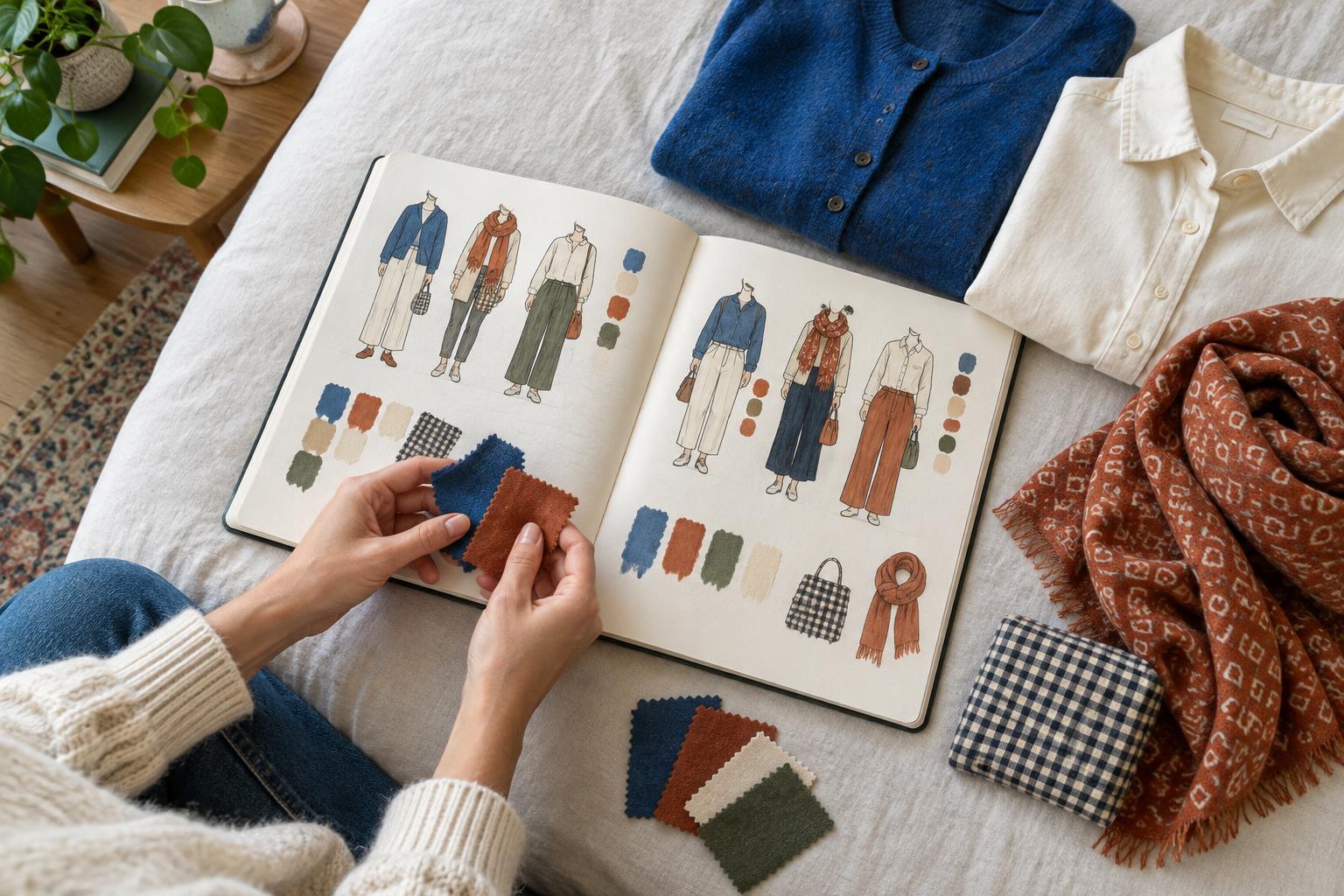
Start with something already in your wardrobe. You could make one item the centre of three outfits, use only two colours, repeat the same accessory in different ways or build each look around a shape such as a long line or a wide silhouette. Choose one constraint at a time so you can tell which decisions it brings into focus.
A useful prompt is specific without prescribing the answer. “Wear this scarf in three outfits” invites choices about placement, colour and mood. “Make every outfit look elegant” may be harder to act on because it asks you to reach a judgement before you have started. If a prompt feels restrictive rather than interesting, change it. The exercise should support curiosity, not turn dressing into a test.
Check the practical boundaries too. Keep your usual needs for comfort, movement and the setting in view. Creative expression does not require ignoring what your day asks of you.
Make three versions, changing the message each time
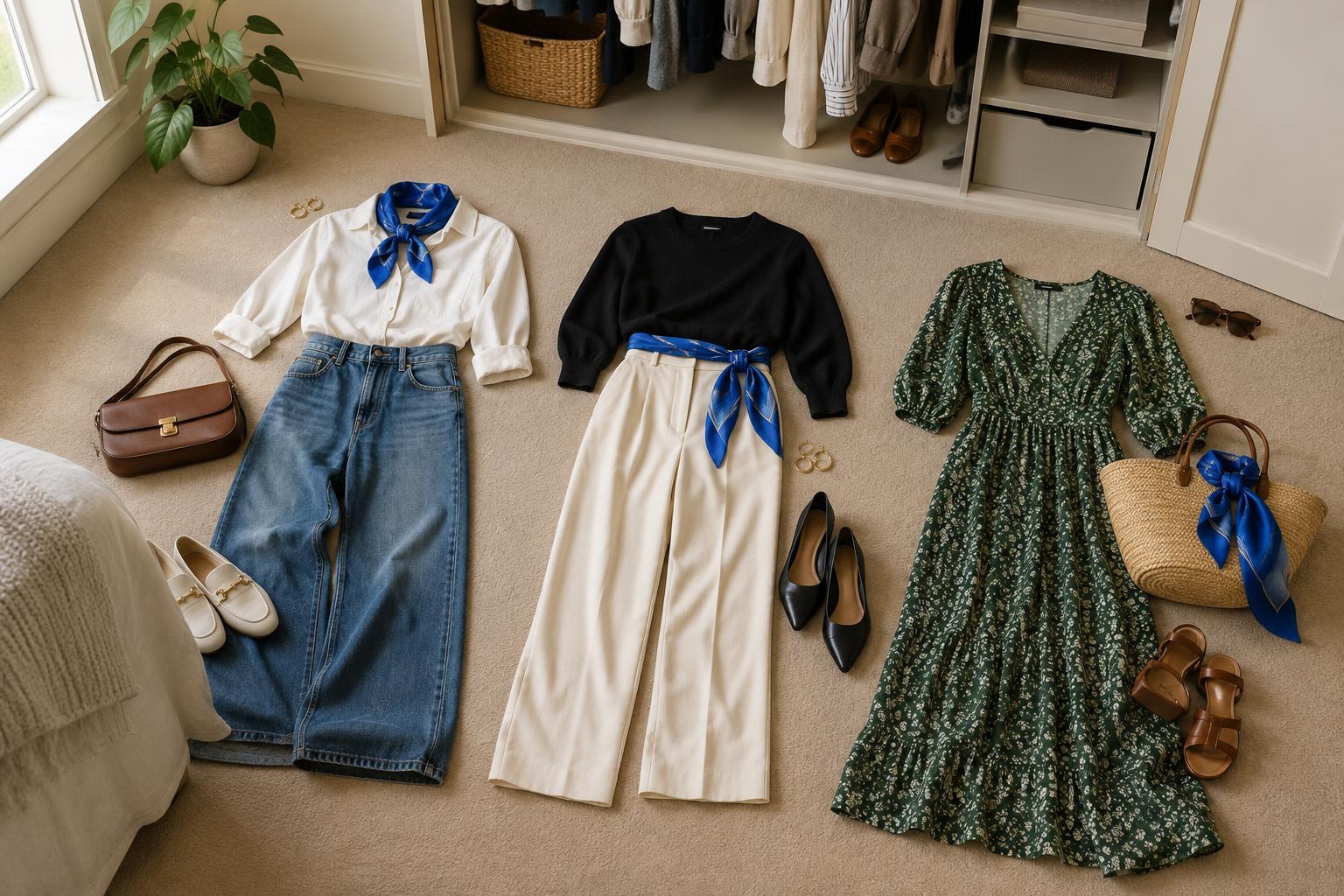
Put together three outfits that meet your constraint but communicate different qualities. You might aim for calm, energetic and understated, or choose your own set of contrasting words. Work with whatever those words mean to you rather than trying to produce a universally recognisable result.
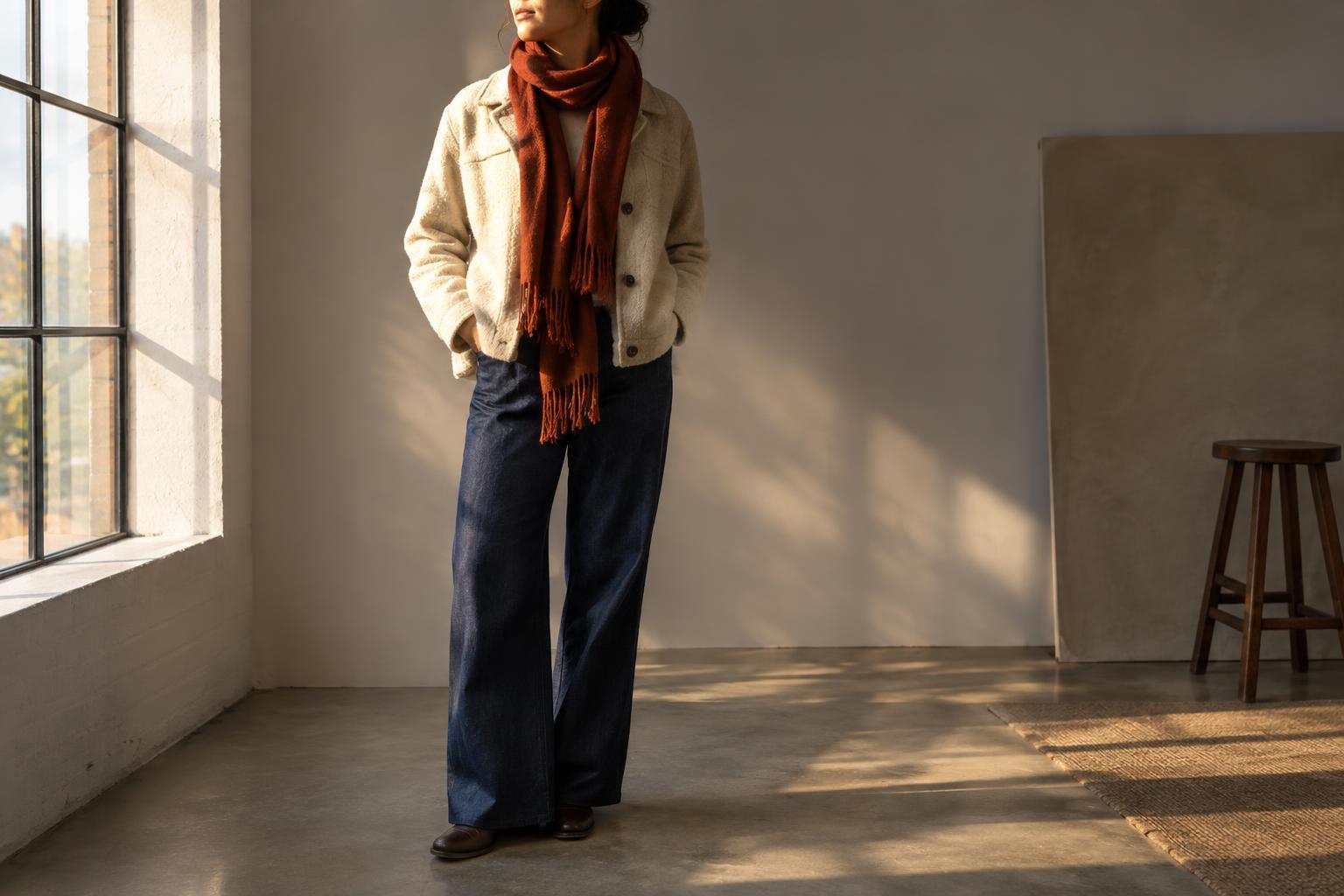
For each version, change at least two details besides the constrained element. Consider proportion, layering, where an accessory sits, the amount of contrast or how much skin or fabric is visible at the neckline and wrists. Small shifts can affect the impression an outfit gives. A scarf tied close to the neck may feel different from the same scarf worn loosely over a jacket.
If the third version feels difficult, that is useful information. Try asking, “What is the most obvious choice I have not made yet?” Then try it, even briefly. You are exploring possibilities, not proving that every combination works.
Notice your decisions, not just the finished outfits
After trying each version, write down a few plain observations. Which choice did you make first? What did you change immediately? Did you reach for contrast, repetition, neatness or an offbeat detail? These decisions can say more about your creative instincts than a label for the finished look.
You can also note the difference between liking an outfit visually and wanting to wear it. An arrangement may look compelling on a hanger or in a photo but feel distracting once you move around. Another may seem simple until you put it on and recognise how at ease you feel. Neither reaction makes the experiment a success or failure; both help you understand your preferences.
If you take photos, treat them as optional notes rather than a verdict. You can learn just as much by describing what changed and how it felt.
Keep what you learned, release the rule
When you finish, identify one choice you would repeat outside the exercise. It might be a colour pairing, a way of wearing an accessory or the contrast between a familiar item and an unusual shape. Then name one choice you are happy to leave behind. Keeping the insight does not mean keeping the constraint.
You can return to the exercise with a different prompt whenever dressing feels automatic or your ideas feel hard to pin down. Over time, you may notice recurring gestures: a preference for balance, a fondness for disruption or a habit of making practical clothes feel personal through one deliberate detail. Those patterns offer clues about how you express yourself, while leaving you free to change your mind.