Start with curiosity, not a verdict
Your style does not need a fixed label to be worth exploring. It may shift with your routines, interests, energy, or the way you want to present yourself in different settings. A monthly reflection gives you enough distance to notice those shifts without judging every outfit as you wear it.
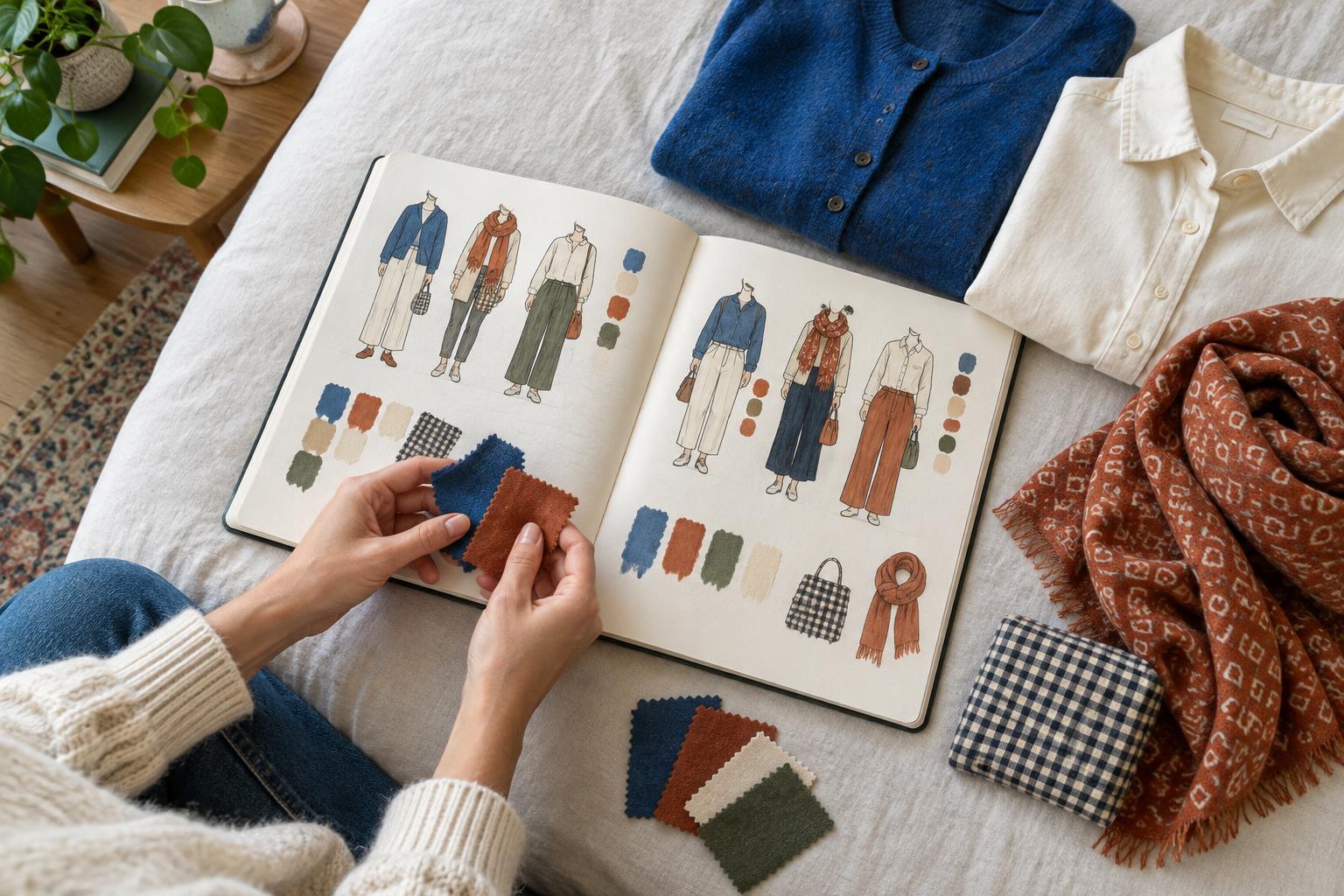
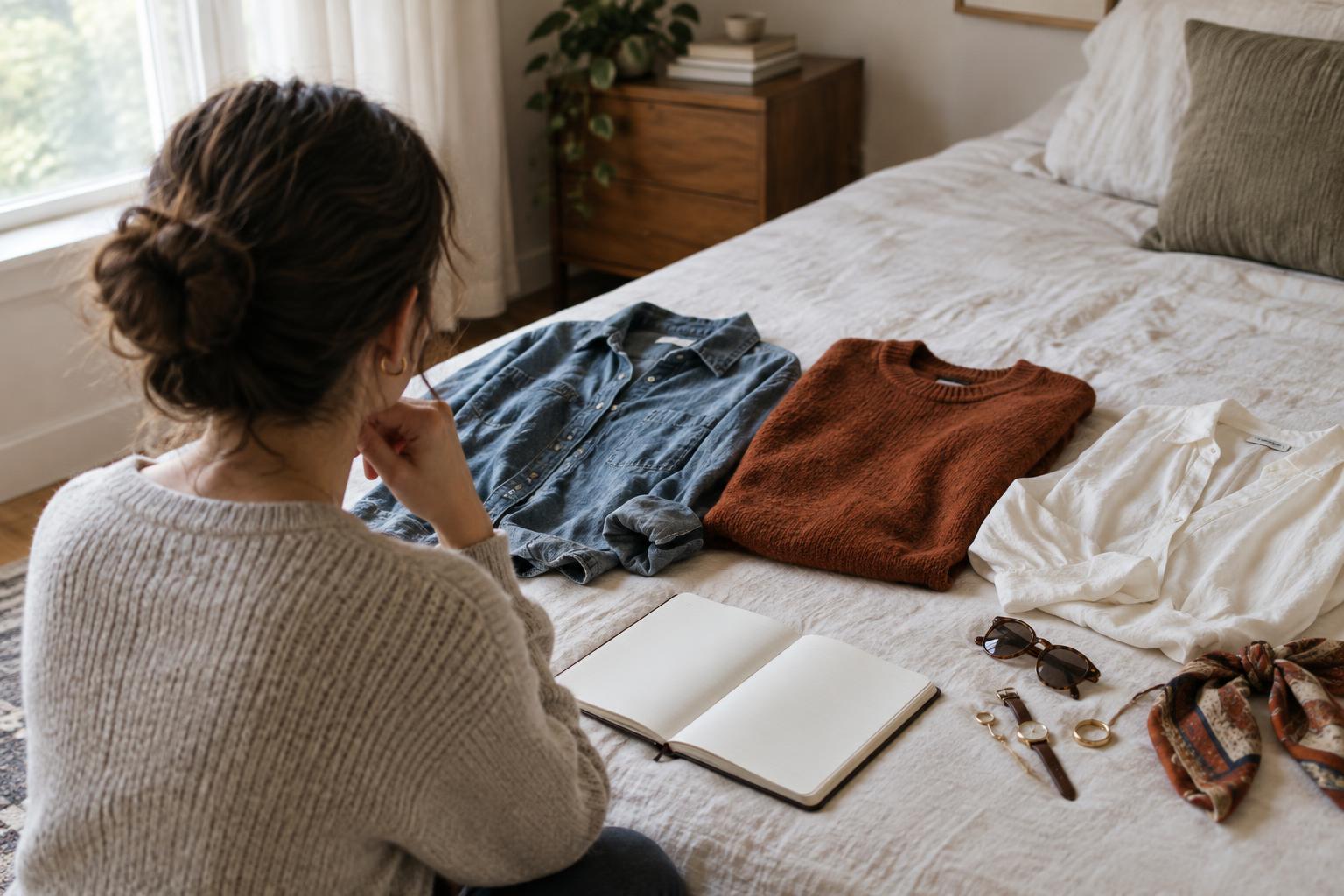
Set aside about 20 minutes near the end of the month. Use a notebook, a note on your phone, or a folder of outfit images. Gather whatever you already have: a few photos, sketches, saved combinations, or simply memories of what you reached for. You do not need to document every day. Three outfits you remember clearly can tell you more than a large collection you never revisit.
Begin by writing one sentence: “This month, getting dressed felt…” Finish it without trying to sound stylish or consistent. Your answer might be “easy,” “repetitive,” or “more playful than usual.” Treat that sentence as a starting observation, not a conclusion about who you are.
Notice what you actually chose
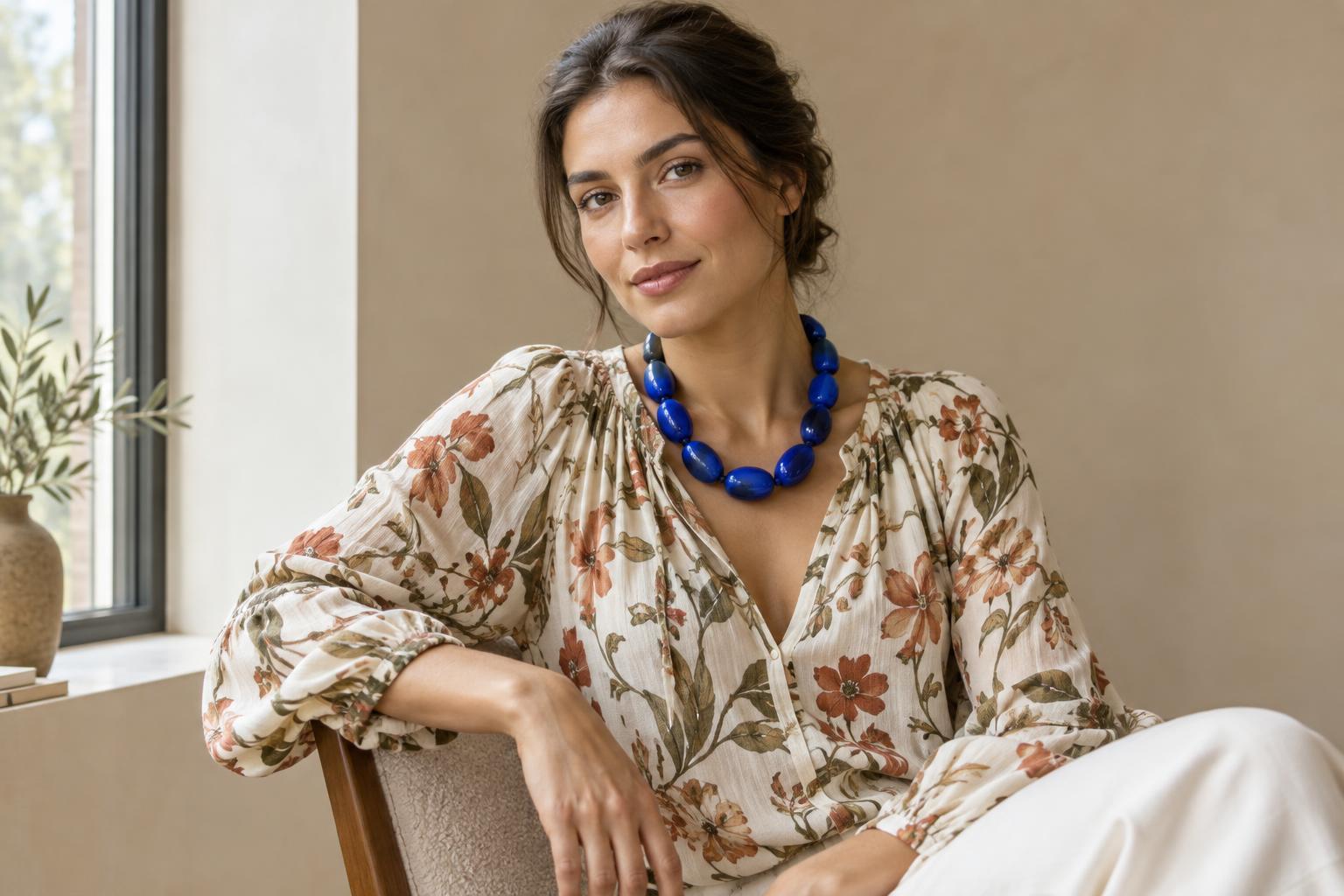
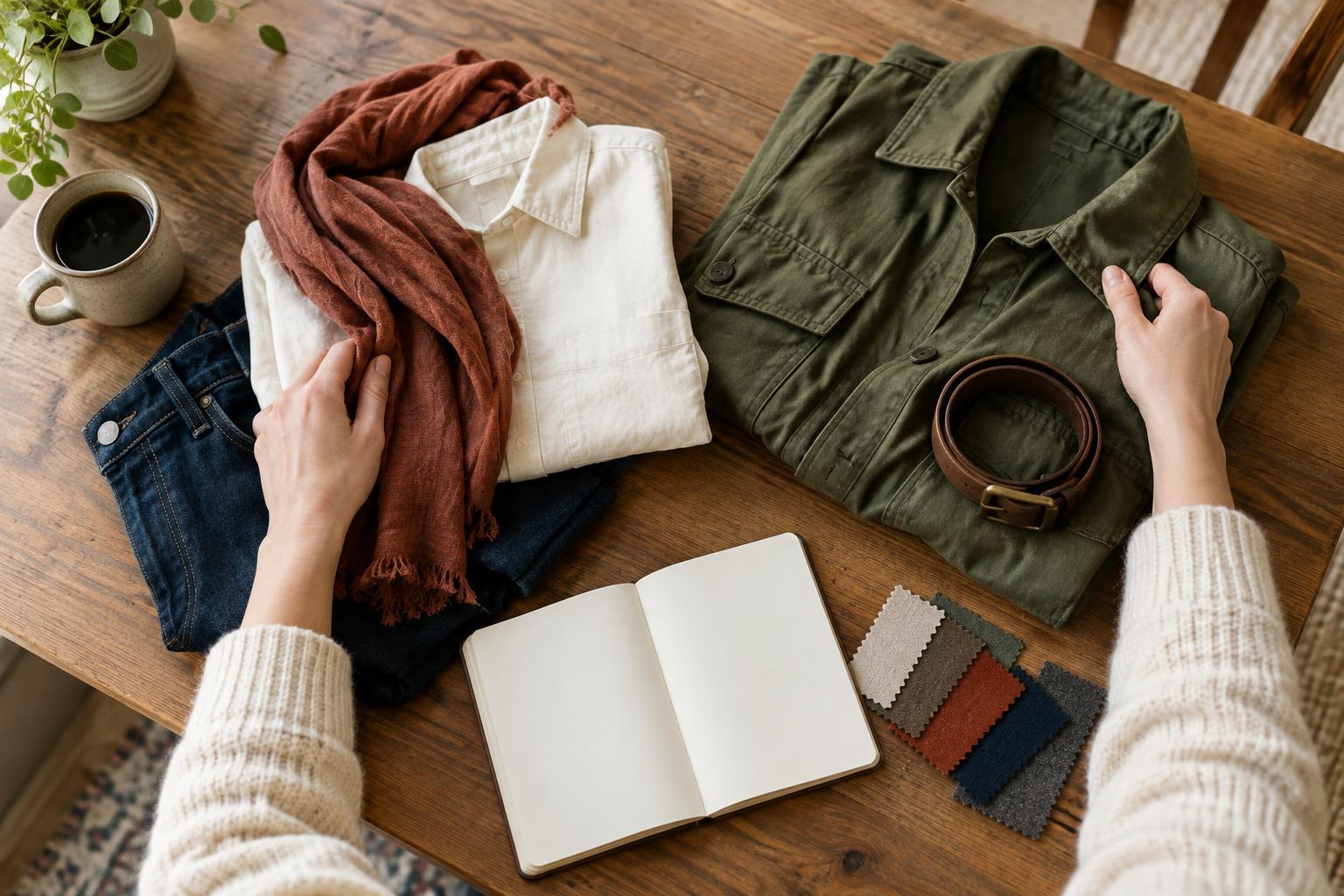
Pick three to five outfits from the month: one you enjoyed, one you wore often, and, if possible, one that did not quite work. For each, list the pieces and the details that shaped the overall impression. Think beyond clothing categories. Did a bright sock change a neutral outfit? Did a loose silhouette make a familiar colour feel different? Did you keep reaching for a particular bag because it was useful, expressive, or both?
Then ask what influenced each choice. Consider the setting, the weather, the amount of time you had, and how much attention you wanted to draw. Context matters: an outfit you chose for a quiet working day does not have to express the same side of you as one you wore to meet friends.
If you use photos, look at them before reading any notes you made at the time. Write down what you notice first, then compare it with how you remember feeling. An image can show proportion and colour, but it cannot always show comfort, confidence, or the pleasure of a detail only you noticed.
Find patterns without making rules
Look across your examples and circle anything that repeats: a colour pairing, a shape, a texture, an accessory, or a way of balancing simple pieces with one striking element. Also notice recurring feelings. Perhaps you felt most at ease in soft layers, or most engaged when you mixed prints. These patterns are clues about your current preferences, not instructions for what you must wear next.
Ask yourself four questions: What did I reach for without hesitation? What felt expressive but still comfortable? What looked appealing in theory but was difficult to wear? What detail surprised me? Short answers are enough. The aim is to understand the relationship between your choices and your experience, rather than to score individual outfits.
Pay attention to apparent contradictions. You might enjoy restrained outfits on busy days and dramatic accessories when you have more room to play. Both can belong to your style. Creative identity is not necessarily a single visual signature; it can also be the way you adapt while keeping a few priorities—such as ease, colour, or humor—in view.
Choose one small experiment
Turn your observations into one experiment for the coming month. Make it specific enough to try but flexible enough to enjoy: wear a favourite accessory with three different outfits, pair two colours you usually keep apart, or restyle an overlooked piece using items you already own. An experiment is a question, not a requirement to improve.
Write down what you hope to learn. For example: “Does this scarf feel more like me when it is the only patterned piece?” or “Can I make my practical work outfit feel more personal with a change of shape?” This gives you something useful to reflect on later even if you decide the combination is not for you. You do not need to buy anything to make progress; changing placement, proportion, or context can reveal possibilities in familiar items.
If the idea feels intimidating, make the first version private. Try the combination at home, take a photo for yourself, or wear it on a low-pressure errand. The point is to create space for discovery, not to perform a new identity on demand.
Keep a record you will want to revisit
End each check-in with three brief lines: “I kept choosing…,” “I want less of…,” and “Next month, I will try….” Save them together so you can read them again after several months. You may find that a preference persists, disappears, or returns in a different form. None of those outcomes means you got it wrong.
Keep your record as private or public as you like. A personal note can be more candid than a post made for an audience, and you can always decide later whether to share an image. If you miss a month, simply begin again with what you remember. Over time, the exercise can help you see style as an ongoing conversation between what you need, what catches your eye, and how you want to express yourself.