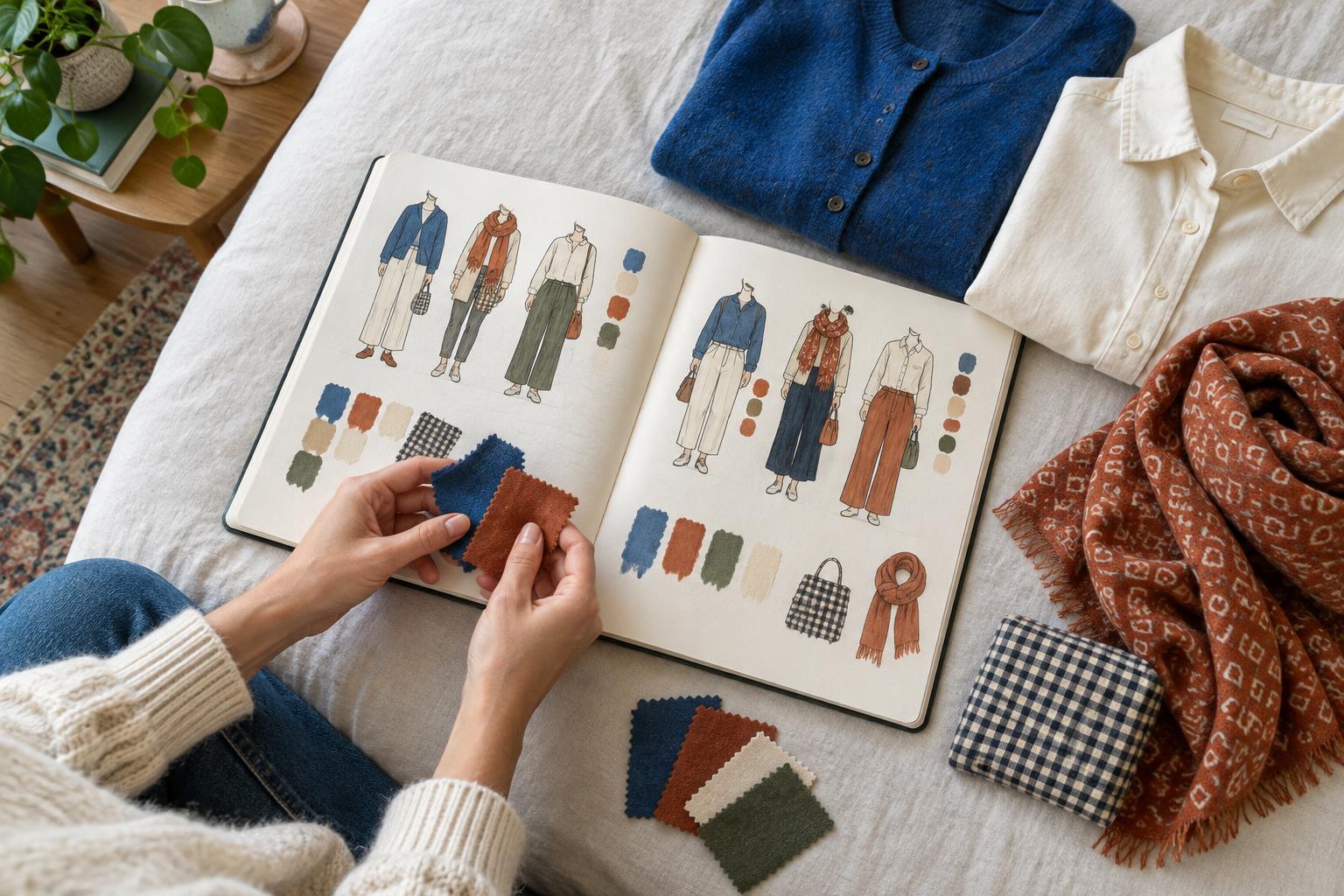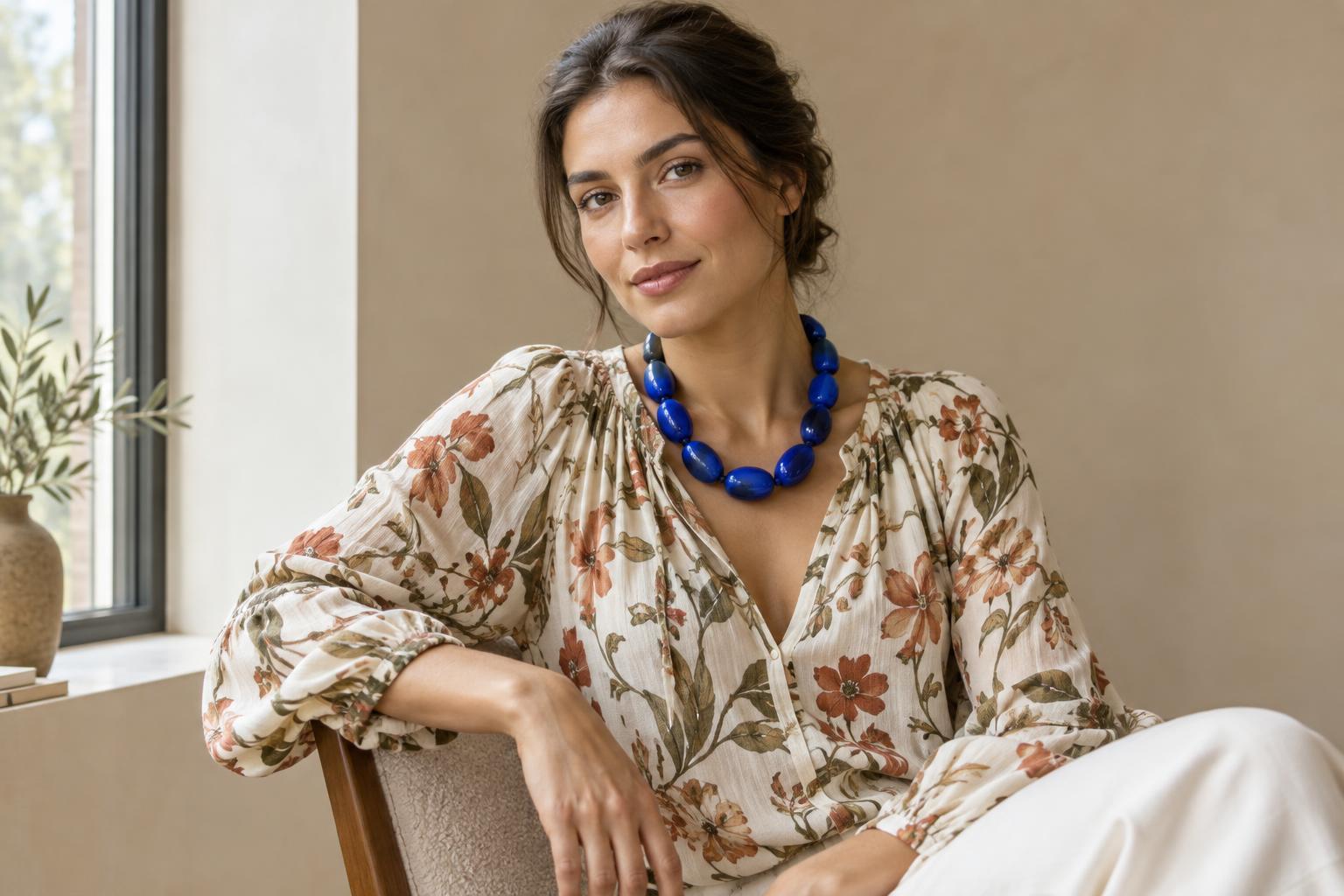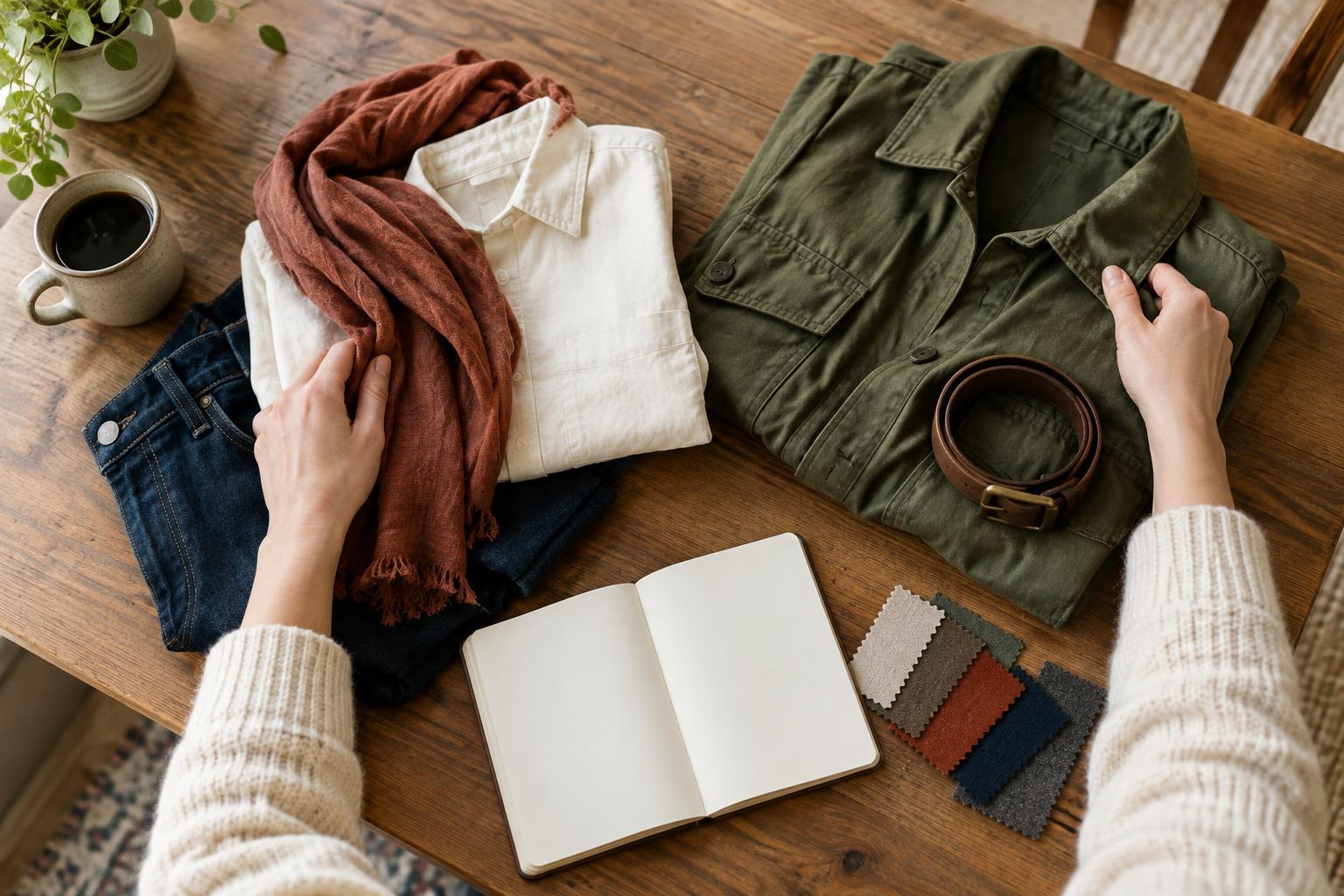
Start with the feeling, not the lighting setup
Before choosing a place to take an outfit photo, finish this sentence: “I want this outfit to feel…” You might choose calm, playful, direct or intimate. The answer gives you a way to judge the light. If you want a quiet image, a softly lit corner may suit it better than a bright patch of sun. If you want to show the sharp outline of a jacket, stronger light might make that shape easier to notice.
Light is not a shortcut to a particular emotion. The same light can feel different depending on the clothing, pose and surroundings. Treat your chosen feeling as a question to test rather than a rule to follow. Take a few pictures, then ask what draws your eye first and whether that supports the story you meant to tell.
Notice what light reveals and what it hides
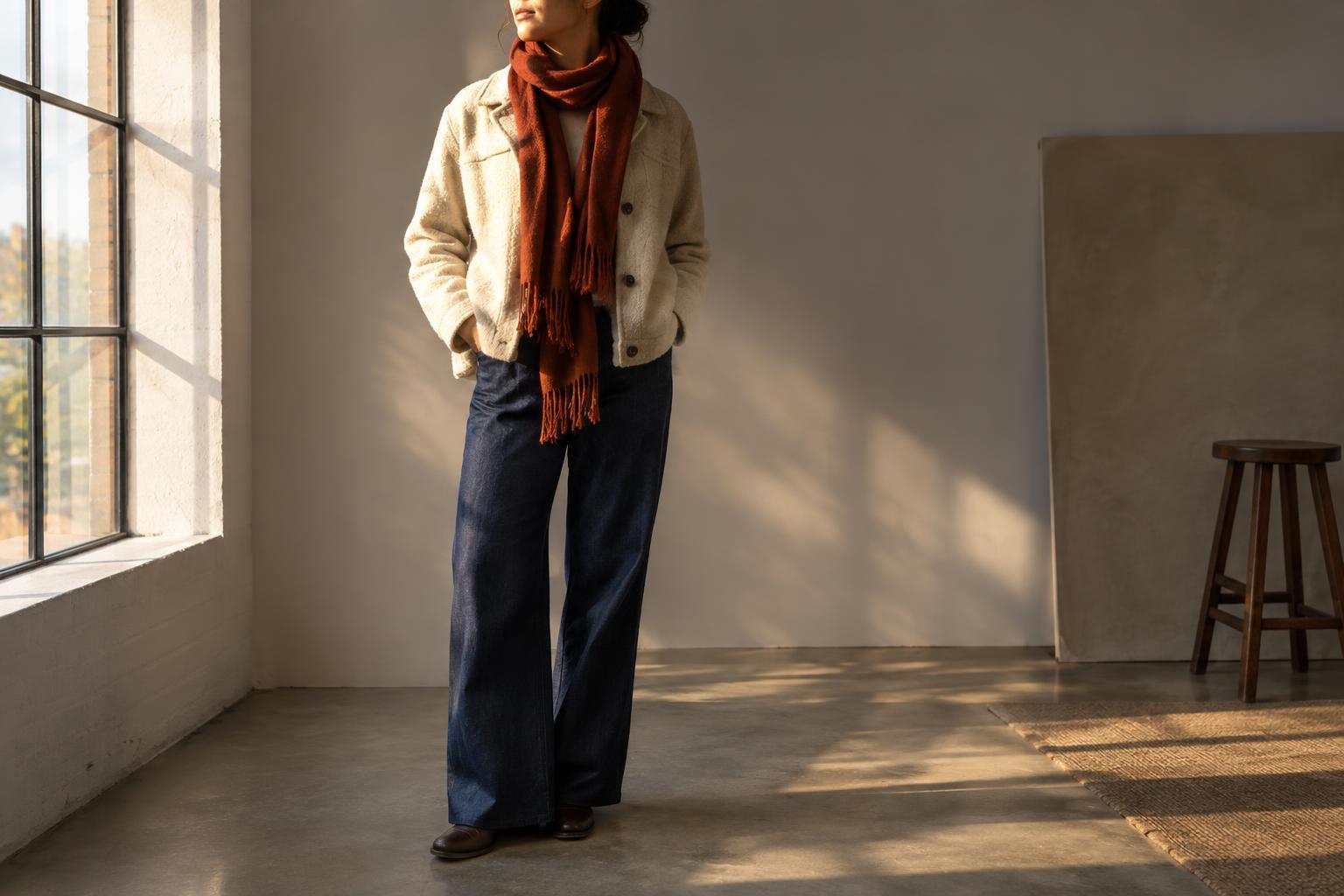
An outfit photo asks the viewer to read several things at once: silhouette, colour, texture and small details. Different lighting can give each of those a different level of attention. Light from the side may make folds and raised textures more noticeable. Light facing the outfit can make the overall shape easier to read, although subtle texture may appear less prominent. A bright area behind the wearer can emphasize an outline while leaving details on the front harder to see.
Choose one feature that matters most to your story. If a hand-stitched cuff is the point, make sure it is visible rather than assuming the viewer will find it. If the outfit is about a simple, graphic shape, check that the edges remain clear. Move the person or garment a small distance, or turn it slightly, before changing everything about the scene. A minor adjustment may be enough to bring the important feature into view.
Try one outfit in three kinds of light
A useful exercise needs only one outfit and one location. First, photograph the outfit near a window with the light falling across its front. Next, turn so the window is to one side. Finally, move to a spot where the light comes from behind. Keep the framing and pose as similar as you can. This makes it easier to see what the light changes instead of mistaking a new angle or gesture for a lighting effect.
Compare the images without asking which one is most polished. Where do your eyes go first? Can you still see the colours and details you care about? Does the outfit seem open, reserved, bold or something else? Write down two or three observations in ordinary language. “The sleeve becomes the focus” is more useful for your next photograph than “the lighting is good.” If a window is unavailable, you can run the same exercise by moving around a steady lamp, provided you can do so safely.
Make light work across a series
When you photograph several outfits for one visual story, the lighting can help the images feel related. You do not need every frame to be identical. You might keep faces and fabrics softly lit throughout, or repeat a bright edge of light in each image. That shared quality gives the viewer something familiar to recognize as the clothing changes.
A change in light can also mark a change in the story. For example, a sequence might begin with details in shadow and end with a clearer view of the full outfit. Use that shift deliberately. If one image is much brighter than its neighbours for no apparent reason, it may interrupt the sequence rather than add meaning. Lay the pictures side by side and look for jumps in visibility as well as mood.
Keep the process repeatable
Once you find light that works, make a brief note of where the subject stood, which way the outfit faced and what you wanted the viewer to notice. You do not need technical measurements to build a useful record. A note such as “window at left; turned the patterned sleeve toward it” gives you a starting point next time.
Leave room for imperfect conditions. Light can change while you work, and some fabrics may appear different in a photograph than they do to your eye. Review a test image before completing a whole set, especially when colour or a small detail is important. The aim is not to control every shadow. It is to make choices that help someone else see what you intended to express through the outfit.