Start with qualities, not outfit labels
It can be difficult to describe your style if you begin with a label such as minimal, vintage or sporty. A label might be useful, but it can also make you feel as though every item has to fit one category. Qualities offer a more flexible starting point. Words such as curious, grounded, playful or precise describe an impression you might want to create without prescribing a particular wardrobe.
Set aside a few minutes with a notebook or a blank note on your phone. Write the prompt: “When I get dressed, I want to feel and express…” Then list ten to fifteen words without judging them. Include qualities that matter to you, even if your current clothes do not reflect them. You are collecting possibilities, not making a promise to dress the same way every day.
Notice what the words mean to you
Circle three words that feel especially useful right now. For each one, finish this sentence: “To me, this quality looks or feels like…” Try to describe something observable. For example, “calm” might mean room to move, a limited colour palette and pieces that are easy to wear. Someone else might express calm through soft texture and gentle contrast. Neither interpretation needs to be the correct one.
Next, ask where each word came from. Did you choose “polished” because you enjoy neat lines, or because you think you ought to appear polished? Do you want to express “bold” in every setting, or mainly when you have room to experiment? These questions are not a test of authenticity. They help you distinguish a choice that energizes you from a rule you have inherited.
Translate each quality into visible choices
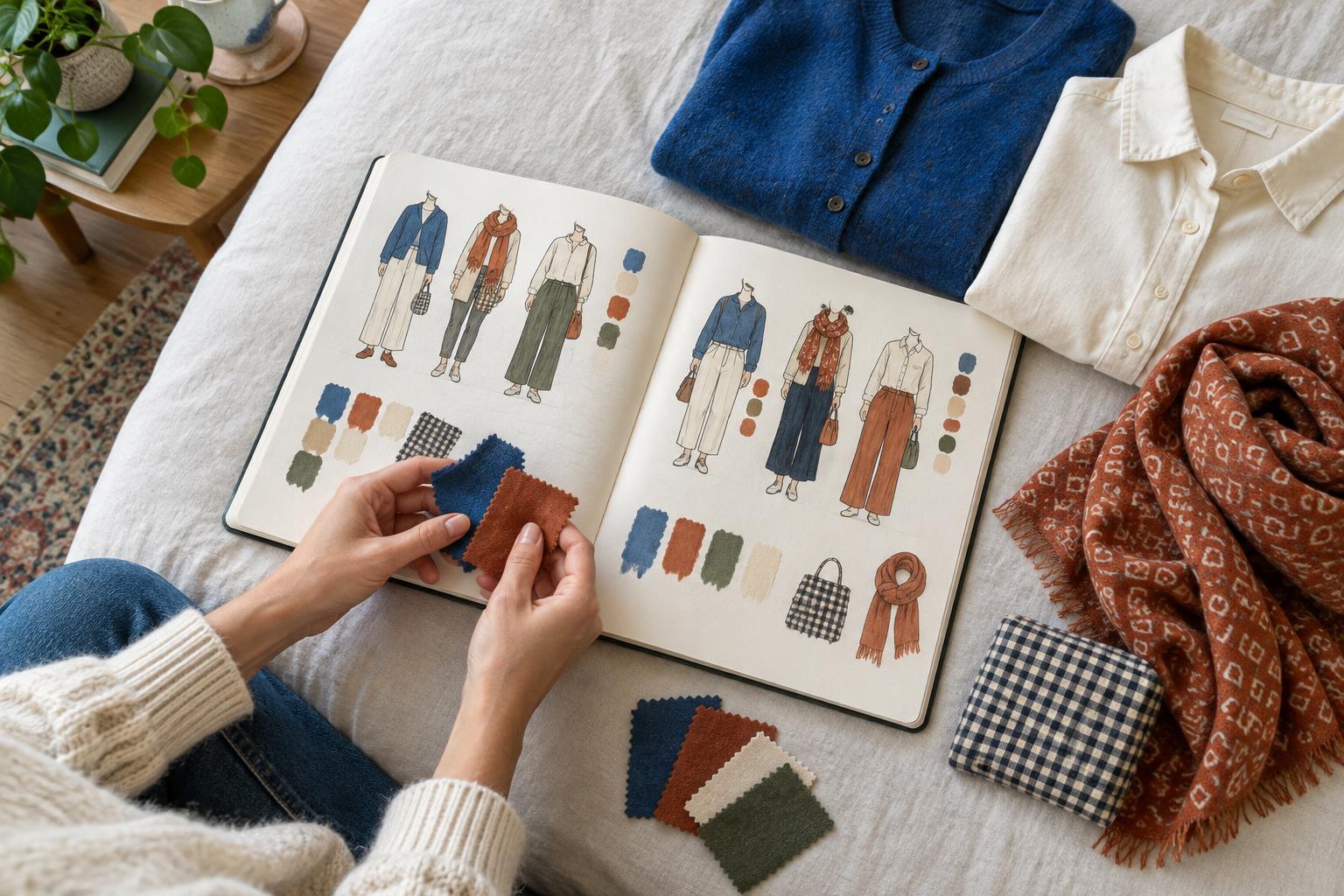
Now make three columns: quality, possible details and what I already own. Under possible details, consider colour, shape, texture, pattern, fit, accessories and the way pieces are combined. “Playful” could mean an unexpected colour pairing, a patterned sock or a distinctive bag. “Grounded” might suggest substantial fabric, familiar shapes or colours you associate with ease. Aim for several interpretations of each word so you do not mistake one item for the only way to express it.
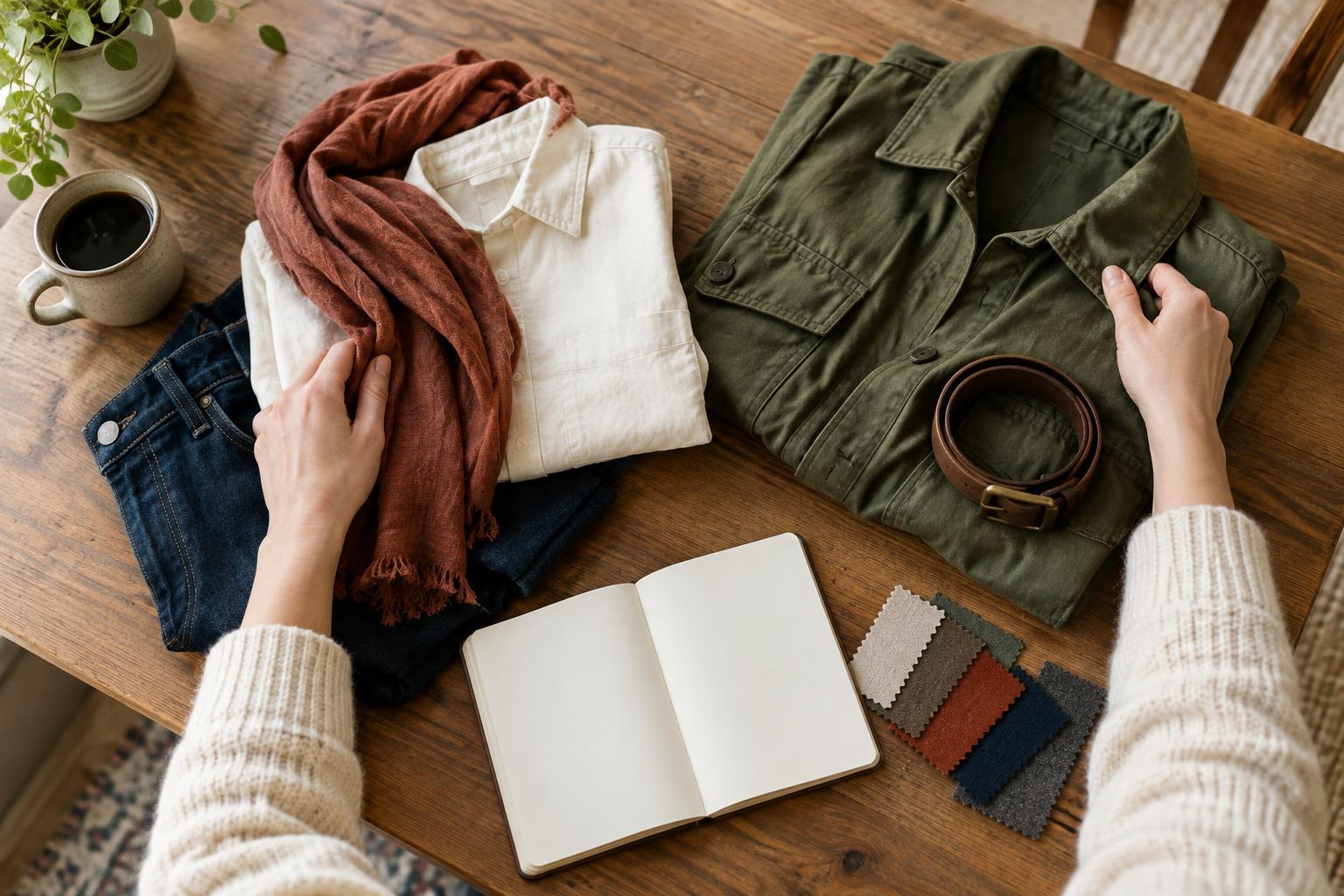
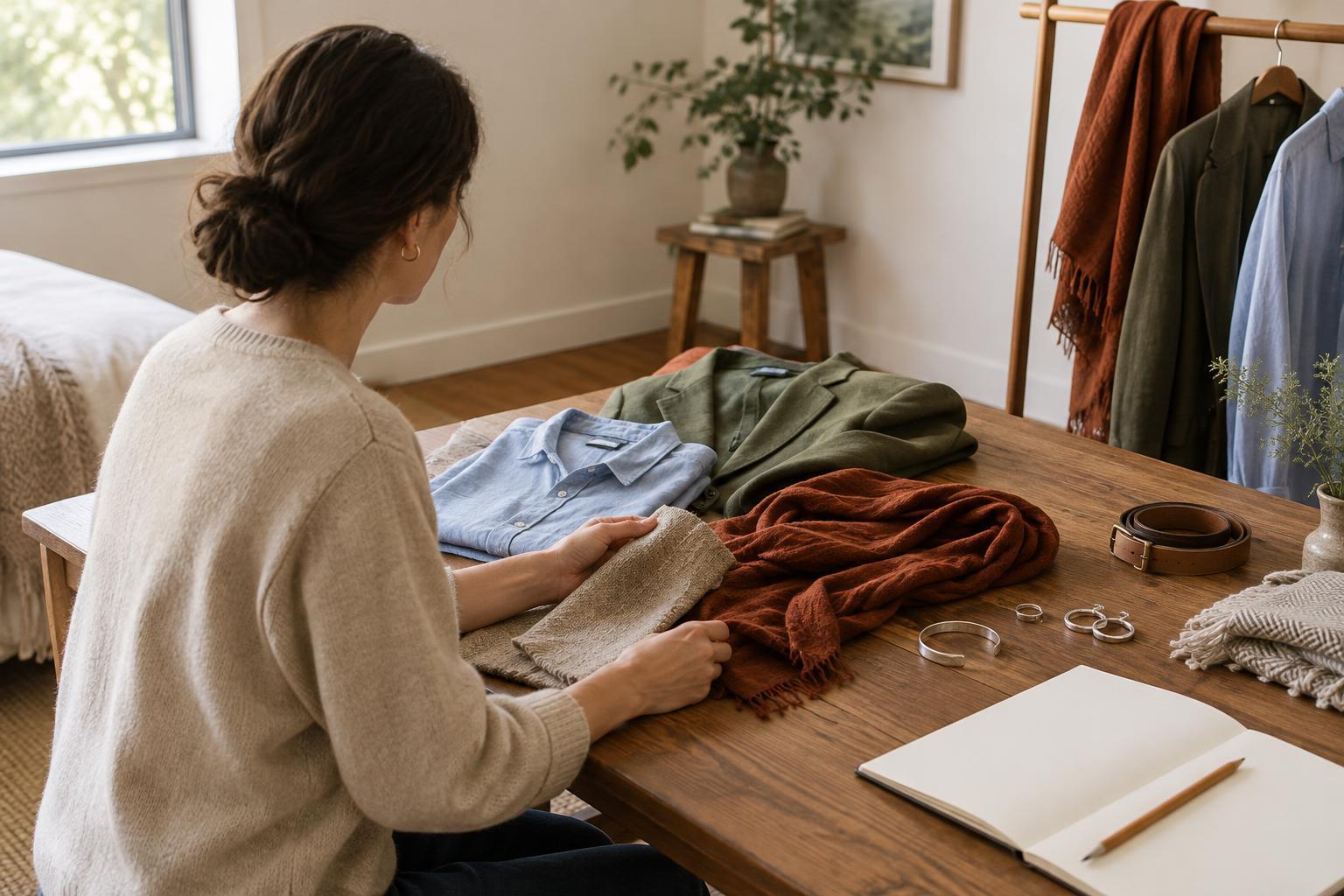
Look through your wardrobe before making a wish list. A jacket worn open may communicate something different from the same jacket buttoned up. A scarf tied at the neck may feel more deliberate than one tucked into a coat. Small changes in styling can help you explore a quality without buying anything. Note the pieces you reach for repeatedly, including those that do not seem remarkable on a hanger. Their appeal may be a clue.
Build a low-pressure outfit experiment
Choose one quality and assemble an outfit using items you already own. Keep the rest of your decisions straightforward so the experiment has a clear focus. If your word is “curious,” for instance, you might pair two colours you usually keep apart or add one accessory with an unusual shape. If your word is “steady,” you might repeat a colour across two pieces and choose a silhouette that feels comfortable throughout the day.
Wear the outfit somewhere ordinary, if that feels appropriate. You do not need an audience or a special occasion to learn from it. At the end of the day, write down what worked: Did you feel at ease? Did the detail you chose remain enjoyable after a few hours? Was anything awkward to move in or difficult to maintain? You can also take a photo for your own reference. Look at it as a record of a choice, not a verdict on your appearance.
Keep the words useful, not restrictive
After trying a few outfits, revisit your three words. You may find that one is too broad to guide a decision, while another gives you plenty of ideas. Replace words, combine them or add a qualifier. “Bold” might become “quietly bold”; “polished” might become “relaxed but considered.” The aim is to create language that helps you notice options, not a personal brand you must defend.
Your qualities can also change with context. You might want your clothes to express warmth on one day and focus on another. Keep a short list you can return to when an outfit feels flat or a purchase is tempting but hard to place. Ask which quality the item supports and whether you would enjoy wearing it in your actual routine. The most useful words are the ones that make getting dressed feel more intentional while leaving room to change your mind.