Start with the message and the material
A brooch is a small detail with a clear point of view. A bright enamel pin can make a plain jacket feel playful; a sculptural piece can give a simple outfit a more deliberate shape. Before deciding where to fasten one, ask what you want it to do. Should it be the first thing someone notices, or a detail they discover up close? That answer will help you choose both the placement and the amount of space around it.
Next, look at what will hold the pin. A sturdy lapel or woven bag panel may support a heavier brooch better than a fine shirt collar. Thin, loosely woven or delicate materials can stretch or show holes after the pin is removed. If you are unsure, test an inconspicuous area or choose a different surface. Check that the clasp closes fully, and consider how the item moves when you walk, sit or carry it.
Use a lapel to frame the face
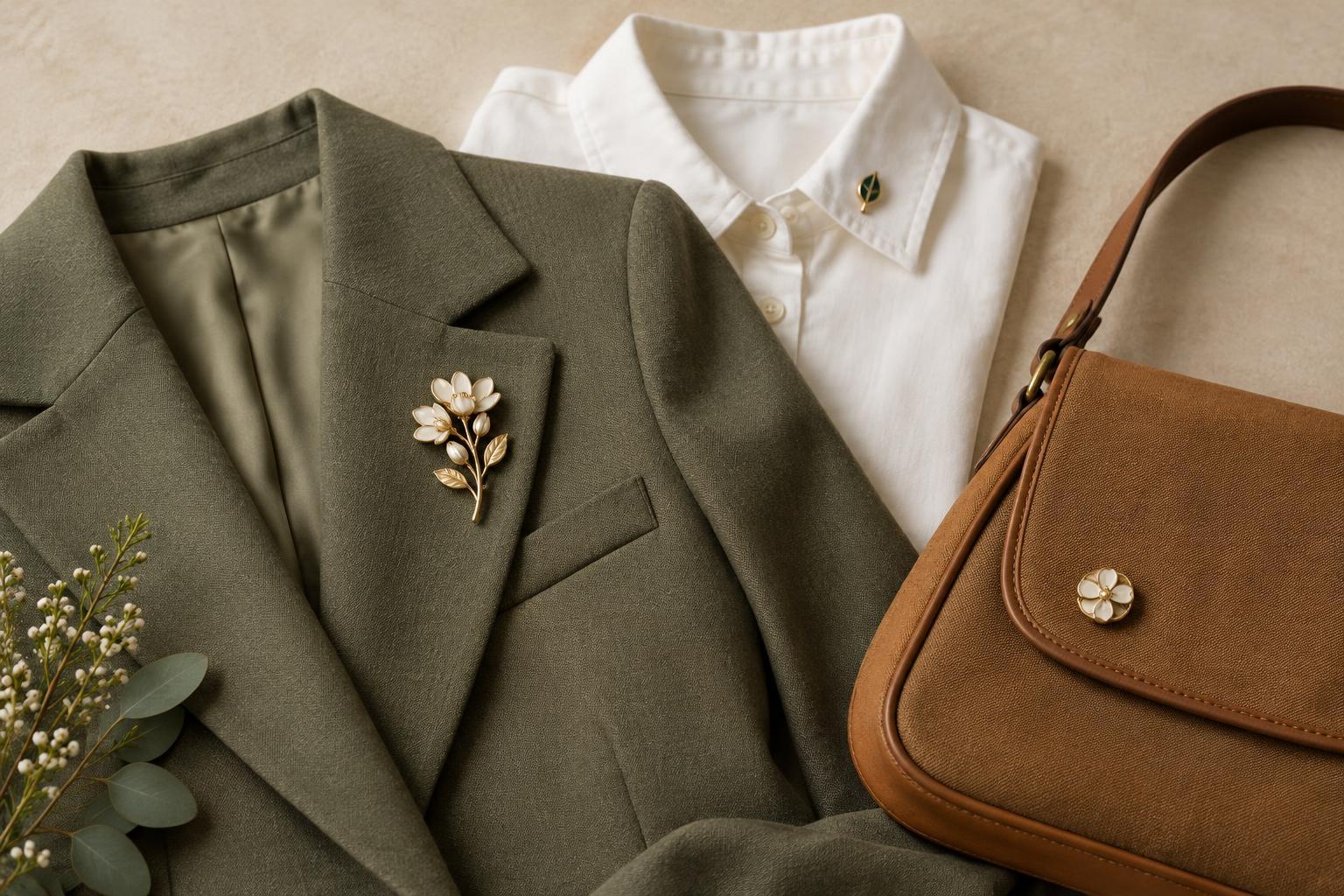
A jacket lapel offers a natural starting point because it already draws a line toward the face. Place a single brooch on the flatter part of the lapel where it can rest without tipping over an edge. Try it with the jacket on: a position that looks centred on a hanger may shift when the fabric falls across your body. Leave enough room between the pin and the lapel edge for the design to read clearly.
Scale changes the effect. A small pin near the upper lapel can feel like a quiet signature, while a larger piece lower down can become the outfit’s focal point. Neither position is a rule. If your jacket has a bold print or prominent buttons, move the brooch to a calmer patch of fabric so the details do not compete. For two or three pins, group them with a little space between their outlines rather than lining them up automatically.
Let the collar set the composition
Collars invite a different kind of placement. A small brooch at one collar point creates an asymmetrical accent; matching pins on both points create a more balanced look. You can also place a brooch just below a closed collar, where it acts as a visual centre for the neckline. Try each option while wearing the shirt or dress, since a collar’s shape changes when it lies against your neck.
Keep weight and comfort in mind. A heavy brooch may pull a soft collar downward, and a pin placed too close to the neck may rub as you turn your head. Fasten it through enough fabric to support the piece without forcing the pin through multiple thick layers. If the collar is sheer, fragile or difficult to pierce, save the brooch for a jacket or bag instead. Good placement should be comfortable as well as visible.
Turn a bag into a portable display
A bag can carry a pin beyond the limits of one outfit. The front of a canvas tote or the flap of a sturdy fabric bag gives you a broad area to work with. Choose a spot that stays visible when the bag hangs from your shoulder, rather than one hidden by your arm or a strap. Keep pins away from areas that fold sharply or brush against your body, where they may snag or work loose.
Before piercing a bag, check what sits behind the outer layer. A pin can catch a lining or leave holes in leather and coated materials. If you would rather not puncture the bag itself, a removable fabric patch or a sturdy fabric strap may offer another place to attach a lightweight pin. Open and close the bag after fastening it, then give the brooch a gentle check to make sure the clasp remains secure.
Edit the arrangement, then wear it
Placement is easier to judge from a little distance. Put on the jacket, shirt or bag and look in a mirror, or take a photo. Notice whether your eye goes where you intended. If the brooch disappears into a pattern, shift it onto a plain area. If it feels isolated, try moving it closer to a seam, collar point or pocket edge. These small adjustments can make the pin look connected to the item rather than added as an afterthought.
For a simple exercise, choose one brooch and try it in three places: an upper lapel, a collar point and a bag panel. Notice how its meaning changes in each setting. Once you find a position you like, wear it for a few minutes and check that it stays comfortable and secure. The best placement is not a fixed coordinate; it is the one that suits the piece, the surface and the expression you want to make.