Think of neutrals as a palette, not a restriction
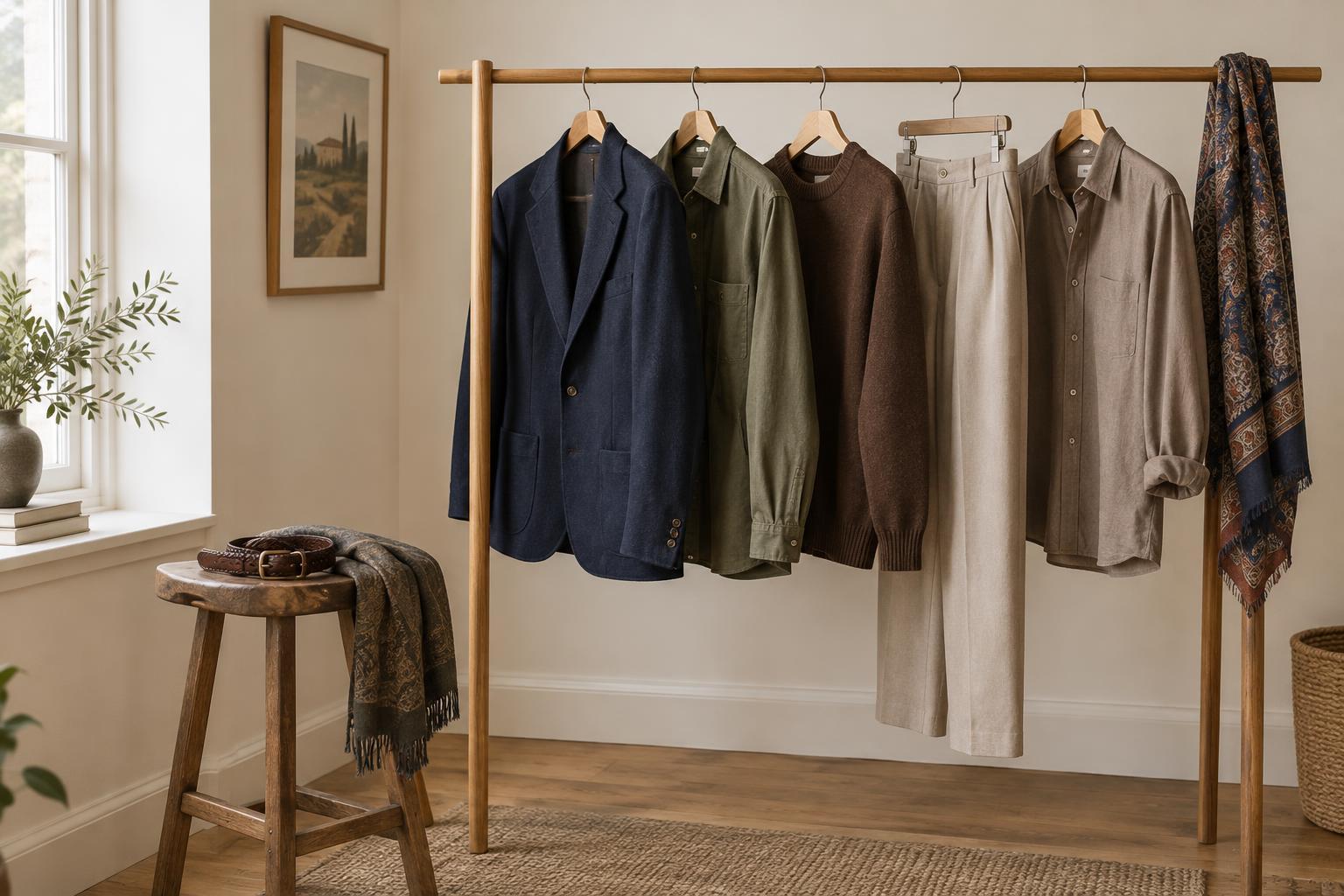
Black and white are useful, but they are not the only colours that can form the backbone of a wardrobe. Navy, charcoal, chocolate, camel, olive, stone and cream can all play a supporting role. A colour is useful as a neutral when it works with several things you already enjoy wearing. Your version of a neutral wardrobe might look very different from someone else’s.
Start by looking at the clothes you reach for most often. What colours appear repeatedly, including in shoes, bags and outerwear? Notice which combinations feel natural to you rather than trying to assemble a supposedly universal set of basics. If you love rust, for example, chocolate and olive might give it a softer setting than black does. If you favour clear blues, navy and cool grey may feel easier to repeat.
Choose a small set with different jobs
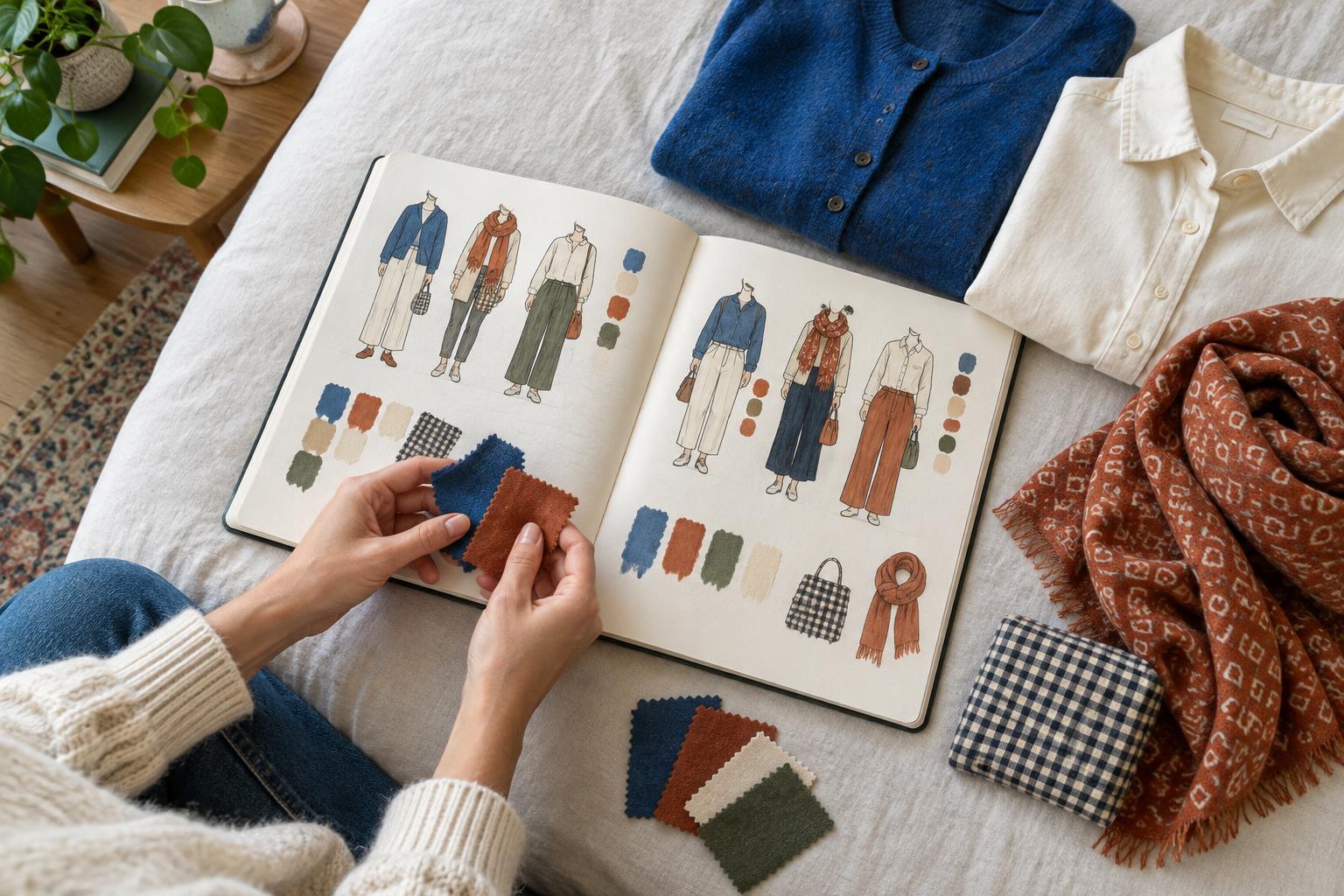
A workable palette can begin with three roles: a dark anchor, a light counterpoint and a middle shade. An anchor might be navy trousers, a charcoal coat or a dark brown skirt. A light counterpoint could be cream, oatmeal or pale grey. The middle shade connects them: think taupe, denim blue, olive or camel. These are roles, not shopping requirements; pieces you own may already cover them.
Try writing down five outfits you would genuinely wear, using your proposed shades. If one colour only appears in a single outfit, ask whether it earns its place through its shape, texture or personal appeal. Versatility matters, but it need not be the only measure. The aim is a wardrobe that makes getting dressed easier without removing the details that make it yours.
Pay attention to undertones and contrast
Two garments can both be called beige and still look quite different together. One may lean pink, another yellow or grey. You do not need a perfect undertone match, but it helps to compare pieces side by side in ordinary daylight before assuming they will pair well. Sometimes a slight difference creates depth; sometimes it makes one item look unexpectedly dull. Your eye is more useful here than a colour label.
Contrast changes an outfit’s mood, too. Navy with cream creates a clearer separation than navy with charcoal. Chocolate with camel feels more closely related, while olive with pale stone offers a gentle shift. Try taking a quick photo of each combination. It can make the overall balance easier to see, especially when you are choosing between two similar tops or deciding whether a bag ties the colours together.
Use texture and pattern to keep things expressive
When an outfit uses mostly related colours, texture becomes more noticeable. A smooth navy shirt against faded denim, or a chunky oatmeal knit over crisp cotton, brings variation without adding another hue. You can use the same idea with accessories: a woven bag, polished belt or matte shoe gives the eye something to follow. The result can feel considered rather than uniform.
Patterns are another way to give neutrals personality. A brown-and-cream stripe, a subtle check or a scarf containing several of your chosen shades can connect separate pieces. Begin with a pattern you already like, then pull one or two neutral colours from it for the rest of the outfit. You do not have to match every shade exactly; repeating a colour family is often enough to make the look feel intentional.
Test the palette before adding more
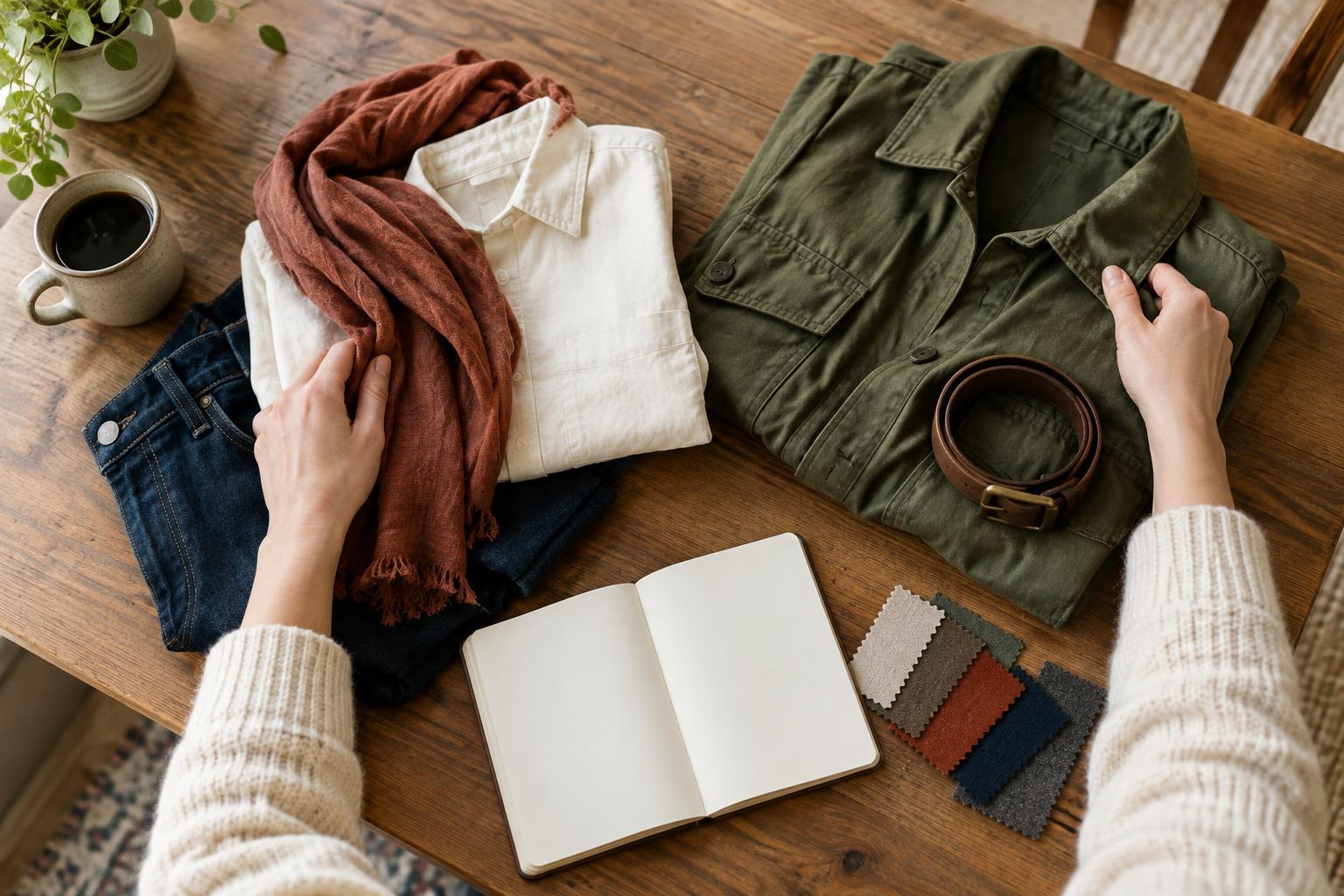
Before buying a new basic, lay out a few existing pieces and build outfits for different parts of your week. Try a dark anchor with two light options, then swap in your middle shade. Include the coat, shoes and bag you would actually use. This small exercise can reveal whether a proposed neutral is genuinely helpful or merely appealing on its own.
Keep a note of any gap that appears repeatedly, such as a lighter layer that works with your dark trousers and favourite jacket. Look for that specific function when you next consider an addition. A useful neutral wardrobe is not built by collecting every shade on a list. It grows from repeated combinations that suit your routines, support your preferred colours and still leave room for surprise.