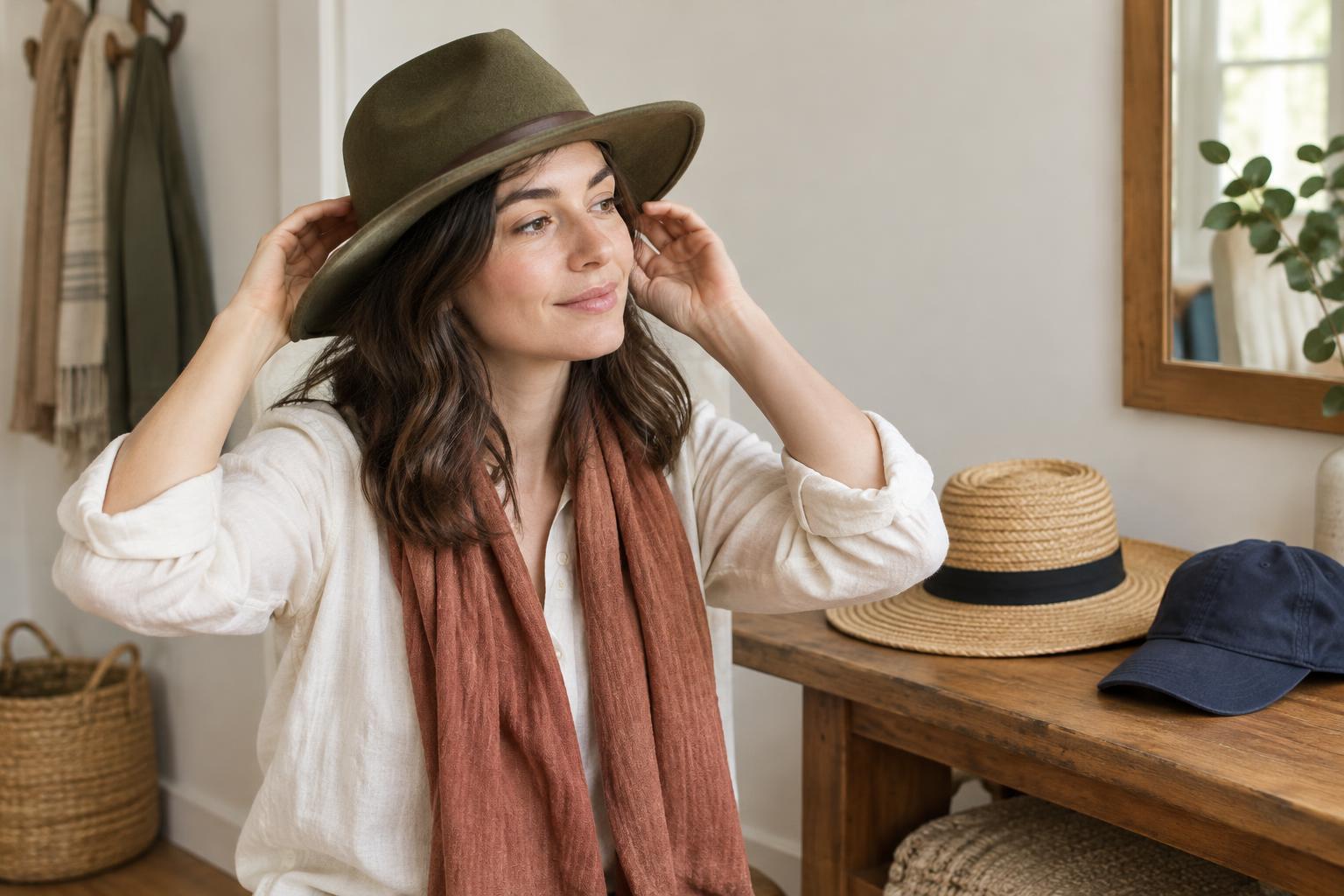
Start with the way you will wear it
Before choosing a shape, picture the hat in an ordinary part of your day. Will you wear it on a walk, during a commute, at an outdoor gathering or as the finishing detail of an outfit? A hat that looks right in a mirror may feel less useful if it shifts whenever you move or clashes with the outerwear you usually reach for.
Think about how much attention you want it to draw. A wide brim or bold colour can make the hat the focal point; a close-fitting shape in a familiar shade can add character more quietly. Neither approach is more expressive. The aim is to find a detail you will enjoy wearing, not just admiring.
Check the fit beyond the size label
If you can, measure around your head where the hat is intended to sit, usually across the forehead and above the ears. Compare that measurement with the maker’s size guide, but treat the number as a starting point. Crown shape, the width of an interior band and the material’s flexibility can all affect how two hats of the same labelled size feel.
Put the hat on without forcing it down. It should make comfortable contact around your head rather than grip one spot tightly. Turn your head, look down and take a few steps. Some movement is normal, but a hat that slips over your eyes or needs repeated adjustment may not be secure enough for your plans. If it leaves a strong pressure mark after a short try-on, a larger size or different shape may be more comfortable.
Pay attention to where you naturally want the hat to sit. Wearing a style higher or lower can change both its look and its stability. Small fit adjustments, such as removable sizing inserts, may help with a slightly loose hat. They are less likely to solve a crown that has the wrong shape for your head.
Compare shapes by what they do
A close-fitting beanie follows the head and puts the focus on its texture or colour. A cap adds a forward brim and often feels casual and easy to combine with familiar clothes. A structured, brimmed hat creates a stronger outline; its crown and brim can make it feel crisp, relaxed or dramatic. Try several shapes before deciding that you are, or are not, a “hat person.” You may simply prefer a different outline.
Look at the hat from the front, side and back. Notice how the brim frames your face, where the crown sits and whether the overall shape works with your usual coat, collar or hairstyle. These are observations, not rules about face shapes. If one angle bothers you, try a different brim width or crown height rather than assuming the entire category is wrong for you.
Let material support the occasion
The material affects how a hat holds its shape and how it feels over time. A soft knit can fold into a bag and feel relaxed, while a firmer woven or felted hat may keep a more defined silhouette. Breathability, warmth and weight matter too. Consider the conditions in which you expect to wear the hat, and check its care label before counting on it as an everyday accessory.
Details can carry much of the expression. Contrast stitching, a ribbon, an unusual texture or a small patch may say enough without demanding a bright colour. If you want the hat to stand out, choose one main feature to lead: shape, colour, pattern or embellishment. This gives you a clear way to judge whether it works with clothes you already own.
Try a small styling experiment
Test a candidate hat with three outfits you actually wear: one simple, one layered and one that already includes a favourite accessory. Take a quick photo of each if that helps you see the full effect. Ask yourself whether the hat adds the feeling you hoped for, whether you can move comfortably in it and whether you keep wanting to take it off.
If the look feels unfamiliar, change only one thing at a time. You might try the same hat with a different jacket, echo its colour in a scarf or wear it at a slightly different angle. Give yourself room to get used to a new silhouette, but trust persistent discomfort. The right hat does not need to transform your style; it should give you another enjoyable way to show it.


