Starting without a clear idea
A collection of attractive outfit photos is not automatically a story. When each image seems to make a different point, viewers have to guess what connects them. Before taking pictures, finish this sentence: “These images show how clothing expresses…” Your answer might be a shift from reserved to playful, the comfort of a familiar jacket, or the way one scarf changes several outfits. Keep the idea small enough to show through clothing and images rather than explain at length.
A useful test is to describe the beginning, middle, and end in one line each. For a story about getting dressed for a creative project, the beginning could show several possible pieces, the middle a choice and an adjustment, and the end the finished look in its intended setting. You do not need a dramatic plot. You need a reason for one image to lead to the next.
Treating image order as an afterthought
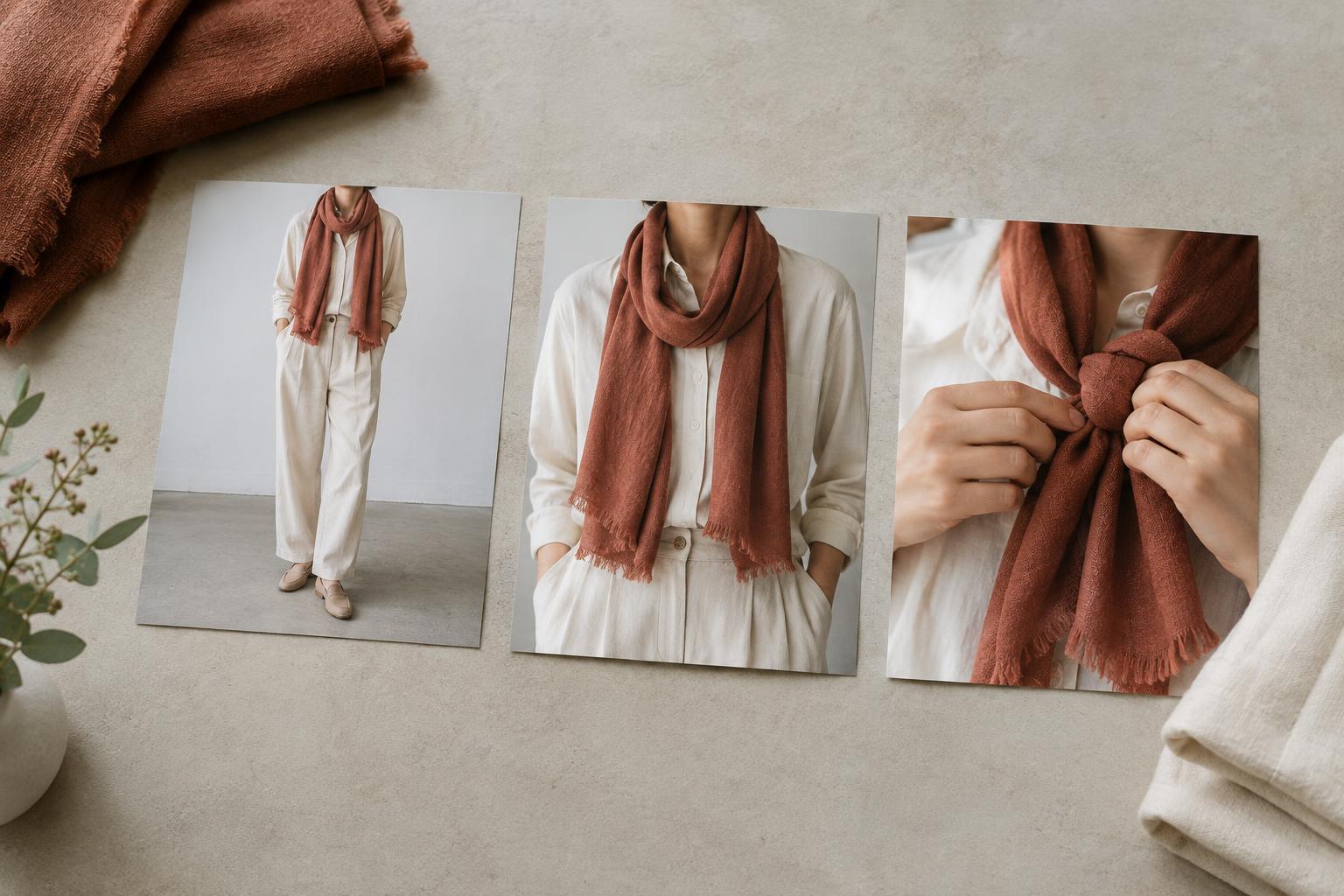
Even strong individual photos can become confusing when their order hides the progression. If the first frame shows the finished outfit and the next three appear to repeat it, a viewer may not know what changed or why. Lay your images out in a row before publishing. Without reading any captions, ask whether you can identify an opening, a development, and a closing image.
Move frames until each one adds information. A wide shot can establish a person and place; a closer shot can reveal a decision about layering; a final image can show the result in use. Repetition can work when it makes a change visible, such as the same pose with different accessories. If two frames communicate exactly the same thing, keep the stronger one or give the other a distinct purpose.
Letting the background compete with the clothes
A busy background can pull attention away from the garment or gesture that carries the story. This does not mean every photo needs a blank wall. A bedroom, hallway, or street corner can provide useful context. The problem arises when bright objects, crowded edges, or unrelated signs become more noticeable than the intended subject.
Look at each frame at a small size and notice where your eye goes first. If it does not land on the important clothing detail, try changing your position, moving an object, or framing the image more tightly. Also check whether the setting helps explain the idea. A coat photographed beside the door may suggest departure; the same coat against an unrelated backdrop may communicate only its shape. Choose context deliberately rather than removing it by default.
Changing the visual language without a reason
A sequence may feel disconnected when its lighting, distance, colour treatment, or framing changes sharply from image to image. Variation is useful, but it should support the story. A close-up of a textured sleeve after a full-length portrait adds new information. An unexpectedly dark image between otherwise bright frames may instead look like an accident unless the mood is meant to shift.
Choose one or two visual anchors to carry through the sequence. These could be a recurring colour, a similar camera height, or a consistent amount of space around the subject. Then make departures intentional. For example, moving from wide frames to close details can mirror a story that becomes more personal. You do not need identical images; you need enough continuity for viewers to recognise that they belong together.
Assuming the important detail is obvious
The meaning of an outfit may depend on something a full-length image barely shows: a repaired cuff, a borrowed belt, or a deliberate clash of patterns. If that detail matters to the story, give it its own frame or make it easy to see in the composition. Otherwise, viewers may notice the outfit but miss the idea behind it.
Captions can help, but they work best when they add context rather than rescue an unclear sequence. A brief caption might explain why a piece was chosen or name the change between two frames. Avoid making every image depend on a long explanation. As a final check, show the sequence to someone without introducing it. Ask what they think happens and which detail they remember. Their answer can reveal where to reorder, simplify, or add one missing image.


