Buying for an imagined version of your routine
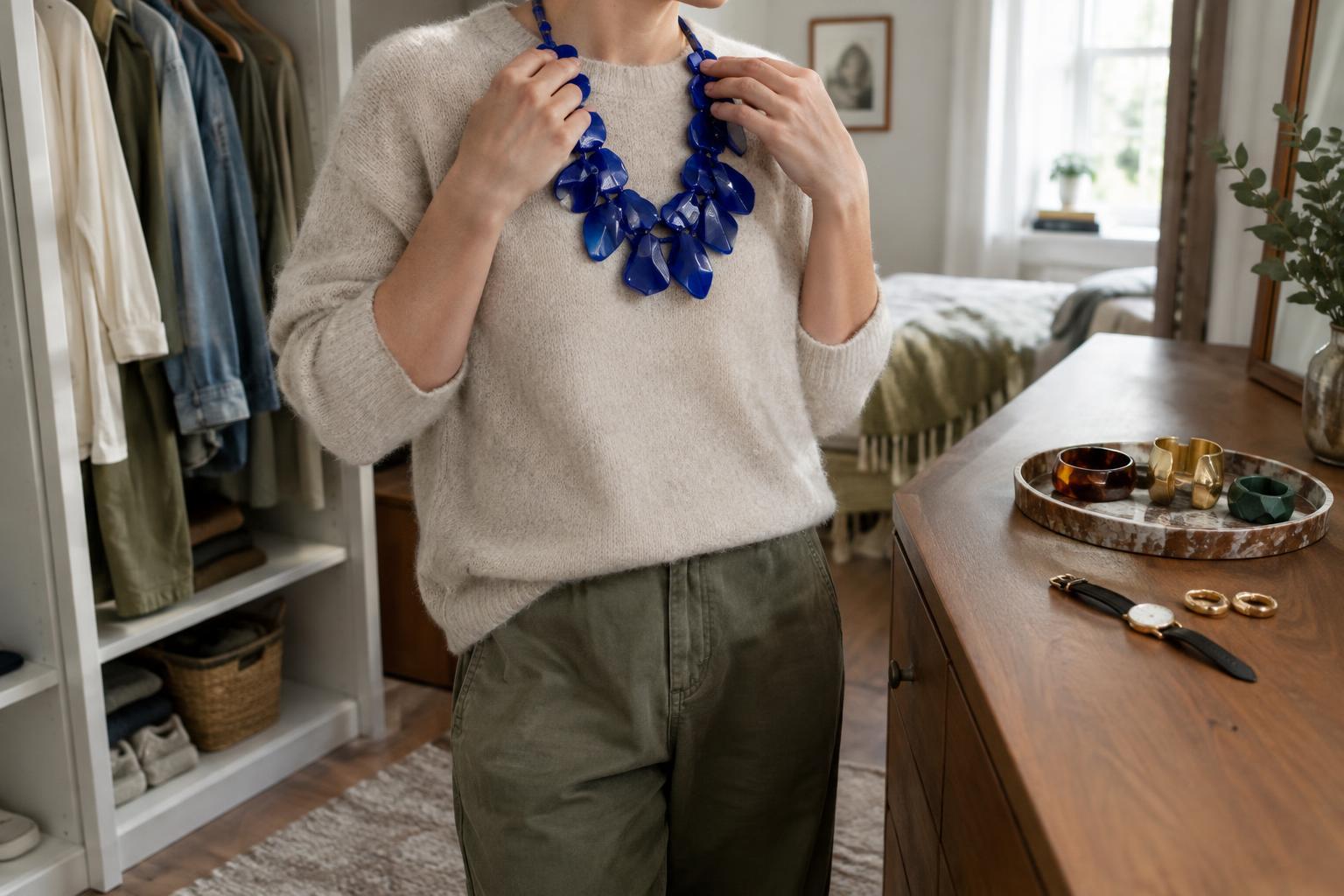
A dramatic necklace or sculptural bag may look exactly like the person you want to be. The mistake is assuming that wanting that look means you have a place for it. If most of your days involve walking, carrying several things or dressing quickly, an accessory that needs careful handling may keep losing out to an easier option. That does not make your taste less adventurous; it means the object and your routine have not met yet.
Before buying, picture one ordinary day rather than a special occasion. What would you wear with the accessory? When would you put it on, and would you leave it on? If you cannot name a realistic outfit and setting, consider trying a smaller or more practical version of the same idea. An expressive colour, shape or texture can still make a statement without requiring a different life.
Judging the piece on its own, not with your clothes
Accessories often look compelling in a display because they have room to be the focus. At home, they must work alongside your necklines, sleeves, coat, shoes and other details. A wide cuff might disappear under your usual layers. A bold earring might compete with the glasses you wear every day. A patterned scarf you love might be difficult to place among the patterns already in your wardrobe.
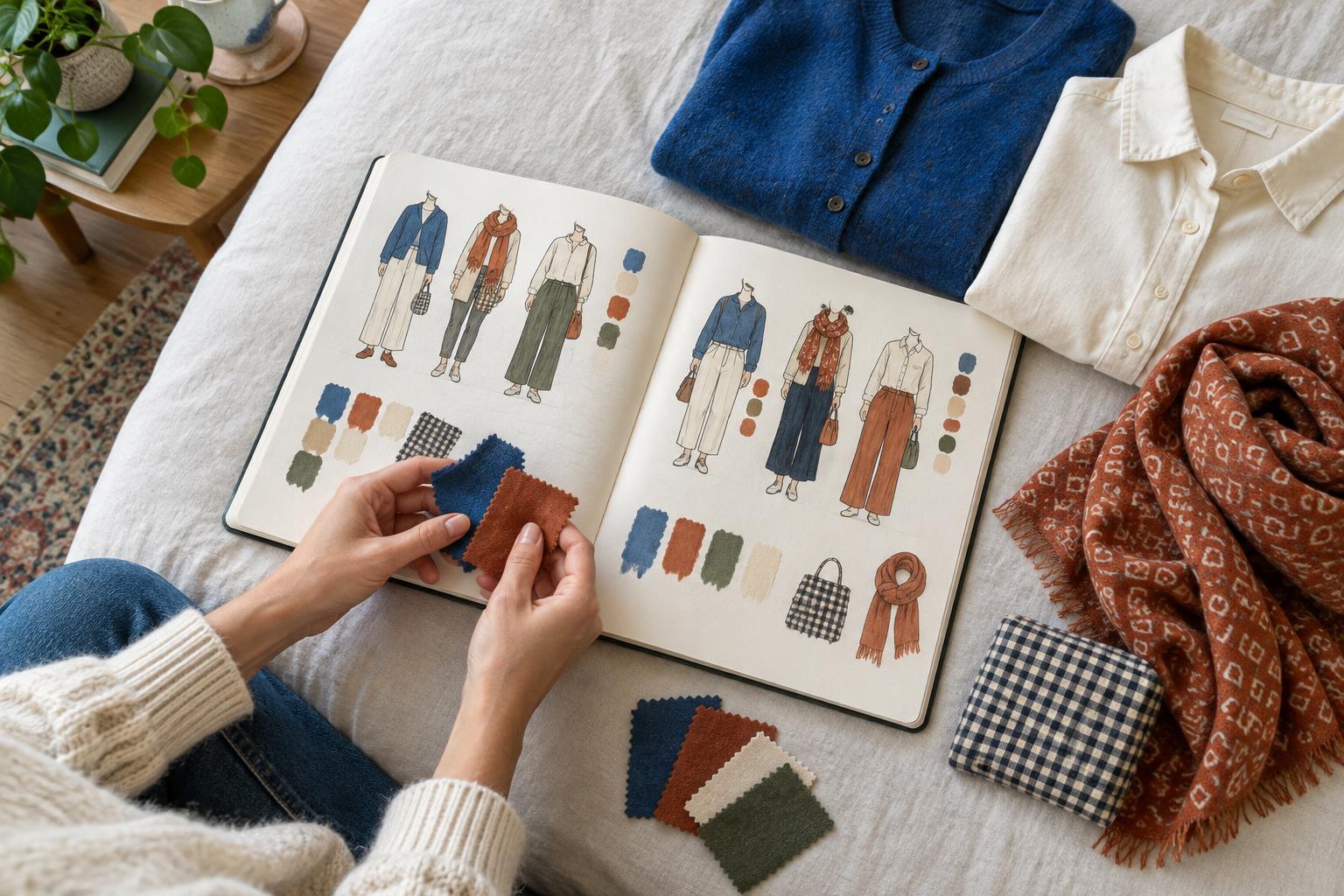
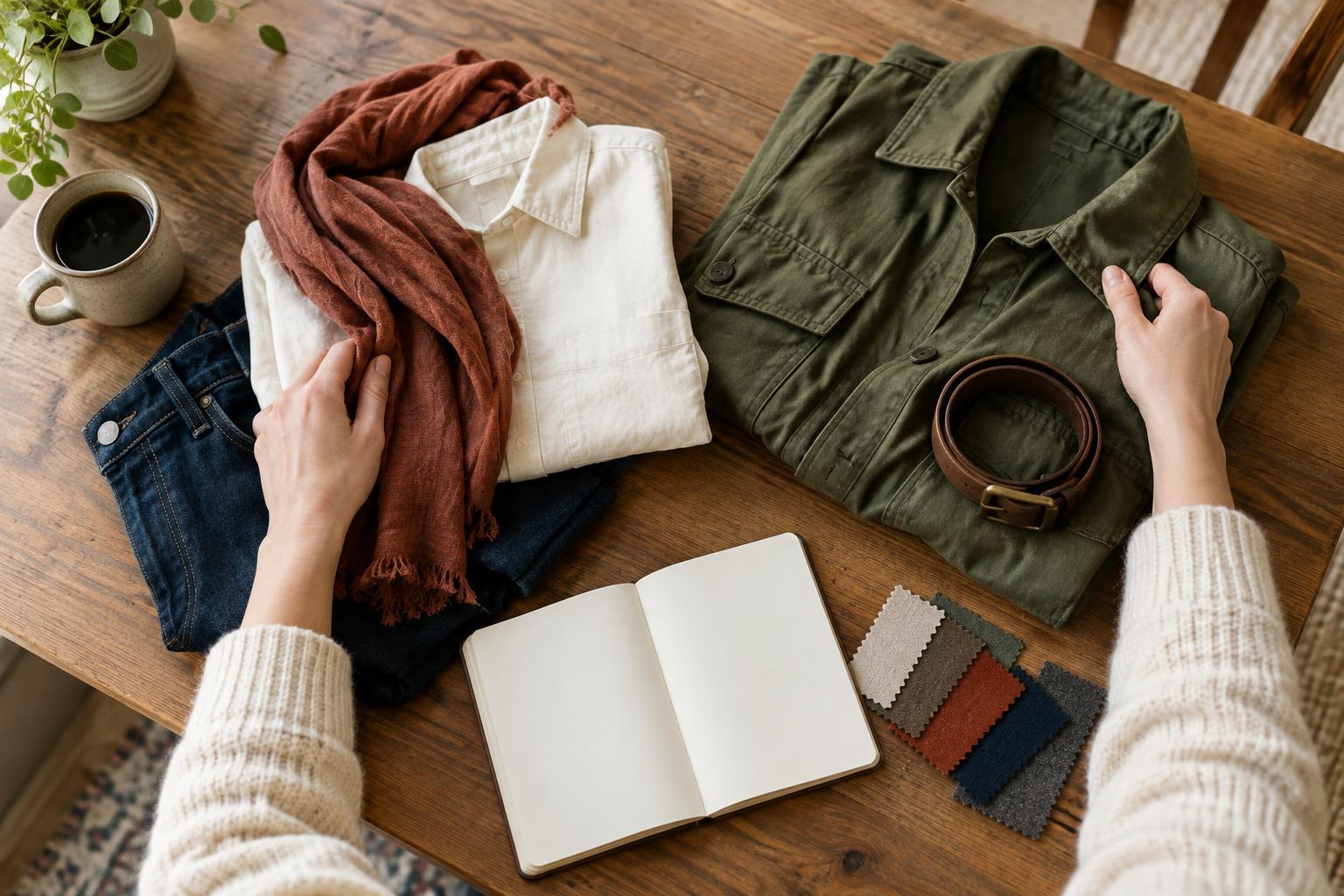
Try a quick pairing test: name three outfits you already wear and describe exactly how the accessory would complete each one. The outfits need not be identical, but the pairings should feel plausible without buying anything else. If all three depend on a new shirt or a change in how you dress, pause. You may have found a good piece for someone else’s wardrobe, or an idea worth revisiting when yours changes.
Overlooking comfort and ease of use
An accessory can express your personality only while you are comfortable enough to wear it. Weight, fastening, texture and movement matter as much as appearance. Earrings that pull, a ring that catches on clothing or a bag you have to rearrange constantly may seem manageable for a few minutes but become irritating over a full day. Even a beautiful clasp can be a barrier if you struggle to close it yourself.
When possible, test the piece as you would use it. Walk with the bag, sit down while wearing the belt or move your arms with the bracelet on. Check whether you can access your essentials and whether the item stays where you expect it to. For an online purchase, look carefully at dimensions, closures and materials, and compare them with an accessory you already wear comfortably. Small practical details often decide whether a piece becomes a favourite.
Confusing visual excitement with personal meaning
Some accessories stand out because they are unusual, bright or beautifully presented. That first reaction is valuable, but it is not always a sign that you will want to wear the piece. Ask what you like about it specifically. Is it the colour, the craftsmanship, the humour, the shape or the way it changes an outfit? If you cannot identify the attraction beyond “it makes an impact,” the novelty may fade before you have worked out how to use it.
A useful exercise is to write three words you want an accessory to communicate, such as playful, precise or relaxed. Then consider whether the piece communicates those qualities in the context of your own clothes. This is not a rule for keeping your style consistent. It is a way to tell the difference between an exciting object and one that helps you express something you genuinely want to say.
Forgetting what you already own
Another rarely worn accessory can enter your collection because it resembles something you like in theory, while the similar pieces you own remain untouched. Before purchasing, check whether you have an accessory serving the same purpose. If you do, ask why you do not wear it. Perhaps the colour is difficult to pair, the strap is uncomfortable or you simply prefer quieter details on most days. A new version will not necessarily solve that problem.
Look through your unworn pieces without treating them as failures. They are clues about which ideas work for you in practice. Try styling one with a familiar outfit, or note the single feature that stops you wearing it. When you shop again, use that observation as a filter. The goal is not to buy only safe accessories; it is to find statement pieces that can take part in your real wardrobe, rather than waiting indefinitely for the perfect moment.