Start with the colour pair, not a rule
Complementary colours sit opposite each other on a traditional colour wheel. Familiar pairs include blue and orange, red and green, and yellow and violet. Their contrast can give an outfit energy: each colour helps the other stand out. But a colour wheel is a starting point, not a requirement to wear two bright, evenly matched blocks of colour.
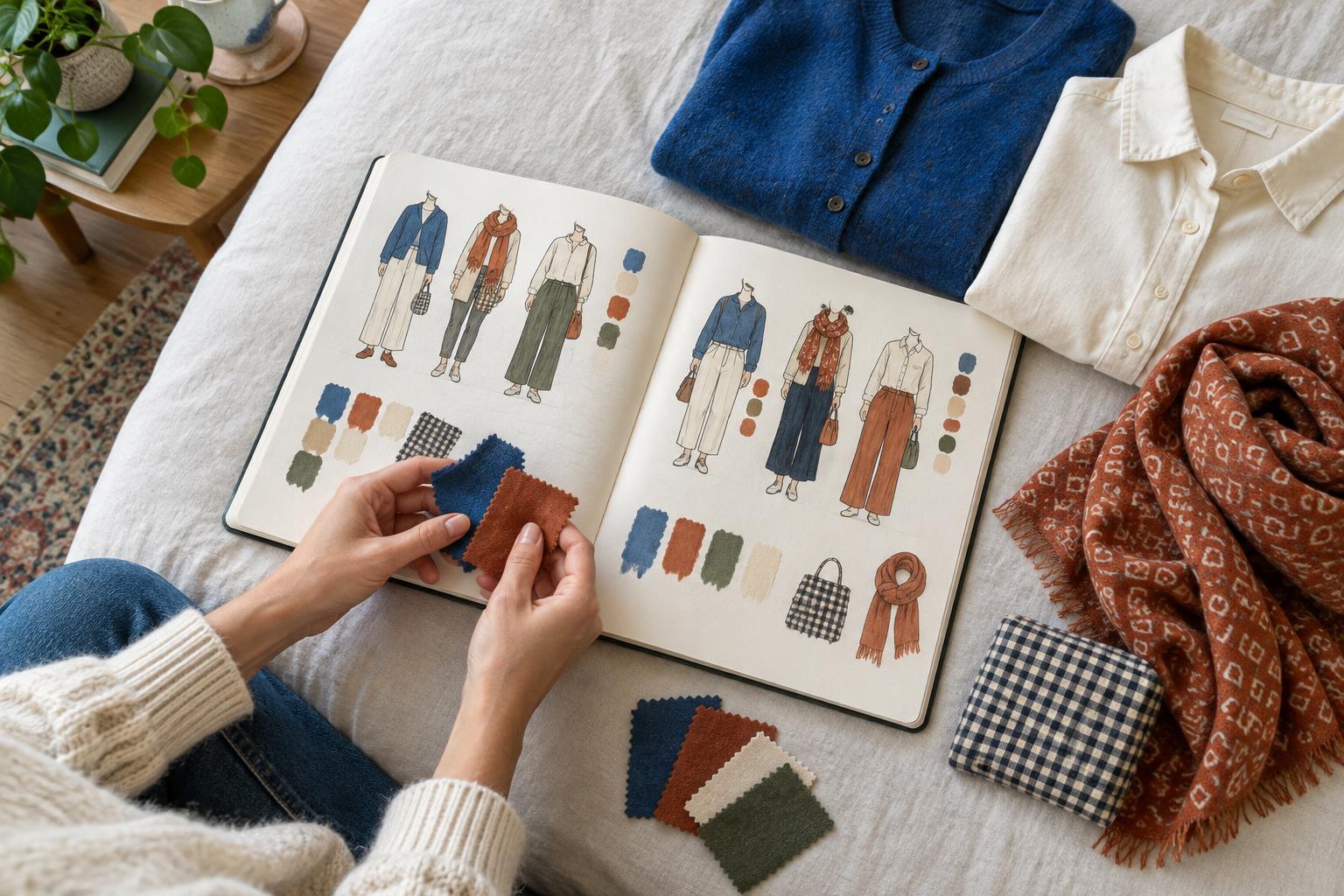
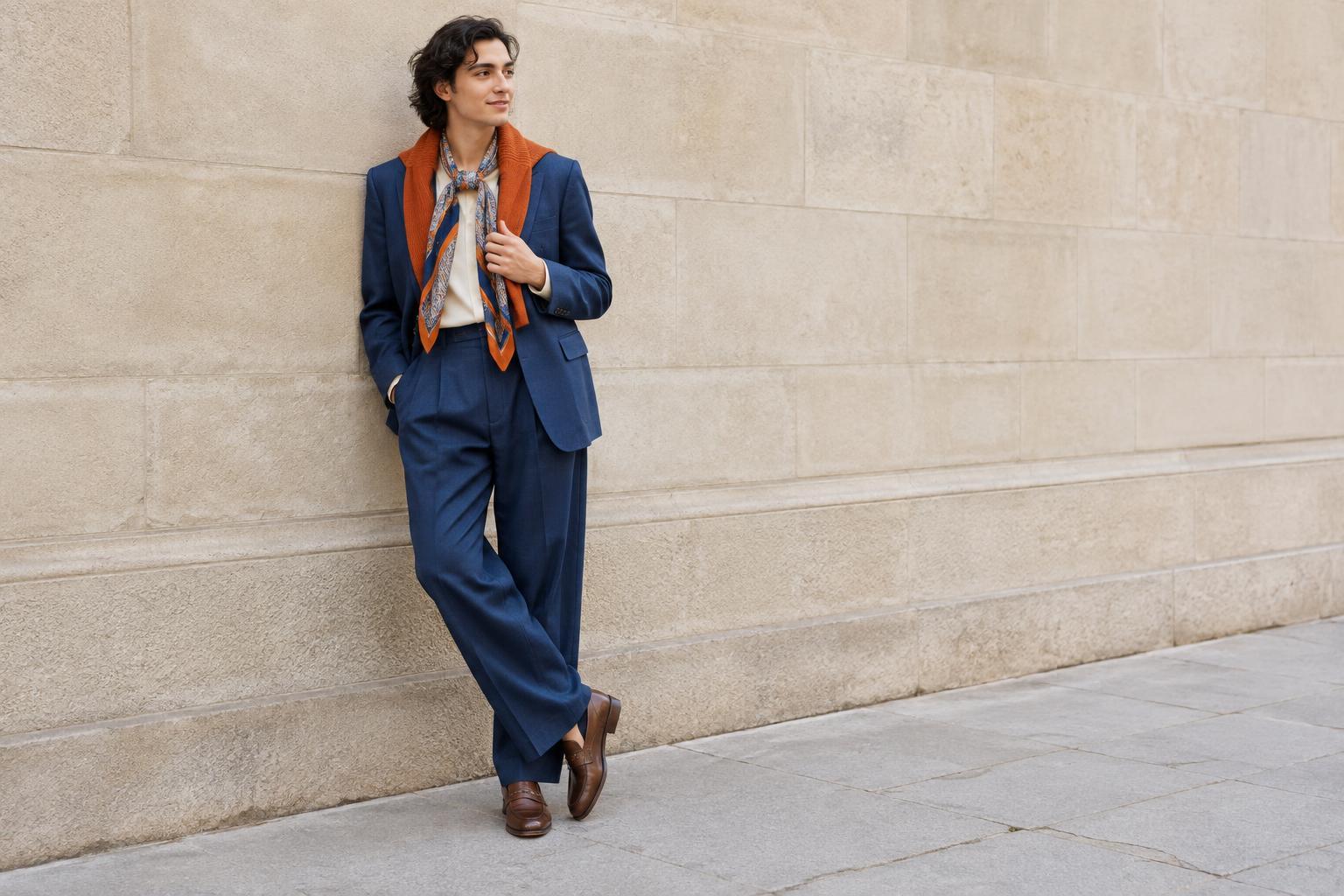
Begin with something you already enjoy wearing. A navy jacket, for example, might lead you toward a rust scarf or a soft orange bag. A burgundy skirt could work with olive knitwear. These are looser interpretations of blue and orange or red and green, yet they still create a sense of contrast. If the pairing feels too bold in your hands, try the pieces on before deciding; colours often look different when separated by your face, skin or a neutral layer.
Adjust intensity to set the mood
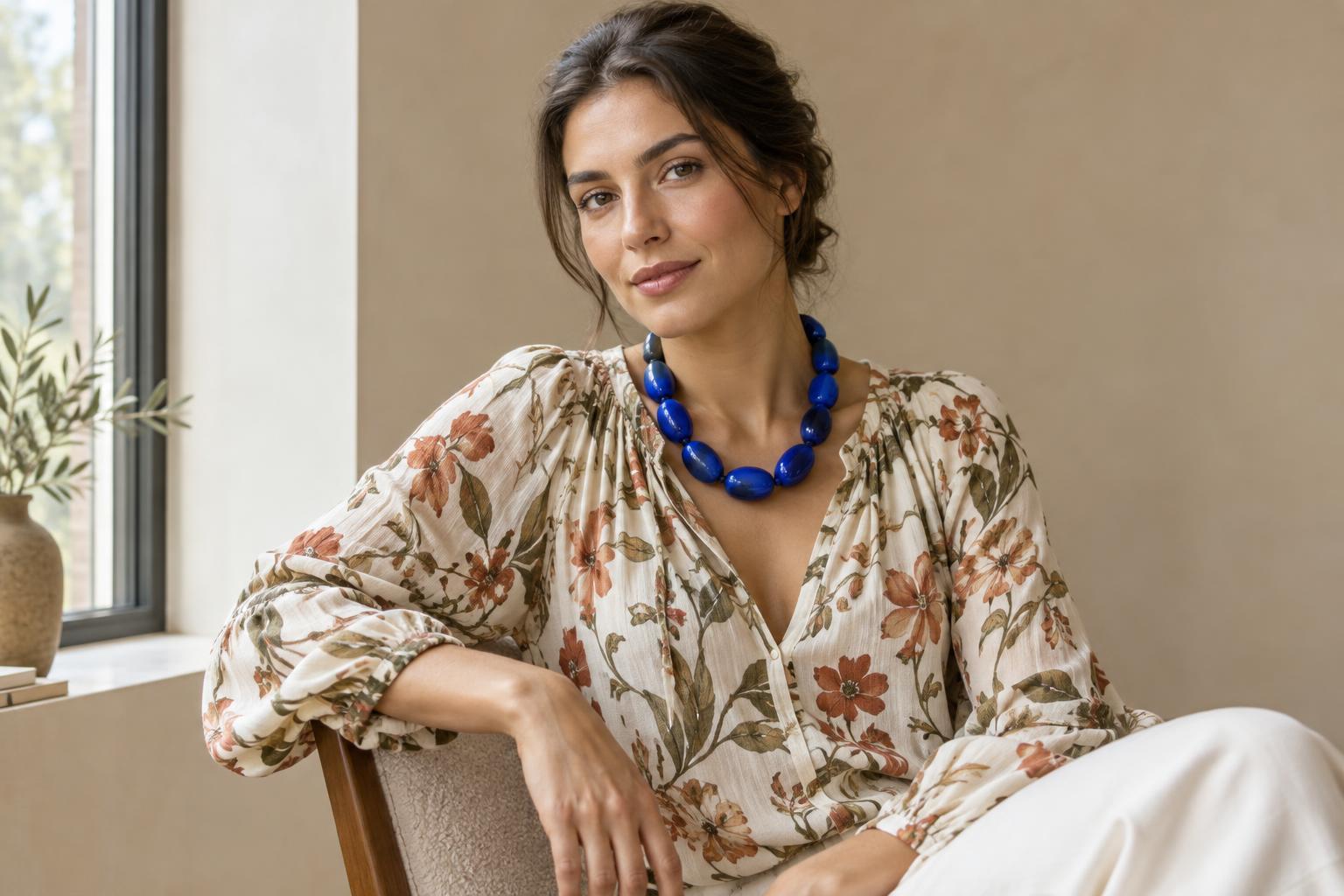
Two saturated colours can create a striking outfit, especially when their shapes are simple. A vivid cobalt top with a clear orange accessory, for instance, puts the colour relationship at the centre of the look. If that is not the effect you want, keep one colour strong and soften the other. Bright blue with faded terracotta feels different from bright blue with bright orange, even though the basic pairing is similar.
You can also make both sides quieter. Dusty lavender with mustard, or forest green with muted brick red, suggests a complementary pairing without demanding attention from across the room. Lightness matters too: a pale yellow shirt beside deep aubergine creates contrast in both hue and depth. When a combination feels off, changing the shade may help more than abandoning the colours altogether.
Give the colours different-sized roles
A simple way to make opposites work together is to let one lead. Wear the colour you want to see most in a coat, dress or pair of trousers, then introduce its partner through a smaller piece: a belt, bag, shoes or patterned scarf. The smaller colour becomes an accent rather than a competitor.
Equal amounts can work when you want a more graphic effect. A green shirt under a red cardigan makes a clear statement, while a green bag with the same cardigan gives the eye more room to rest. Neither approach is inherently better. Ask what you want someone to notice first. If the answer is the whole silhouette, use contrast sparingly. If the answer is the colour pairing itself, give both colours visible space.
Use neutrals and patterns as connectors
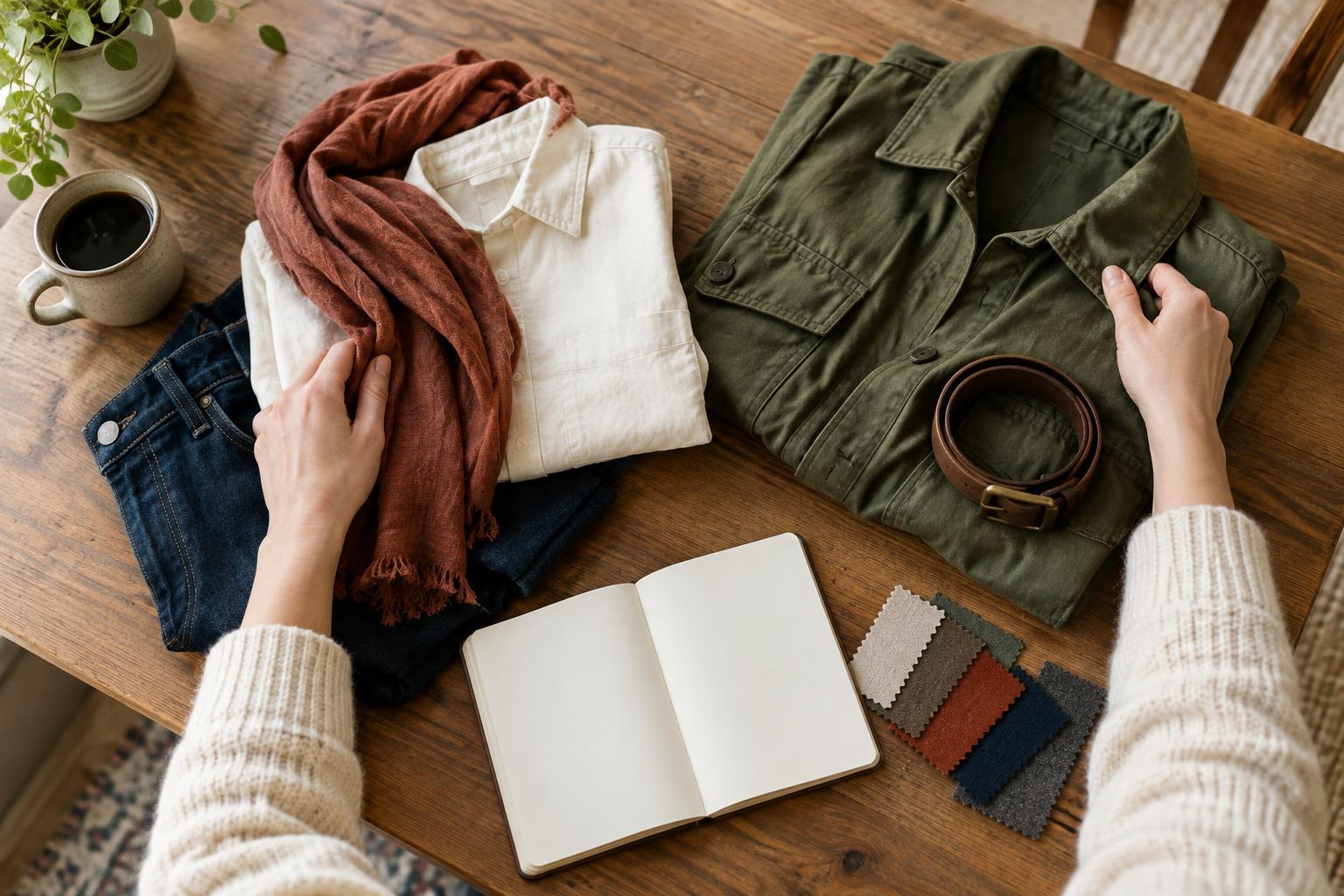
Neutrals can create a pause between complementary colours. A white shirt between a violet jacket and yellow trousers separates two strong areas. Denim, grey, cream, brown and black can play a similar role, though each changes the overall mood. Cream may soften a pairing; black may make it feel sharper. Choose a neutral that belongs with the clothes you already wear, rather than adding one just to follow a formula.
Pattern offers another route. A print that contains small touches of both colours can make an accent feel intentional: think of a blue-and-rust scarf with a mostly blue outfit, finished with rust-coloured shoes. You do not need an exact match. Repeating a colour family is often enough to connect the pieces. If the print is busy, keep the surrounding shapes uncomplicated so the outfit has a clear focal point.
Try a small outfit experiment
Choose one complementary pair and pull out every item you own in its general colour families. Include pale, dark and muted versions. Build three outfits: one with a tiny accent, one with a larger secondary colour, and one that gives both colours similar attention. If you like taking outfit photos, compare them side by side. Notice where your eye goes first and which version feels most like you.
Finally, try changing just one variable. Swap a bright accessory for a muted one, add a neutral layer or move the accent from your shoes to somewhere near your face. This makes it easier to see why a combination works for you. Complementary colours are most useful as a tool for choice: they can help you express playfulness, clarity or quiet contrast, depending on how you wear them.