Think of a dress code as a starting point
A personal dress code is not a list of things you are forbidden to wear. It is a short set of choices that helps you recognize an outfit as yours. Perhaps you like clean shapes with one surprising accessory, or soft layers interrupted by a strong colour. These preferences can give you a starting point on mornings when you do not want to invent an outfit from scratch.
The key is to describe what you want your clothes to do rather than what they must always look like. “I want to feel comfortable, intentional, and a little curious” leaves more room than “I only wear black trousers and white shirts.” A useful dress code makes ordinary decisions simpler while keeping experimentation possible. If it starts to feel like a uniform you did not choose, it may be too strict.
Find the details you return to
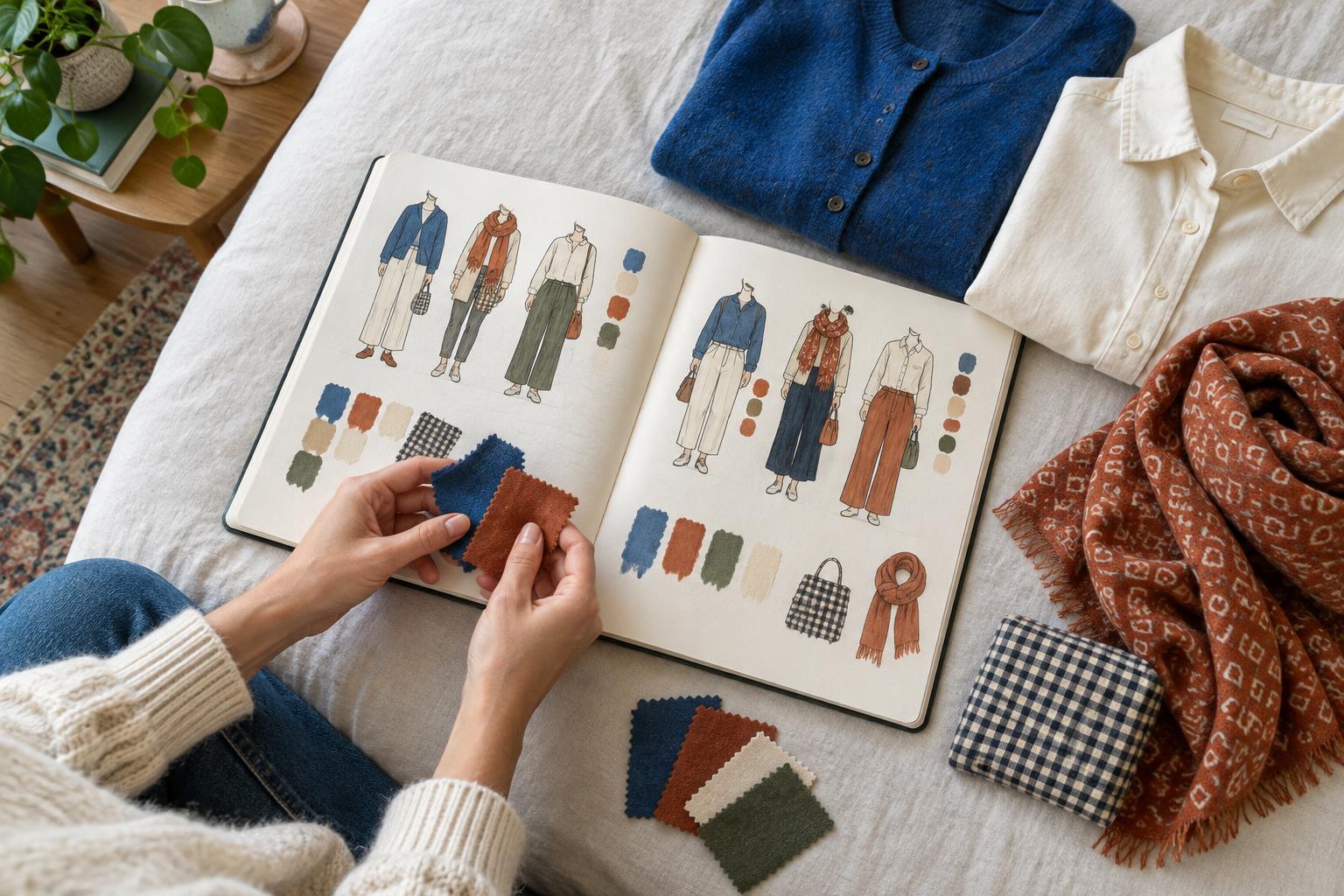
Begin with outfits you have actually enjoyed wearing. Choose five, including everyday looks rather than only outfits for special occasions. For each one, note the shape, colours, textures, and details that made it work for you. Also note how you felt and what you were doing. An outfit you loved for an afternoon walk may offer a different lesson from one that helped you feel at ease at a gathering.
Look for repeated decisions, not identical garments. You might repeatedly balance a loose piece with a more defined one, wear quiet colours near your face, or add something handmade to an otherwise simple look. These are potential style anchors: familiar choices that can travel between outfits. Pick two or three that seem useful in different settings. You do not need to include a detail merely because you own it or because it appears often in your wardrobe.
If you struggle to see a pattern, try describing your favourite outfits without naming the clothes. Words such as “layered,” “graphic,” “gentle,” or “unfussy” can reveal a preference that works across seasons and budgets.
Turn preferences into flexible guidelines
Write your dress code as three to five short statements you can act on. For example: “Start with an easy shape.” “Include one detail with a story.” “Use contrast, but keep it comfortable.” These are more adaptable than a fixed shopping list. An easy shape could be a relaxed shirt one day and a roomy dress another; a detail with a story might be a repaired bag, a gift, or a pin you chose because it makes you smile.
Separate your anchors from your practical needs. You may need shoes you can walk in, layers you can remove, or clothes suitable for particular settings. Those requirements deserve space in the dress code, but they do not have to define your whole identity. Try writing a simple outfit formula that accommodates both: “comfortable base + familiar shape + one expressive detail.” Use it as a prompt, not a rule.
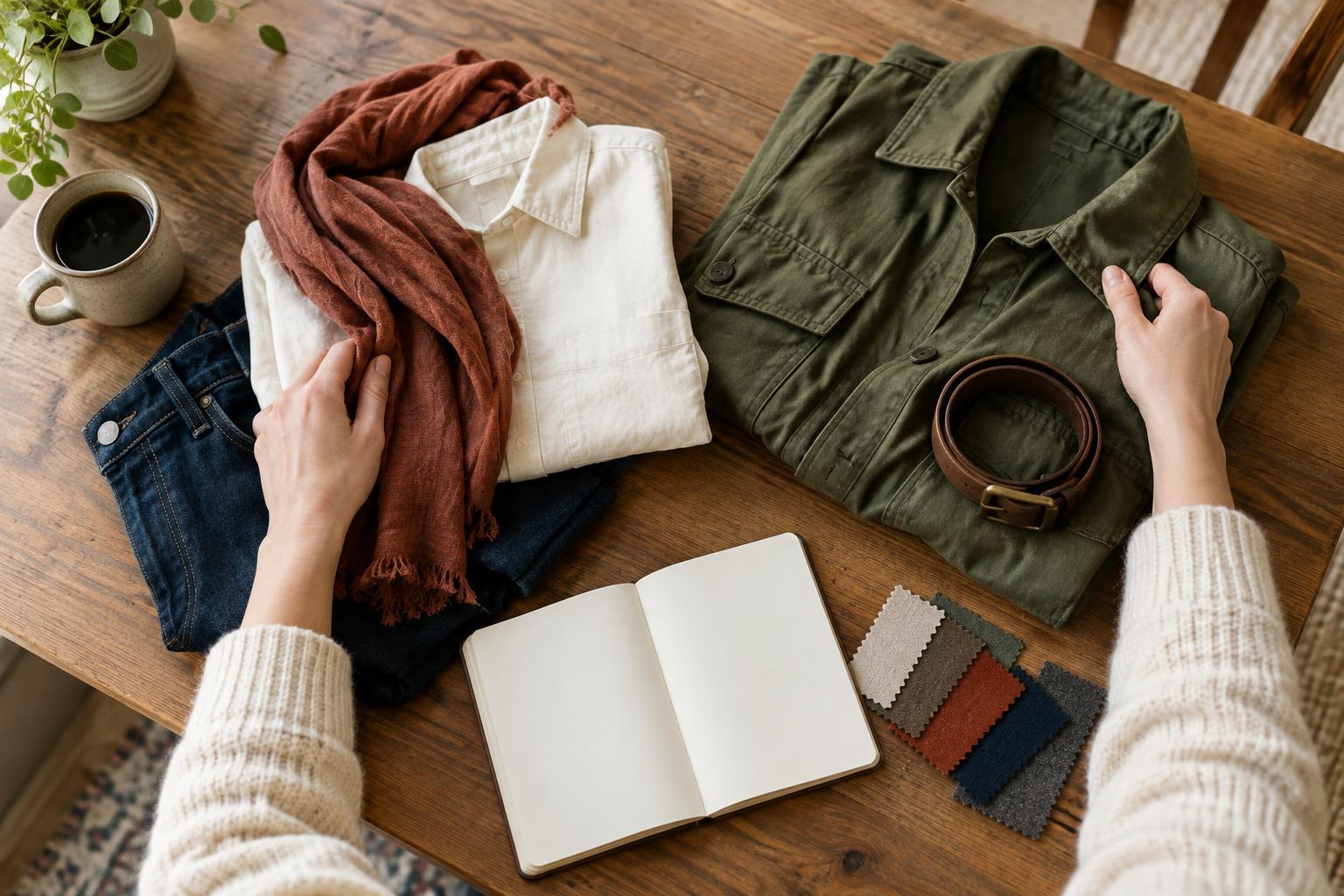
Test your guidelines against clothes you already own. Can you make three distinct outfits without buying anything? If every version looks nearly identical, loosen one statement. If the guidelines are so broad that they offer no help, make one more specific.
Give play a place in the outfit
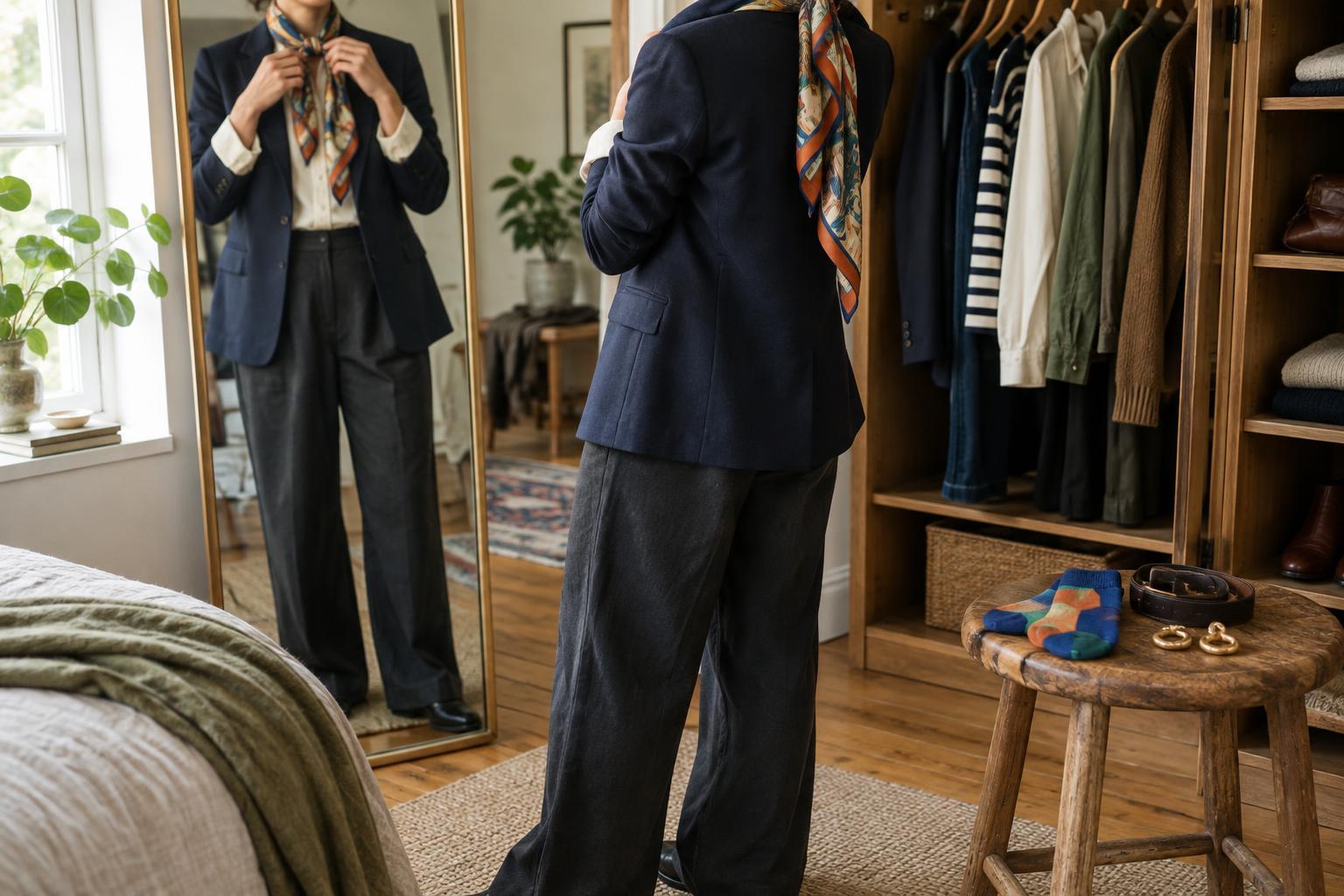
Play is easier when it has a low-stakes entry point. Keep most of an outfit familiar and change one element: a patterned sock, an unexpected colour pairing, a different way of tying a scarf, or jewellery worn with clothes you usually consider casual. The familiar pieces provide continuity, while the changed detail lets you learn what you enjoy.
You can also set yourself a small challenge using what you have. Wear one item in three different contexts, combine two colours you have never paired, or build an outfit around an accessory instead of choosing it last. Take a quick photo if it helps you remember the result. Ask what felt interesting and what felt awkward without treating either answer as a verdict on your taste. Some experiments work better as inspiration for a future outfit than as looks you want to repeat.
Leave room for days when you do not want to experiment. A dress code that supports your life should work on quiet, busy, and playful days alike.
Revise the code when your life changes
Your personal dress code is a working note, not a permanent declaration. Revisit it when getting dressed starts to feel difficult or when your routine, comfort needs, or interests change. Notice which guidelines still help and which ones you follow only out of habit. Keeping an anchor may feel grounding; letting one go may make space for a version of yourself you are ready to explore.
The goal is not to make every outfit instantly recognizable to someone else. It is to give yourself a useful language for choosing clothes: enough consistency to feel at home in them, and enough freedom to remain curious.