Start with scale, not rules
Jewellery changes where the eye lands. A slim ring might add a glint that becomes noticeable only when you move your hand. A wide cuff can become one of the first things someone sees. Neither effect is inherently more polished or expressive. The difference lies in scale: how much space a piece occupies, how clearly its shape reads and how strongly it contrasts with what surrounds it.
Delicate and chunky are useful descriptions, but they are not fixed categories. A small pendant can look prominent against a plain, dark top, while a substantial necklace may blend into a patterned outfit. Finish matters, too. A reflective surface can draw attention even when the piece is small; a matte or fabric-covered piece may feel quieter despite its size. Looking at jewellery in the context of a complete outfit tells you more than looking at it on its own.
What delicate jewellery brings to an outfit
Fine chains, narrow bangles and small studs often create a close-up effect. From a distance, they may read as a subtle shimmer or a line near the face or wrist. Up close, their shapes and details become clearer. This can make them useful when you want clothing, colour or an existing accessory to remain the main focus while still adding a finishing detail.
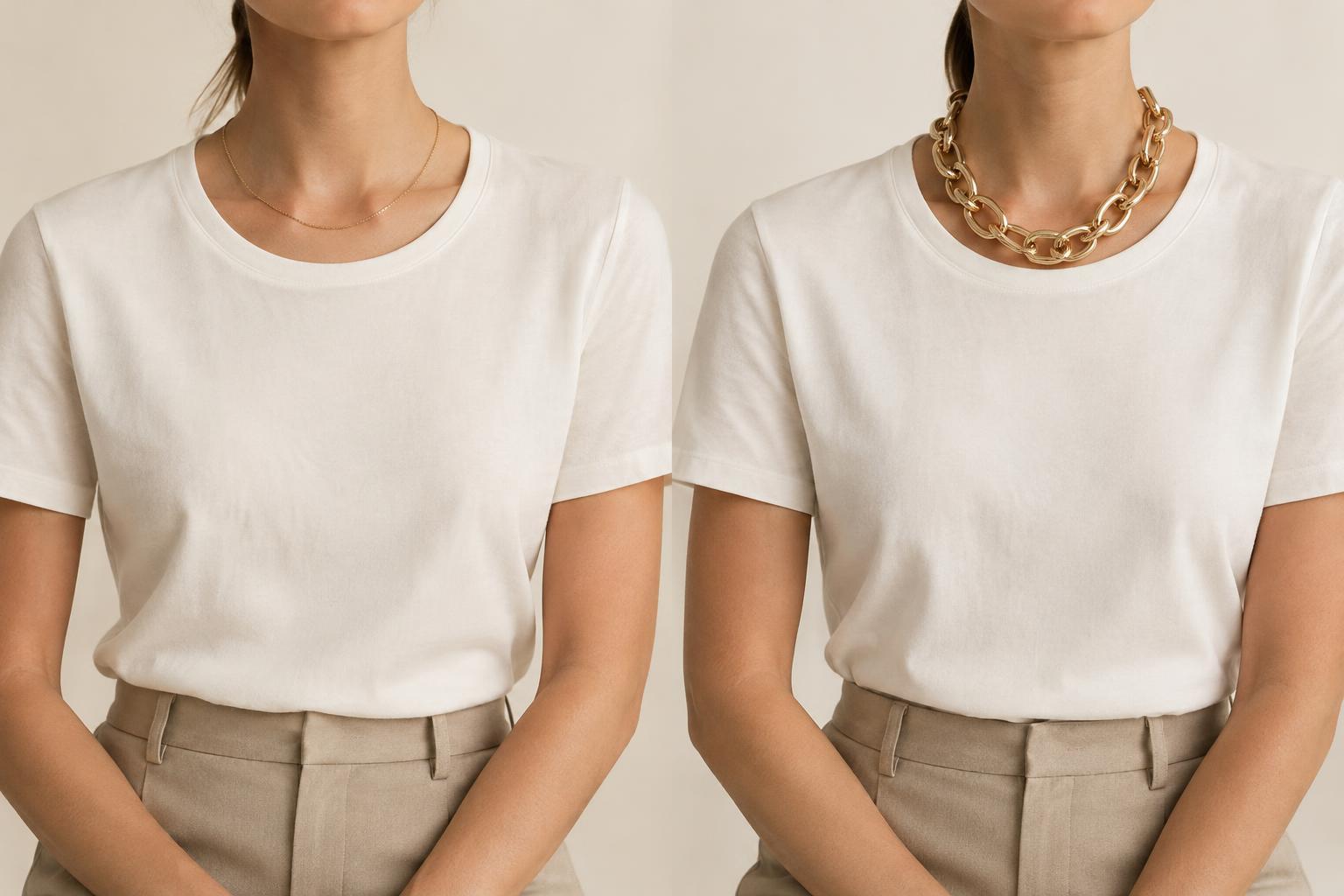
Delicate pieces can also introduce repetition without taking over. Two thin rings echoing the curve of a small hoop, for example, can connect separate parts of an outfit. If you want the jewellery to register more clearly, consider contrast rather than adding many pieces: a fine chain over a solid-colour neckline may be easier to see than the same chain over a busy print. Layering several fine pieces can create a stronger effect, though their individual details may become less distinct.
What chunky jewellery brings to an outfit
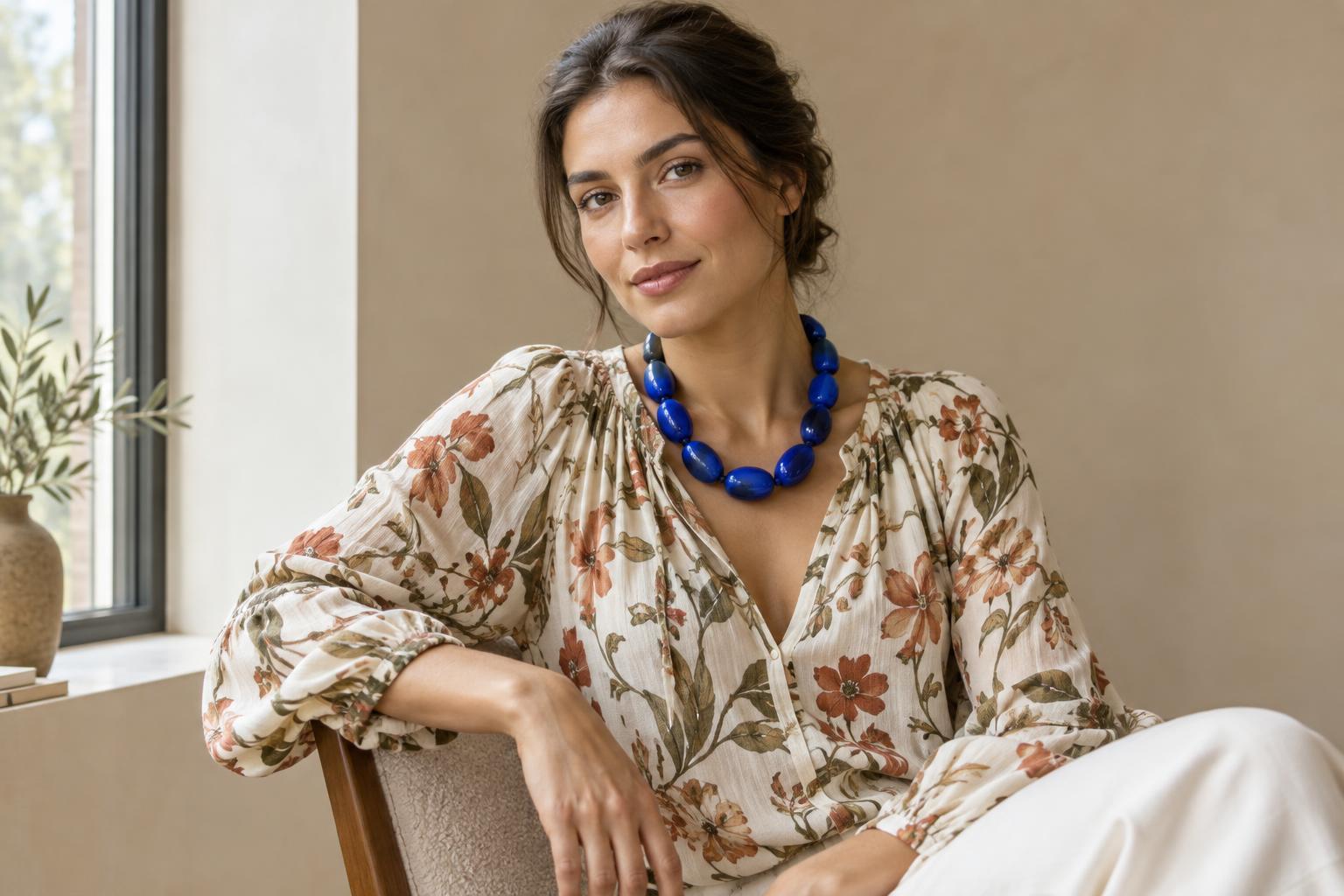
Chunky jewellery tends to make shape visible sooner. Broad links, oversized beads or a thick ring can create a focal point even with a simple shirt. These pieces can change the perceived character of familiar clothes: a plain top might feel more graphic with a sculptural necklace, while a soft knit might gain a sharper edge from a solid metal cuff. The effect depends on the piece’s shape, material and placement, not just its size.
A larger piece also creates a clearer relationship with the lines of your clothes. A short, bold necklace sits near the neckline and may draw attention toward the face. Long, substantial earrings add vertical lines beside it. A broad bracelet brings focus to the wrist and sleeve. If several areas compete for attention, try removing one piece and looking again. You may prefer the energy of multiple focal points, or find that one gives each detail more room to be seen.
Use placement and contrast to shape the effect
To compare pieces fairly, keep the outfit the same and change only the jewellery. Notice where your eye goes first. Does the jewellery connect with the neckline, repeat a colour or interrupt the outfit’s lines? Try viewing the result from a few steps away as well as close up. A piece that looks dominant in your hand may appear balanced once it is worn with a jacket or a patterned dress.
You can also work with contrast deliberately. Pair a fine chain with a structured jacket for a small point of softness, or place a chunky pendant over a simple, fluid top for a stronger outline. Matching every detail is not necessary. A contrast in scale or texture can give an outfit interest, while repeating a shape or material can make that contrast feel intentional.
Find your preferred balance with a quick exercise
Choose one outfit you wear often and photograph it three ways: with no jewellery, with one delicate piece and with one chunky piece in roughly the same area. Keep the lighting, pose and clothing as consistent as you can. Look at the images side by side and ask what changed. Which version draws attention to the part of the outfit you wanted to emphasize? Which one feels most like you?
Then try a fourth version that combines scales, such as small earrings with a bold ring. Mixing delicate and chunky jewellery can create a useful rhythm: one piece establishes a focal point, while the other adds a quieter detail. Treat the photographs as a way to notice your preferences, not as a test with a correct answer. The most useful choice is the one that helps your outfit communicate what you want it to say.