Notice the gap between memory and daily life
Some clothes feel like evidence of a former self: the jacket you wore when you first felt confident, the shoes that belonged to a different routine, or the bright colours you once reached for without thinking. Keeping them is not a mistake. But if getting dressed regularly feels like choosing between nostalgia and comfort, it may be time to ask what your wardrobe is doing for you now.
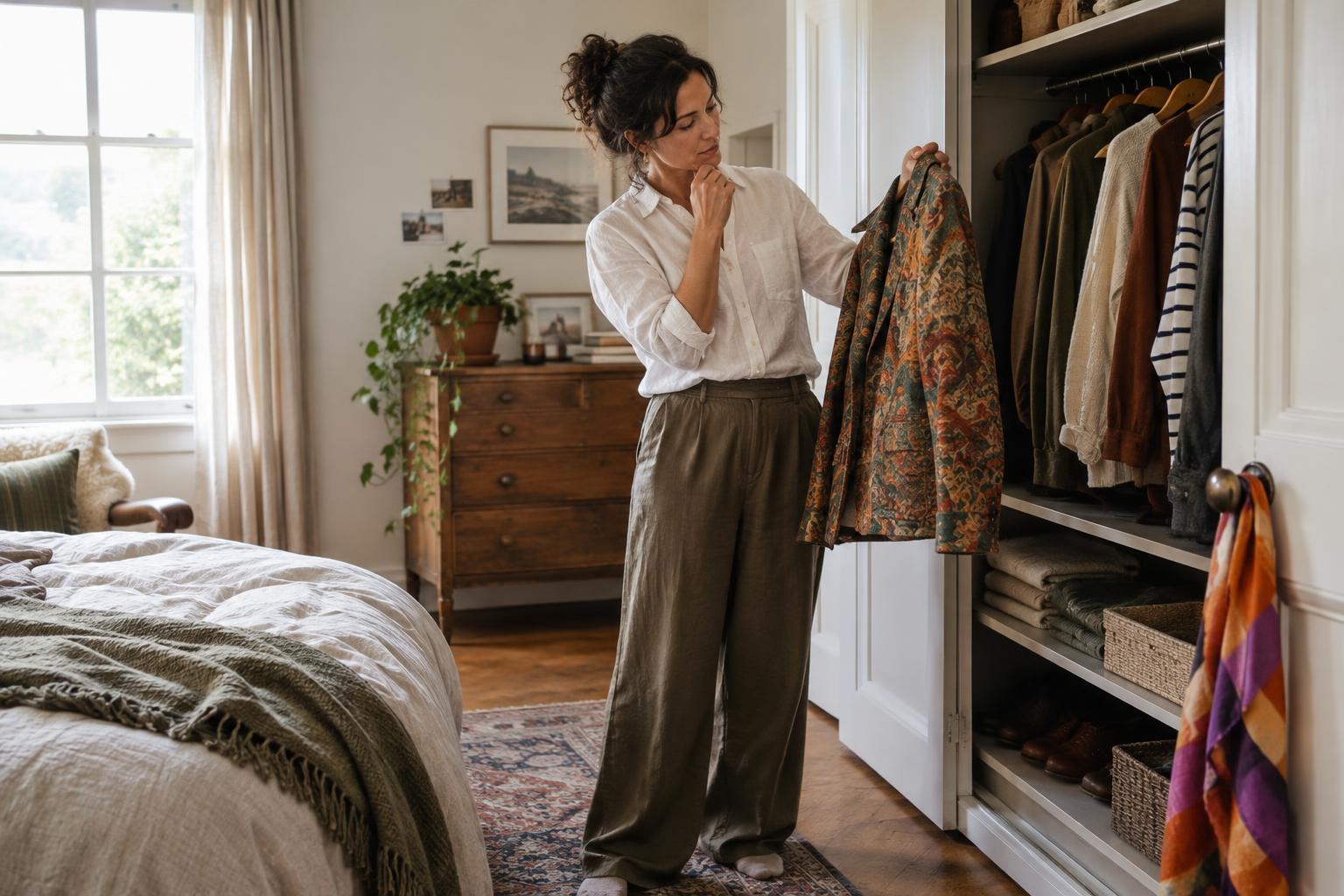
Start with observation rather than a clear-out. For a week, notice which pieces you wear willingly, which you put on only because they are there, and which you admire but never choose. Pay attention to the reason. A garment might be uncomfortable, difficult to combine, unsuited to your day, or simply disconnected from the way you want to present yourself. These are useful clues, not judgments about your past taste.
Describe your present self in concrete terms
An identity statement such as “I want to look more like myself” can be hard to translate into an outfit. Make it specific by finishing three sentences: “My days usually involve…,” “I want my clothes to help me feel…,” and “I want people to notice….” Your answers might point toward clothes that are easy to move in, a calmer colour palette, or one distinctive detail that starts conversations. The goal is not to invent a fixed label for yourself. It is to name what matters in your current life.
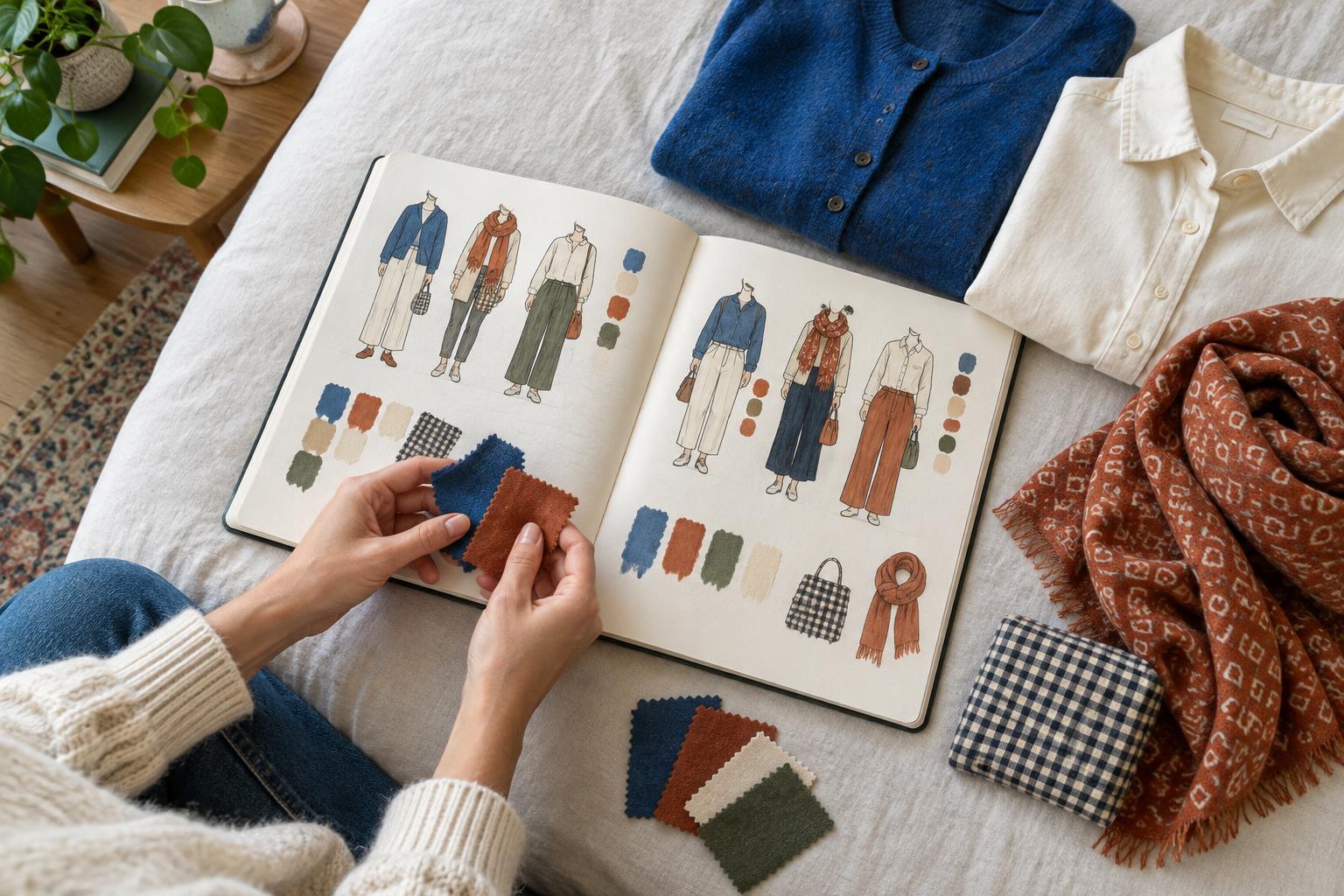
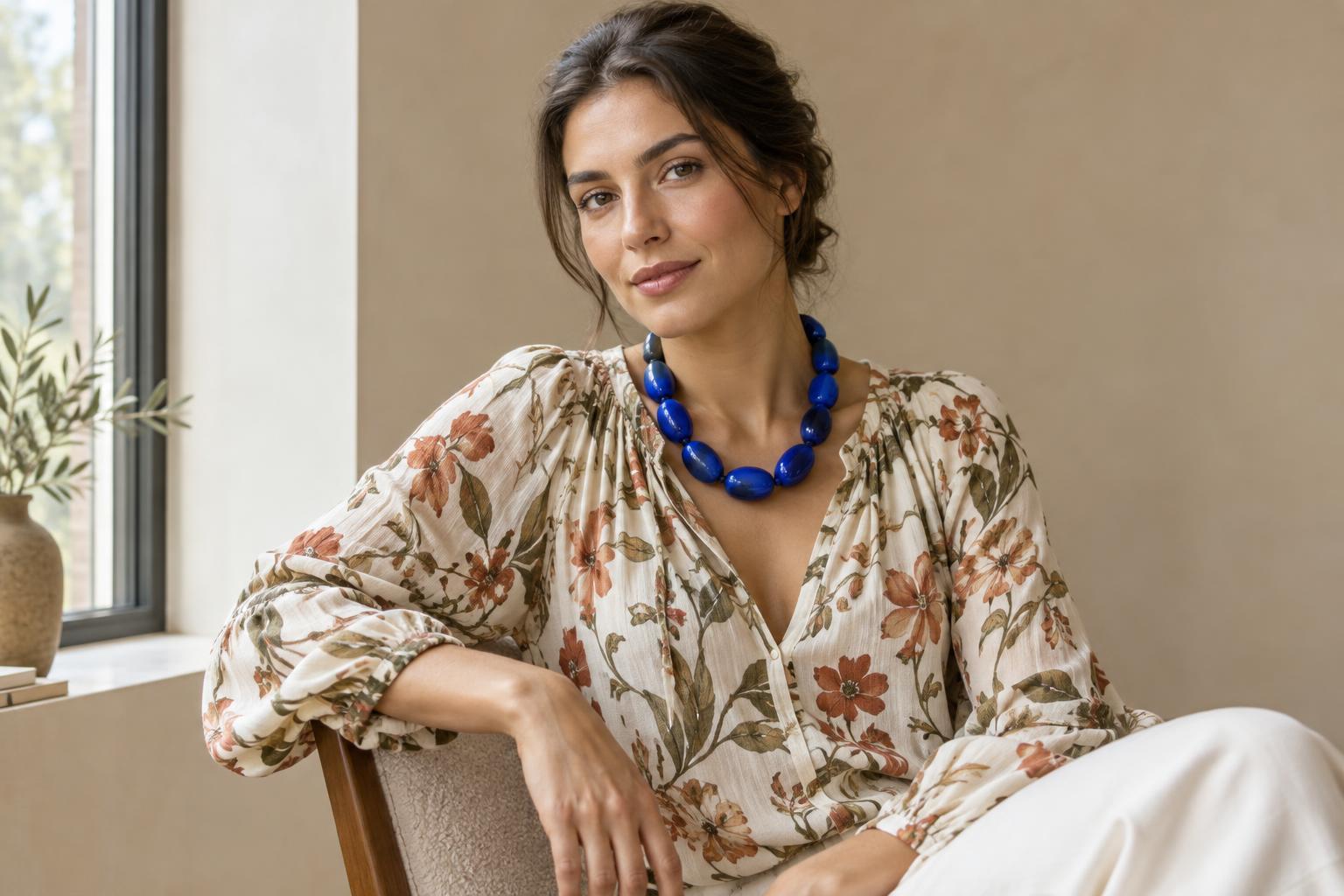
Then choose two or three visual cues to explore. If you want to feel grounded, you might try familiar shapes and textures with a little weight or structure. If you want to express playfulness, you could experiment with unexpected colour pairings or a patterned accessory. No colour, silhouette, or fabric has a universal meaning; what matters is the association it holds for you and whether it works in the places you actually go.
Give old favourites a new role
Changing your style does not require you to discard everything linked to an earlier chapter. Take one piece you still care about and try it in an outfit built for today. A formal shirt might feel easier with relaxed trousers. A vivid scarf might provide enough colour when an entirely bright outfit no longer appeals. Sometimes changing the surrounding pieces lets an old favourite express something new.
Other items may be meaningful without needing a place in your regular rotation. You can keep a small number as keepsakes, store them separately from everyday clothes, or let them go when you are ready. Separating sentimental value from practical use makes the morning decision simpler. It also leaves room to appreciate who you were without feeling obliged to dress as that person.
Build outfits around your actual routines
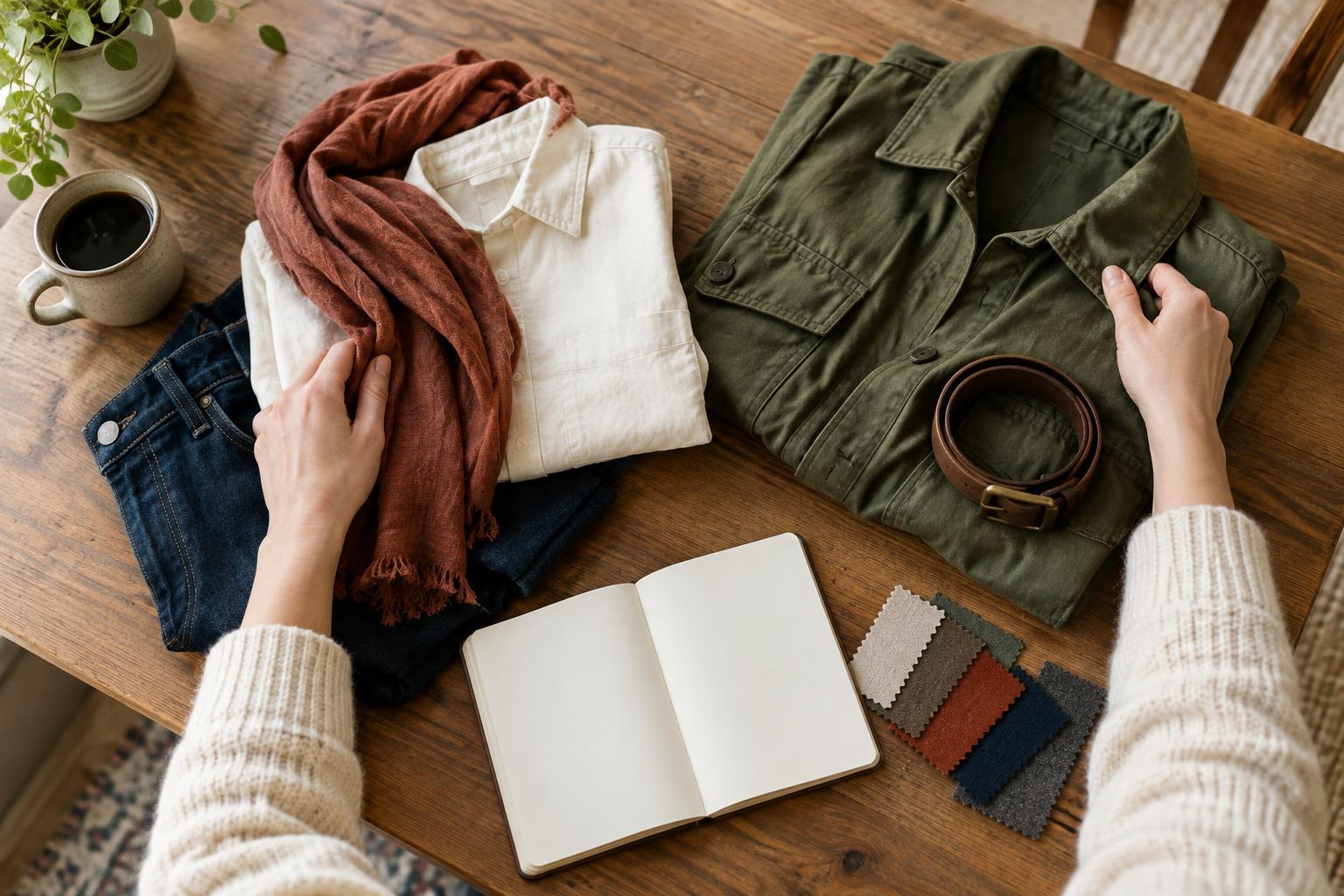
Before buying anything, assemble three outfits for situations you encounter often. You might choose a workday, an unplanned errand, and a gathering where you want to feel especially present. Use what you own, and take a photo of each outfit if that helps you see it as a whole. Ask whether you can sit, walk, carry what you need, and adjust to the setting without constantly thinking about your clothes.
Look for repeated obstacles. Perhaps every outfit you like depends on the same comfortable shoes, or a favourite accessory has nothing in your wardrobe that supports it. These patterns offer a more useful shopping guide than a vague ambition to reinvent yourself. If you decide to add something, choose a piece that solves a specific problem and works with several items already in use. A satisfying change can be as small as altering a hem, trying a different combination, or moving an accessory into regular rotation.
Allow your style to remain unfinished
You do not need a dramatic before-and-after moment. Personal style can shift gradually as your responsibilities, preferences, body, or sense of self changes. An outfit that fits you now does not have to explain your entire history or predict who you will become. It only needs to support the day in front of you and feel like a choice you can stand behind.
When an experiment does not work, describe what felt off instead of declaring the whole direction wrong. Was the colour unfamiliar, the fit distracting, or the combination too far from what you normally wear? Keep the part you liked and change one element next time. Dressing for who you are now is less about arriving at a final look than learning to pay attention—and giving your wardrobe permission to change along with you.