Start with your days, not an ideal wardrobe
A list of supposed wardrobe essentials can be tempting, but it may have little to do with your routine. Someone who walks to work, spends weekends outdoors and rarely attends formal events needs different clothes from someone whose days look different. A useful wardrobe gap is not an item you lack in the abstract. It is a repeated difficulty getting dressed for something you actually do.
Before reviewing your clothes, sketch out the kinds of days you dress for: work, errands, time at home, social plans or anything else that comes up regularly. Include how you want to feel as well as what you need to do. Perhaps you want ease and movement on busy days, but still enjoy a bold colour or distinctive shape. This gives your wear log a purpose: finding where your clothes support your life and where they get in the way.
Keep a small, honest wear log
For a few weeks, record what you wear in whichever format is easiest: a note on your phone, a paper list or quick outfit photos kept for yourself. Write down the main pieces, then add a few words about the occasion and how the outfit worked. Did you feel comfortable? Did you change before leaving? Was there a piece you wished you had reached for? The log does not need to be complete or polished to be useful.
Pay attention to repeats without judging them. Wearing the same trousers often may mean they fit well and suit several parts of your life; it does not automatically mean you need more trousers. Likewise, a garment left unworn is not necessarily a mistake. It may belong to another season, need a repair or be waiting for a pairing you have not tried. Record those possibilities rather than forcing an immediate decision.
If taking photos helps, keep the process simple. A mirror photo can reveal proportions or colour combinations that are hard to remember later. If photos feel like a chore, skip them. The best tracking method is the one you can use on ordinary mornings, not just when you have time to style an outfit.
Look for friction, not just empty categories
When you review your notes, look for moments when getting dressed stalled. Perhaps you repeatedly chose an outfit you liked, then changed because the shoes were uncomfortable for the walk ahead. Perhaps you own several expressive tops but reach for the same plain one because it works with your available layers. These patterns point to more specific gaps than “I need more clothes.”
Separate each problem from its first apparent solution. If a favourite dress stays in the wardrobe because you cannot wear it comfortably in cooler weather, the answer might be a layer you already own, a different way of styling it or a missing practical piece. If you keep wishing an outfit had more personality, try an accessory, a colour pairing or a change in silhouette before assuming you need a new statement garment.
Notice what is already doing several jobs well. These dependable pieces show you which fits, fabrics and details suit your daily life. They can also help you describe a real gap precisely: “a comfortable layer that works over these two shirts” is more actionable than “a better wardrobe.”
Test the gap with outfits you own
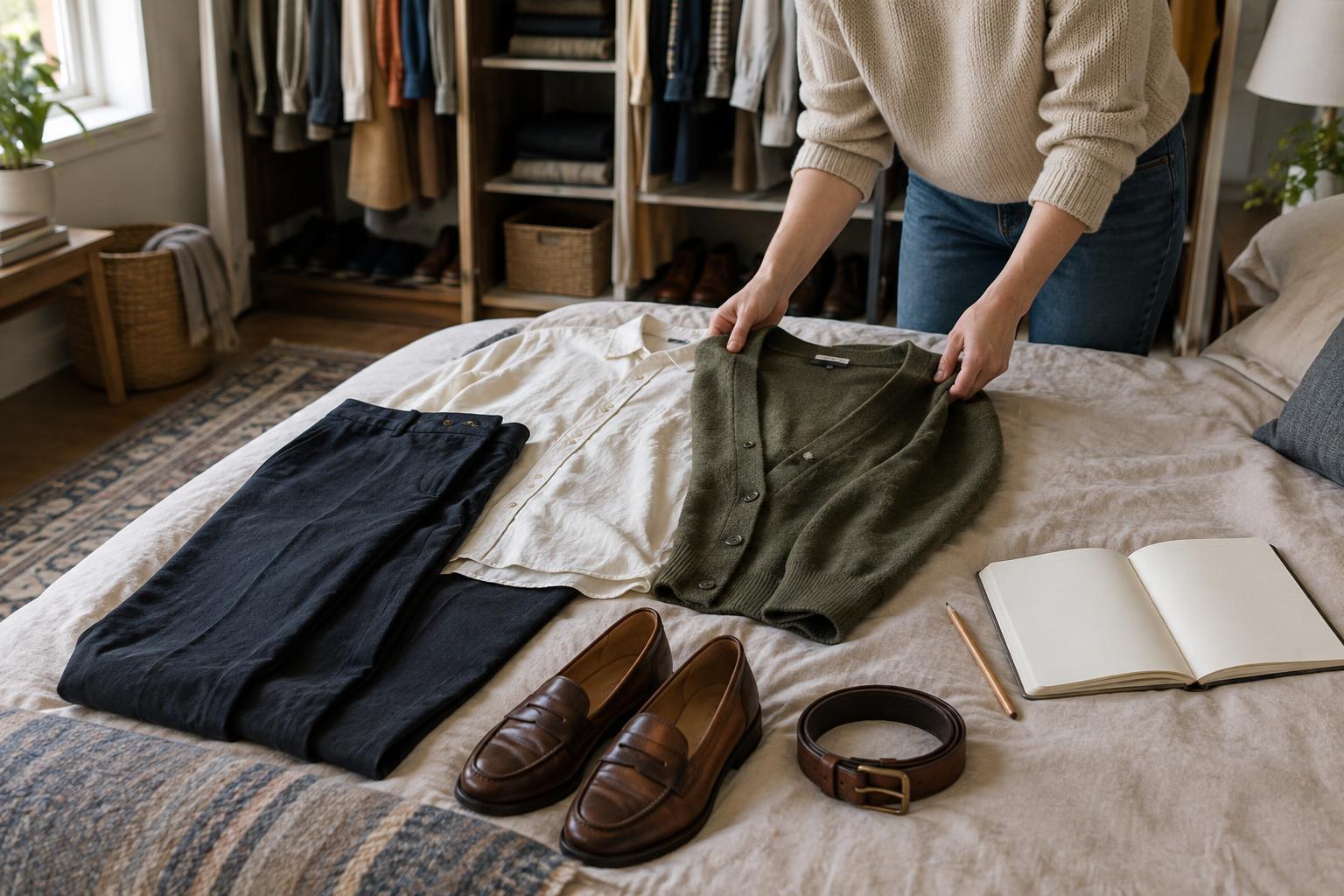
Choose one suspected gap and build two or three outfits around it using your existing clothes. Try on combinations rather than only imagining them. You may find that a tucked shirt changes the balance, a scarf brings together colours you thought clashed, or a different pair of shoes makes a familiar outfit feel like you. Set aside anything that needs a simple repair or adjustment so it does not keep masquerading as a missing item.
If the gap remains, describe the role of the missing piece instead of naming a product straight away. What must it work with? Where would you wear it? What comfort or care requirements matter? What would make it feel like your style? This short description helps distinguish a useful addition from something appealing on its own but difficult to wear with the rest of your wardrobe.
Keep the list flexible
Your wear log is a snapshot, not a verdict. Weather, changing routines and special occasions can all affect what appears in it. Review your notes again when your days change, and give occasional-use pieces a fair chance before calling them unnecessary. A gap that appears once may not need attention; one that interrupts several outfits is more worth exploring.
You do not have to fill every gap with a purchase. You might restyle a piece, make a repair, borrow something for a rare occasion or decide that an outfit simply does not fit your life now. Tracking what you wear is most useful when it replaces vague dissatisfaction with clear choices. It helps you build a wardrobe around the person getting dressed each morning, while leaving room for that person to experiment.


