Start with the outline, not the size label
A silhouette is the overall shape your clothes create when you look at them from a short distance. A fitted shirt follows the lines of the torso more closely; a relaxed shirt leaves more space between fabric and body. Neither is automatically neater, more flattering, or more expressive. The useful question is what shape helps you communicate what you want to communicate.
Imagine the same trousers worn with two different tops. A close-fitting knit might create a defined outline, while a loose overshirt might make the outfit feel open and easy. The trousers have not changed, but the outfit’s visual emphasis has. Before deciding whether a piece works for you, consider its role in the whole outline rather than judging its size label alone.
Notice what each shape can express
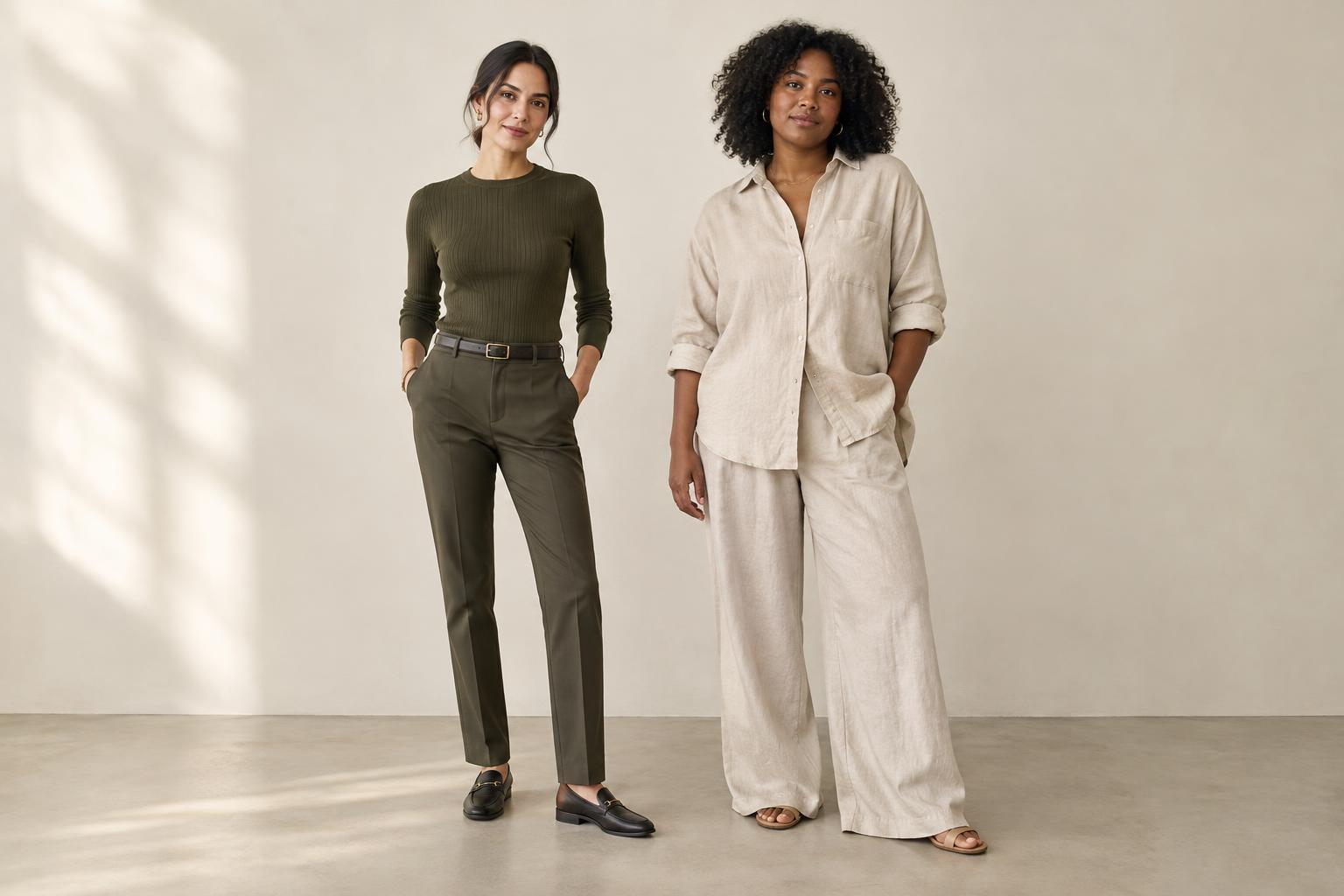
Fitted pieces can bring clarity to an outfit. They show where one garment ends and another begins, which can help a bold print, unusual collar, or statement accessory stand out. Relaxed pieces can suggest movement and ease. They also give fabric room to drape, making folds and volume part of the visual story. These are possibilities, not rules: a fitted look can be playful, and a relaxed one can be precise.
Fabric changes the effect. A soft, loose shirt may fall close to the body in places, while a structured jacket can hold a wide shape even when you stand still. Colour matters too. A single colour across fitted and relaxed pieces can make their shapes feel connected; contrasting colours can draw attention to the point where the outline changes. If an outfit seems different from what you imagined, look at fabric and colour as well as fit.
Combine fitted and relaxed pieces with intention
You do not have to choose one silhouette for an entire outfit. Pairing a fitted top with wider trousers can make the lower half the focus. A roomy shirt over narrower trousers shifts attention toward the shoulders and sleeves. You can also build volume in one area with a long coat, full skirt, or broad-leg trousers, then let the rest of the outfit provide a quieter outline.
Try changing just one element at a time. With the same trousers and shoes, compare a fitted top, a relaxed top, and a relaxed top partially tucked in. Notice where your eye goes first and whether the outfit feels balanced in the way you want. “Balanced” does not have to mean symmetrical: an oversized layer or dramatic sleeve may be exactly the point. The aim is to make the contrast feel chosen rather than accidental.
Check how the shape works in motion
A silhouette is not only a still image. Sit down, reach forward, walk, and put on any outer layer you would usually wear. A fitted garment should give you the freedom you need without constant adjustment; a relaxed garment should have a shape you enjoy rather than simply extra fabric everywhere. Pay attention to sleeve length, shoulder placement, hems, and how layers move against one another.
Comfort is personal and depends on the activity. You might like a close outline for an evening out but prefer more room during a day of errands. Or you might feel most at ease in structured, fitted layers throughout the day. Keeping more than one silhouette in your wardrobe is not a failure to define your style. It gives you different ways to express it.
Make a small silhouette study
Choose one outfit you already wear and take three photos from roughly the same position: one with its usual shape, one with a more fitted layer, and one with a more relaxed layer. If you prefer, use a mirror instead of photos. Look at the overall outline before inspecting individual details. Which version feels calm, energetic, polished, playful, or like another quality you want to convey?
Write down one thing you like about each version and one thing you would change. Your notes might be as simple as “I like the space around the sleeves” or “I want a clearer line at the waist.” Use those observations the next time you get dressed or consider a new piece. The most useful silhouette is not the one you are told to wear; it is the one that supports both your movement and your intended expression.