Choose the question before the frame
A style photograph does more than record what you wore. It directs attention. A full-length image can show how a coat changes your silhouette; a detail shot can show why you added a bright scarf; a close-up can make the scarf’s weave the subject. None is automatically the best image. Each answers a different question about your choices.
Before taking a photo, finish this sentence: “I want someone to notice…” Your answer might be the balance between loose and fitted pieces, an unexpected colour pairing, or the wear on a favourite accessory. Use that answer to choose where the camera goes. If you want to tell a fuller story, take all three kinds of shot rather than expecting one frame to do everything.
Full-length shots reveal shape and relationships
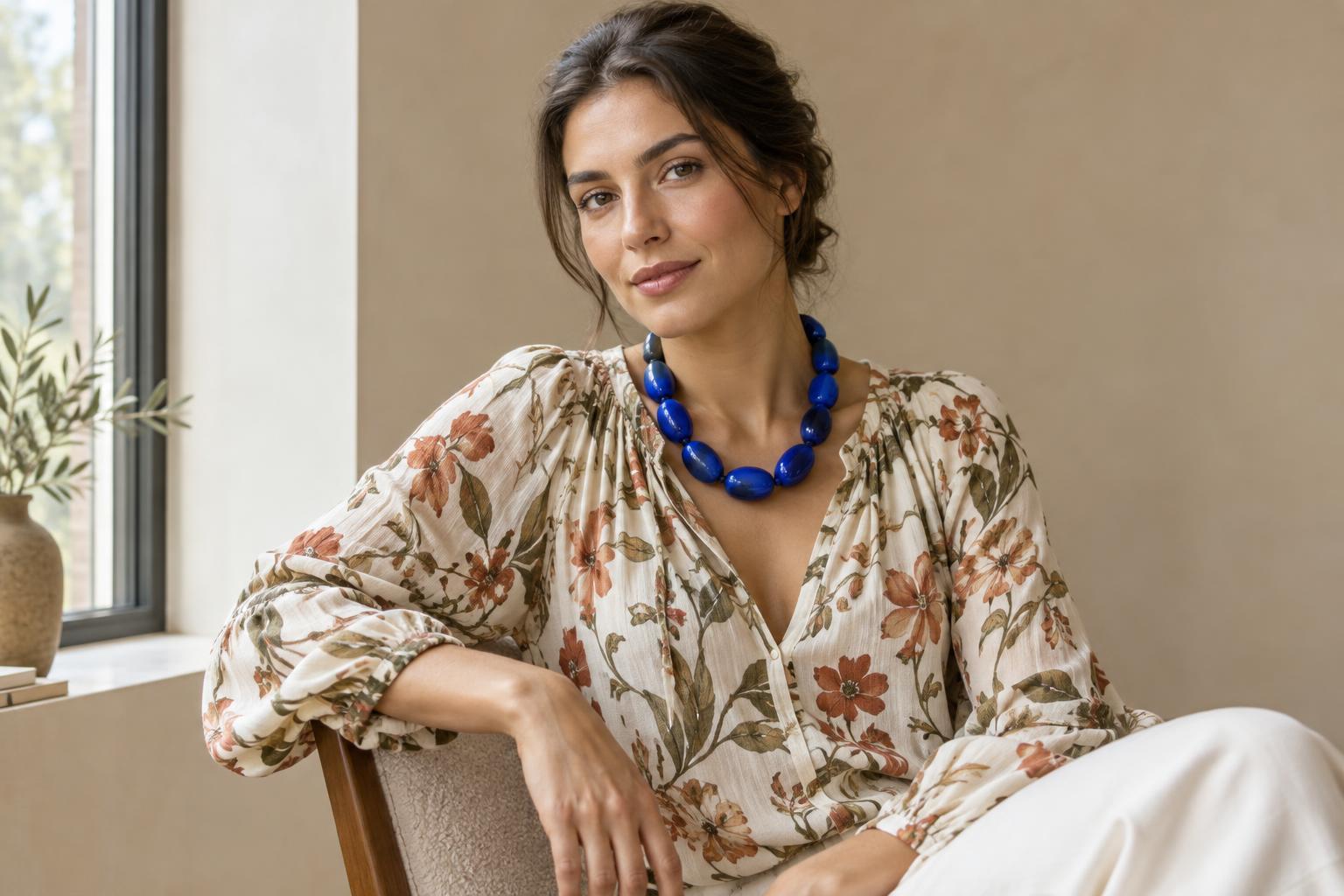
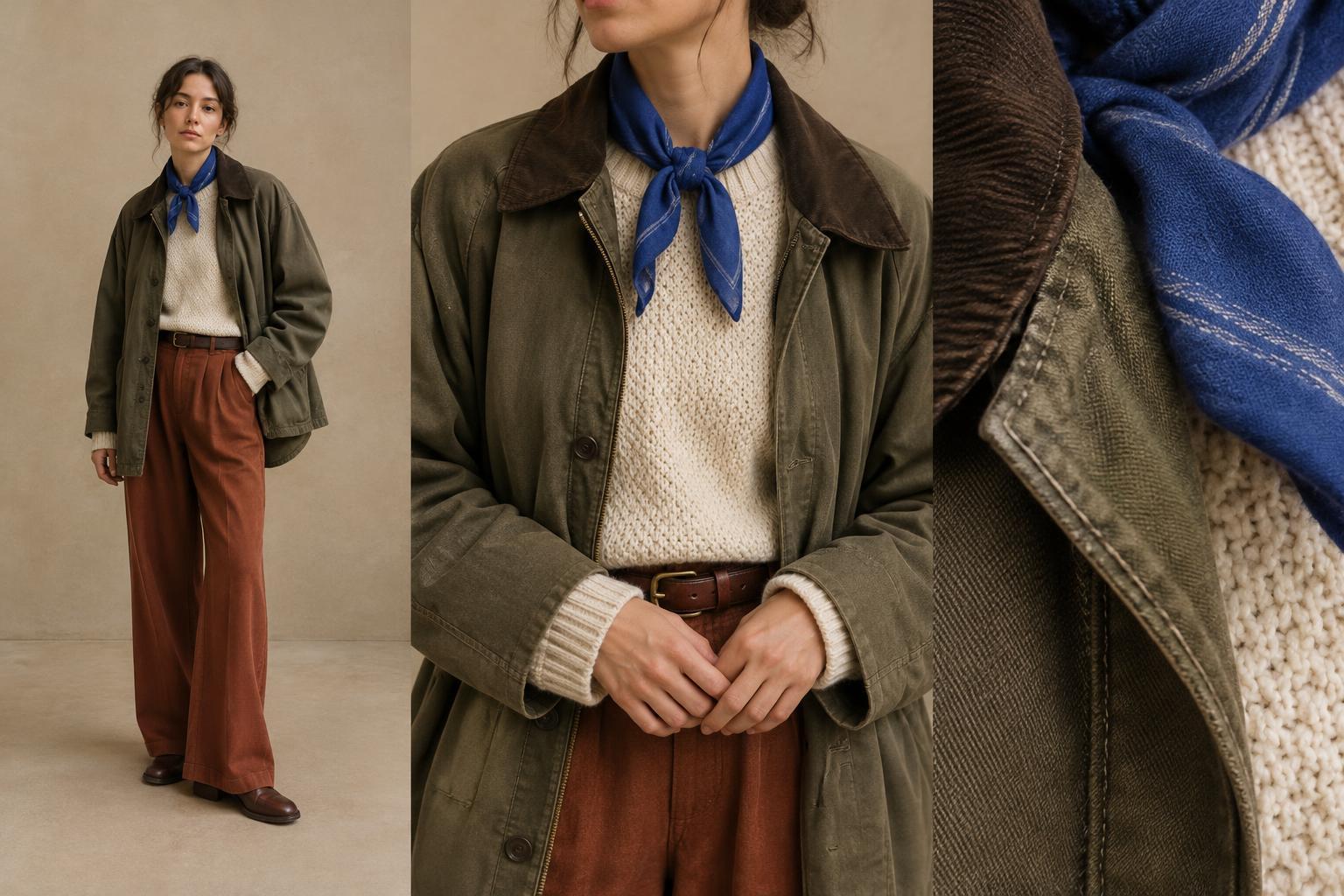
A full-length shot shows the outfit as a whole, from head to footwear. It is useful for seeing proportion: where a jacket ends, how trousers fall, whether a bag sits close to the body, and how one colour is distributed across the look. It can also show posture and movement, which may be part of how you express yourself through clothing.
Give the figure enough room in the frame that shoes and any raised accessory are not accidentally cut off. Keep the camera roughly level if you want a straightforward view of proportion; a steep angle can change how lengths appear. A simple background helps the outfit read clearly, but surroundings can be useful when they support the story. A doorway, for example, might reinforce the clean lines of a structured outfit. Ask what the setting contributes before including it.
Detail shots reveal the decisions behind the outfit
A detail shot isolates a small area while keeping enough context to show how pieces work together. Think of a cuff folded over a sleeve, a belt crossing a patterned shirt, or two necklaces layered at different lengths. Unlike a full-length image, it lets a small styling decision become the main event. Unlike a very tight close-up, it still shows where that decision sits on the body or within the outfit.
Use detail shots when the meaning of an item depends on its neighbours. A brooch photographed on its own tells us what the brooch looks like; a frame that includes the jacket lapel and a little of the shirt shows why you placed it there. Check the edges of the image for distracting objects, then shift your position rather than moving everything into an unnatural arrangement. The aim is to clarify the choice you made.
Close-ups reveal surface and character
Move closer when the story is in a material, finish or mark: the grain of leather, a row of hand-sewn stitches, the contrast between matte fabric and a glossy button, or the softened edge of a well-worn bag. A close-up may reveal something too small to register in a full-length photograph. It can suggest care, playfulness or a preference for texture without needing to show an entire outfit.
Close-ups also remove context, so they can leave viewers unsure what they are seeing. That ambiguity may be useful if you want a quiet, abstract image, but less useful if you want to explain a styling choice. Let the camera focus on the feature that matters and look for light that makes its surface visible without washing it out. If the result feels disconnected, pair it with a detail shot that shows where the feature belongs.
Build a three-frame story
Try photographing one outfit in three frames: first the full look, then one styling decision, then one close-up of a surface or small feature. You do not need special equipment. Set a phone on a stable surface for the full-length image, use a timer if needed, and move closer for the other two. Keep the outfit unchanged so you can see what framing alone adds or removes.
Review the images in order and ask three questions. What does the first frame tell me about shape? What choice becomes clear in the second? What feeling or quality does the third add? If two images say the same thing, change one angle or choose a different detail. You can also reverse the sequence, beginning with an intriguing close-up and revealing the full outfit last. Either way, the goal is not a perfect set of pictures. It is to make your visual choices as deliberate as your clothing choices.