Start with the outline
Before considering colour or hardware, look at a bag from a few steps away. Its outline is often the first detail you notice. A rectangular tote creates a broad, clear line; a narrow shoulder bag draws a slimmer one. A round or crescent-shaped bag introduces a curve that can soften an outfit built from straight edges. None of these effects is automatically better. The useful question is whether you want the bag to blend with the shapes you are wearing or interrupt them.
Try comparing a bag with the outline of your clothes rather than judging it alone. A square bag alongside a boxy jacket repeats the jacket’s geometry and can make the whole look feel intentional. The same bag beside a flowing dress creates contrast. A compact bag may leave the clothing as the main focus, while an oversized shape can become the visual anchor. Capacity matters too: a pleasing silhouette is less useful if it cannot hold what you need.
Notice what structure does
Structure describes how firmly a bag holds its shape. A rigid bag keeps a defined outline when it is set down or partly empty. A soft bag folds and shifts with its contents and the way you carry it. Between those extremes are bags with a firm base and flexible sides. Looking at an empty bag can help you judge its structure without the contents changing its appearance.
Firm shapes can give a loose outfit a crisp finishing detail. Softer shapes can make tailored clothing feel less formal or continue the relaxed lines of a layered look. Consider how the bag behaves in use, not just in a photograph. A slouchy bag may change shape when filled, and a stiff one may be awkward to fit into a crowded space. If a bag has to carry bulky items, check whether its opening, base and corners work for those objects.
Use strap length to place the focal point
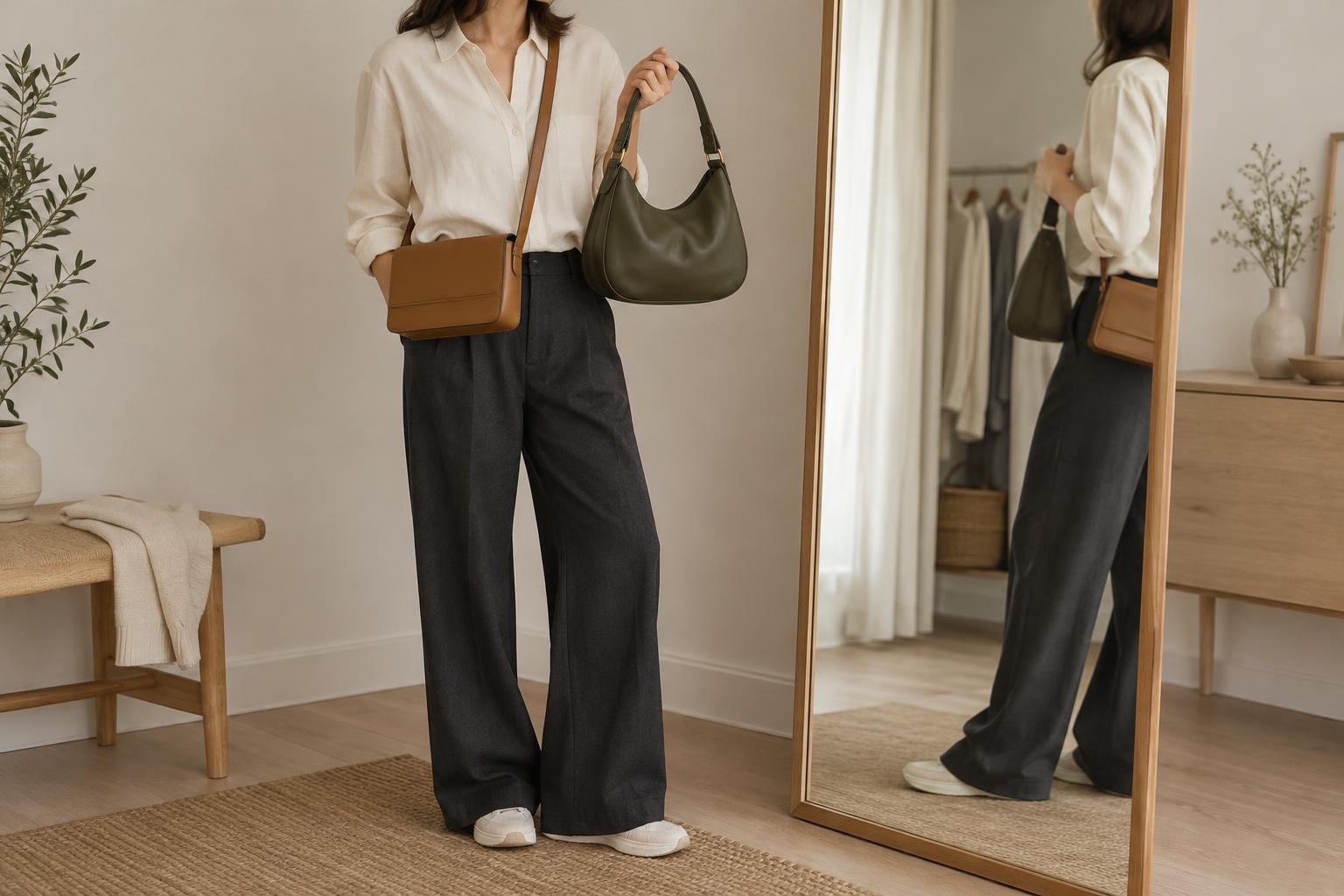
A strap decides where a bag sits against your body, which changes how it interacts with your outfit. A short handle held in the hand keeps the bag separate from the torso and often draws attention lower down. A shoulder strap that places it near the ribs overlaps a jacket or top. A longer strap may position it at the hip, where it can sit alongside a pocket, hem or change in colour. A crossbody strap adds a diagonal line of its own.
Small differences in length can matter more than a label such as “shoulder bag” suggests. Think about where the bag rests when you walk, whether it covers a detail you want to show, and whether you can reach inside comfortably. An adjustable strap offers room to experiment, but its range may not suit every preferred position. Try it over the outerwear you actually wear; a thick coat can change both the fit and the bag’s resting point.
Compare combinations rather than isolated features
Shape, structure and strap length work together. A structured rectangle worn close under the arm makes a different statement from the same outline carried by a long handle. A soft crescent bag at the hip may follow the body’s movement, while a small rigid bag there can read as a distinct accent. Instead of searching for a universally versatile design, decide what role the bag should play in the outfits you wear most.
For a quiet finishing touch, you might choose an outline that repeats an existing line and a strap that keeps the bag near a similar colour. For more contrast, place a curved or sharply defined shape against clothing with a different silhouette. These are starting points, not rules. A bag can also stand out simply because it sits in an open area of the outfit rather than over a busy print or layered detail.
Run a short mirror test
Choose one outfit and compare two or three bags while keeping the clothing unchanged. First, look at the full silhouette from a distance. Which bag draws your eye first, and is that where you want attention? Next, check the side view and the position of each strap. Finally, put your usual items inside, walk around and reach for something. A bag that looks balanced while empty may sit differently when you use it.
If you are choosing between similar options, note one concrete reason for each preference: “the curved edge softens the jacket,” or “the shorter strap keeps the print visible.” That observation is more useful than a general verdict that one bag is stylish. Over time, these comparisons can help you identify the shapes and carrying positions that express your style while still making everyday sense.