Care is part of the outfit
An outfit begins before you put it on. A crisp collar can make a relaxed shirt feel deliberate; a stretched neckline can make the same shirt look tired. Lint on dark trousers, a twisted seam or a bag that has lost its shape may draw the eye before your chosen colours and details do. Garment care is not about making every piece look new. It is about helping each piece look the way you intend.
Start by noticing what matters most to your style. If you favour clean lines, pay attention to creases, hems and fit. If you like soft, lived-in layers, focus on keeping them clean and comfortable without removing their character. Try photographing two versions of an outfit: one as it comes out of storage and one after a few minutes of care. The comparison can show which small changes make the biggest visual difference.
Protect the shape that creates your silhouette
Silhouette depends on more than a garment’s cut. A sweater that has stretched on a hanger may sit differently at the shoulders. A shirt dried in a tight bundle may have a rumpled shape that competes with a tailored jacket. Before washing or drying, check the care label and consider how the fabric behaves when wet. Some pieces hold their shape well on a hanger; others are better dried flat or gently reshaped while damp.
Storage has a similar effect. Give structured garments room rather than pressing them into a crowded rail, and fold items that are prone to stretching. Empty pockets before putting clothes away so they do not pull unevenly. When getting dressed, check how a piece falls from the front, side and back. If its shape has changed, a different layer or styling choice might work better than trying to force the original outfit plan.
Keep colour and texture working together
Colour combinations rely on the condition of the surfaces you pair. A faded black tee can look appealing beside washed denim but less intentional next to a sharp black jacket. Pilling can make a smooth knit look fuzzy, while lint may dull the contrast between two colours. These effects are not always flaws: wear can add personality. The useful question is whether it supports the look you want.
Follow care labels, sort laundry where appropriate and avoid treating every item with the same routine. Washing a garment more often or more vigorously than it needs may affect its colour, texture or finish. Between washes, airing an item when suitable and removing surface lint can sometimes be enough to prepare it for another wear. Test any stain treatment on an inconspicuous area first, especially on vivid colours or delicate fabrics, and avoid rubbing so hard that you change the fabric’s surface.
Make finishing touches part of getting dressed
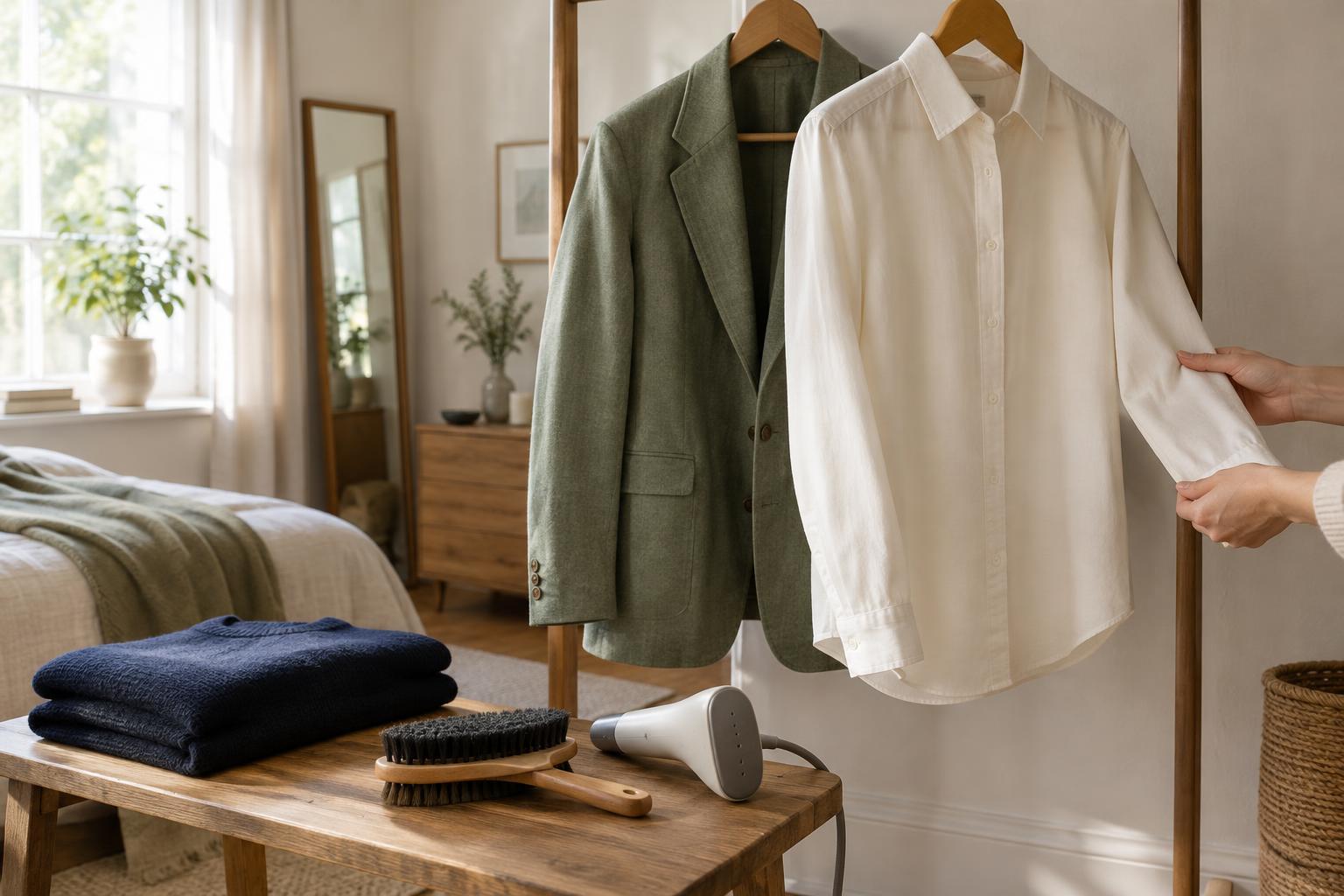
A short preparation routine can bring an outfit into focus. Check for loose threads, visible marks and lint; smooth a collar; make sure cuffs and hems sit where you want them. If a garment needs pressing or steaming, follow its care instructions and use a method appropriate to the fabric. The goal is not to flatten every wrinkle. Linen creases, soft drape and worn-in texture may be exactly what gives an outfit its character.
Accessories deserve the same quick look. A clean pair of shoes, an untangled necklace or a scarf folded so its pattern shows can make the whole combination feel more considered. Keep a small care kit where you dress: a lint brush, a soft cloth and a place to collect items needing repair are enough to make these checks easy. Set aside anything that needs more attention rather than letting it disappear back into the wardrobe.
Choose a care routine that supports your style
You do not need a complicated system. Pick a few garments you wear often and ask what tends to interrupt their look. Is it a wrinkled hem, a faded colour, missing buttons or shoes that need wiping? Build your routine around those repeat issues. A brief check before putting clothes away, followed by another before wearing them, can prevent a minor problem from becoming an outfit-day surprise.
Care can also help you decide what belongs in your wardrobe. A beautiful piece that requires more upkeep than you are willing to give may rarely get worn. That does not make it a bad choice, but it is useful information about how you dress. Personal style works best when your clothes suit your habits as well as your taste. Looking after the details you value helps your outfits communicate your ideas more clearly.