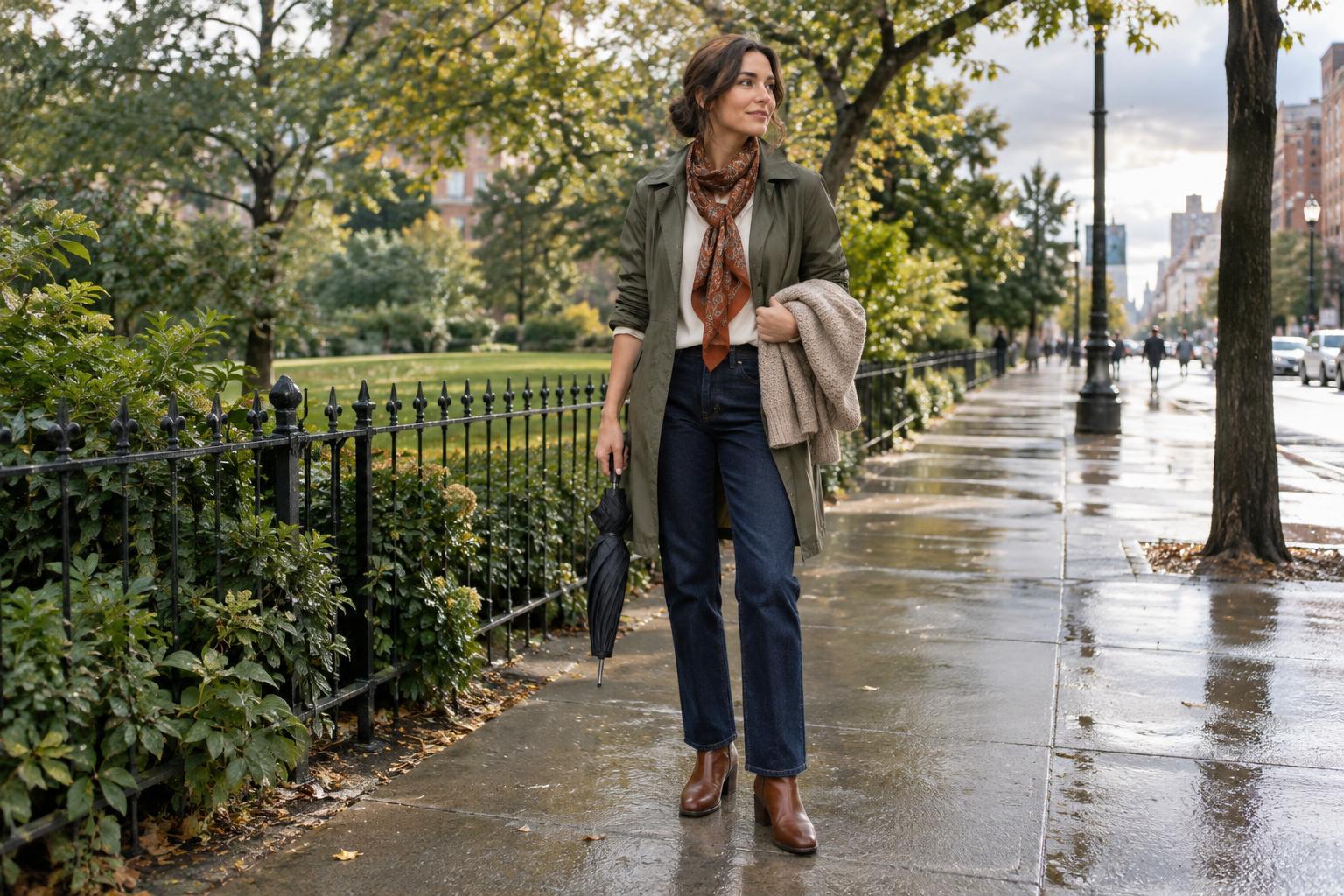
Find the part of the outfit you want to keep
When the weather changes, it is tempting to replace an entire outfit. A more useful starting point is to ask why you like wearing it. Perhaps it is the contrast between a fitted top and wide trousers, a particular colour pairing, or the way a scarf brings attention to your face. That quality is the outfit’s anchor. Once you can name it, you can change the pieces around it without losing the feeling that made the outfit yours.
Try describing a favourite look in three short phrases, such as “relaxed shape, sharp shoes, warm colours.” Avoid listing garments at first. Those phrases give you room to substitute a breathable shirt for a sweater or boots for sandals while preserving the overall impression. You do not need an exact seasonal copy; you need a version that still feels recognisable.
Use layers to change comfort, not character
For cooler or unpredictable days, build around the outfit’s familiar proportions. If you like a long, loose shirt over narrow trousers, a fine knit beneath the shirt may preserve that shape better than a bulky sweater on top. If a cropped jacket defines your usual look, try wearing it over a warmer base layer. Pay attention to where added volume sits: one substantial outer layer often keeps an outfit clearer than several pieces competing at the same length.
On days that may warm up, make at least one layer easy to remove and carry. An open overshirt, lightweight cardigan or unstructured jacket can alter your comfort without hiding the whole outfit. Check the result both with and without that layer. If removing it leaves the look feeling unfinished, let a visible detail underneath—a collar, colour contrast or simple accessory—carry some of the expression.
Adjust fabric and coverage for heat or cold
A favourite silhouette can often survive a fabric change. A roomy trouser shape might work in a lighter material when it is warm and a denser one when it is cold. A close-fitting top can become a short-sleeved version in summer or a long-sleeved base in winter. Fabric weight, breathability and how a garment feels against your skin matter as much as its appearance, so wear a possible substitute for a while before treating it as an equivalent.
Coverage can change independently of colour or shape. In heat, you might keep a preferred monochrome palette but choose fewer layers, a looser fit or shoes that feel comfortable in warm conditions. In cold weather, you might retain the same palette through a coat, knit and socks. This approach is especially helpful when your style depends on a consistent visual mood rather than one specific item.
Give practical weather gear a place in the look
Rain, wind and damp ground call for practical choices, but those choices can still support your style. Start with what needs to work: an outer layer suited to the conditions, shoes with appropriate grip and a bag that can handle the day. Then consider how each piece relates to your outfit. A raincoat can echo a colour already present, while sturdy footwear can repeat the visual weight of a belt or bag.
Accessories offer a small, flexible way to keep your point of view visible. A patterned scarf can bring back the colour story of an outfit hidden under a coat. A distinctive hat or pair of socks can add personality when the rest of your clothing is chosen for warmth. In strong wind or rain, secure and manageable details are often more enjoyable than pieces you must constantly adjust.
Make a small set of weather-ready versions
Choose one outfit you already wear often and lay out three variations: a warm-day version, a cool-day version and a wet-day version. Keep at least one anchor constant in each, whether that is a silhouette, colour combination or statement detail. Take a quick photo of each version, then compare them. Do they express the same idea? More importantly, would you feel comfortable spending an ordinary day in each one?
Note any gap that the exercise reveals before buying something new. You may find that an existing shirt works as a light layer, or that changing footwear is enough to make an outfit useful on damp days. Over time, these small adaptations give favourite clothes more opportunities to be worn. Changing weather becomes less a reason to abandon your style and more a chance to express it in another way.


