Start with the clothes you actually use
A wardrobe colour audit is not a test of whether you own the “right” palette. It is a way to see the relationship between your clothes and the outfits you want to make. A row of blue shirts might be a dependable foundation, an unnecessary repeat, or both. The difference becomes clearer when you look at what you wear, what you leave untouched, and what each piece can do.
Set aside a little time and gather your clothes, shoes, and frequently worn accessories where you can see them. If taking everything out feels overwhelming, work through one category at a time and take notes. Keep occasion and season in mind: a coat and a summer shirt do not need to earn their place in the same way. Put aside items that do not fit or need repair so they do not distort the picture of your usable wardrobe.
Make a simple colour map
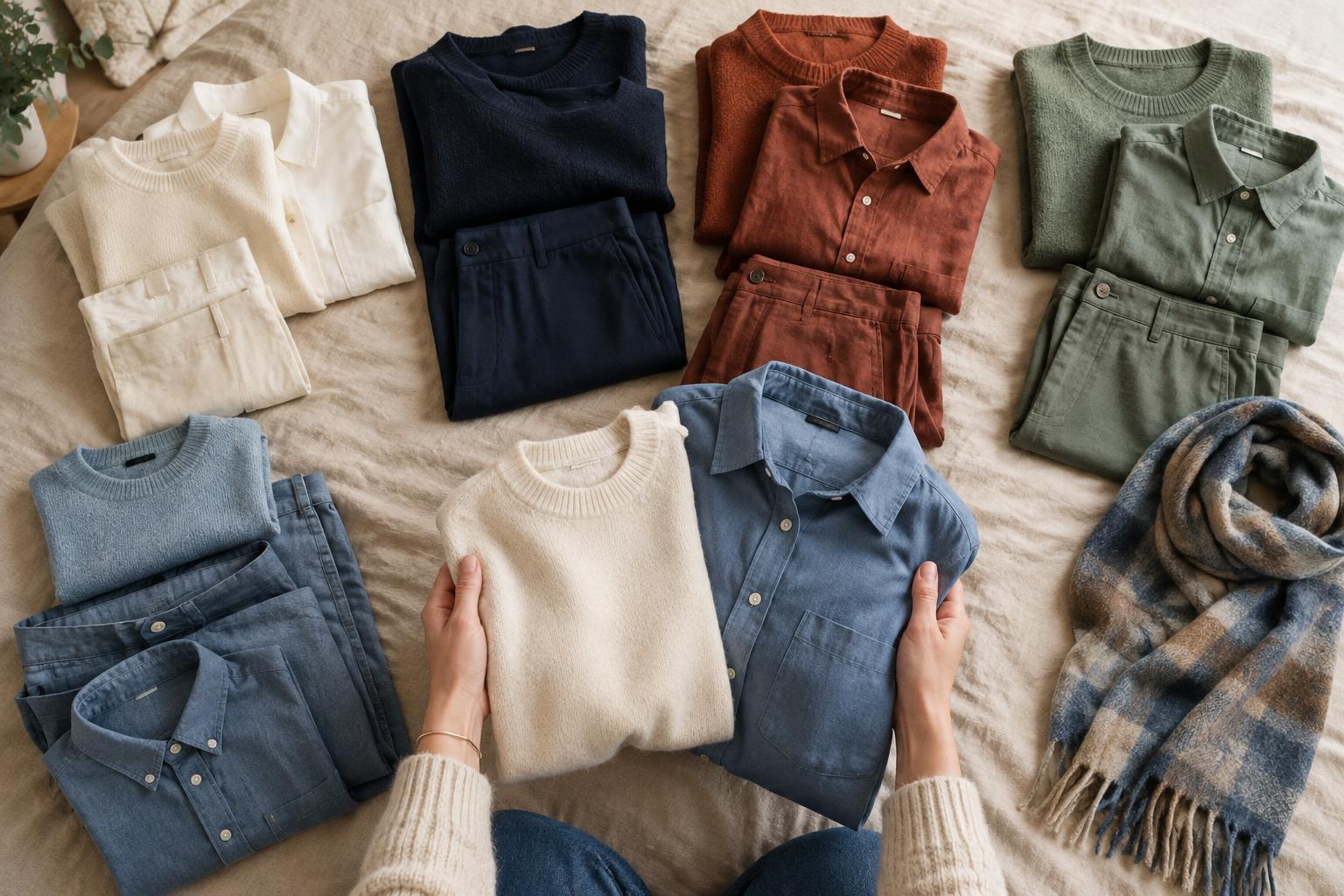
Sort the usable pieces into broad colour families such as black, white, grey, brown, blue, green, red, and pink. Add separate groups for multicoloured prints and shades that matter to you but would disappear inside a broad label. Then note the type of item in each group: tops, bottoms, layers, shoes, bags, or smaller accessories. A handwritten grid is enough. Its purpose is to make patterns visible, not to produce a perfect inventory.
Look beyond the number of items in each pile. Five green tops and no green bottoms create different options from two green tops, a skirt, and a jacket. Prints also deserve a closer look: note their dominant colour and one or two colours you might echo elsewhere in an outfit. If two pieces look similar in a pile, place them side by side in natural light. You may find that one is muted and the other vivid, making them less interchangeable than you thought.
Separate useful repeats from accidental ones
A repeat is useful when it solves a real problem. Two dark trousers might serve different settings, weights, or levels of comfort. Several white tops might make sense if you wear them often and each has a distinct shape. To assess a cluster, ask what changes when you swap one piece for another. Consider its cut, fabric, care needs, and the outfits you pair it with—not just its colour.
Accidental repeats often show up as pieces you like individually but rarely choose because an existing item fills the same role better. You do not have to discard them to learn from them. Make a note such as “three similar light-blue shirts; reach for the loose one.” That observation can guide future choices. It is more useful than a rule that says you are allowed to own only one item in a shade.
Find gaps by trying to build outfits
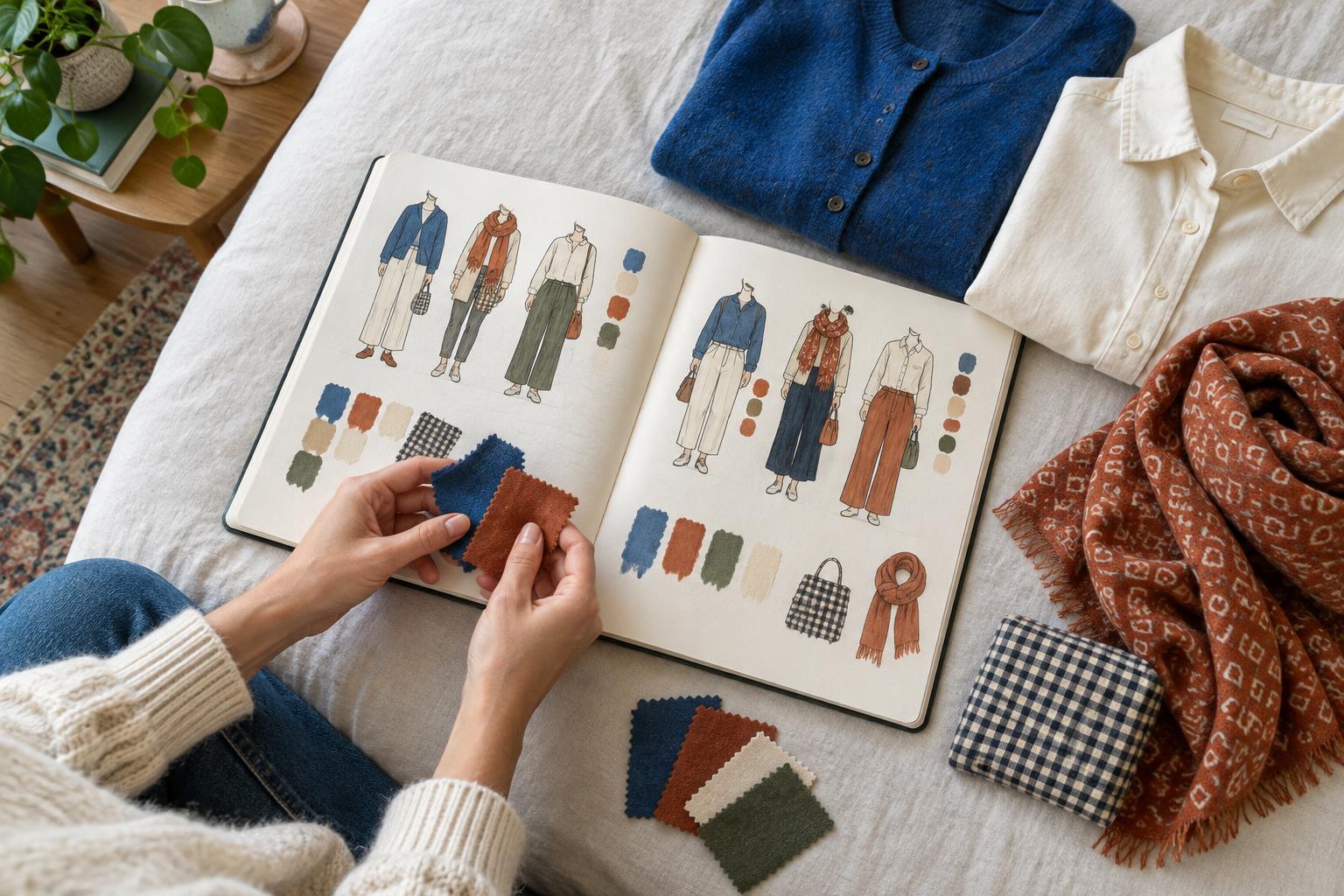
An empty square on your colour map is not automatically a gap. You may own no yellow because you do not enjoy wearing it. A meaningful gap appears when you can describe an outfit you want to wear but struggle to assemble. Choose three pieces you like but seldom wear and build an outfit around each using only what you own. Notice where you get stuck: perhaps a patterned skirt needs a quieter top, or your pale layers do not work with the shoes you usually choose.
Write down the missing role before naming a colour. “A simple, comfortable top for this skirt” gives you more freedom than “a cream blouse.” Try another colour already in your wardrobe, change the balance of light and dark, or use an accessory to connect two pieces. Sometimes the issue is shape or formality rather than colour. A gap is worth addressing only if solving it would help you wear clothes you already value.
Turn the audit into a small experiment
Finish by identifying a few combinations to test over the next couple of weeks. Pair a familiar base colour with a shade you usually reserve for another category, or pull a minor colour from a print into your shoes or bag. Take a quick photo if it helps you compare outfits later. Pay attention to how the combination feels in ordinary use, not only how neatly the colours line up when laid out together.
Keep a short list of observations: colours you reach for, repeats that earn their space, and outfit roles that remain difficult to fill. If you later decide to add something, bring that list with you and judge the item against a specific outfit rather than its appeal on its own. A good colour audit does not prescribe a permanent palette. It gives you a clearer starting point for expressing yourself with the wardrobe you have.