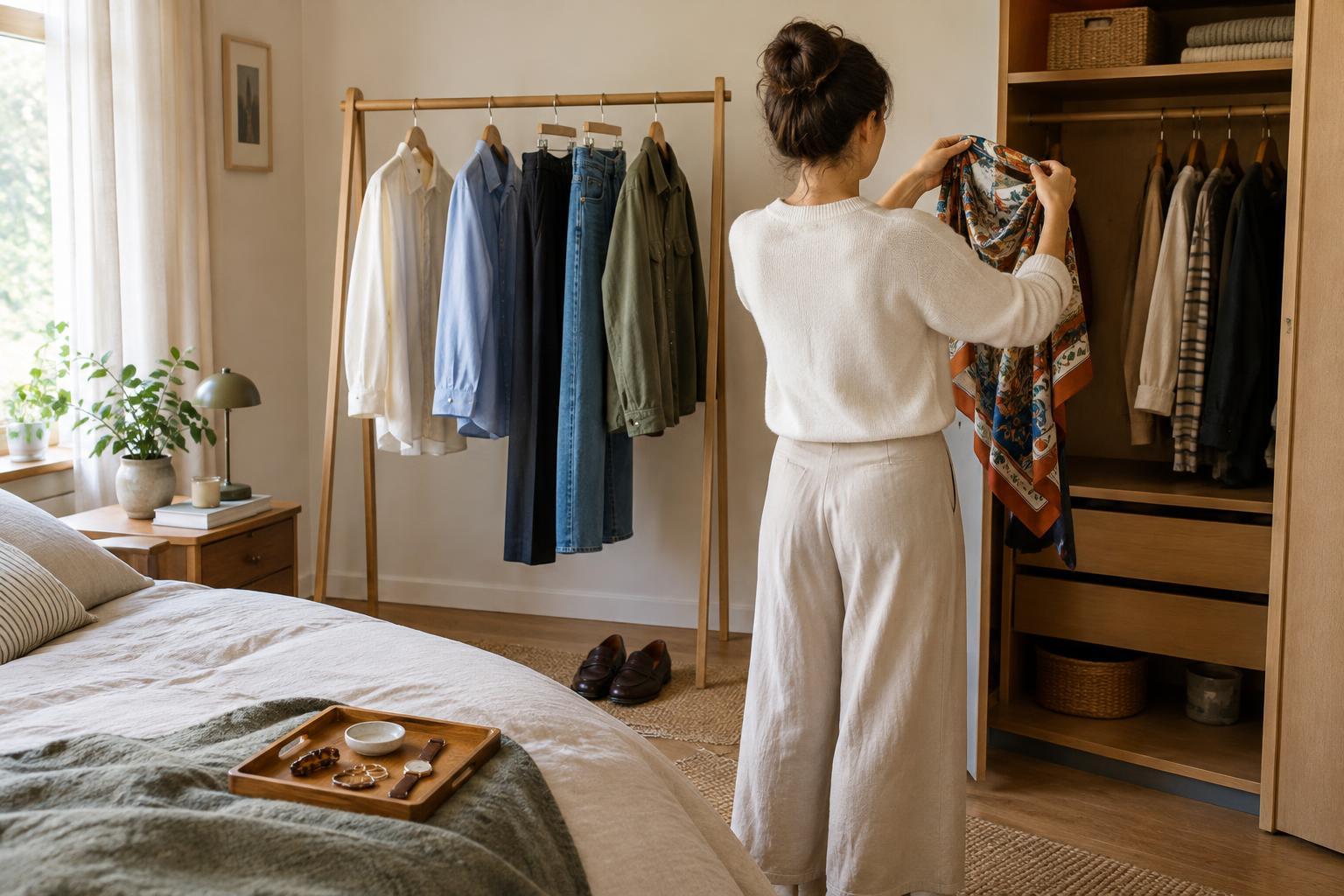
Start with a combination, not a uniform
An outfit formula is a simple description of pieces that work well together, such as relaxed trousers, a fitted top, a loose layer and one noticeable accessory. It is more flexible than a uniform: the shapes stay familiar, but the colours, textures and details can change. That familiarity reduces the number of decisions you face when you are short on time.
Begin with an outfit you have worn comfortably more than once. Ask what made it easy: Was it the balance of proportions, the shoes you could walk in, or the way one piece made the rest feel finished? Write down the roles of the pieces rather than their exact names. “Straight-leg bottoms + easy top + structured outer layer” gives you more room to experiment than “black jeans + white shirt + blazer.” Aim for a starting point, not a rule you must follow every day.
Match the formula to your actual morning
A useful formula has to suit your routine. Think about the places you regularly go, how much you move, the temperatures you dress for and any dress expectations you need to meet. A combination that looks good but requires constant adjustment is unlikely to save time. If your day often moves between different settings, a removable layer or a change of shoes may be more useful than building a separate outfit for each stop.
Try a quick wardrobe check. Pull out two or three bottoms you reach for often, several tops that work with them, and the layers and shoes you find comfortable. Put together a few combinations and test them by sitting, walking and carrying what you normally take out. Notice where an outfit feels awkward or unfinished. You do not need to buy anything to complete this exercise; the point is to find dependable options among the clothes you already have.
Choose one place for personality to show
Repeatability does not require a quiet or neutral look. Decide which part of an outfit you most enjoy using to express yourself. It might be colour near your face, patterned socks, a sculptural bag, jewellery, an unexpected shoe or a distinctive silhouette. Give that element a clear role in your formula. For example, a simple top-and-trouser combination can create space for a bright scarf, while understated accessories can balance a boldly patterned layer.
Keeping one element open for variation makes the formula easier to use. You could wear the same shapes several times in a week and change the mood with a soft colour pairing one day and high contrast the next. If you like several statement pieces together, that can be your approach too. The useful question is not whether an outfit is restrained, but whether its details feel intentional to you and comfortable for the day ahead.
Prepare options before you need them
Once you have a promising formula, assemble three complete versions of it. Include shoes, outerwear and any accessory you usually want to wear. Check that the pieces are ready to use and that each version works for a real type of day in your routine. Seeing the full outfits together can reveal small obstacles, such as a layer that bunches over a sleeve or shoes that change the length of your trousers.
Make the options easy to remember. You might take a photo of each outfit, jot a short note, or keep the pieces near one another in your wardrobe. These reminders are for your own use, so they need not look polished. If your schedule changes often, identify one easy swap for each version: a warmer layer, a more practical shoe, or a different bag. Preparing swaps leaves room for the unexpected without sending you back to the beginning.
Revise the formula as you wear it
The best test happens outside the wardrobe. After wearing a version of your formula, notice what you were glad to have chosen and what you kept adjusting. Perhaps a favourite shape works only with certain shoes, or a necklace you love becomes distracting on a long day. Treat those observations as useful information, not as proof that you got dressed incorrectly.
After a few wears, simplify the formula until you can recall it without checking a list. You may end up with more than one: an easy everyday combination, a warmer version and one for occasions when you want to feel more dressed up. Keep the parts that support your life and your sense of self. A repeatable outfit formula should give you a dependable place to begin each morning, with enough freedom to dress like yourself.


