Start with the fit you want
Before judging a garment, decide how you want to wear it. A close-fitting top, a loose shirt and an oversized jacket should not pass the same test. Think about what will go underneath, where you plan to wear it and whether you want a neat outline or room to move. Fit is not simply a question of whether you can fasten something; it is whether the shape and ease support the look you intended.
Wear, or bring, the kinds of layers and shoes you would pair with the item. A jacket tried over a thin T-shirt may feel very different over a sweater. If you have time, try a neighbouring size even when the first one seems acceptable. Comparing two sizes often makes it easier to spot a shoulder that sits better, a waist that pulls less or a length that feels more natural.
Check the garment from every angle
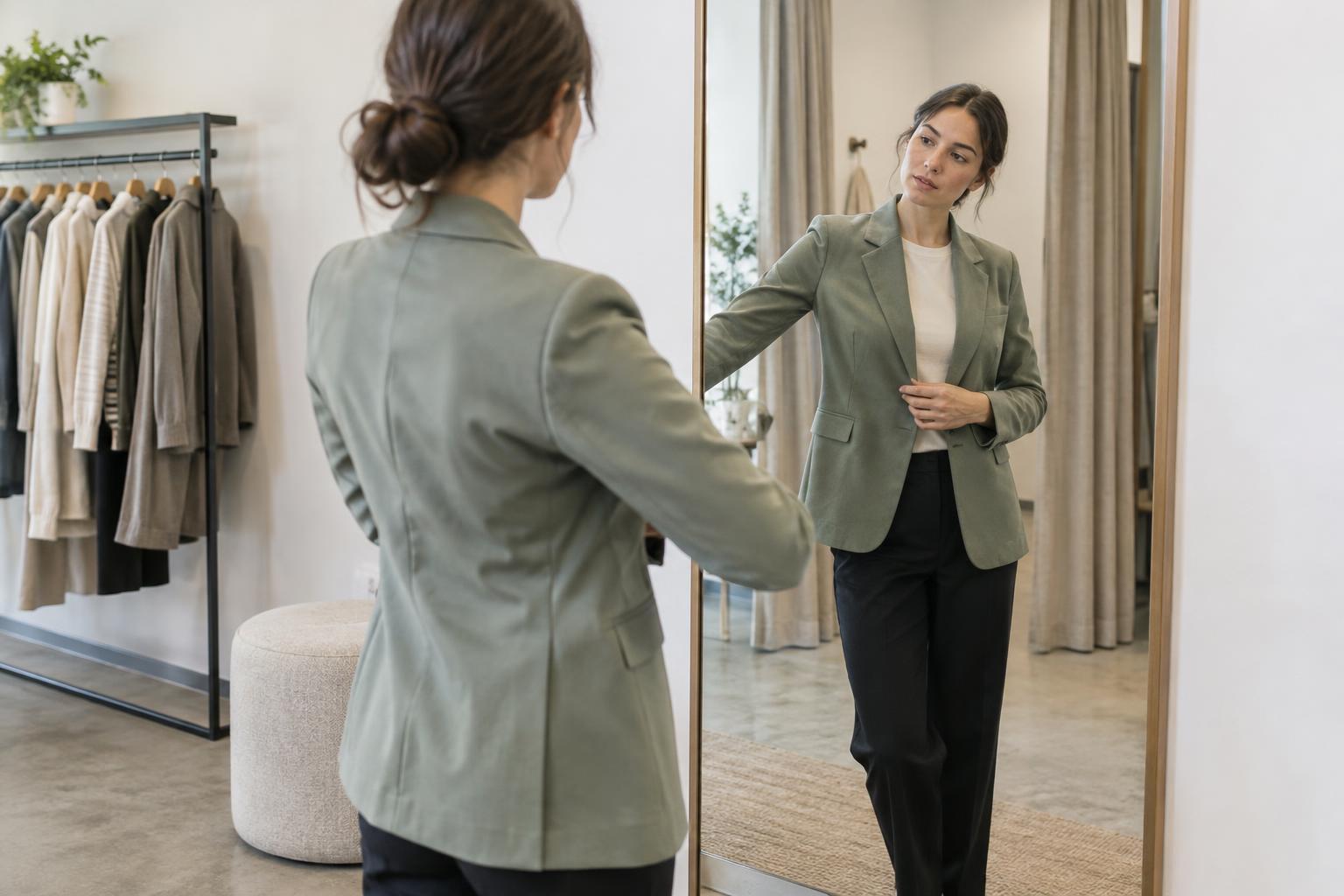
Look at the front, sides and back while standing comfortably, without holding your posture to make the garment work. Notice whether seams sit where the design seems to intend. On a conventional fitted shirt or jacket, shoulder seams usually look most balanced near the edge of your shoulders. On a dropped-shoulder design, they will sit lower by choice. What matters is whether both sides hang evenly and the garment's intended shape comes through.
Check for strain and excess fabric. Buttons that gape, pockets that flare or horizontal pulling across the chest or hips may suggest that you need more room. Large folds can mean there is more fabric than you want, though draping may be part of the design. Look at the hem, too: does it hang as expected, or rise noticeably at the front or back? A mirror photo from each angle can help you assess the outline without focusing on one small detail.
Move as you would in real life
A fitting-room pose tells you only so much. Sit down, stand up, reach forward and lift your arms. For trousers or a skirt, take a few steps and sit if the space allows. For a coat or jacket, cross your arms and turn your torso. The garment should let you do the ordinary things you expect to do in it without persistent pulling, slipping or readjusting.
Pay attention to what happens after you move. Does a top settle back into place, or do you have to tug it down? Does a waistband remain comfortable when seated? Do sleeves still reach where you want them when your arms are forward? Some garments are deliberately structured or close-fitting, but a design choice should feel manageable to you. If you are already negotiating with the garment during a brief try-on, consider how you might feel after wearing it for several hours.
Notice how the fabric affects fit
The same measurements can feel different in different fabrics. A stretchy knit may follow your shape and recover when you move; a firm woven fabric may need more room to allow the same movement. Feel the fabric, check its label and notice whether it stretches when you gently move it. Also consider whether the item is lined, how heavy it feels and whether the fabric hangs smoothly or holds its shape.
Look beyond how it fits for a moment in the mirror. Fabric that feels pleasant while standing may cling, crease or ride up when you sit. Thin fabric may reveal pocket outlines or underlayers more than you want. None of these qualities is automatically a flaw: a crisp shirt and a fluid shirt serve different style goals. The useful question is whether the material behaves in a way you will enjoy wearing.
Make a confident decision, in person or online
Before buying, name what works and what does not. You might decide that the shoulders and overall shape are right, but the sleeves are longer than you prefer. A straightforward alteration may be worth considering; changing a garment's fundamental proportions is a bigger commitment. Do not rely on an imagined future fix unless you are comfortable with the effort and possible cost.
When shopping online, compare the listed garment measurements with a similar item you own and like, rather than relying only on a size label. Check whether measurements refer to the garment or the body, and look for images that show its shape from more than one angle. Review the fabric description and return terms before ordering. Once it arrives, repeat the standing, sitting and movement checks at home while the item is still returnable. The best fit is one that lets you wear the piece as yourself, not one that asks you to keep adjusting to it.