Start with a story you can show
An outfit photo series does not need a dramatic plot. Its story might be a feeling, a contrast, a routine, or a change: getting ready for a quiet day out, bringing colour into a familiar place, or wearing one jacket in several ways. The key is to choose an idea that a viewer could notice in the pictures without reading a long explanation.
Write your idea as one sentence before you plan the shoot. Try “A structured outfit becomes more relaxed as the day goes on” rather than “My personal style.” Then list three things a camera could show: perhaps a crisp collar, the jacket worn open, and the outfit in a less formal setting. If you cannot name visible details, make the idea more specific. You can keep your private motivation, but give the images something concrete to carry.
Give every visual choice a job
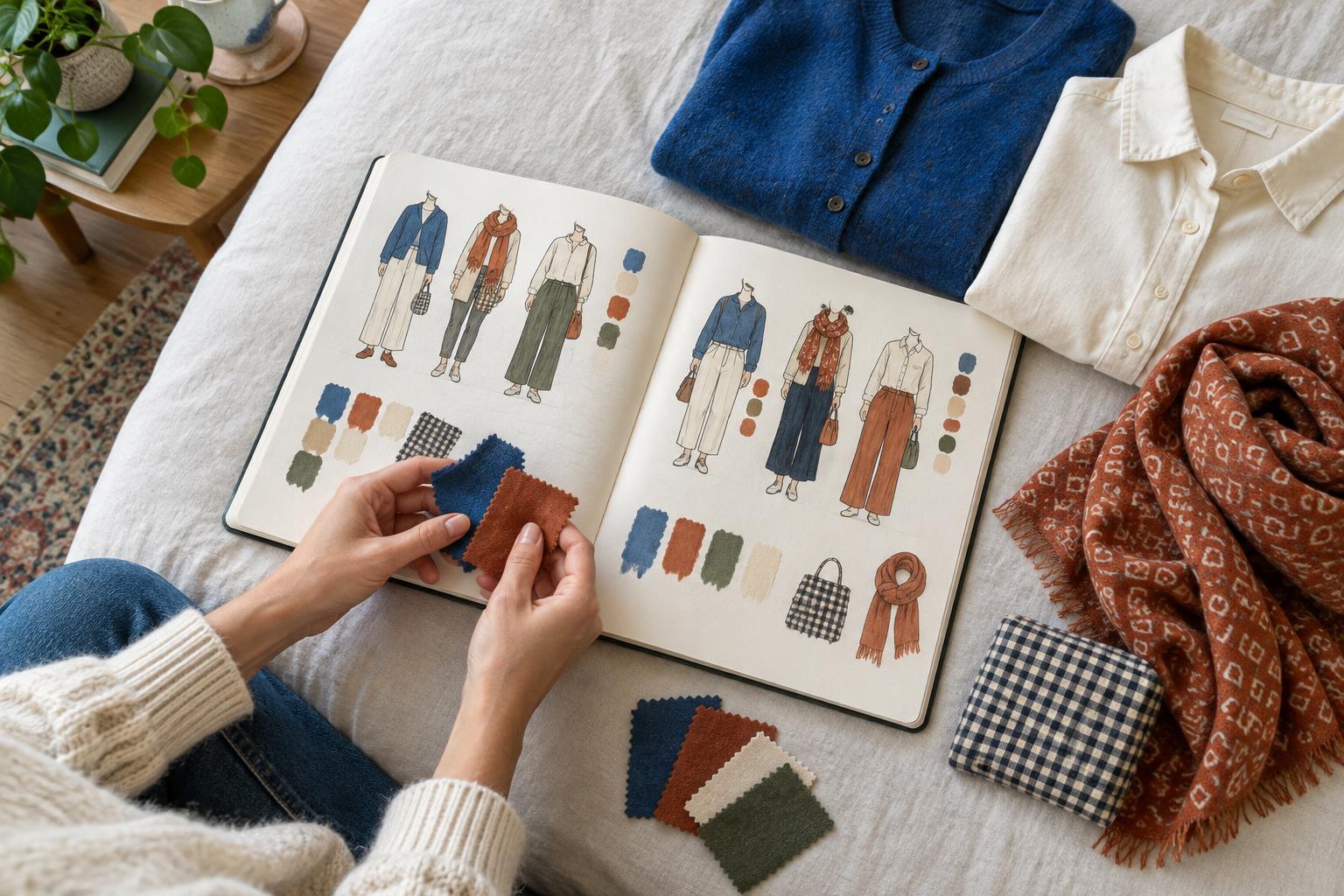
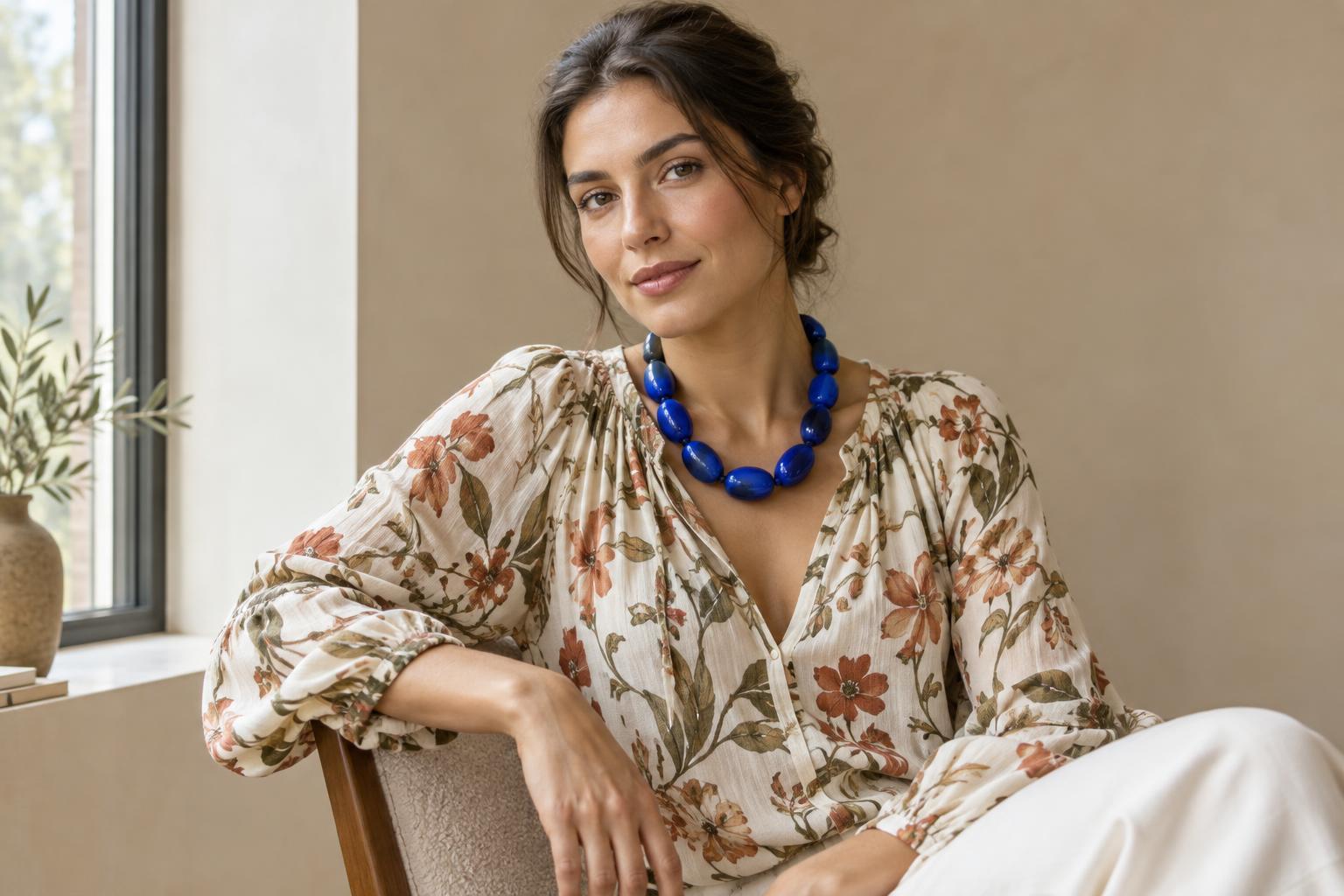
Once you have a sentence, use it to make decisions about clothing, accessories, location, and light. For a story about calm repetition, you might return to one colour or silhouette throughout the series. For a story about playful contrast, you might place a bright accessory against a simple outfit and an uncluttered background. These choices do not have to match perfectly; they need to help the same idea come through.
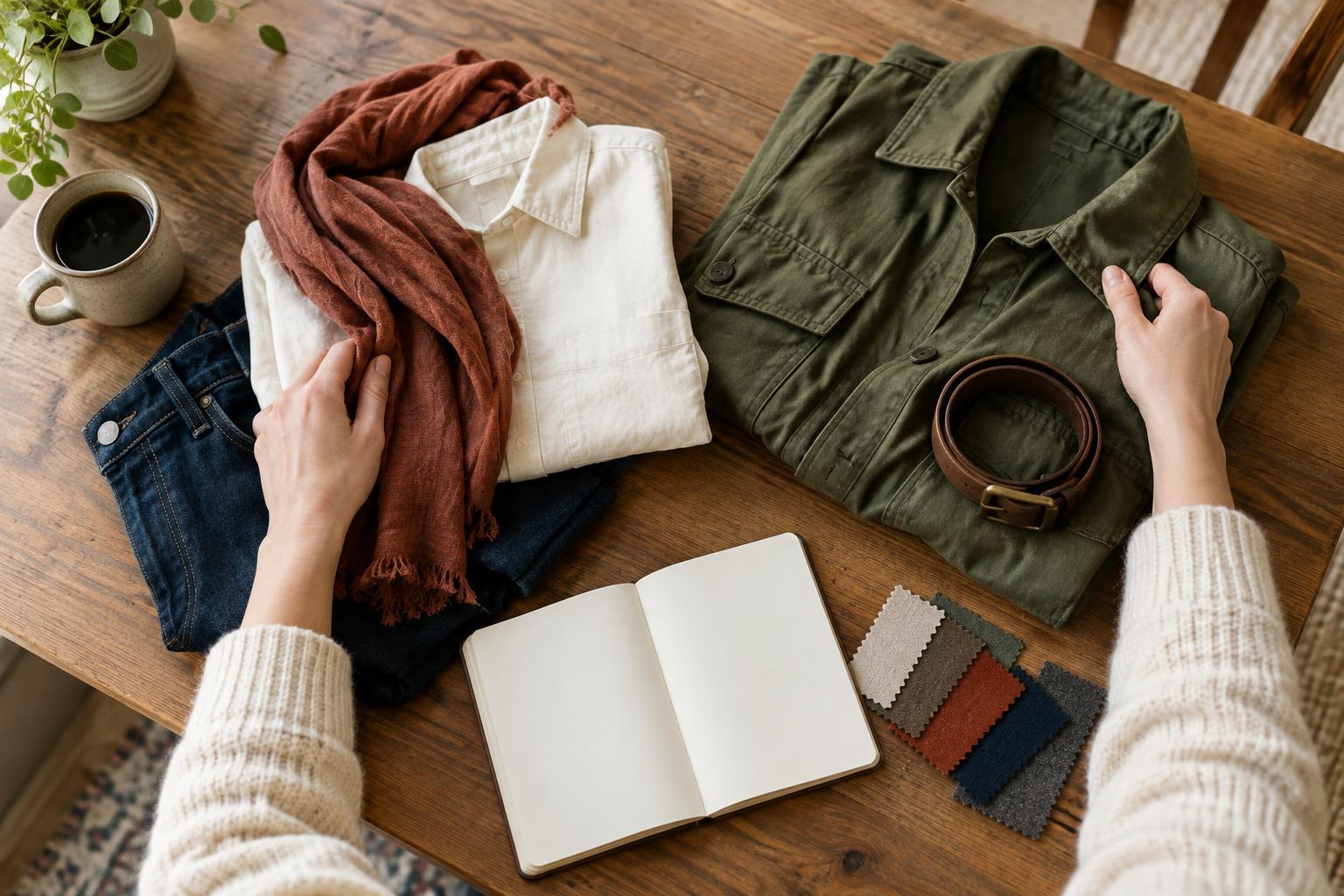
Choose one or two details to repeat, such as a scarf, a particular shape, or hands adjusting a sleeve. Repetition helps separate images feel connected. Let other elements vary with purpose. If each photo introduces a new outfit, setting, colour palette, and pose, the viewer may spend more time working out the connections than noticing your intended story. A simple test is to ask what each choice adds, rather than whether it looks striking on its own.
Plan a sequence, not just a collection
Give the series a beginning, middle, and end. The first image can establish the outfit or setting. Middle images can move closer to a meaningful detail, show an action, or reveal a different side of the look. The final image can offer a small change or a sense of arrival. You do not need to photograph events in that order; you can arrange the images afterward to create a clear path.
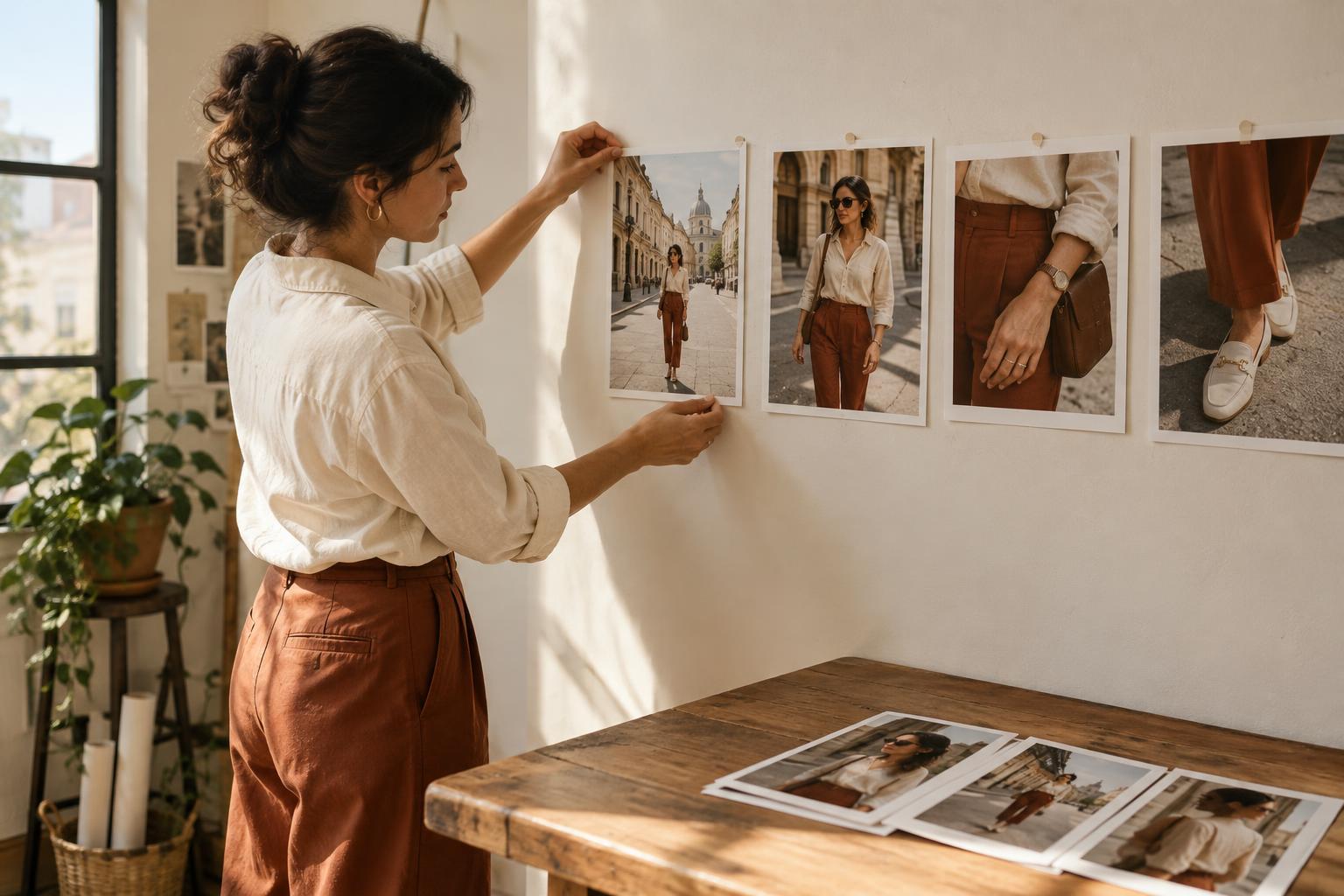
Make a short shot list before you begin: one full-length view, one image that places the outfit in its surroundings, two detail shots, and one closing frame. Treat this as a starting point, not a rule. If your story is about how an accessory changes an outfit, the accessory should be easy to find in more than one frame. A beautiful detail photo is less useful if viewers cannot tell how it belongs to the wider look.
Keep the frame focused while you shoot
Before taking each photo, look beyond the outfit. A busy background, a stray object, or harsh light on the wrong area can compete with the detail you want viewers to notice. Moving a few steps, changing the camera angle, or waiting for a clearer frame may help more than adding another styling element. Leave enough space around the subject when the setting matters; move closer when texture or a small gesture carries the story.
Take a few versions of each planned image, changing only one thing at a time: the pose, distance, or direction of the light. That gives you choices without turning the shoot into a search for unrelated pictures. If other people appear in a frame, consider whether they belong in the story and whether they are comfortable being photographed. Your strongest image is not necessarily the most elaborate one; it is the one that communicates its part of the idea clearly.
Edit for meaning, then test the result
Lay the images out in the order someone will see them. Remove near-duplicates, even if you like both, and look for gaps: can a viewer see the whole outfit, understand the setting, and notice the detail that matters? Keep an image because it adds information or changes the rhythm, not simply because it was difficult to capture. A shorter series with distinct frames can be easier to follow than a longer set of similar poses.
Finally, view the series without its title or caption. Write down the story you think it tells, or ask a trusted friend to describe what they notice. If the answer differs from your original sentence, you have options: reorder the images, replace a confusing frame, or revise the story to fit what the pictures genuinely show. A clear outfit photo series is not one that explains everything. It gives viewers enough visual clues to follow one idea from image to image.