Start with the space around your face
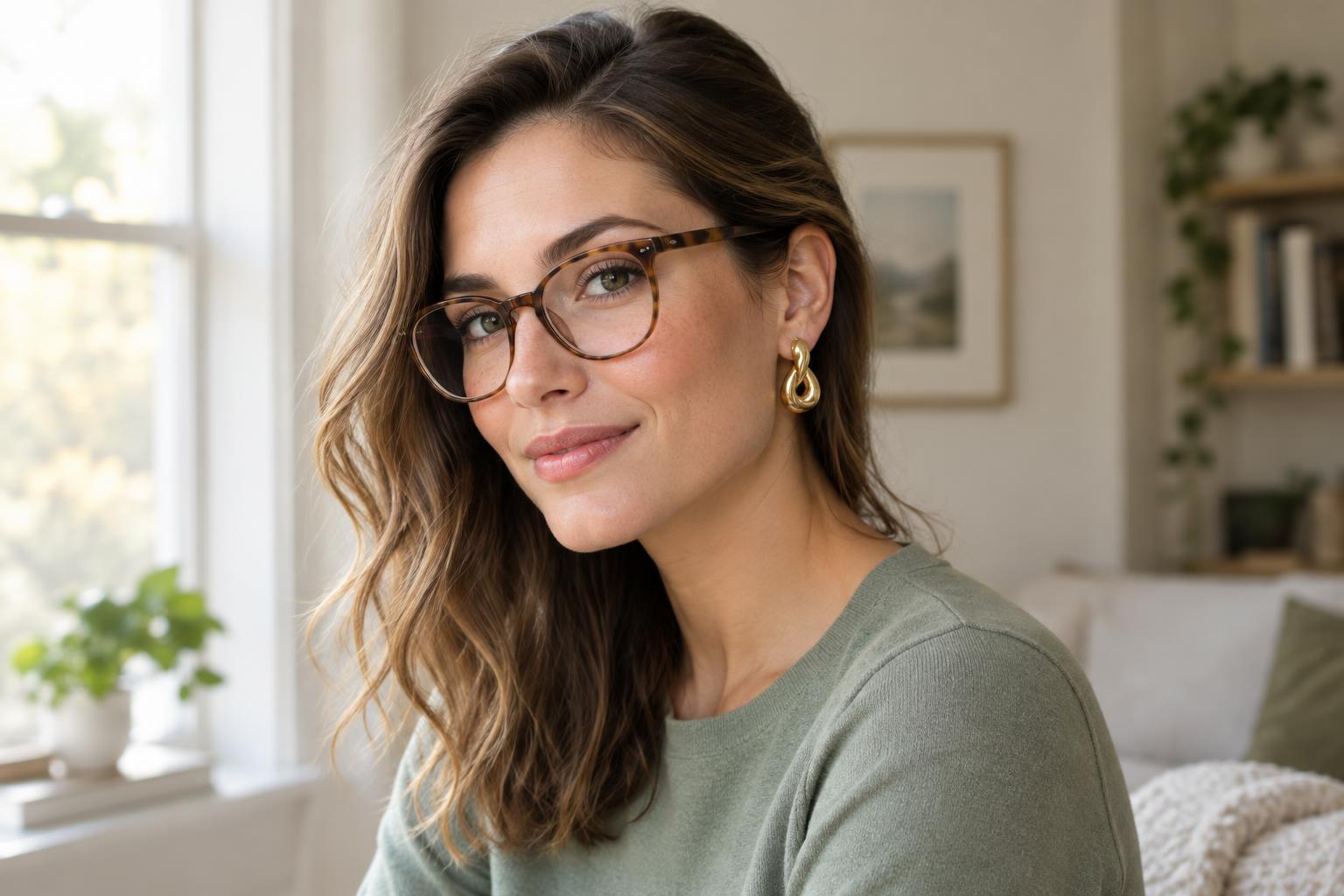
Earrings rarely appear on their own. Glasses draw a line across the face, while hair can reveal, soften or cover the ears. Before choosing a pair, notice how these elements look together. Put on your glasses, arrange your hair as you plan to wear it and look at the whole picture rather than judging the earrings in your hand.
Decide what you want the earrings to do. They might add a small glint beside bold frames, repeat a colour from your outfit or become the main point of interest. There is no rule that only one detail can stand out. Giving each detail a purpose simply makes it easier to choose a combination you enjoy.
Pair earrings with glasses without making them match
Frame shape and visual weight are useful starting points. Thick or brightly coloured frames already make a strong outline, so small hoops, studs or slim drops can add detail without occupying much more space. If you want a more expressive look, larger earrings can work too. Try choosing a distinct shape or finish so the earrings look intentional beside the frames rather than like a second version of them.
With thin or nearly invisible frames, earrings have more room to lead. Sculptural shapes, textured metal or a noticeable colour can provide contrast. You can also create a quiet connection: a warm-toned earring might echo a warm frame detail, while a curved earring can play against angular glasses. Matching materials exactly is optional; repeating one small element is often enough.
Check the side view as well as the front. Earrings that swing into the arms of your glasses may make noise or feel distracting. If your glasses rest close to your ears, consider a shorter drop, a secure stud or a hoop that sits away from the frame arm. Comfort matters more than a combination that looks good only while you stand still.
Consider what your hairstyle reveals
Hair worn down can partly hide earrings, especially small ones. If you want the earrings to remain visible, look for a shape that extends below your hair or a colour and finish that contrasts with it. Movement can help too: a simple drop may catch the eye as your hair shifts. If you prefer a subtle effect, a small stud that appears only when you tuck your hair behind an ear can be part of the appeal.
With a ponytail, bun, short cut or tucked-back hair, the ears are more exposed. This can make even compact earrings feel prominent. Try studs for a clean outline, hoops for a softer curve or longer shapes to bring attention toward the neck and shoulders. If you wear a side part or sweep hair behind one ear, you can choose whether to highlight that visible side or use matching earrings for a steady look from every angle.
Think about the hairstyle you can comfortably maintain, not just the one you create for a mirror check. If you often let your hair loose during the day, choose earrings you will still like when they are partly covered.
Use proportion as a tool, not a rule
Proportion helps you describe what you see, but it does not dictate what you should wear. A broad frame paired with a tiny earring can look deliberate and spare. A broad frame with a large earring can look playful and full of energy. The useful question is whether the combination expresses what you intended.
To compare options, keep your glasses and hairstyle the same while changing only the earrings. Try one pair close to the ear, one pair with length and one with an unexpected shape or colour. Step back far enough to see your face and upper body together. Notice where your eye goes first and whether the earrings still show when you turn your head. This quick comparison is often more helpful than trying to follow a fixed rule about face shapes.
Pay attention to practical proportions as well. Heavy earrings may feel tiring even if they look balanced. Long or wide styles can catch on hair, scarves or collars. Choose a pair that suits the way you expect to move through the day.
Build a combination you can repeat or change
If you want a dependable starting point, identify one pairing that feels easy: perhaps slim hoops with your everyday glasses and hair worn down, or colourful studs with your hair pulled back. Remember what makes it work for you: the contrast, the comfort or the way the earrings bring out a detail in your frames.
Then change one part at a time. Swap the earrings while keeping the hairstyle, or change the hairstyle while keeping the earrings. This lets you see how much each choice affects the result and helps you make more use of pieces you already own. The best pairing is not necessarily the most coordinated one. It is the one that feels like you and lets you go about your day without fuss.