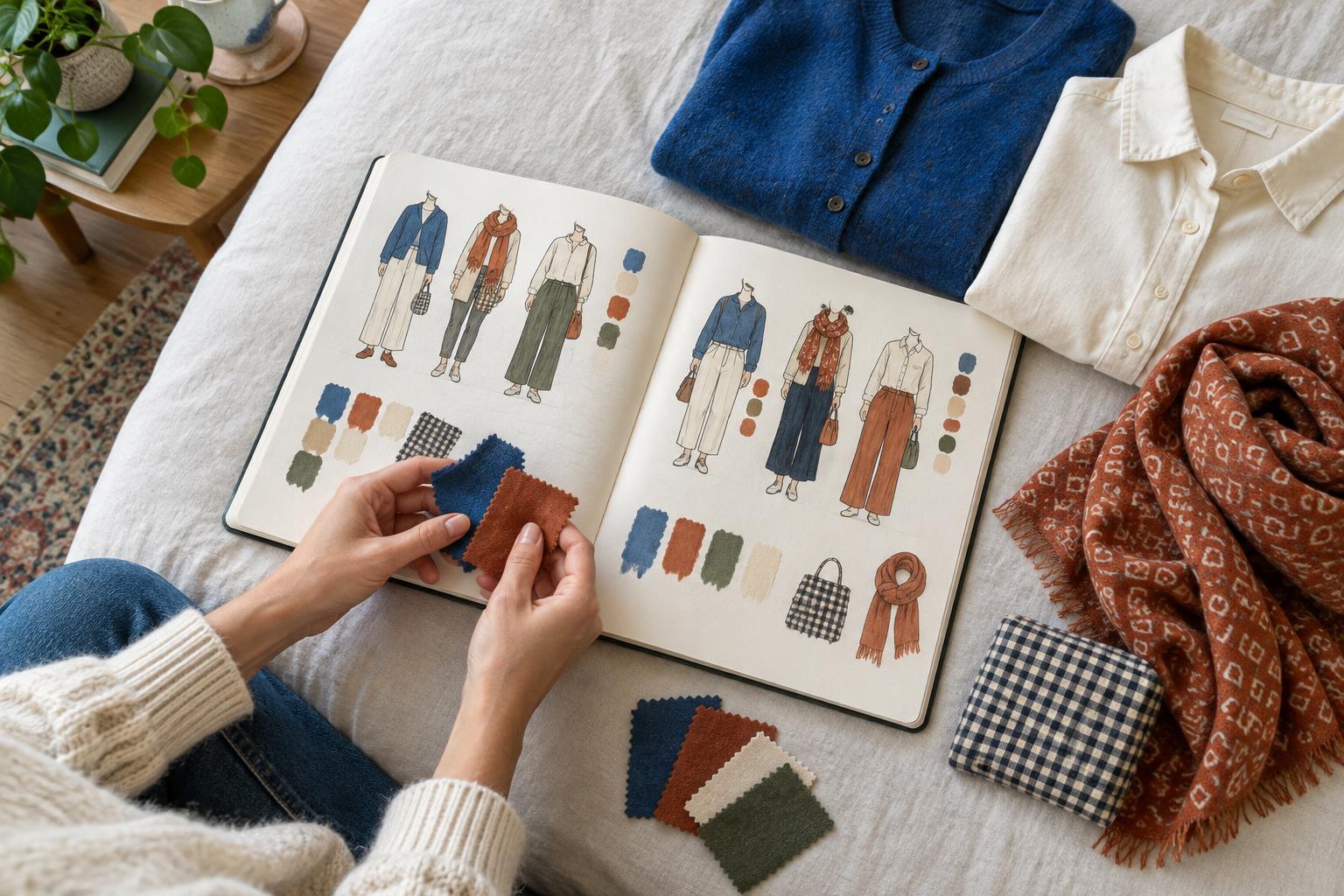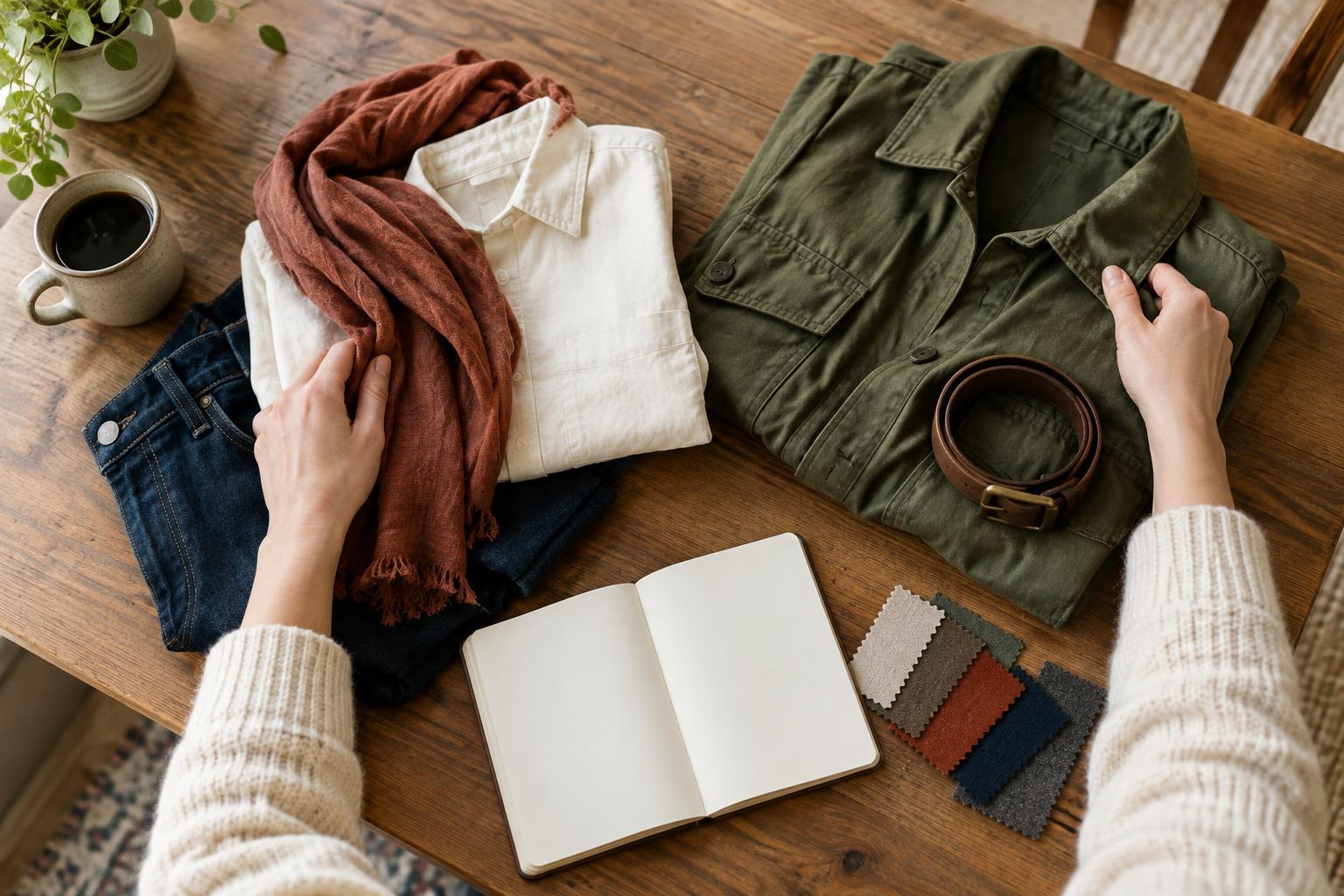
Decide what you want the accessory to say
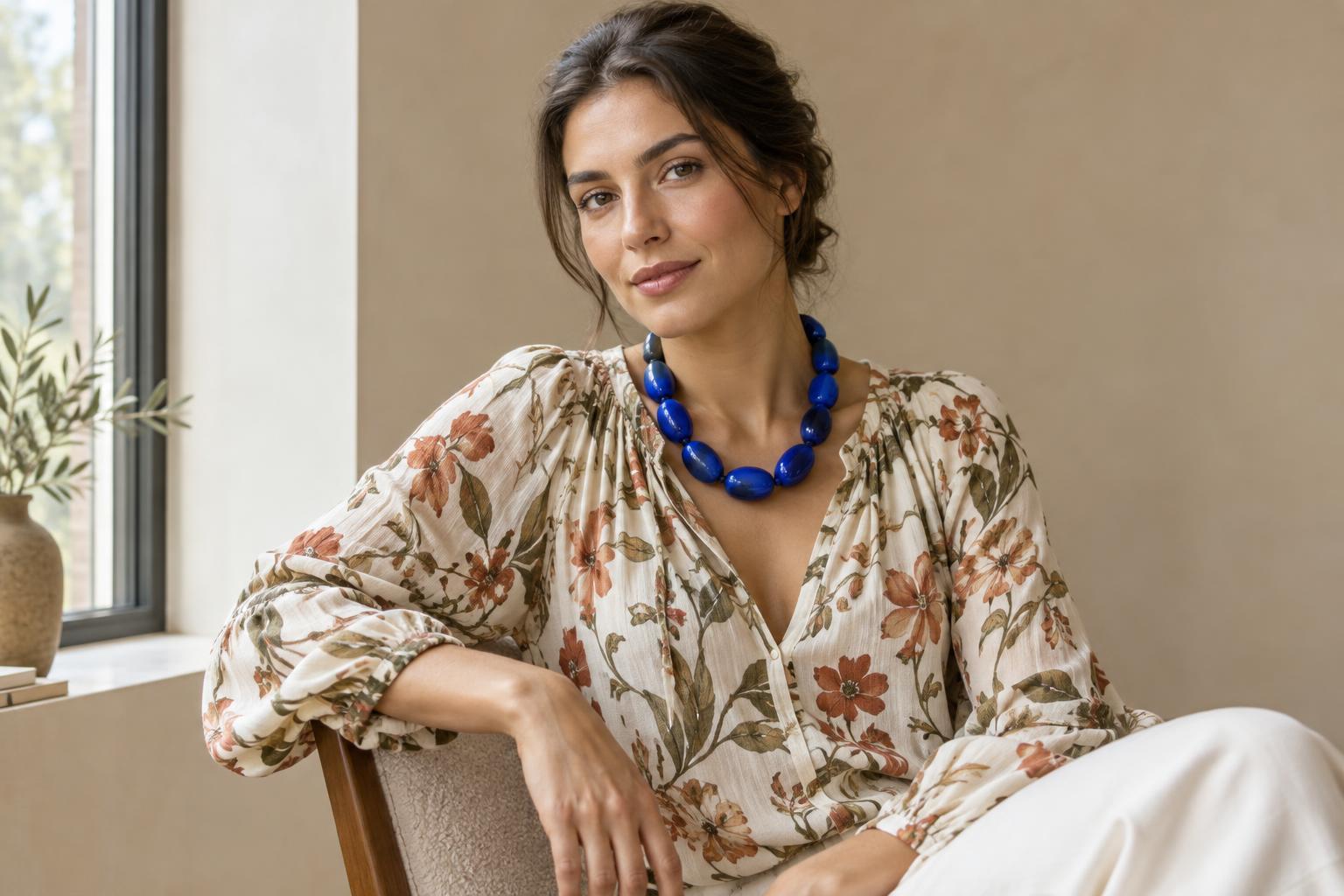
A focal accessory is the detail you want someone to notice first: perhaps a sculptural necklace, a bright scarf, an unusual belt or a patterned bag. It does not have to be large or expensive. Its role is to give the outfit a point of emphasis. Choosing one begins with a question: what feeling do you want to bring forward? A crisp metal cuff might make a soft outfit feel more structured, while a printed scarf could add playfulness to simple separates.
Before reaching for accessories, describe the outfit in a few words, such as relaxed and graphic or quiet and polished. Then choose a piece that either reinforces that description or provides one deliberate contrast. This is more useful than asking whether the accessory is bold enough on its own. A piece becomes a focal point because of its relationship to what surrounds it.
Look at the outfit before adding anything
Put on the clothes you plan to wear and notice where the outfit already draws attention. A strong print, dramatic sleeve, high-contrast colour pairing or distinctive neckline may already be doing much of the visual work. In that case, your focal accessory can be smaller but still clear: a vivid ring beside solid sleeves, for example, or earrings that pick up one colour in the print.
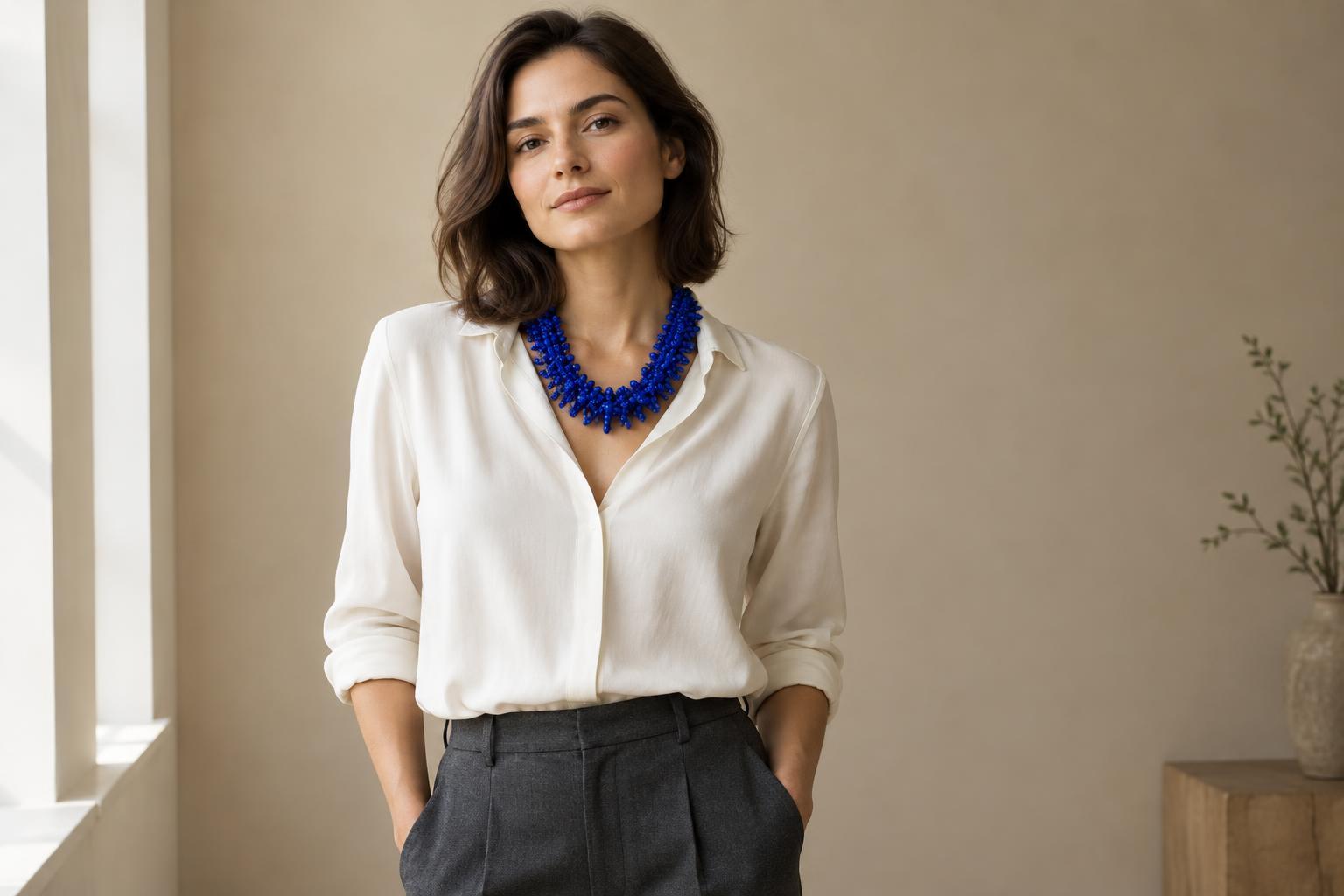
Consider the open spaces the clothing creates. A plain neckline leaves room for a necklace or scarf; a simple waist can frame a belt; an uninterrupted silhouette can make a bag more prominent. There is no rule that a particular neckline demands a particular accessory. The aim is to give the piece enough visual space to be seen rather than placing it where it has to compete with a busy seam, print or layer.
Choose the kind of contrast that suits you
An accessory can stand out through colour, size, shape, texture or movement. You rarely need all of these at once. A small accessory in a vivid colour may be more noticeable against neutral clothing than a large piece in a similar shade. Likewise, a textured woven bag can catch the eye in an outfit made mostly of smooth fabrics, even when the colours are close.
Try comparing two options while keeping the clothes the same. If one piece changes the outfit in the direction you intended, it is a stronger choice than the one that merely looks impressive in your hand. Check the effect from a few steps away as well as close up. Some details reward a closer look, while others define the outfit at a glance. Either can work; what matters is whether the emphasis feels like yours.
Let supporting details stay in support
Choosing one focal accessory does not mean wearing only one accessory. It means giving the others quieter jobs. If a pair of colourful earrings is the focus, a simple bag and understated necklace can complete the outfit without asking for equal attention. If a patterned bag is the focus, your shoes need not match it exactly; they can simply avoid introducing another competing pattern.
Start by adding the focal piece, then bring back other accessories one at a time. After each addition, ask where your eye goes first. If the answer keeps changing, remove a piece or choose a quieter version. Repeated colours or materials can help details feel connected, but perfect coordination is optional. A small echo of the focal colour may be enough to make the outfit feel considered.
Use a quick edit to make the choice easier
When you are undecided, set out three possible focal pieces and photograph each one with the same outfit. Do not change the clothing or the other accessories between pictures. Look at the images side by side and ask: Which piece makes the outfit easier to read? Which one expresses the mood I had in mind? Which would I be comfortable wearing for the day ahead? The last question matters: a beautiful accessory is less useful if its weight, fit or function keeps distracting you.
Once you have chosen, make one final check in the mirror. Notice whether the accessory is visible when you move, whether it sits comfortably and whether the rest of the outfit gives it room. If it feels right, stop editing. The purpose of a focal point is not to make an outfit flawless; it is to make one expressive choice feel clear.