Start with a feeling, not a shopping list
Trying a new look can feel like a demand to become a different person overnight. A gentler approach is to choose one quality you want your clothes to express. Perhaps you want to look more playful, composed, dramatic or relaxed. Treat that word as a prompt rather than a rule: you are exploring how it might appear on you, not committing to a permanent identity.
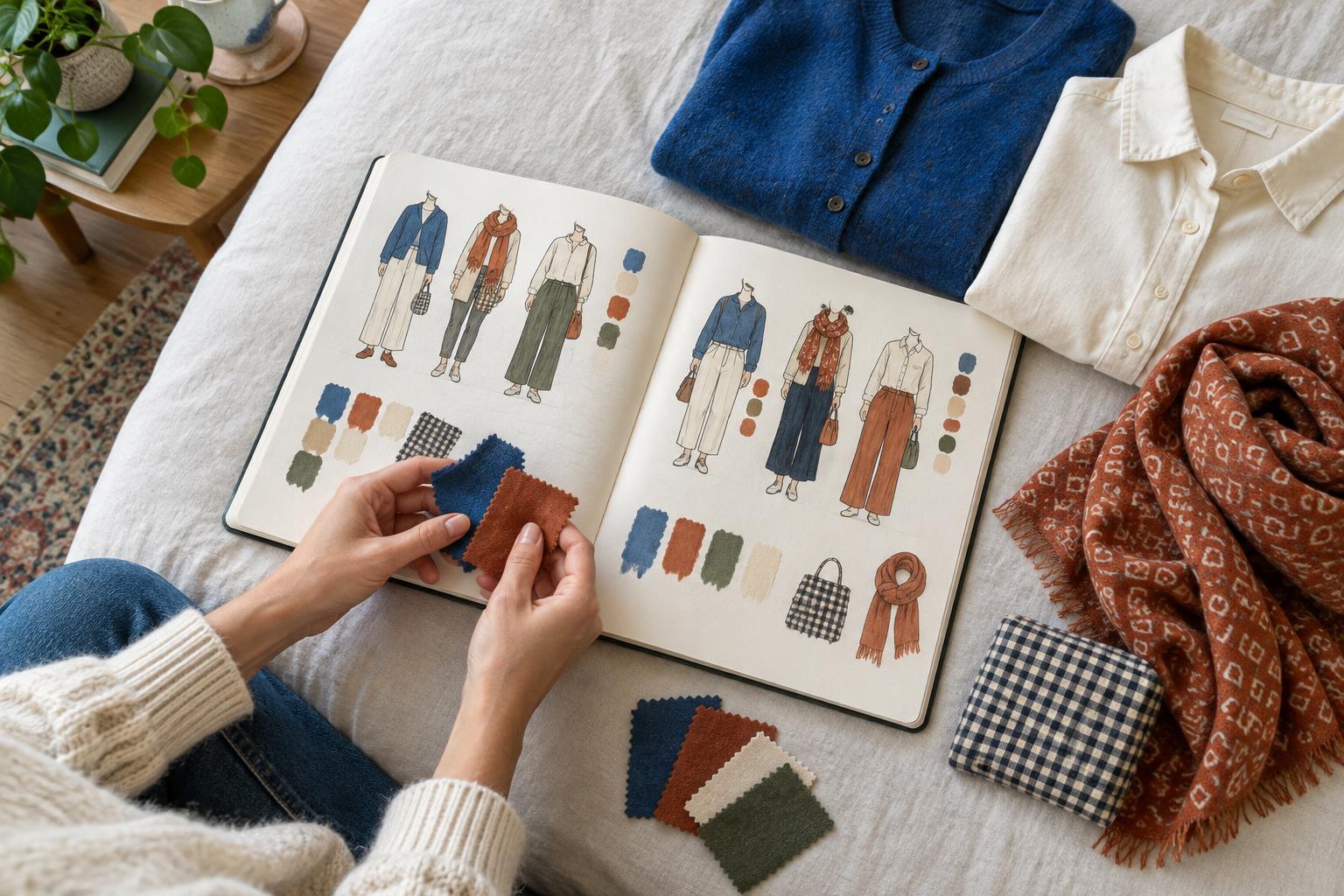
Write down three visual details you associate with the quality. “Playful” might suggest bright colour, an unexpected pairing and an accessory with movement. “Composed” might suggest clean lines, repeated colours and a tidy arrangement of layers. Your associations can be different. The point is to translate an abstract feeling into choices you can test with clothes you already have.
Before rearranging your wardrobe, name a practical limit for the experiment. You might decide to use only pieces you can comfortably wear all day, or to build outfits around shoes you already rely on. Constraints keep the exercise connected to your life. A look that only works while standing still in front of a mirror may be interesting, but it may not be the look you want for an ordinary Tuesday.
Change the arrangement before changing the pieces
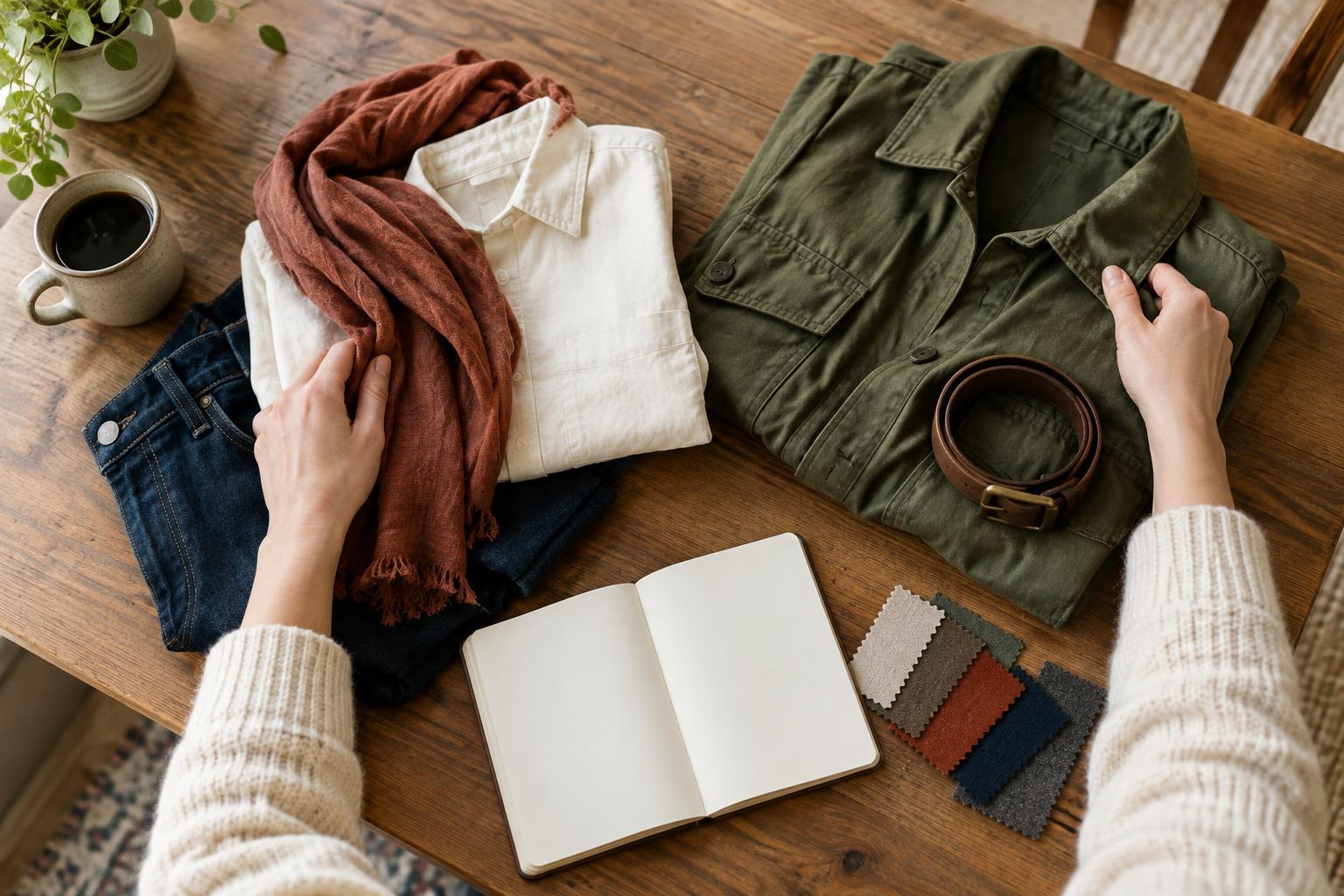
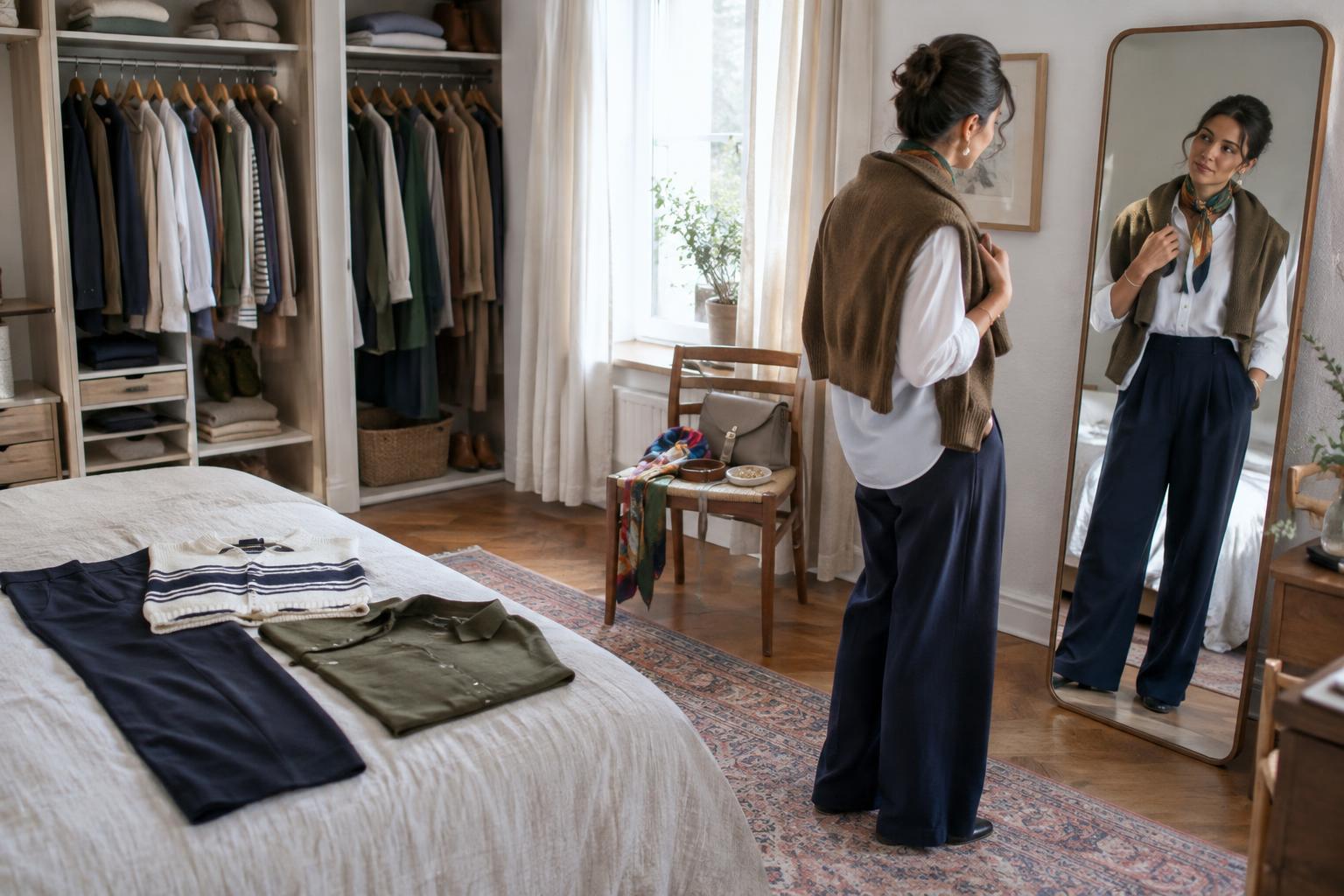
Pull out one outfit you wear often and make three versions of it. In the first, change the proportions: tuck a top, leave it untucked, roll a sleeve or add an open layer. In the second, change the visual emphasis: move a scarf from your neck to your bag, or wear a noticeable accessory instead of several small ones. In the third, alter the mood with a different combination of shoes, outerwear or bag.
Look at each version from a few steps away. Where does your eye go first? Does the outfit feel balanced in the way you want, or would you rather draw attention somewhere else? There is no universal answer. Someone seeking a sharper look might like a clear shoulder line; someone seeking ease might prefer a softer shape and visible layers.
If you feel stuck, try pairing items that usually live in separate parts of your closet. A dress worn under a sweater may read differently from the same dress on its own. A crisp shirt with casual trousers may feel less formal than expected. Check comfort and movement as you go, rather than assuming an unfamiliar pairing cannot work.
Use colour and accessories as low-commitment experiments
Colour can shift the impression of familiar clothes without requiring a new silhouette. Choose one garment with a colour you rarely feature and build around it using pieces you already own. Try it first with quiet companions, then with another colour or pattern. If a combination feels too busy, repeat one colour in a small detail, or let more neutral space separate the competing elements.
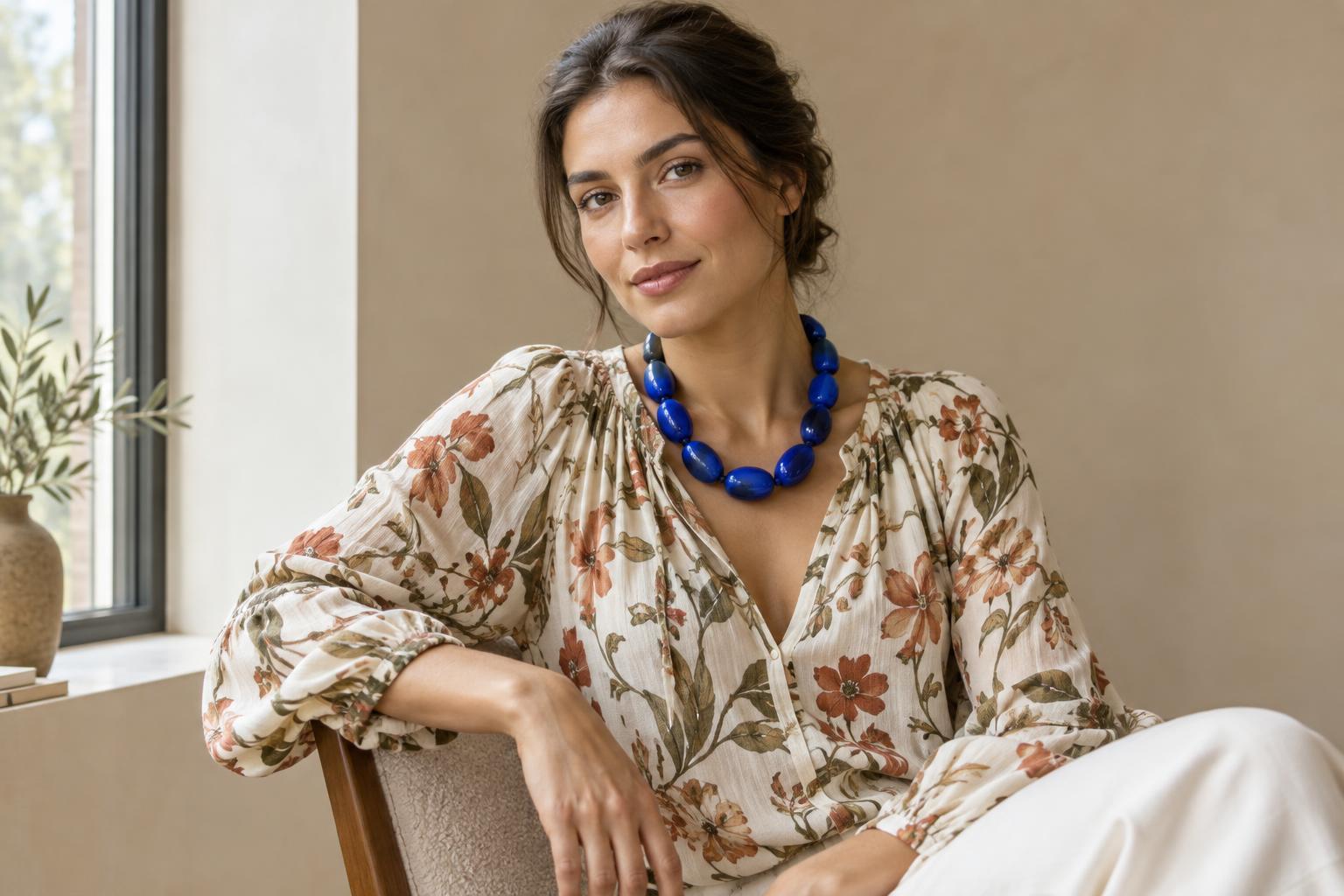
Accessories offer another way to test a direction at a small scale. A belt, brooch, scarf, pair of glasses or bag can change the focal point of an outfit. Try using just one as the statement detail and keeping the rest understated. Then reverse the idea: use several subtle details that share a colour, texture or shape. Compare how each approach feels, not just how it looks.
You do not need to force yourself to like every experiment. If a bright scarf feels exciting in your hand but distracting when worn, that is useful information. Perhaps you prefer colour farther from your face, or in a smaller amount. An unsuccessful outfit can still tell you something precise about your taste.
Make a small visual record
A quick photo can help you see an outfit as a whole, rather than as separate decisions made in the mirror. Photograph two or three versions in similar light and from a similar distance. You are not creating content for anyone else; the images are notes for yourself. If photographs feel unhelpful, make a simple written record instead: list the pieces, the feeling you intended and what actually stood out.
Look for patterns across your experiments. Do you keep returning to contrast, such as a structured jacket over a soft top? Do you enjoy repeated colours, visible texture or an unexpected accessory? Also notice which outfits you want to wear outside the house. Your reactions during an ordinary day can reveal more than a single moment of approval in front of a mirror.
Save a few combinations you would wear again, including the ones that only need a small adjustment. This gives you a personal reference library made from your real wardrobe. It is more useful than a collection of images that depends on clothes you do not own.
Keep what fits your life and let the rest go
At the end of the exercise, choose one change to carry forward. It might be wearing a familiar shirt differently, bringing an overlooked accessory into rotation or pairing colours you used to keep apart. Repeating one choice gives you time to learn whether it genuinely feels like yours.
Creative identity does not require a single, perfectly consistent aesthetic. You may want a quiet look on one day and a striking detail on another. By experimenting with what is already in your wardrobe, you can discover the choices that express you now without treating every new idea as a reason to start over.