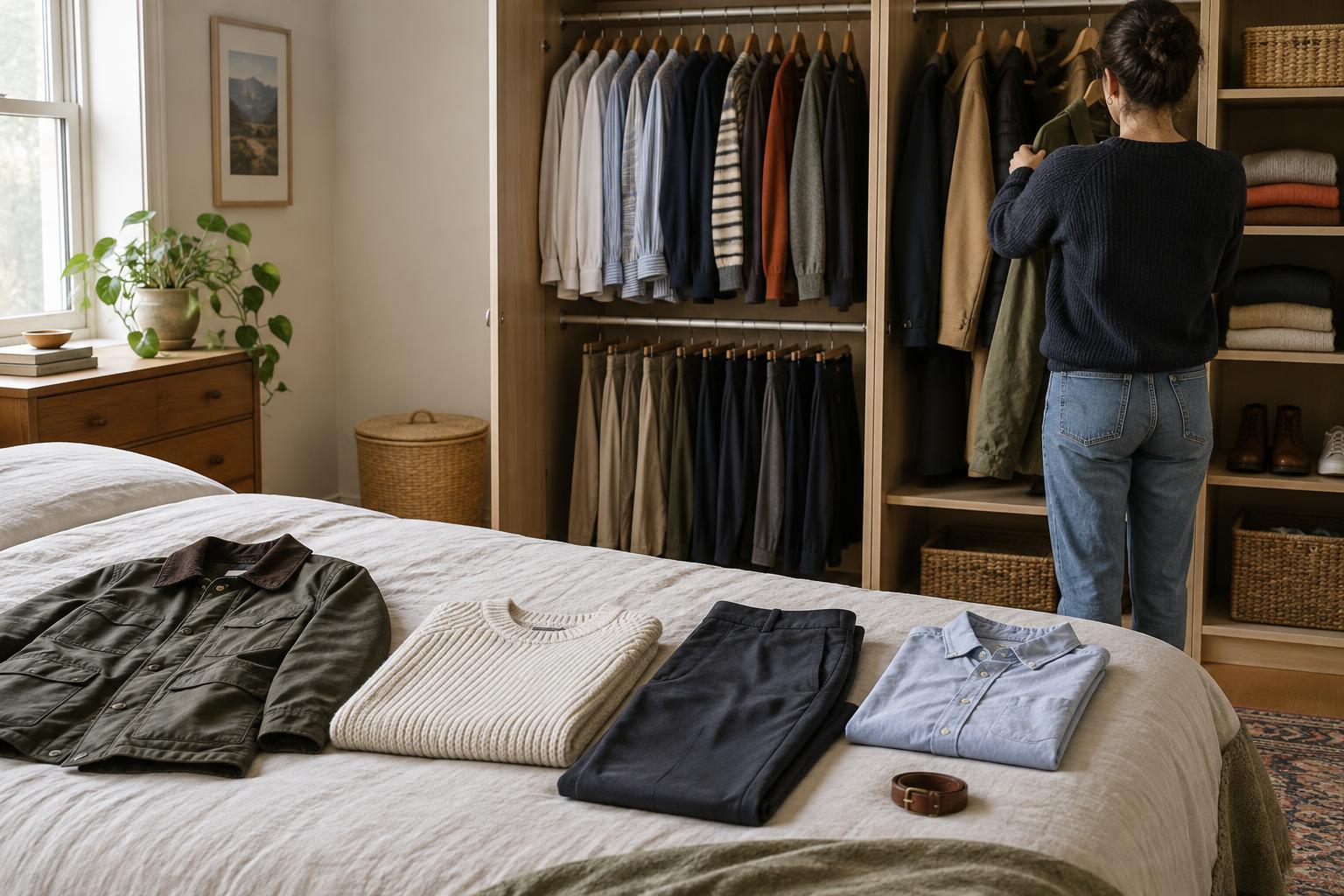
Start with the clothes you actually use
A wardrobe inventory is a record of what you have and how it serves you. It need not be a perfect catalogue or a challenge to reduce your belongings. The aim is to make your clothes easier to see, combine and choose. Sorting by garment type gives the exercise a clear starting point; adding function reveals why certain pieces earn their space.
Set aside time to work through one storage area at a time, such as a rail, drawer or box. Keep a note on paper or in a simple digital document. You do not have to empty your entire wardrobe at once. If you store clothing for another season, include it later or mark it as not yet reviewed. An inventory is most useful when you can finish it and return to it.
Group garments by type
Begin with broad categories: tops, bottoms, dresses and one-piece garments, layers, outerwear, shoes and accessories. Divide a category further only when the distinction helps you make decisions. For example, separating lightweight tops from warm knitwear may help you plan outfits, while sorting every neckline into its own group may create more work than insight.
List each item in a few identifying words, such as “blue striped shirt” or “black wide-leg trousers.” Record its usual storage place if you often forget where things are. As you go, place damaged garments and pieces that need washing or alteration in separate piles, but leave them on the list. An item that needs attention is still part of your wardrobe, even if it is not ready to wear today.
Add the function each piece performs
Next to each item, write down what it does for you. Functions can be practical: keeping you warm, working in rain, allowing comfortable movement or meeting a dress expectation. They can also be expressive: adding colour, creating a sharp silhouette, making a quiet outfit feel playful or helping you feel like yourself. A garment can have several functions; there is no need to force it into a single box.
Use words that reflect your life rather than a prescribed set of occasions. “Good for long walks,” “easy to sit in all day” or “makes a plain outfit feel finished” may tell you more than “casual” or “smart.” If you rarely wear something, note why without judging the purchase. Perhaps it is difficult to layer, needs a particular undergarment or belongs to an activity you seldom do. These details make the inventory more revealing than a count alone.
Look for patterns, not ideal numbers
Once the list is complete, scan it for repeated roles. You might own several pieces you love for their colour but only one layer that works over them. Or you may discover that a small group of reliable garments supports most of your week. Neither observation means you must change anything. It simply shows where your wardrobe is flexible and where getting dressed takes more effort.
Try building three outfits from the items you have listed: one for an ordinary day, one for a change in weather and one that expresses a mood you enjoy. Note which pieces make each outfit work and where you get stuck. A perceived gap may turn out to be a pairing you had not tried. If it is a genuine gap, describe the function first, such as “a comfortable layer for cool evenings,” rather than jumping straight to a specific item to buy.
Keep the inventory useful and personal
Your inventory should be easy to update. Add a brief note when an item enters or leaves your wardrobe, and revisit the list when your routines or the weather change. If photographs help you recognise pieces or remember outfit combinations, you can add them, but a text list works just as well. Choose the format you will actually use.
The finished inventory is not a verdict on whether you own the right clothes. It is a map of the materials you already have for everyday dressing and self-expression. By recording both garment type and function, you can see not only what is in your wardrobe, but what each piece makes possible.


