Start with a purpose, not a pile of necklaces
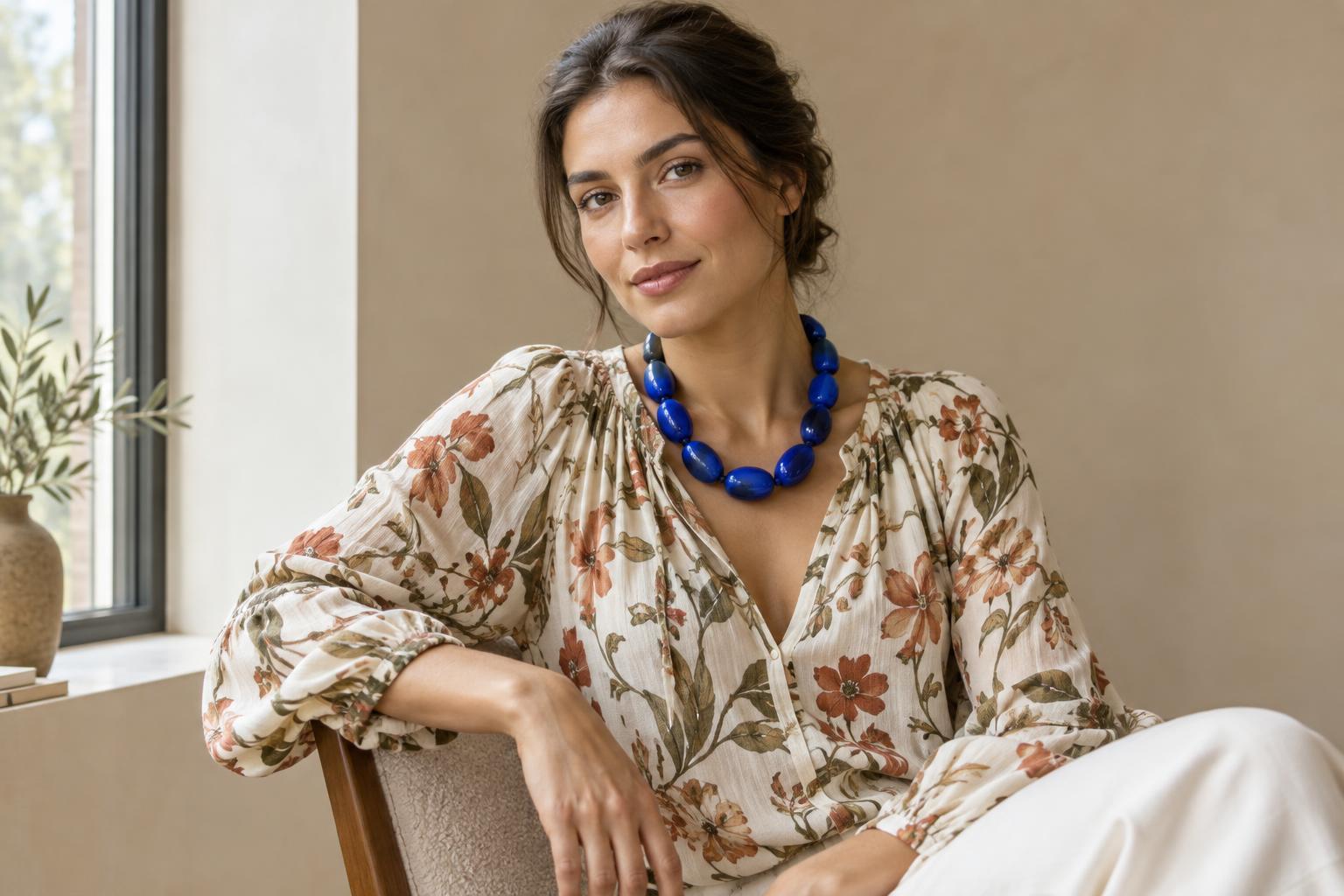
Layering necklaces works best when each piece has a role. One might frame your face, another might carry a pendant, and a third might add texture against your clothing. Before reaching for every chain you own, choose the detail you want people to notice first. A meaningful charm, a bold link or a flash of colour can be your focal point; the other necklaces can support it.
Begin with two pieces if you are new to layering. Put them on together and look in a mirror while standing naturally. Can you see both clearly, or does one disappear behind the other? Adding a third necklace is easier once the first two have distinct positions. There is no required number of layers: two well-chosen chains can make more of a statement than five competing ones.
Choose lengths by where they fall on you
Necklace length labels are a starting point, not a guarantee of placement. The same chain can sit differently depending on your neck, the size of its pendant and the fabric beneath it. Try your shortest piece first, then add a second that leaves visible space below it. A little separation lets each shape read on its own; more space may help when both pieces have pendants.
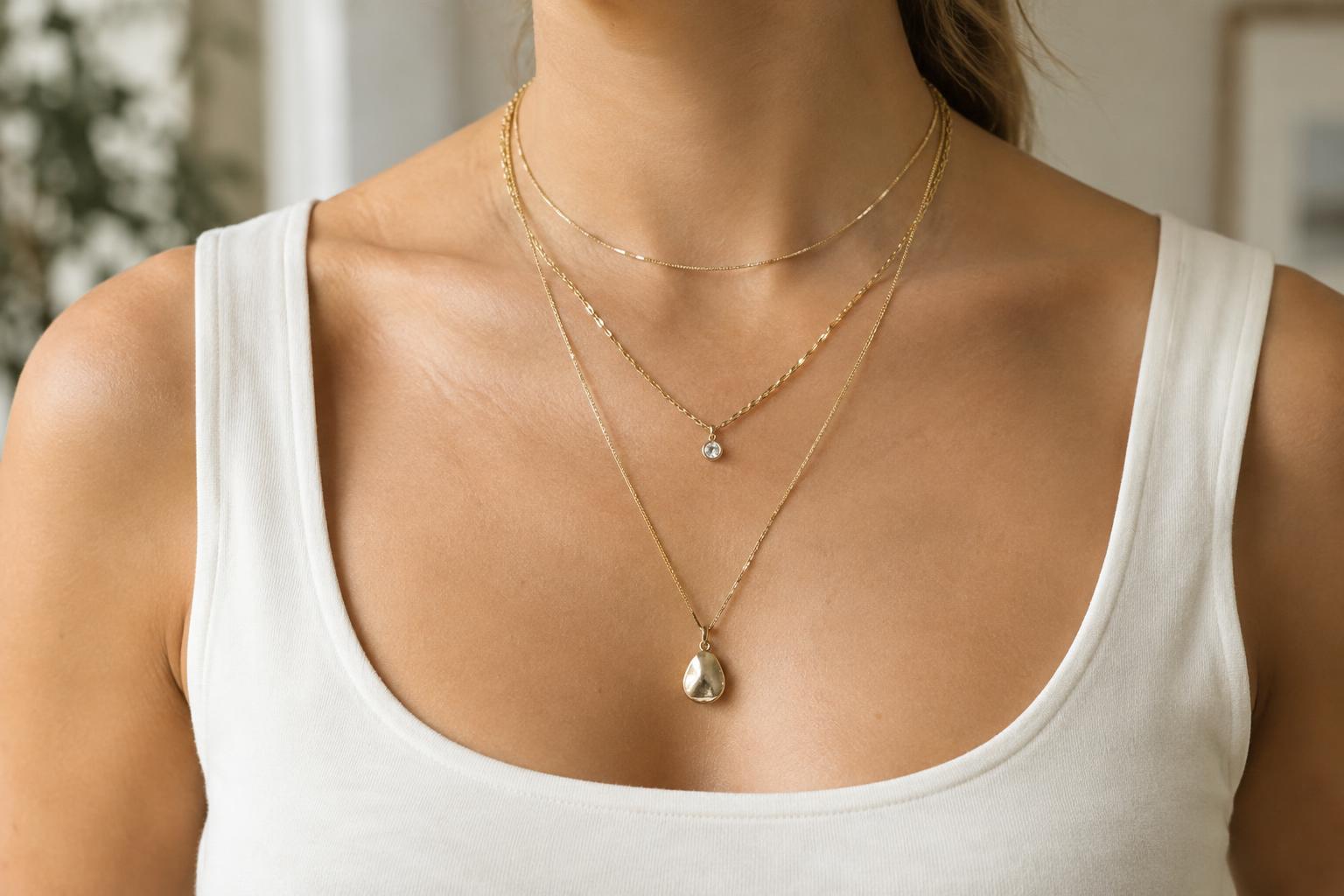
Consider your neckline as part of the arrangement. With an open neckline, you might place one chain near the collarbone and let a pendant fall into the open space below. Over a crew-neck top, a longer chain may show more reliably than a delicate one resting at the edge of the collar. If a pendant repeatedly catches on a neckline, adjust its length or try the stack with a different top. Check the result while sitting and moving, too: necklaces shift when you do.
Give each layer a distinct job
A reliable combination is a simple short chain, a middle layer with a small detail, and a longer focal pendant. Keeping the largest charm on just one layer can prevent the stack from looking crowded. If you prefer a bolder look, try a substantial chain alongside a finer one rather than using several heavy pieces at once. Contrast gives the eye a path through the layers.
You can also vary texture without changing your overall style. A smooth chain beside a link chain is easier to distinguish than two nearly identical fine chains sitting close together. Repeating one element, such as a metal tone, charm shape or colour, can make unlike pieces feel intentional. Mixed metals can work as well; try repeating each finish somewhere in the stack so neither looks accidental. These are options to test, not rules you need to follow.
Reduce tangles while you wear them
Fine chains are especially likely to twist together when they sit at similar lengths and move as a group. Give delicate pieces more vertical space, or pair a fine chain with one that has a different weight or texture. If two pendants keep crossing, try moving one to a shorter or longer chain. A chain extender can help you test a new position without replacing the necklace.
Fasten each necklace separately and check that its clasp starts at the back before adding the next layer. A necklace-layering clasp can keep several closures together and make them quicker to put on, though it will not stop every chain from crossing in front. During the day, straighten the stack gently rather than pulling a knot tight. If a combination tangles every time you wear it, treat that as useful feedback: change the spacing or swap one piece.
Store the stack so it is ready to wear again
Take layered necklaces off one at a time, especially if their chains have begun to overlap. Lay each piece flat or hang it separately, with its clasp closed. Keeping fine chains in separate compartments or pouches helps prevent a small twist from becoming a knot before the next wear. If you use a shared jewelry box, give pendants enough room that their chains do not loop around neighboring pieces.
For a quick styling exercise, choose one focal necklace and make two stacks around it: one with clear, widely spaced lengths and one with closer layers and contrasting textures. Wear each with the same top for a few minutes. Notice which arrangement feels comfortable, stays visible and expresses what you intended. Keep a photo of the version you like; it can be a starting point the next time you want your accessories to say something without slowing down your morning.