Start with the story, not the clothes
An outfit mood board is a collection of images that helps you explore what you want to express through clothing. It becomes more useful when the images share a point of view. Before collecting jackets, shoes or accessories, write a one-sentence prompt: “I want this outfit to feel like a quiet morning in a city,” or “I want to look playful but composed.” The sentence gives you something to select for, rather than leaving you with a folder of unrelated favourites.
Keep the idea specific enough to guide choices but open enough to interpret. “Confident” might lead in many directions; “confident without looking formal” creates a more interesting question. You can also name the setting and purpose: a gallery visit, a workday, or an ordinary afternoon you want to make feel different. The story does not need to be obvious to anyone else. It only needs to help you decide what belongs on the board.
Collect images that play different roles
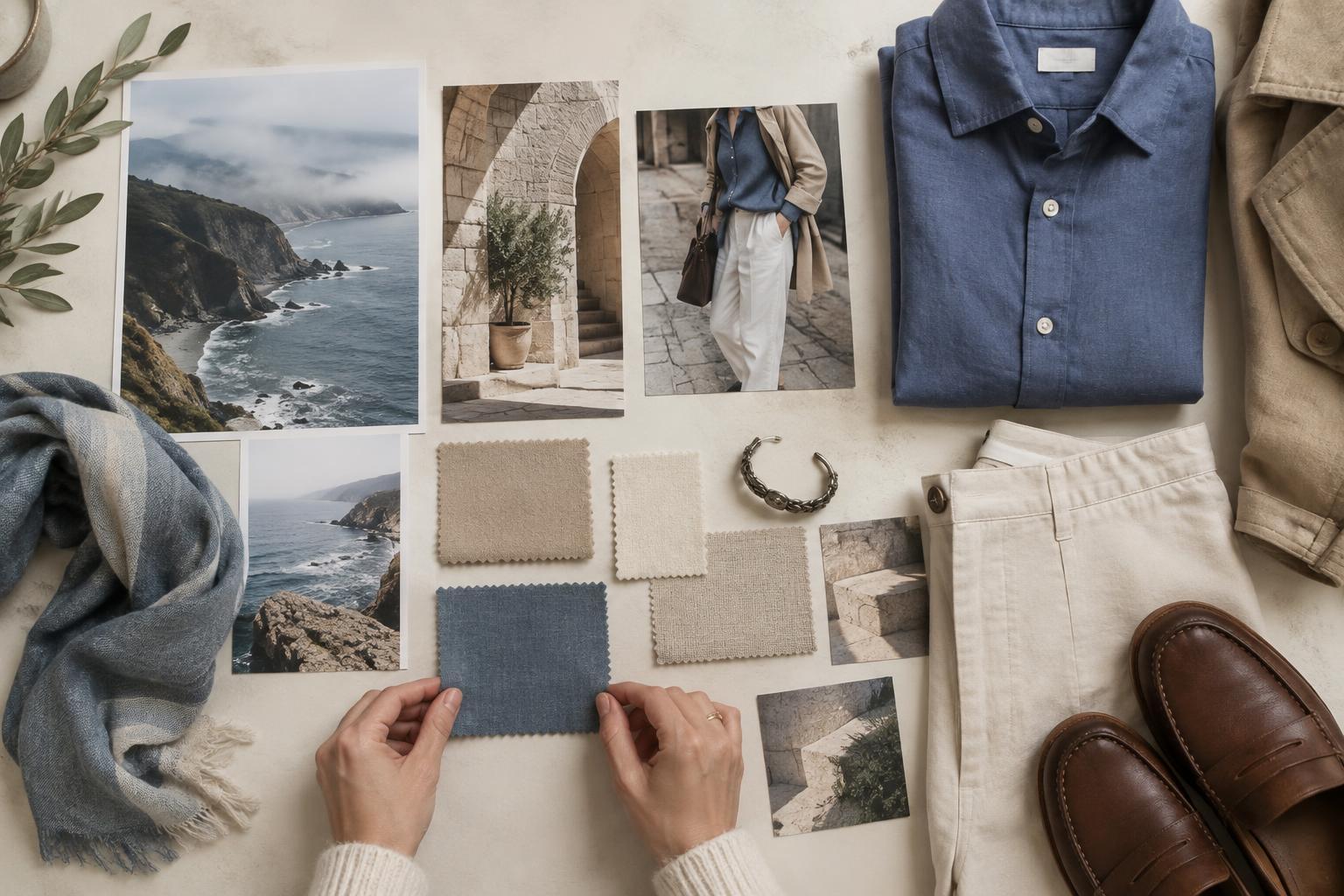
Begin with a small pool of images, perhaps a dozen or so, and look beyond complete outfits. A photograph of a doorway might suggest a colour pairing. A close-up of worn leather might point to texture. A poster could offer a strong graphic shape, while a street scene could capture the mood you want to carry into your day. Mixing clothing and non-clothing references makes it easier to create an outfit that feels personal rather than copied.
Give each image a job. One can establish the atmosphere, another the silhouette, another the palette and another a detail such as a scarf knot or a bold earring. If several images say exactly the same thing, keep the one that communicates it most clearly. If an image is beautiful but has no connection to your prompt, save it for another board. Editing is not a rejection of your taste; it is how you make the story visible.
Find the visual thread
Lay out your images and look for recurring cues. You might notice long vertical lines, soft edges, dark neutrals or one bright accent. Write down two or three threads that appear across the collection. These become your working rules. For a “quiet morning in a city” board, the threads might be relaxed tailoring, muted blue and grey, and one crisp detail that makes the outfit feel intentional.
Not every image needs to match. Contrast can make a board more expressive: a delicate fabric beside a sturdy shoe, or an orderly grid interrupted by an irregular print. The key is to choose the contrast on purpose. Ask what it adds to the story. If the answer is unclear, try removing it and see whether the board gains focus. A clear narrative can hold a surprising detail, but it should not have to explain away every image.
Arrange the board so someone can read it
Whether you use a digital canvas or paper, place your strongest image where the eye naturally lands first. Group supporting images nearby, then give smaller details room around the edges. This creates a path from overall feeling to practical choices. You do not need a polished design: consistent spacing and a limited selection will often make the idea easier to understand than elaborate decoration.
Add a few short labels if they clarify decisions. Words such as “soft structure,” “unexpected shine” or “room to move” can connect an abstract reference to something you can wear. Avoid labelling every image; the pictures should still do most of the work. When you think the board is finished, step away and return with your original sentence in mind. Can you see that idea without explaining each image individually? If not, adjust the selection or layout.
Translate the narrative into an outfit
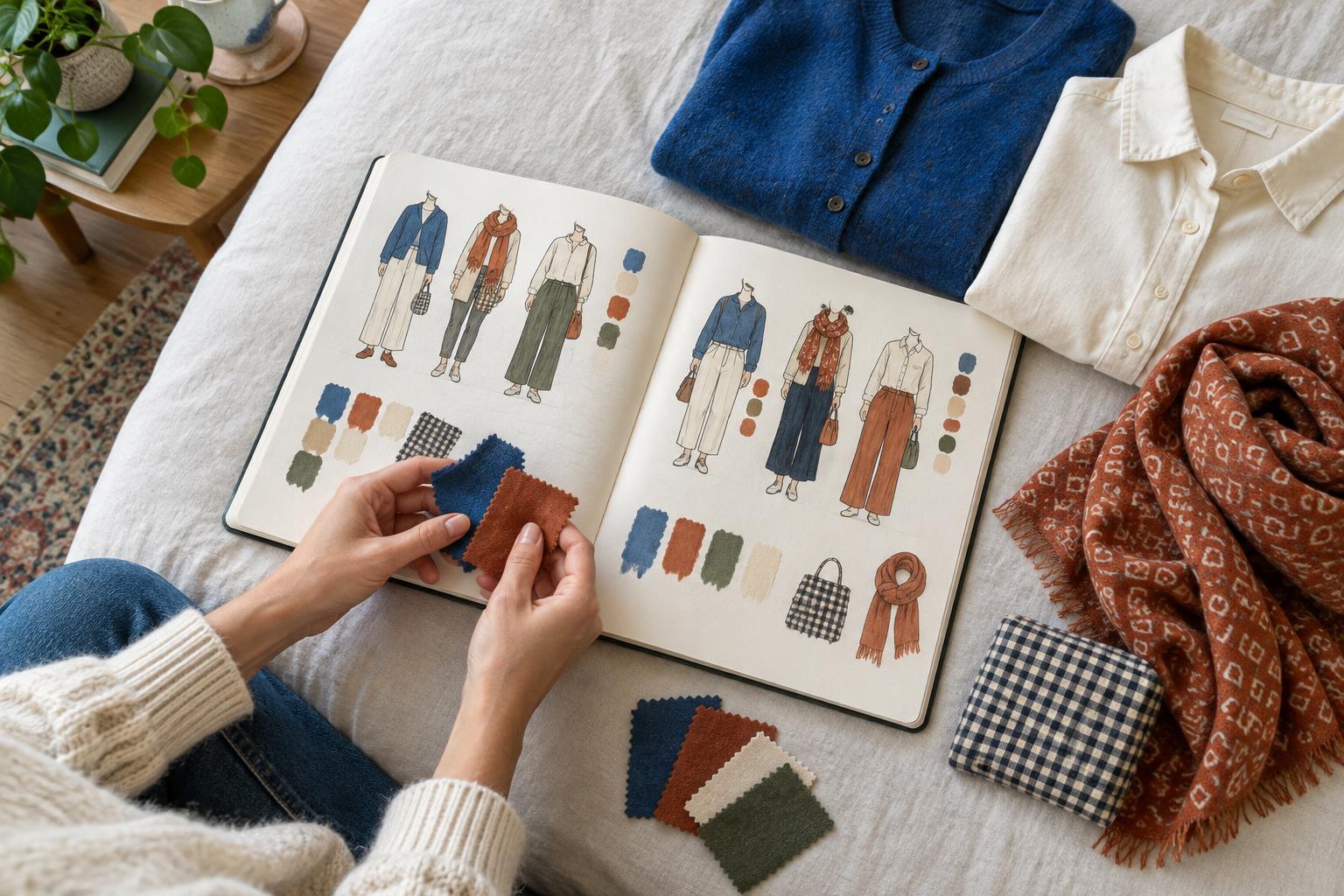
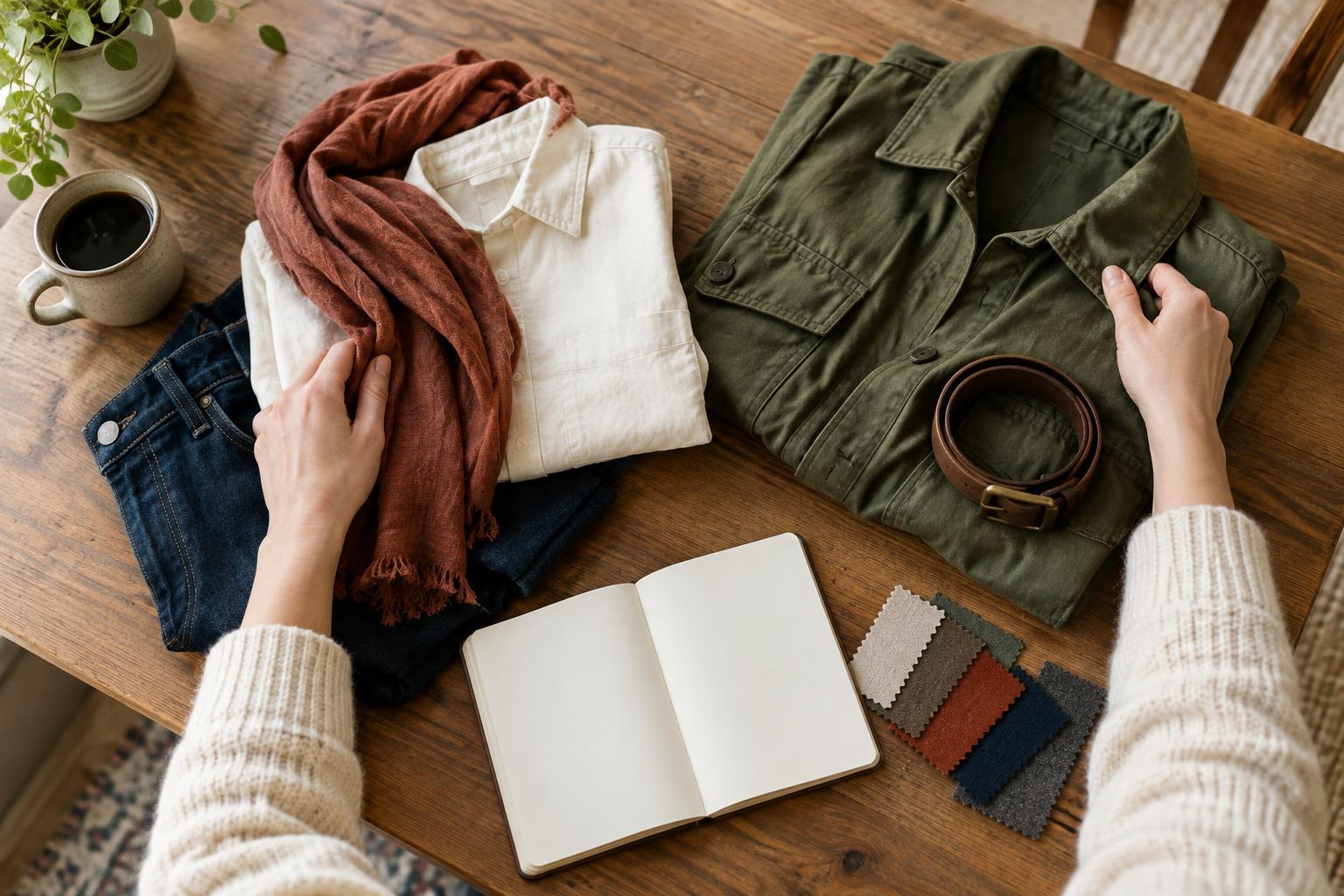
Treat the finished board as a guide, not a shopping list. Identify one wearable choice for each major thread: a shape, a colour relationship, a texture and perhaps a statement detail. You may already own pieces that express them. For example, relaxed tailoring could mean an unstructured jacket or loose trousers; a crisp detail could be a neat collar, a structured bag or polished shoes. The goal is to carry the board’s logic into your wardrobe, not reproduce an image exactly.
Try on a version of the outfit and take a quick photo. Compare the feeling of the photo with the board. If the outfit looks too busy, remove a detail; if it feels flat, strengthen one contrast. Notice how the clothes move and whether they suit the day you planned for. You can revise either the outfit or the board as you learn what works. A successful mood board is not simply attractive to look at: it helps you make choices that feel connected to an idea.