Start with the pieces you actually wear
Mixing jewellery metals is not a test of whether every clasp, chain and buckle has the same colour. It is a way to bring pieces you like into one look. A silver ring might be a daily habit, while a warm-toned necklace carries a memory or adds colour near your face. Neither has to be put away because the other is present.
Begin by choosing one piece you want to wear, then build around it. If it is a substantial gold-toned pendant, let that be the focal point. Your other metals can play smaller supporting roles: a slim silver band, a watch with a steel case or a pair of understated earrings. Starting with a favourite is more useful than trying to satisfy a rule about which metal you are supposed to wear.
Repeat a metal to create a visual connection
Repetition is one of the easiest ways to make different metals feel connected. If you wear a silver necklace and a brass bracelet, add a small silver detail elsewhere, such as a ring. The repeated silver gives the eye a path through the outfit. The pieces do not need identical shapes or finishes; a recognisable echo is enough.
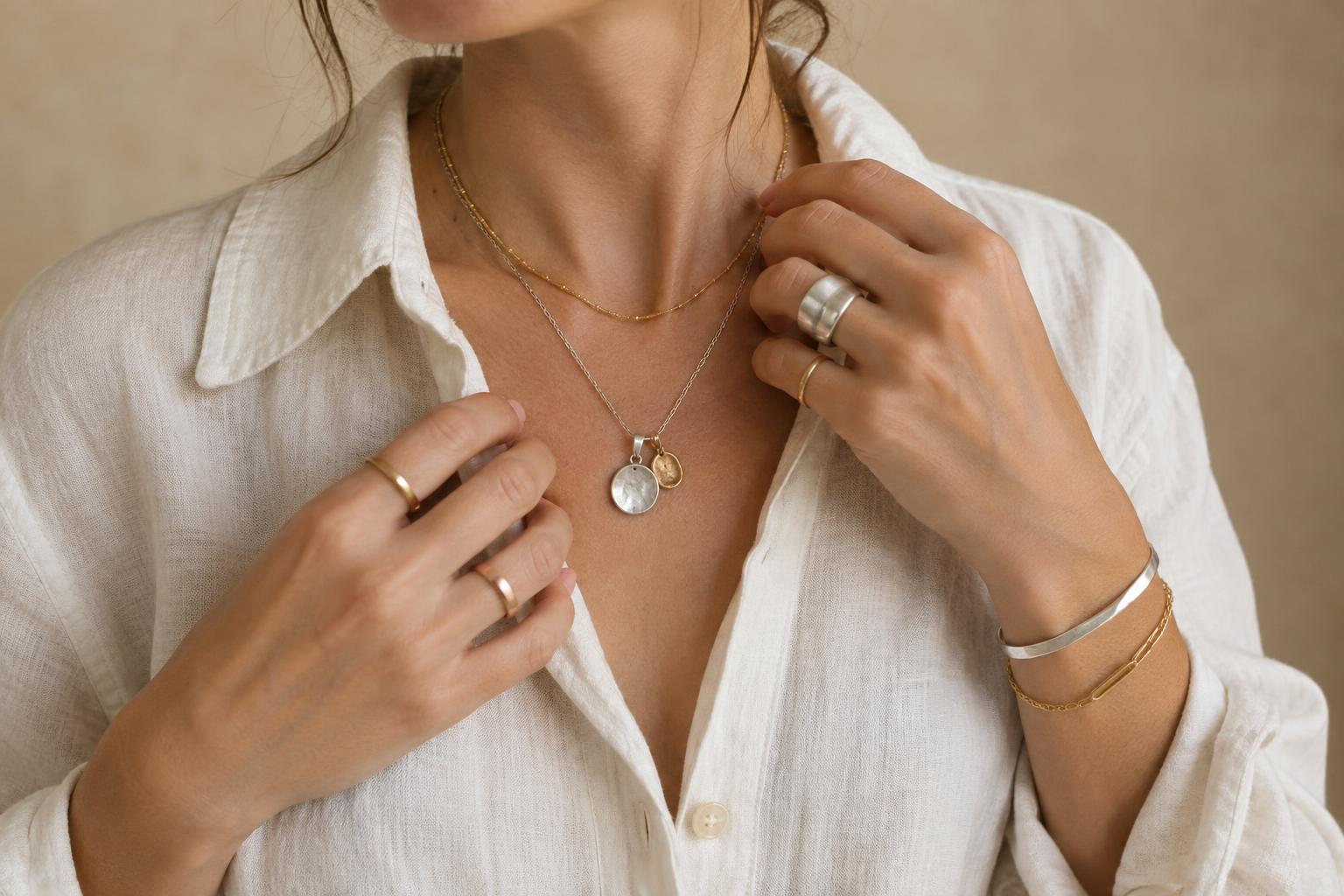
You can also place two metals close together so the combination looks deliberate. Stack a gold-toned and a silver-toned ring on neighbouring fingers, layer chains of different colours, or pair a mixed-metal watch with a simple bracelet. When the metals meet in one area, their difference becomes part of the design rather than something a viewer has to discover later.
There is no required ratio. You might wear mostly silver with one warm accent, or divide the colours more evenly. If a combination feels scattered, repeat one of the less prominent metals once more before replacing anything.
Look beyond colour: finish, shape and scale matter
Two pieces can share a metal colour and still feel unrelated. A polished, delicate chain and a chunky, brushed cuff make different visual statements. When mixing metals, look for a connection in texture, shape or weight. Smooth silver hoops and smooth gold-toned bangles may sit comfortably together because their finishes speak the same visual language. Two sculptural pieces may connect through their shapes even if one is bright and the other is darkened.
Scale offers another way to organise a look. Try one larger statement piece with several quieter pieces rather than asking every accessory to compete. For example, a wide brass cuff can lead while fine silver rings provide detail. If you prefer a bolder result, repeat a substantial shape in another metal. The aim is not perfect symmetry, but a sense that each piece has a role.
Pay attention to what happens when jewellery moves. Layered necklaces that continually tangle may be frustrating even if their colours look appealing. Comfortable spacing and different chain lengths can matter as much as the metal combination.
Use clothing as the backdrop, not a restriction
Your clothes can help mixed metals read clearly. Against a simple neckline or solid-coloured sleeve, each piece has room to be seen. With a patterned or highly detailed outfit, you might choose fewer accessories or keep their shapes related. These are options for directing attention, not rules about what you may wear.
Metallic details on clothing and bags can join the composition too. A silver zip does not forbid gold-toned earrings. If you want a connection, repeat the zip’s cooler colour in a ring or bracelet. If you would rather leave it alone, treat the zip as part of the garment rather than another item that needs matching. Not every visible bit of hardware needs a partner.
Try a five-minute mixed-metal edit
Lay out three pieces you would happily wear on their own, including at least two metal colours. Put them on together and take a quick photo in the light where you normally get dressed. Then change just one thing: move a ring to another hand, swap a chain length, remove a bracelet or add a small repeat of one metal. Compare the two versions and notice where your eye goes first.
Ask yourself whether that first point of attention is where you want it. Does the combination feel quiet, playful, bold or somewhere between? Keep the version that supports the impression you want to make, even if its metals are unevenly distributed. Once you know which arrangement feels right, you have a starting point for future outfits—not a formula you must follow every time.