Start with the space the neckline creates
A neckline frames the face and creates an outline around the upper body. A necklace adds another line inside or around that frame. When the two lines work together, the pairing can feel intentional; when they overlap awkwardly, even pieces you love may seem harder to wear. There is no rule that says every neckline needs a necklace. The useful question is what you want the accessory to do: repeat the clothing’s shape, introduce a contrasting curve, or become the main point of attention.
Before choosing a piece, look at where its chain and pendant actually fall while you are wearing the top. A necklace that ends just above a neckline often reads differently from one that rests directly on its edge. Move around, too: a pendant may shift as you sit or walk. If the necklace keeps catching on a collar or disappearing under the fabric, try another length rather than assuming the design itself is wrong.
Crew necks and other high necklines
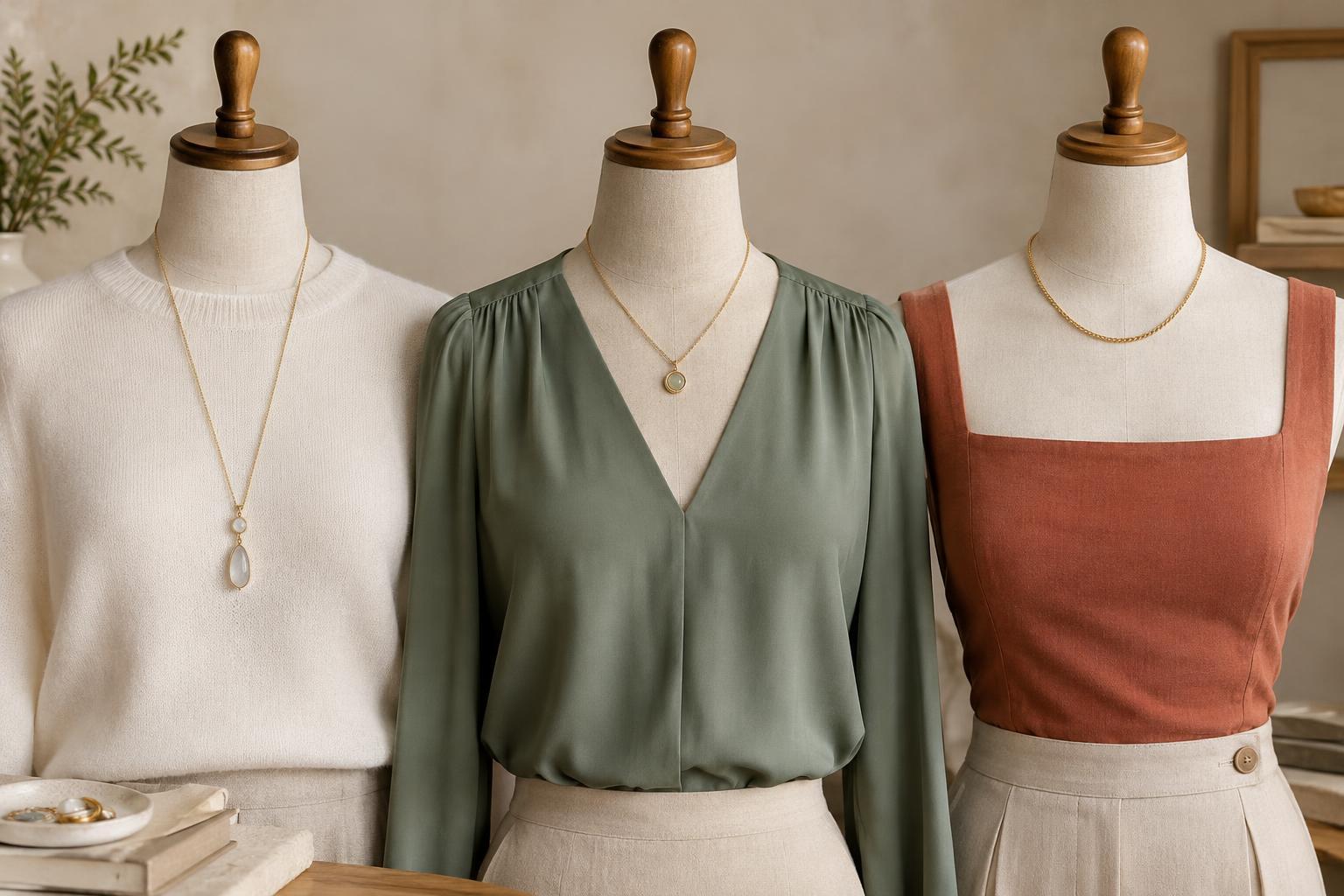
A crew neck leaves little exposed space between the neck and the fabric. One option is a short necklace that sits clearly above the collar, such as a close-fitting chain or a compact statement piece. Another is a longer pendant that drops well below the collar line. Both create a distinct placement instead of asking the necklace to compete with the edge of the shirt.
A turtleneck or mock neck offers a continuous background for a necklace. A longer chain, a bold pendant or several chains of visibly different lengths can stand out against a plain knit. Consider the fabric before choosing a heavy piece: a substantial pendant may pull a lightweight top out of shape, while a fine chain can be difficult to see against a textured one. If the garment already has strong colour or pattern, a single clear necklace shape may give the eye a place to rest.
V-necks and open collars
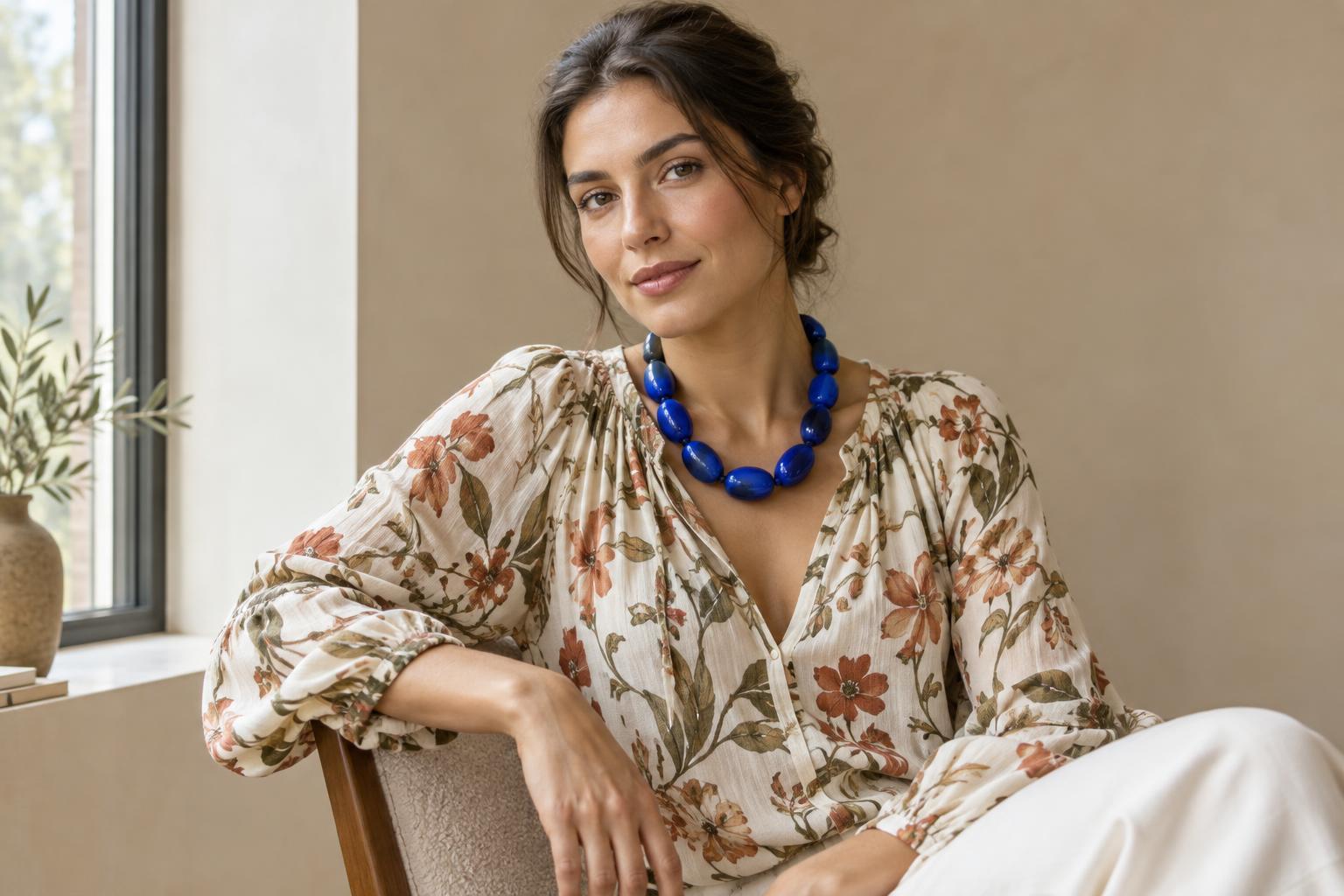
A V-neck points downward, so a pendant or chain with a similar taper can echo its direction. For a tidy effect, let the pendant sit within the open area rather than directly on the V’s lowest point. A rounded necklace can also work: its softer line provides contrast without needing to match the neckline exactly. What matters most is that the necklace has enough visible space to hold its own shape.
An open shirt collar creates a V-like opening, but its folds add extra lines. A small pendant within the opening can feel understated, while a necklace worn over the shirt can make a stronger statement. Try both before settling on one. With a buttoned-up collar, a necklace can sit beneath the collar points or outside them, depending on its size and how the fabric lies. If the collar and necklace keep shifting against each other, a simpler chain or a different button position may be more comfortable.
Scoop, square, boat and strapless shapes
A scoop neck leaves a broad, curved area of skin. A necklace with a gentle curve can follow that opening, while a shorter pendant can sit at its centre. A square neckline has straighter edges and defined corners; a compact necklace can sit inside the open space, or a rounded shape can soften the geometry. You do not have to match angles precisely. Notice whether the necklace appears deliberately placed rather than crowded against the fabric.
A boat neck runs widely across the shoulders, leaving a narrow area above the garment. A close-fitting necklace can occupy that space, while a longer pendant crosses the fabric to create a vertical line. Strapless tops leave more open space, so several lengths may work. A short necklace draws attention toward the face; a longer one extends the focus downward. The amount of space does not mean you must fill it: bare skin can be part of the look, with earrings or another accessory taking the lead instead.
Make the pairing yours with a quick mirror test
Set out two or three necklaces of different lengths and try each with the same top. First, look only at placement: is the piece clearly above, within or below the neckline? Next, consider visual weight. A wide collar, ruffles or detailed print already adds activity near the face; a delicate chain may offer a pause, while a bold necklace may create an intentionally maximal look. Neither is automatically better. Choose the effect you want rather than treating “balance” as a requirement to be subtle.
Finally, check the outfit from a few steps away and in motion. Can you see the detail that made you choose the necklace? Does it sit comfortably without constant adjustment? If so, the pairing is doing its job. Neckline guidance is a starting point, not a dress code: an unexpected length or contrasting shape can be the detail that makes an outfit feel distinctly yours.