Start with activities, not a packing list
A small travel wardrobe works best when every item has a job. Before opening your closet, write down the main parts of your trip: travel days, long walks, meals out, work commitments, quiet mornings, or time outdoors. You do not need an outfit for every entry. You need a clear picture of the conditions your clothes will have to handle.
Group similar plans together. Several days of exploring on foot may call for one kind of outfit formula, while a dinner or presentation may call for another. Note anything with a firm requirement, such as footwear suitable for uneven ground or clothing appropriate for a particular venue. Then check the weather forecast close to departure and plan for reasonable variation rather than packing for every imaginable possibility.
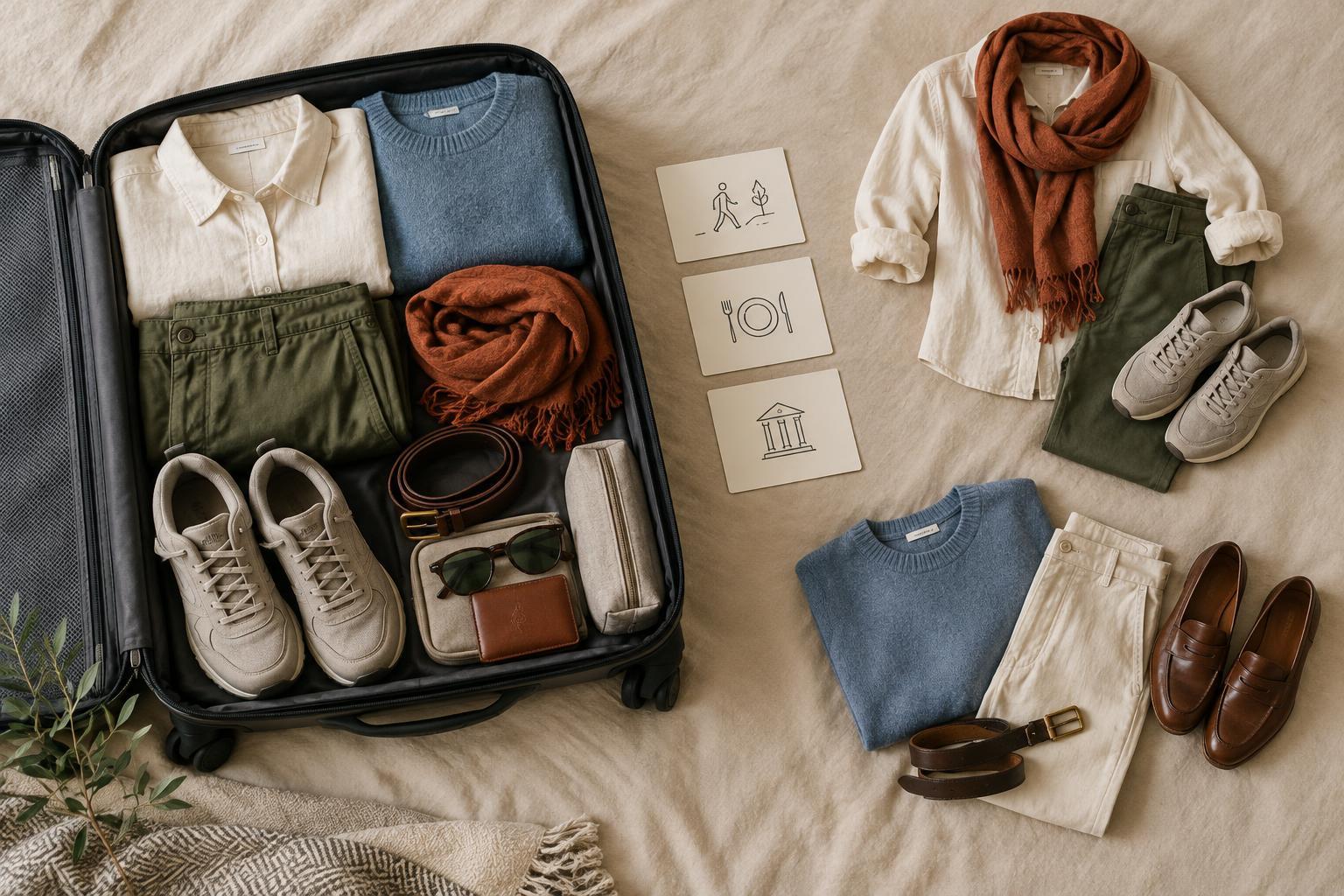
Try a simple exercise: label each itinerary item as active, casual, polished, or transit. If most of your plans share a label, let that category shape most of your bag. A single polished evening does not need to dictate the whole wardrobe.
Build outfit formulas you would actually wear
An outfit formula is a repeatable combination, such as comfortable trousers, a light top, and an overshirt. Choose two or three formulas that fit your activities and your usual style. Repeating a silhouette is not a failure of creativity; it can make dressing easier when your surroundings and schedule are unfamiliar.
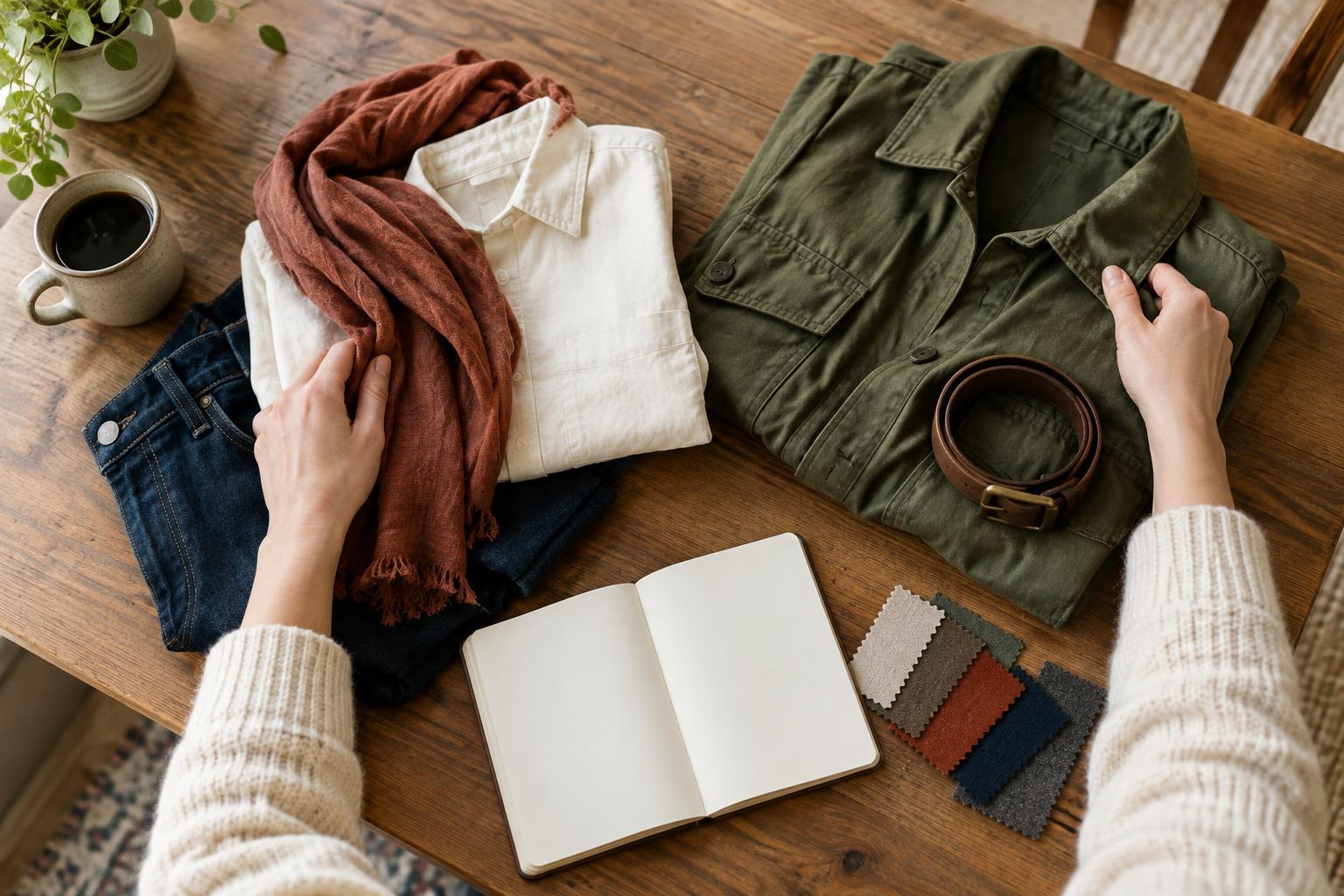
Lay out your candidate pieces and test them as complete outfits. Can the same trousers work with a walking-day top and a smarter layer? Can a shirt be worn open over one outfit and buttoned into another? If an item works only with one other piece, consider whether that particular outfit is important enough to earn the space.
Photograph the combinations on your phone if you find visual reminders helpful. You may spot gaps more easily in a set of outfit images than in a pile of folded clothes. The goal is not to maximize the number of theoretical combinations. It is to have enough combinations you genuinely like for the plans you actually have.
Choose a shared colour direction, then add personality
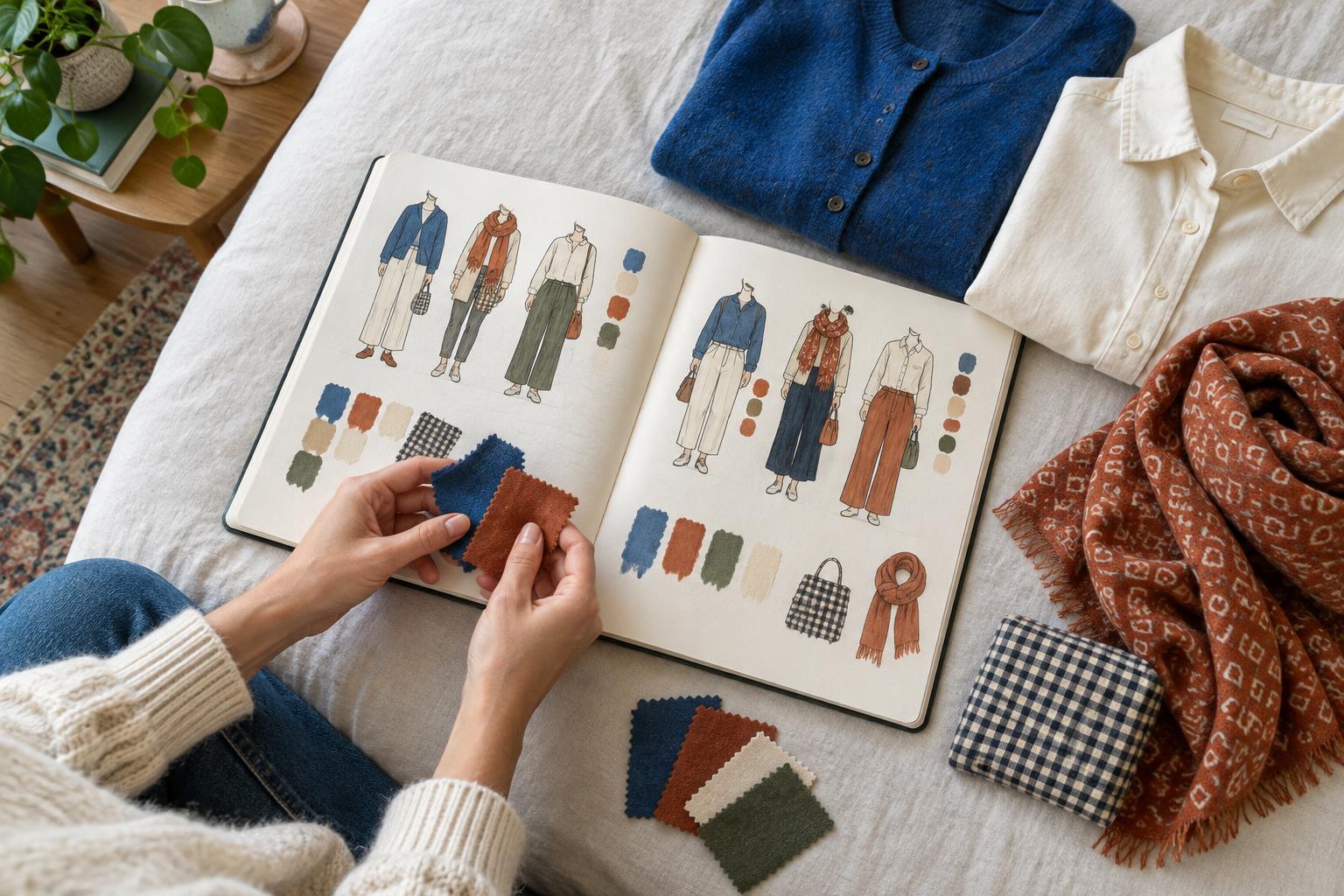
A loose colour direction helps a small wardrobe feel connected. Start with one or two colours you enjoy wearing repeatedly, then choose supporting pieces that sit comfortably beside them. They do not all have to match perfectly. A useful test is whether you would happily wear each top with more than one bottom in your bag.
Keep space for an expressive detail. A patterned scarf, distinctive belt, colourful bag, or pair of earrings can change the emphasis of a familiar outfit without requiring a second set of clothes. Pick details you already reach for at home, rather than bringing an accessory you hope your travel self will suddenly adopt.
Pattern can work in a compact wardrobe, too. If a bold shirt feels central to your style, let it be the focal point and build several outfits around it. Packing small does not mean packing only neutral clothes; it means making deliberate connections between the pieces you choose.
Give comfort and care a place in the plan
Shoes deserve early attention because they affect what you can comfortably do. Start with the pair suited to your longest or most demanding days, ideally one you have already worn for similar activities. Add another pair only if your itinerary calls for a meaningfully different function. A shoe that looks versatile but feels uncomfortable after an hour is not doing much work for your wardrobe.
Think about how often you are willing and able to rewear or wash items. If laundry is part of the plan, choose pieces whose care requirements you understand and allow realistic drying time. If it is not, make room for enough next-to-skin layers to feel comfortable. A light outer layer may also be more useful than an extra statement outfit when temperatures vary through the day.
Try on complete outfits with the layers and shoes you intend to pack. Sit, walk, and reach in them. This quick check can reveal a waistband that bothers you in transit or a jacket that will not fit over your sweater.
Edit with one final itinerary check
Once everything is laid out, walk through the trip in order. Name what you would wear for each type of day, including transit and any special plans. If you cannot place an item anywhere, ask why it is coming. If several pieces do the same job, keep the one you prefer to wear and care for.
Leave a little flexibility rather than filling every bit of space. Plans can shift, and an outfit can change with a different layer or accessory. The most useful small travel wardrobe is not the one with the fewest items. It is the one that supports your itinerary while still looking and feeling recognizably like you.