Start with the outfit you already like
An outfit earns a repeat for a reason. Perhaps the proportions feel right, the clothes are comfortable, or you can get dressed without a long debate in front of the mirror. Instead of treating that combination as evidence that you lack ideas, treat it as useful information about your personal style. Repetition can be a choice: you are keeping the parts that work and leaving yourself room to play with the rest.
Choose one outfit you reach for often and write down its three most dependable features. Be specific: “loose top with a defined waist” tells you more than “shirt and trousers.” Include how you want to feel in it, such as relaxed, sharp or playful. This gives you a starting point for variation. If you change everything at once, you may lose the qualities that made the outfit worth repeating.
Keep the base, change one signal
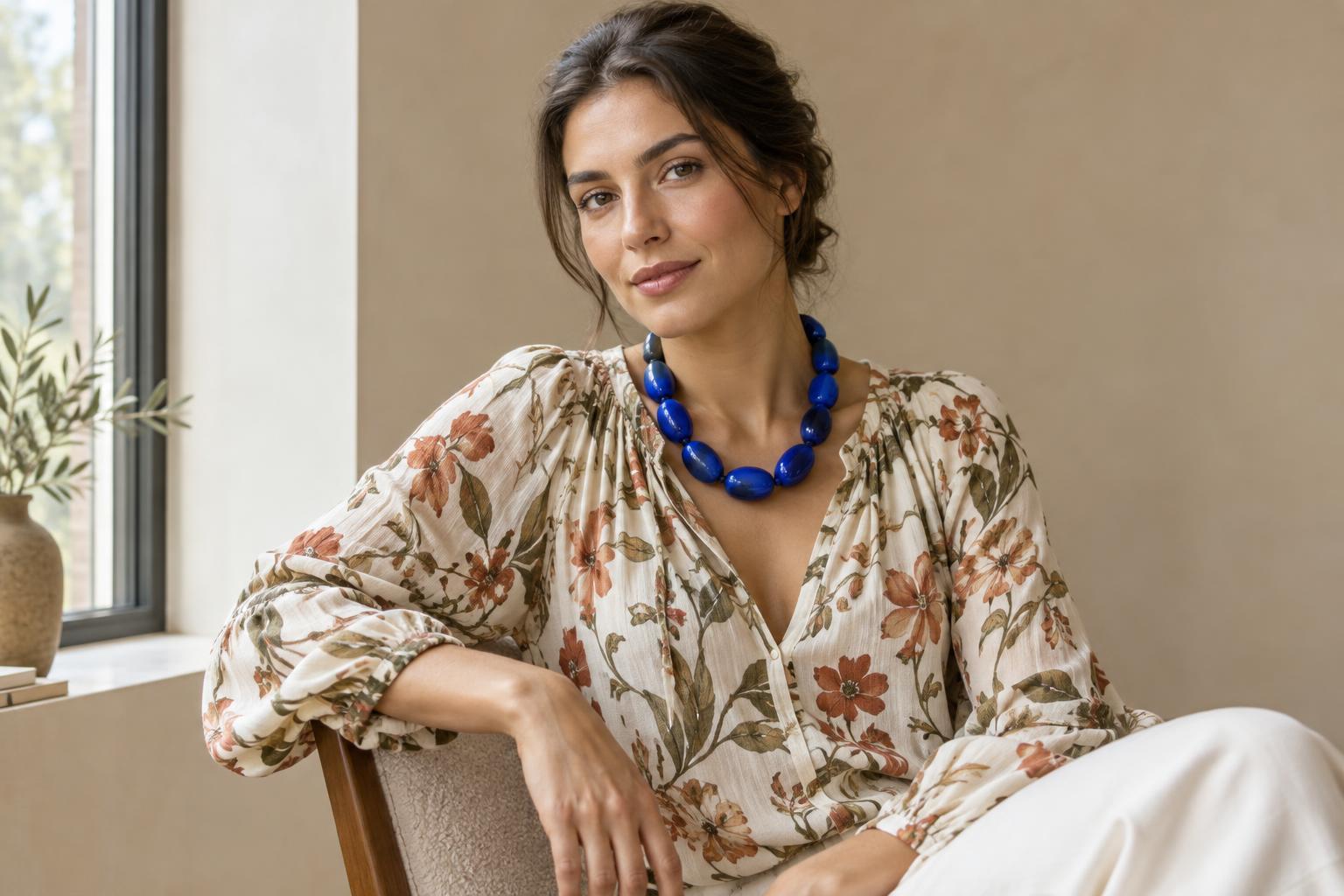
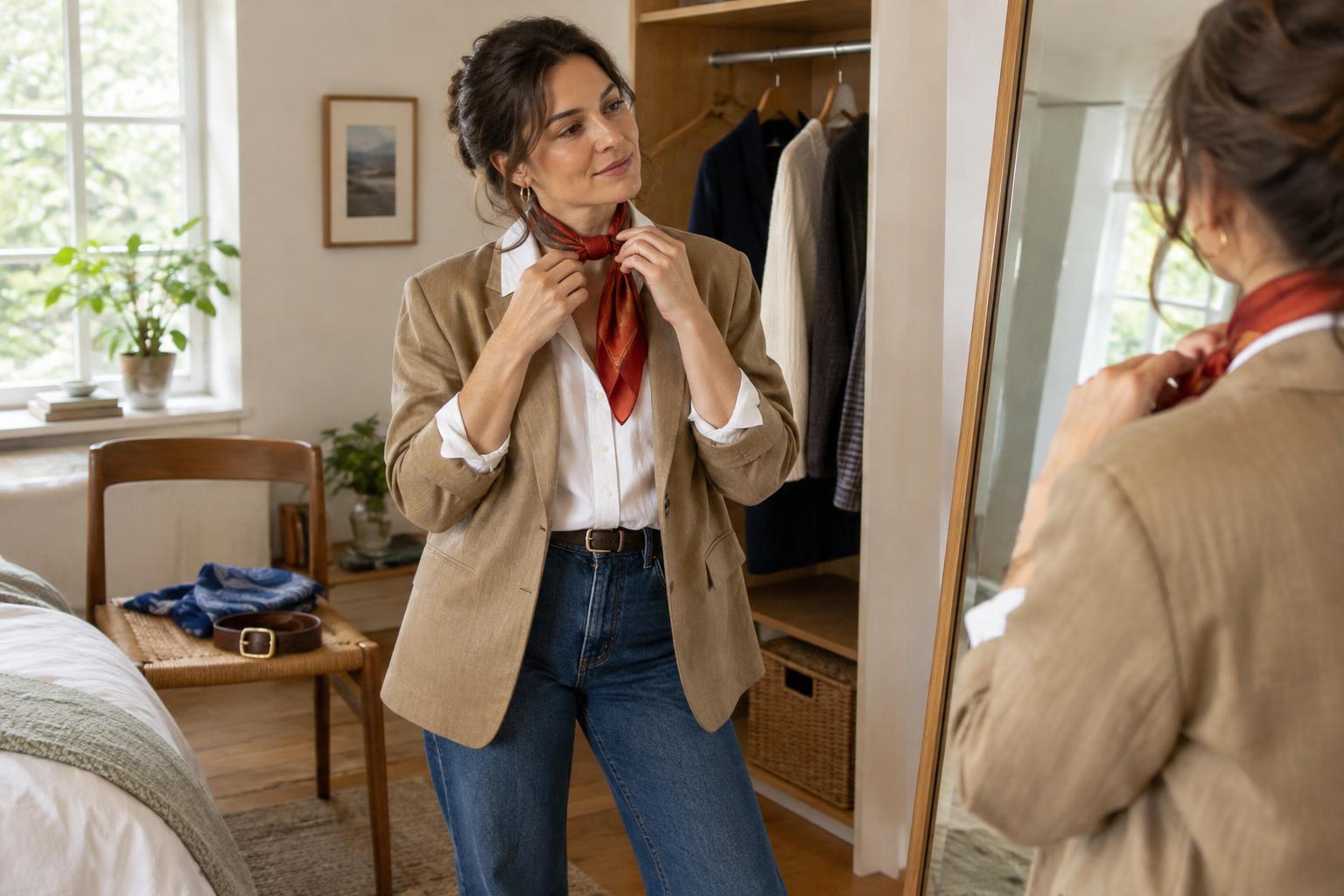
An outfit communicates through more than its individual pieces. Colour, shape, texture and the way you wear something all affect its overall impression. Try keeping your familiar base and changing just one of those signals. A bright scarf can make a quiet combination more expressive; a structured bag can make the same clothes feel more deliberate. Neither change requires a new outfit from scratch.
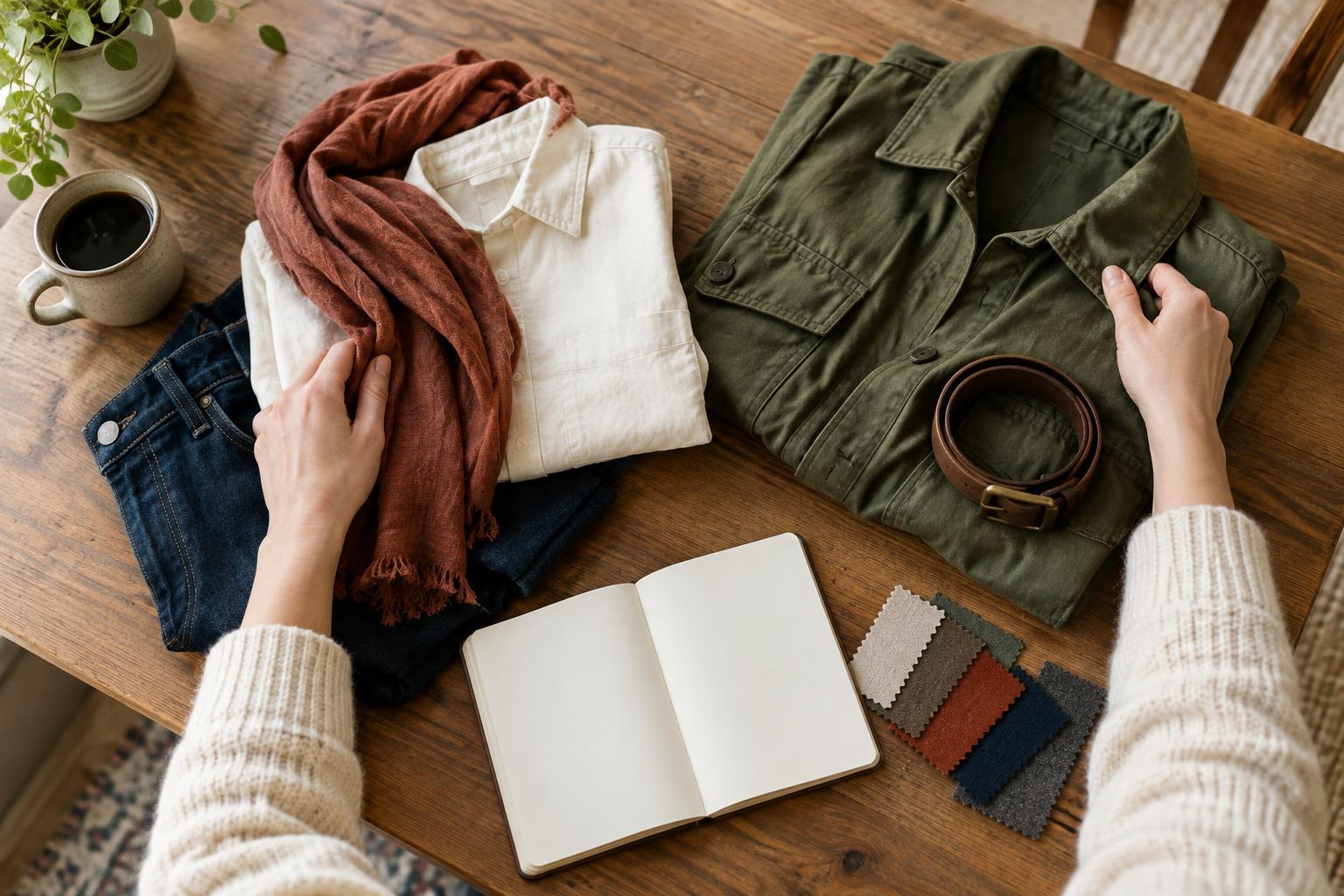
Make a short list of details you already own: a belt, a necklace, a patterned pair of socks, a different bag or an outer layer. On your next few wears, test one detail at a time. Notice which changes feel like you and which feel distracting. The aim is not to make every repeat look unrecognisable. It is to give yourself a few versions of an outfit you genuinely enjoy.
Use styling to shift the mood
Small styling choices can change the rhythm of familiar clothes. You might wear a shirt open over a top instead of buttoned, roll the sleeves, tuck only the front, or switch between a neat and a relaxed layer. Shoes can alter the balance of an outfit, too. A pair with a contrasting shape or colour may be enough to make the combination feel different when you look in the mirror.
Keep comfort and practicality in the picture. A styling change that needs constant adjustment is unlikely to become a satisfying option, however good it looks for a moment. Try each variation during an ordinary day rather than judging it only while standing still. If it lets you move comfortably and still expresses the mood you wanted, it belongs in your rotation.
Give your repeats a little structure
Feeling stuck can come from making the same decision automatically, not from wearing the same clothes. A simple rotation introduces choice without demanding novelty every morning. Name three versions of your reliable outfit, such as quiet, colourful and layered. Each version can share the same foundation while using a different accessory, accent colour or silhouette. These names are prompts, not rules.
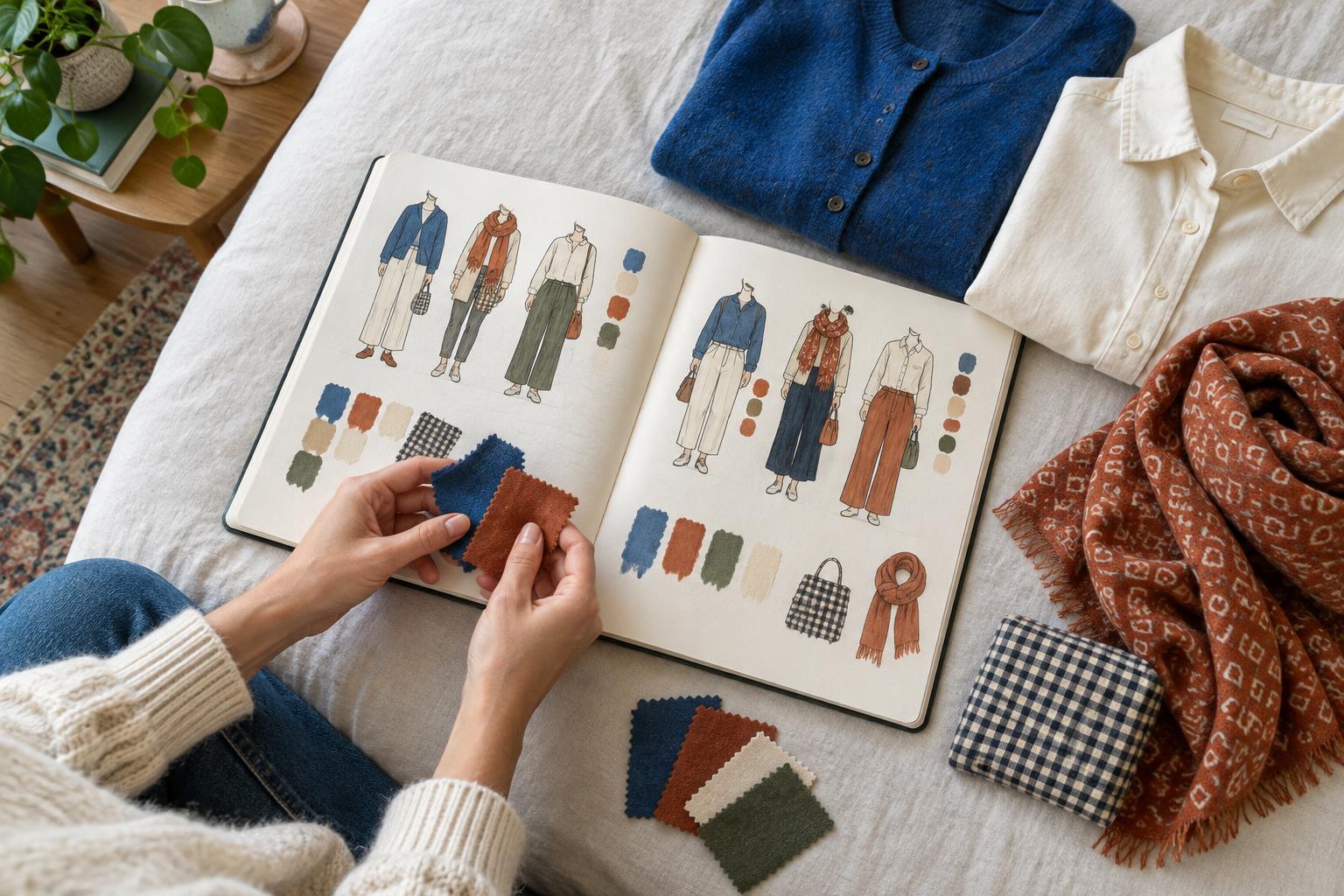
If visual notes help, take a photo of each version or jot down its pieces and the occasion it suits. You do not need a polished outfit archive. A few reminders can make overlooked combinations easier to see, especially when you are short on time. When a version no longer feels right, edit it. Personal style can stay recognisable while your preferences change.
Know when to repeat and when to refresh
Before changing an outfit because you are bored with it, ask what is actually bothering you. If it still feels good to wear but looks too familiar, an expressive detail may be enough. If the fit is uncomfortable, the fabric no longer suits your needs, or the outfit does not reflect how you want to present yourself, a more substantial adjustment may help. That could mean pairing one piece differently rather than replacing the whole combination.
Try a one-week experiment: repeat your favourite base outfit when it makes sense for your plans, and choose a different focal detail each time. At the end, note which version you would wear again. You will have learned more than whether you can make an outfit look new. You will have a clearer sense of which kinds of change make a familiar look feel like your own.