Start with what the outfit helps you do
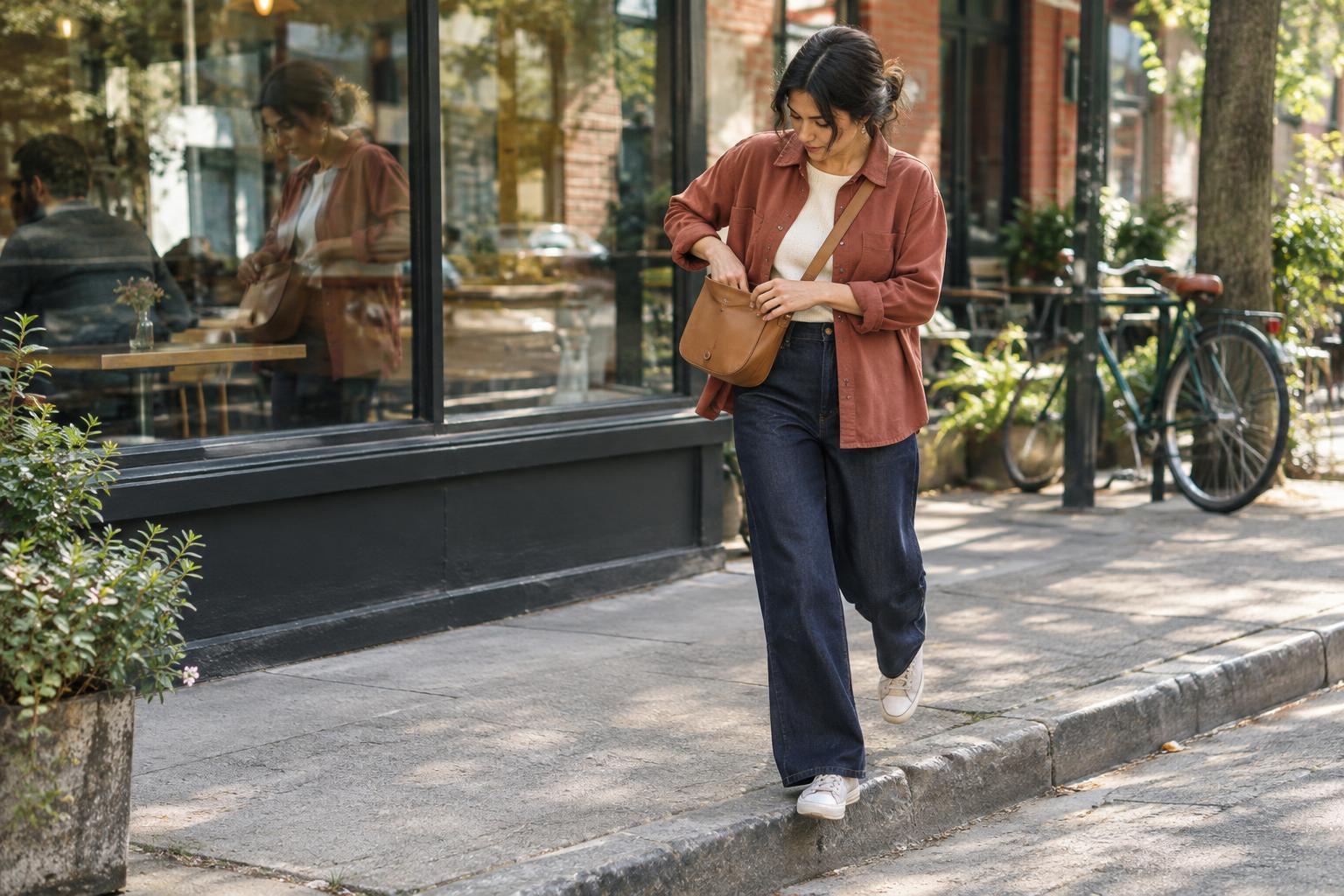
A straight-on photo is useful: it lets someone see the silhouette, colours, and proportions at a glance. But it cannot show the whole experience of wearing an outfit. A jacket may look structured until you roll up its sleeves. A long skirt may reveal its shape most clearly when you climb a step. Showing an outfit in use adds those small pieces of information without requiring a dramatic pose.
Before taking photos, name one or two ordinary things you would actually do while wearing it. You might walk to a café, carry a tote, browse a shelf, sit at a desk, or meet a friend. Choose actions that suit the clothes and your day, rather than inventing a scene that feels awkward. The aim is not to prove that every outfit is practical. It is to show how this one fits into your life.
Give the viewer a place to stand
Setting can explain an outfit, but it need not compete with it. A doorway gives a full-length frame and a sense of arrival. A worktable places hands, sleeves, and accessories in context. A bench can show how layers settle when you sit. Pick one setting with enough room to see the clothes clearly, then look for two or three angles within it instead of changing locations for every shot.
Pay attention to what the background contributes. Repeated lines might echo the stripes in a shirt; a plain wall might give a patterned coat space to stand out. If the surroundings are busy, move a little closer or shift your position so the outfit remains easy to read. Personal belongings can be part of the story when they are genuinely used: a bag on your shoulder says more than the same bag placed beside you solely for display.
Photograph actions in small stages
You do not need to catch a perfect candid moment. Ask a friend to take a few frames as you begin, continue, and finish one simple action: button a coat, pick up a book, cross a room, or settle into a chair. If you are photographing yourself, set the camera where it is stable and repeat the action with a timer or a short burst of images. Review the results for readable shapes and natural gestures, not flawless timing.
Mix distances as you go. A wide frame establishes the whole outfit and setting. A medium frame shows how a sleeve bends or how a bag sits against a coat. A close frame can reveal a cuff, fastening, or texture. Keep at least one clear full-outfit image so the smaller moments have an anchor. If a movement makes the clothes hard to see, try a slower version or photograph the pause immediately after it.
Let details reveal choices
An outfit in use tells a story through adjustments. Perhaps you tuck a scarf inside your collar outdoors, then loosen it when you sit down. Perhaps the way you carry a bag changes which part of a jacket is visible. These shifts can explain your styling choices more effectively than a row of isolated accessory close-ups.
Choose details that answer a question about the outfit. How does the layer open? Where does the hem fall when you walk? What happens to a bold colour when it appears beside the rest of your clothes? You can include hands or part of a face without making every frame a portrait. If another person appears in the background, consider choosing a different frame or asking before sharing it. Showing your own everyday life does not require putting someone else’s on display.
Build a short sequence, then edit it
Try making a five-image story with one outfit: a clear view before you leave, a frame that places you in a setting, an action, a detail in use, and a final moment when the outfit has settled. The frames do not have to follow a strict timeline. They should give the viewer enough variety to understand both what you wore and how you wore it.
When selecting images, ask what each one adds. If three walking shots show the same thing, keep the clearest one. If a beautiful detail shot gives no clue where it belongs, pair it with a wider frame. Consistent lighting and a small range of backgrounds can help the images feel connected, but do not erase every crease or sign of movement. Those are often the clues that make the outfit feel worn rather than arranged.
As an exercise, photograph the same outfit during one routine activity and select just five frames. Put the full-outfit view first, then rearrange the remaining four until the sequence feels easy to follow. You may discover that the most expressive image is not the one where you face the camera. It may be the moment you reach for your bag, turn a corner, or settle into the clothes you chose.


