Start by knowing what you are handling
Costume jewellery covers a wide range of pieces: plated metal chains, beaded necklaces, painted earrings, imitation pearls, fabric brooches and rings set with glued stones. That variety is part of its appeal, but it also means there is no single cleaning method that suits every piece. A finish that tolerates a soft cloth might be damaged by water, polishing paste or vigorous rubbing.
Before you clean or store an accessory, take a moment to look at how it is made. Are the stones held by small metal prongs, or do they appear to be glued in place? Is the surface smooth metal, delicate paint or a fabric wrap? Check for loose links, lifting settings and worn plating. If a piece has a maker’s care instructions, follow those first. When you are unsure what a material can tolerate, the gentlest approach is usually the best place to begin.
Build a simple after-wear routine
A little attention after wearing can make later cleaning easier. Before putting jewellery away, wipe accessible surfaces with a clean, soft, dry cloth. This removes some of the skin oils, fingerprints and product residue that can collect during the day. Use a light touch around painted areas, loose beads and glued embellishments; a snagging cloth or firm pressure may do more harm than good.
Let accessories dry fully before storing them if they have been exposed to rain, perspiration or a damp room. Put on perfume, lotion and hair products before adding jewellery, and allow those products to settle first. This does not make a finish immune to wear, but it can reduce direct contact with substances that may dull or mark some materials. Taking jewellery off before showering, swimming or exercising is another straightforward precaution, especially for plated pieces and anything with glued details.
Clean carefully rather than aggressively
If a dry cloth is not enough, decide whether the particular piece can safely handle a little moisture. For a sturdy, nonporous surface, you might try a barely damp soft cloth on a small, inconspicuous area, then dry it immediately. Avoid getting moisture into seams, settings or hollow components. Do not soak pieces unless their care instructions explicitly say it is safe: water can reach adhesive, thread, fabric and finishes that are difficult to dry thoroughly.
Skip abrasive pads and all-purpose metal polishes unless a product is clearly appropriate for that exact material and finish. Heavy polishing may remove a thin plated layer rather than restore it. Imitation pearls, painted details and coated beads deserve particular caution because their visible surfaces can be easily changed. If a mark does not lift with gentle attention, leaving it alone may be better than risking the whole piece.
Give each piece its own space
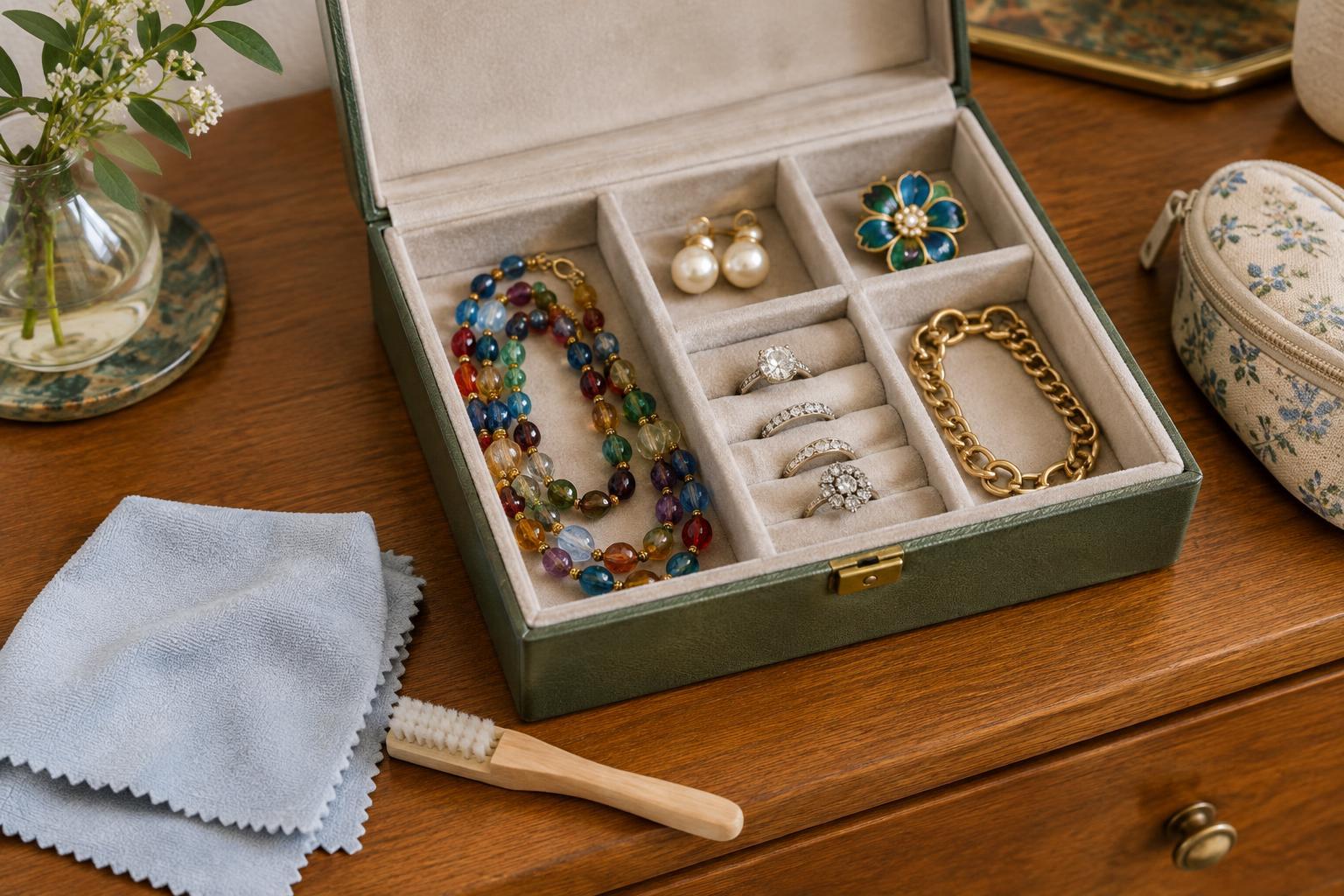
The most useful storage rule is simple: prevent pieces from rubbing against or tangling with one another. Place earrings in separate compartments, fasten necklace clasps before laying chains flat, and keep chunky pieces away from delicate surfaces. Small soft pouches, lined trays and dividers all work; choose a setup that lets you see what you own without piling everything together. A necklace hung up for easy access should have room to hang without catching on its neighbours.
Store jewellery in a dry place away from direct sunlight and persistent heat. Sunlight can affect some colours and finishes, while moisture may encourage tarnishing or damage certain components. Avoid closing a damp piece inside a pouch or box. For accessories you rarely wear, an occasional check is worthwhile: a loose stone or tangled chain is easier to deal with before it becomes part of a crowded drawer.
Protect favourites when travelling and rotating outfits
Travel is when small accessories are most likely to be compressed, tangled or misplaced. Pack them in a compact case with separate sections, or give each delicate piece its own soft pouch. Keep brooch pins closed and place earrings together so you can find a pair without emptying the bag. If you pack jewellery beside cosmetics, make sure caps are secure and give both items enough space that a spill or hard container will not reach a fragile finish.
Care can also be part of getting dressed. When you choose a statement piece, notice where it will sit: a bracelet may knock against a desk, and a long necklace may catch on a textured top. That does not mean saving favourites for special occasions. It means wearing them with a little awareness, then returning them clean and dry to a place where they will be easy to enjoy next time.


