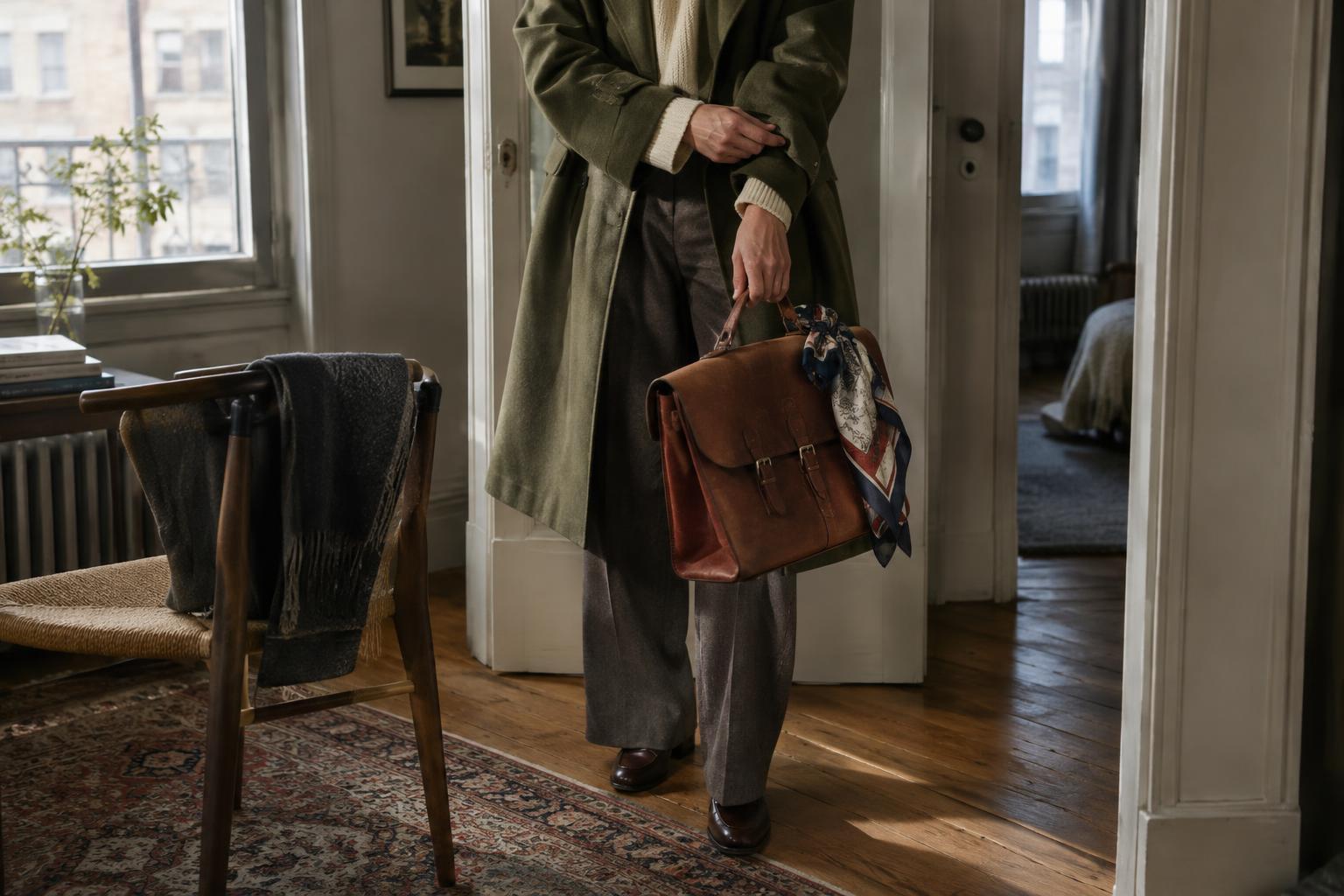
Start with a story, not a pose
A face-free clothing photograph does not have to be mysterious or impersonal. It can tell us what someone reaches for on a difficult morning, how they get ready to go out, or why they keep wearing a well-loved jacket. The starting point is a small idea: one sentence that describes what the clothes mean in this particular story. “Getting dressed to feel ready” gives you more to work with than “outfit photo.”
Choose a subject you can show rather than explain. A coat hanging by the door suggests departure. A sleeve pushed up before a hands-on task suggests activity. Shoes set beside a bag suggest a decision still being made. These are possibilities, not fixed symbols; a viewer may read them differently. Your job is to give the images enough specific detail to invite a reading without forcing one.
Let garments carry the character
When a face is outside the frame, fit, texture and wear become more noticeable. A sharply folded collar can create a different impression from a soft, rumpled one. A repaired cuff, mismatched buttons or a frequently used pocket may say more about a person’s relationship with a garment than a full-length view does. Include a mix of wider shots and close details so viewers can connect the whole outfit to the marks of use that make it particular.
Look for actions that give the clothing a role. Photograph hands fastening a buckle, a hem moving as someone walks, or a scarf being tied twice before it feels right. These moments work because something is happening; the person is not simply displaying an item. If you are photographing yourself, a timer and a stable surface can make these actions easier to capture. You can take several attempts, then keep the frame in which the gesture feels least forced.
Use framing to guide attention
Decide what each frame needs to show before you crop out a face. A photograph from shoulder to waist can hold attention on a necklace, neckline and hand position. A view from behind can show the shape of a coat and the direction of movement. A close-up of shoes on a doorstep can suggest where the story begins. Cropping should help the viewer see a deliberate subject, not leave them wondering whether part of the photograph is missing by accident.
Check the edges and background as carefully as the outfit. A bright object behind a shoulder may compete with the detail you meant to feature. A mirror or reflective window may also bring a face into a frame unexpectedly. If privacy matters, review the finished image for names, addresses, identifiable interiors or other clues before sharing it. Keeping a face out of view does not, by itself, make someone unidentifiable.
Build a sequence with a beginning and an end
A series can tell a fuller story than one carefully composed image. Try making three to five photographs: a setting, a choice, an action and a final detail. For a story about getting ready to leave, you might show a jacket on a chair, two accessories laid out, a hand choosing one, and the jacket moving through the doorway. The images do not need to record every step. They need enough variation to make the transition feel clear.
Keep one visual thread running through the series. It could be the same colour appearing in several frames, a repeated hand gesture, or light falling across different parts of an outfit. Then vary your distance: pair a full or partial outfit view with a close-up, rather than repeating the same composition. When you arrange the images, ask what each one adds. If two frames make the same point, the stronger one is usually enough.
Try a small face-free story exercise
Choose one garment you wear often and finish this sentence: “I reach for this when…” Use the answer as your story prompt. Make four images: where the garment lives, one detail that matters to you, the garment in use, and a final frame that suggests what happens next. Work with the light and space you have. A plain wall, a doorway or the edge of a table can provide a useful setting without becoming the subject.
Lay the photographs out in order and look at them without your original sentence. Can you tell what changes from the first image to the last? Is the garment recognizable, and is there a detail that makes this story yours? If you share the series, a short caption can add context without spelling out every meaning. You might also describe the visible actions and details in image descriptions so the story is not carried by the pictures alone. The aim is not to hide the person behind the clothes, but to show how a person’s choices can be visible even when their face is not.


