Start with the day, not the mirror
Before judging how an outfit looks, picture what you will actually do in it. Will you sit for a long stretch, climb stairs, carry a bag, bend to pick something up or move between warm and cool spaces? A look that feels excellent while standing still may need a small adjustment to work through those moments. The goal is not to make every outfit suitable for every activity. It is to find out whether this outfit suits your plans.
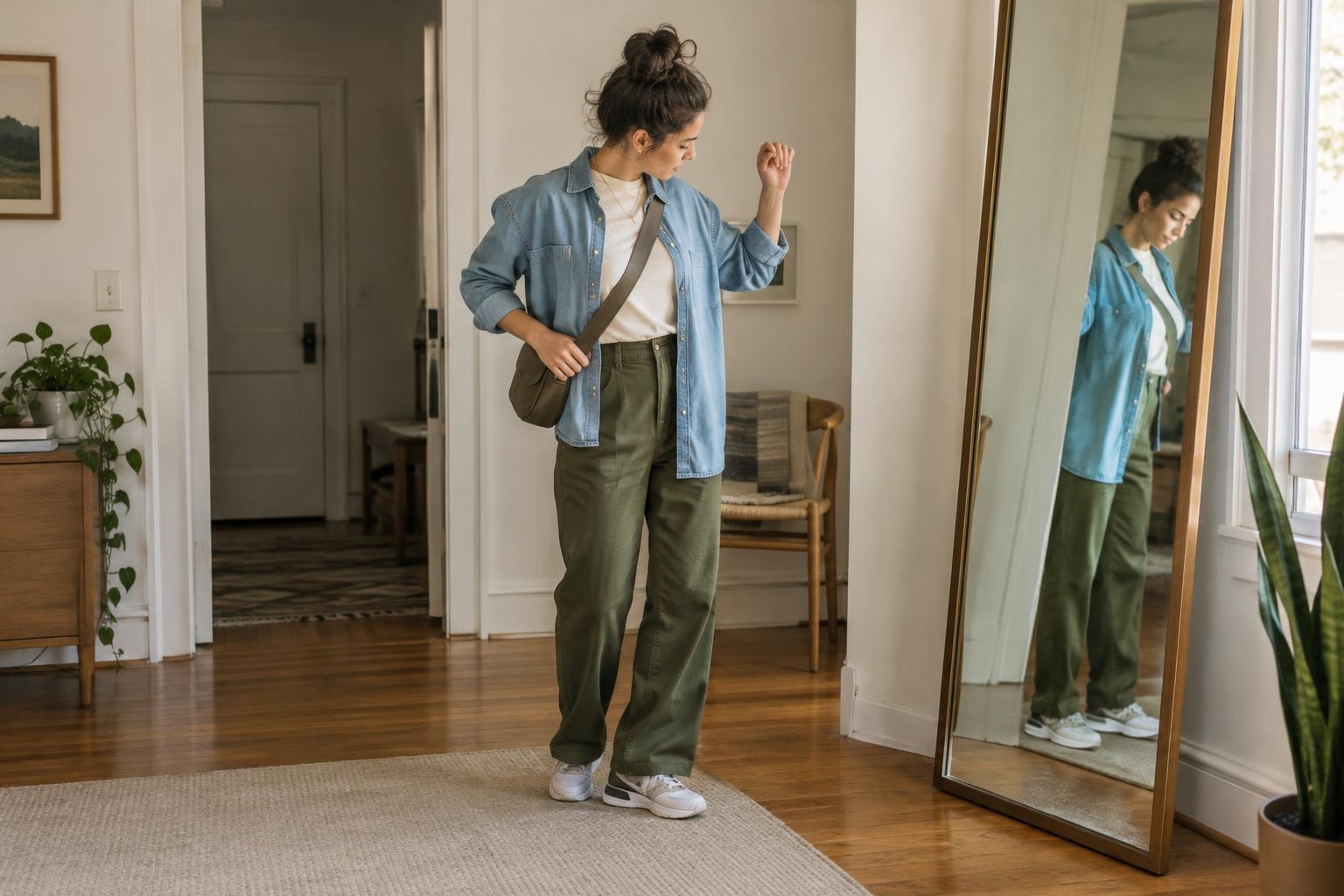
Put on the full look, including the shoes, outer layer and accessories you intend to wear. Then give yourself a few minutes to settle into it. Notice anything you are already tugging, smoothing or repositioning. One adjustment may be no trouble, but a detail you have to fix repeatedly at home is likely to keep asking for your attention when you leave.
Try a short range-of-motion check
Move through a few ordinary actions at a comfortable pace. Walk across the room, sit down and stand up, reach for a shelf, and bend or squat as your day may require. If you will commute or work at a desk, spend a minute seated rather than testing everything in front of a standing mirror. Check whether waistbands press, sleeves pull, hems shift or fabric limits your stride. You do not need to perform movements that are uncomfortable or irrelevant to you.
Pay attention to how the outfit settles after each action. Does a shirt return to place when you stand? Can you sit without thinking about a skirt hem? Do trouser legs catch on your shoes? A quick mirror check can help, but your own sense of ease matters just as much. If a piece makes you hold your body differently to keep it in position, consider whether that effort is worth it for the occasion.
Check the points of contact
Comfort often comes down to small points where clothing meets the body. Notice collars, cuffs, seams, straps, waistbands and the edges of shoes. Is anything rubbing, pinching or slipping? Also check how layers interact. A jacket may fit well over a thin top but feel restrictive over a thicker one; a bag strap may push a collar out of place. Test these combinations together rather than assessing each item on its own.
Shoes deserve a walk around the room, not just a glance. Make sure your feet feel secure and that you can move at a pace that suits your plans. If you are carrying a bag, put a few of your usual essentials inside and try it on. The weight and strap position may change how it feels. These checks are especially useful when an item is new to your wardrobe or has not been worn for a while.
Make sure the details work with you
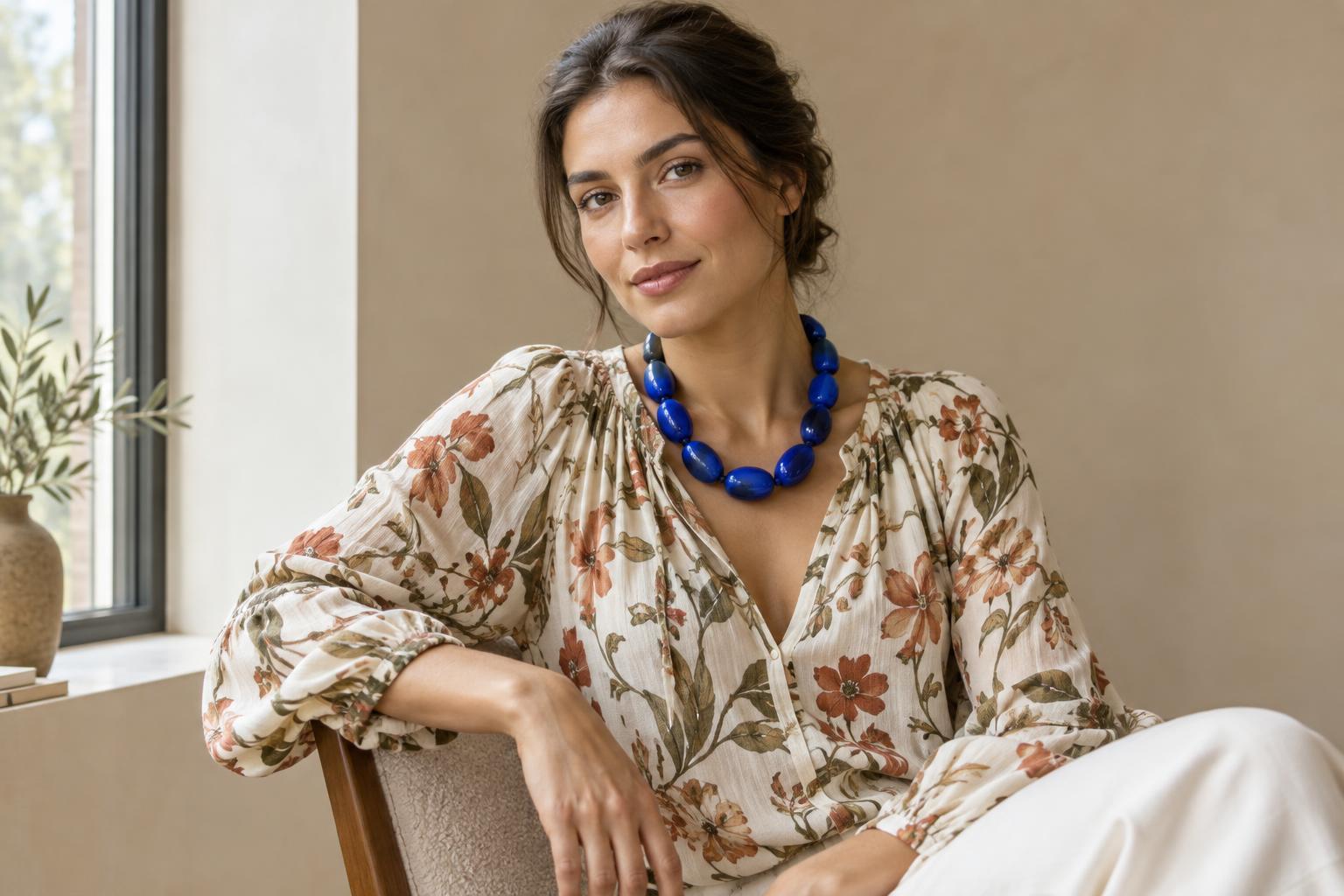
Statement pieces can make an outfit feel distinctly yours, and they should be part of the test. Turn your head while wearing larger earrings, move your arms with stacked bracelets, and see whether a scarf stays where you want it. If an accessory catches on fabric or makes a sound that distracts you, you can change its placement or choose a different piece. Keeping the expressive detail does not have to mean tolerating a nuisance all day.
Consider what you need to access while wearing the outfit, too. Can you reach a pocket or open your bag without rearranging several layers? Can you take off a coat easily if you expect to do so? Practicality is not the opposite of personal style. An outfit often communicates more confidently when you can move naturally in it instead of managing it every few minutes.
Adjust one thing, then decide
If the test reveals a problem, start with the smallest useful change. Try a different underlayer, switch the shoes, move a bag strap or replace a belt. Then repeat the movement that exposed the issue. This keeps the decision focused: you are solving a specific problem, not starting your outfit from scratch. If an item still demands too much attention, set it aside for a day when it better fits your plans.
Before leaving, ask yourself two questions: Can I do what I need to do in this outfit, and do I feel like myself wearing it? The answers do not have to be perfect. A short comfort check simply gives you a chance to choose which trade-offs you are happy with. When your clothes support both your movement and your sense of expression, you can turn your attention to the day ahead.