Treat the photos as notes, not a verdict
An outfit photo captures one angle, one moment and one set of lighting conditions. It cannot tell you whether an outfit is good, or whether you are wearing it correctly. What it can do is preserve a choice you made: the loose shirt you reached for twice, the bright socks that made a quiet outfit more playful, or the jacket you kept adjusting all afternoon. Think of your photos as a record of experiments rather than a gallery of finished looks.
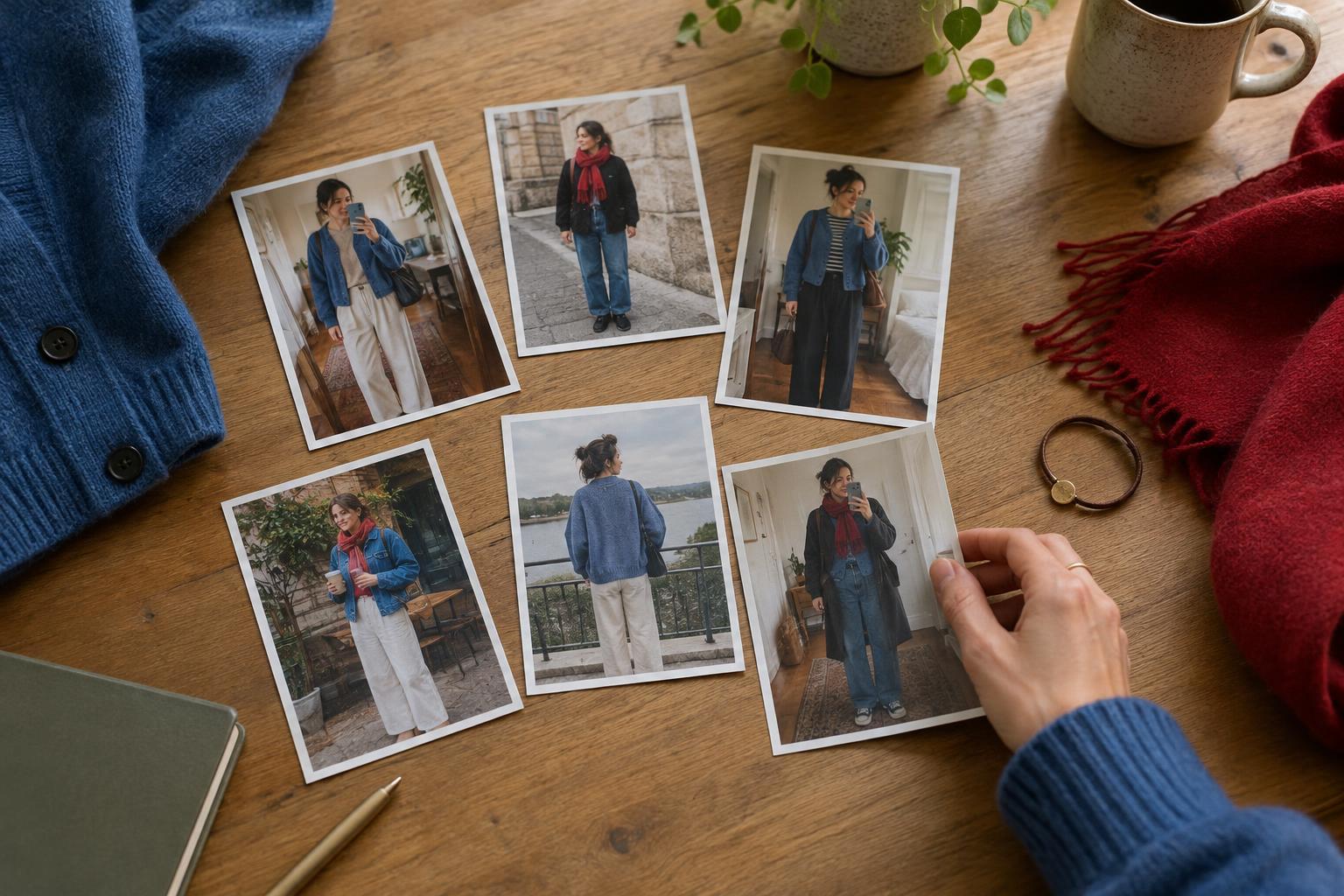
Start by collecting a manageable set of photos from days when you dressed for ordinary life. They do not need matching poses or polished backgrounds. If you have few photos, take a quick picture before leaving home for the next week or two. Include outfits you liked, outfits that felt merely fine, and a few that did not work for you. The contrast will give you more to notice than a collection of favourites alone.
Remember what the outfit felt like to wear
Before analysing shapes and colours, add a little context. For each photo, jot down where you were going and how you felt in the clothes. Did you move easily? Did you feel at ease with the amount of attention a detail drew? Did you keep a layer on because you liked it, or because you felt uncomfortable without it? A look that photographs well but distracts you all day may not be one you want to repeat.
Try three short prompts beside each image: “I enjoyed…,” “I kept noticing…,” and “Next time I would….” You might write, “I enjoyed the contrast between the neat collar and worn-in trousers,” or “I kept noticing that the bag slipped off my shoulder.” These observations are more useful than a simple yes-or-no rating. They separate the idea you liked from a practical detail you might change.
Look for choices that repeat
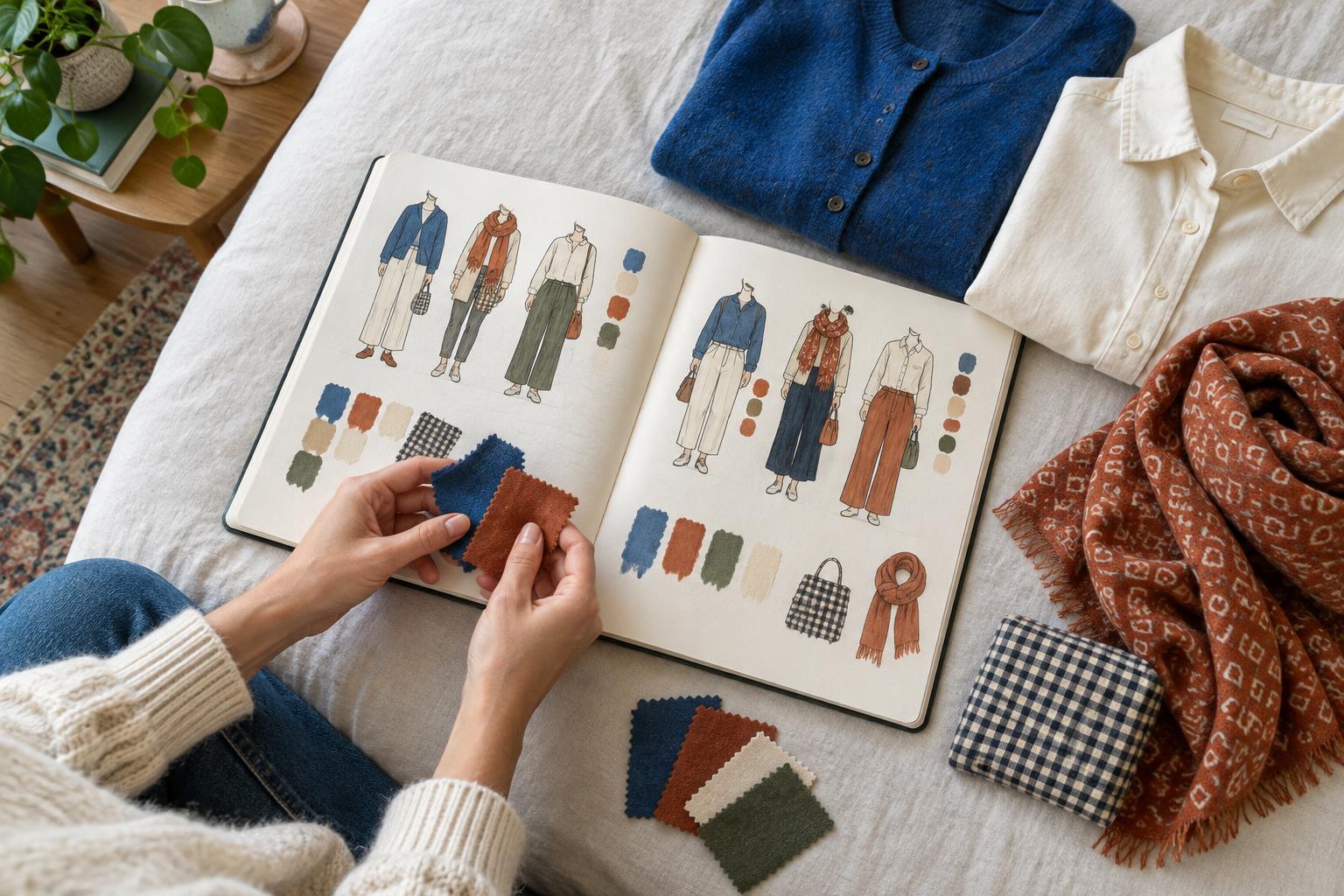
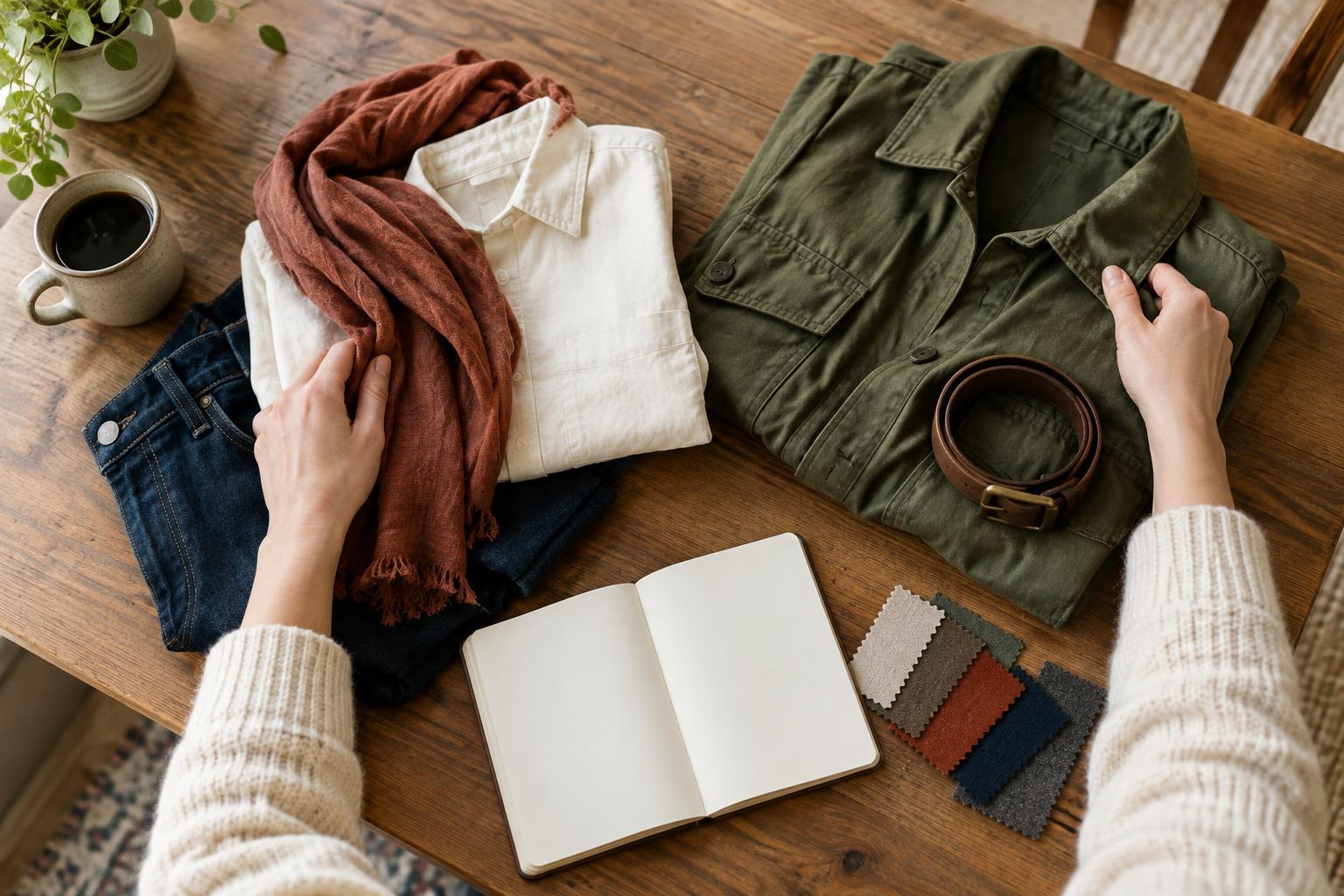
Lay out your photos where you can see several at once, either in a phone album or on a page. Look first for repetition, not perfection. Are there colours you use as a base? Do you often pair one structured piece with something softer? Perhaps you regularly choose small, unusual accessories over a bold print. A recurring choice can suggest what you enjoy, even if no single outfit feels complete.
Then look at your favourite photos and ask what, specifically, makes you want to wear those outfits again. Name details rather than broad labels such as “minimal” or “creative.” “A clear silhouette with one unexpected colour” is a more useful observation because you can test it in different clothes. If your favourites have little in common visually, look for a shared feeling instead: ease, precision, humour or a sense of being ready to participate.
Give the less successful outfits the same attention. You may find that you like a patterned scarf but not wearing it close to another busy pattern, or that you enjoy an oversized shape when it leaves your hands free. The goal is not to create rules you must obey. It is to learn which combinations make your choices feel intentional to you.
Turn one observation into an experiment
Choose one pattern you noticed and make a small change to test it. If you seem happiest in outfits with a defined waist, try a different tuck or layer with clothes you already own. If a colourful accessory often appears in your favourite photos, move it between otherwise familiar outfits. Change only one or two elements at a time so you can tell what made a difference.
Take another photo, then wear the outfit through your usual day before deciding what you think. An image may help you assess proportions, while the day tells you about comfort and practicality. Keep the experiment if it works; adapt it if it almost works. You do not need to buy anything to learn from it. Swapping the position of a scarf, rolling a sleeve or pairing familiar pieces differently can reveal a lot.
Keep a record that leaves room to change
Save a small selection of photos with captions that explain your choices. Instead of labelling an image “best outfit,” try “I liked the calm colours and playful earrings” or “This shape felt easy to move in.” Captions will help you remember why an outfit mattered after the day itself has faded. You can also keep the photos private; sharing them is not part of the exercise.
Review the collection occasionally, especially when getting dressed starts to feel repetitive. Notice what still appeals to you and what no longer fits your life or interests. Personal style is not a fixed answer hidden in your camera roll. Your photos offer clues about choices you have made, which you can use to make the next choice with more curiosity and confidence.