Choose a motif that means something to you
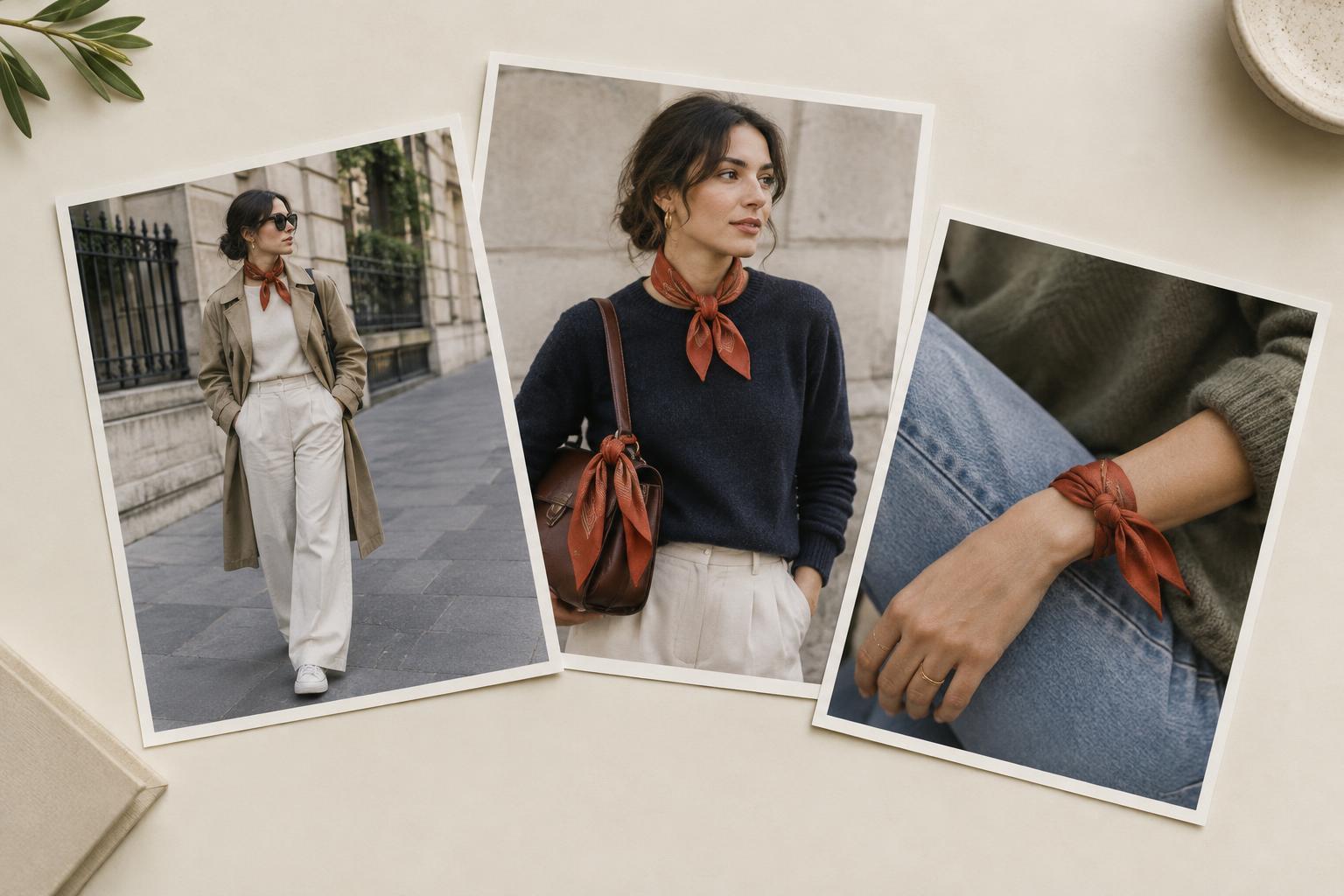
A visual motif is a detail that appears more than once and helps separate images feel related. In an outfit photo series, it might be a colour, a shape, a texture or an accessory. A red scarf can appear around your neck in one frame, tied to a bag in another and held in your hand in a third. The scarf stays recognizable, but its role changes.
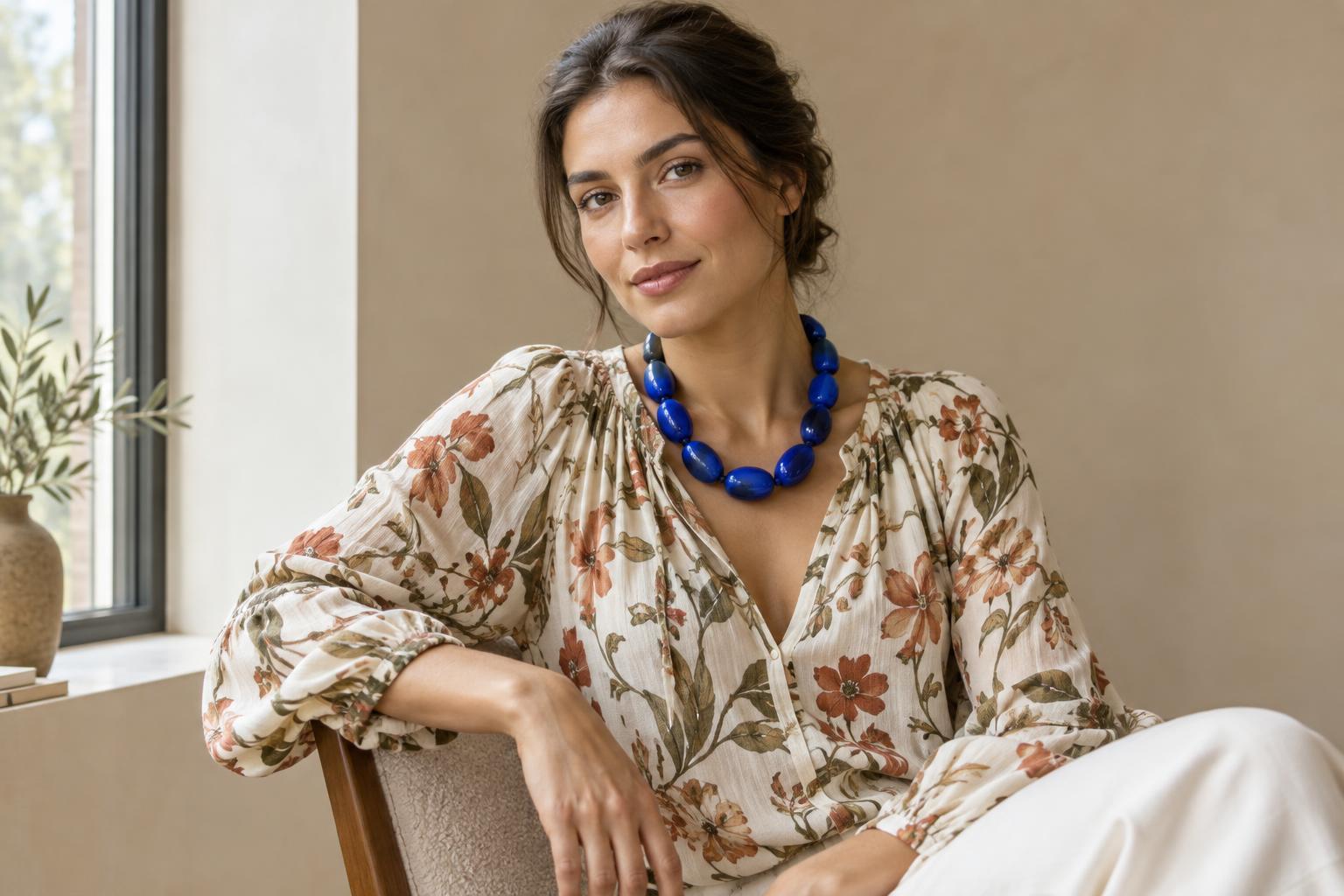
Start with a detail you already enjoy wearing rather than buying something for the photographs. You might choose the curved shape of a favourite pair of earrings, the grid of a checked shirt or the blue that keeps appearing in your wardrobe. Ask what you want the detail to suggest. Soft folds may give a series a gentle rhythm; crisp lines may make it feel more structured. Your answer does not need to be grand. A motif can simply point to a part of your style you want to notice more closely.
Decide what stays constant and what changes
Repetition works best when the viewer can spot a connection without seeing the same photograph several times. Choose one thing to hold steady, then give yourself room to change the rest. If your motif is a striped top, you could photograph it beneath a jacket, beside another patterned item and as a close-up of the sleeve. If your motif is a circle, look for it in a belt buckle, a bag handle and the shape made by your arms.
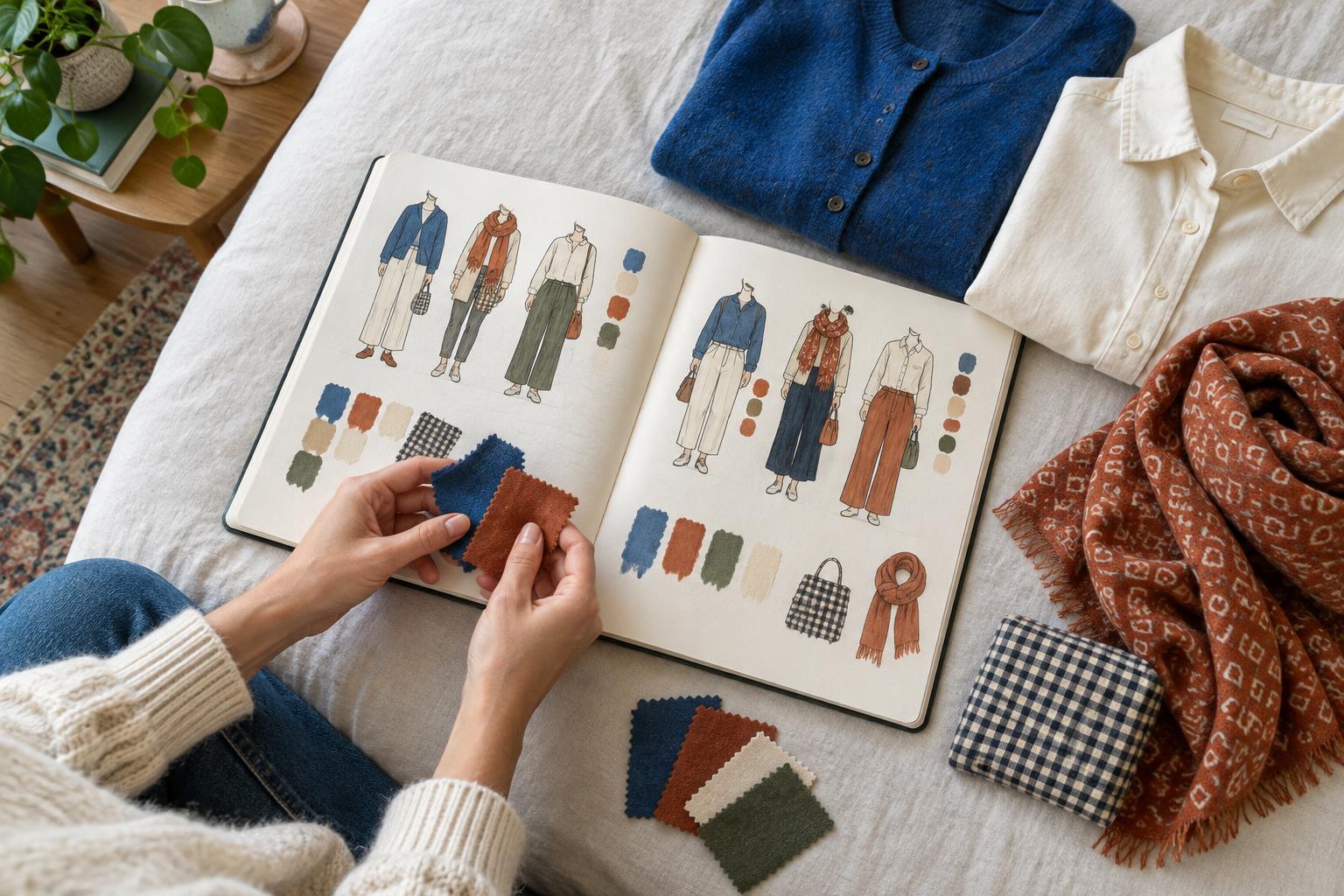
Keep the plan small enough to use. Write your motif at the top of a page, then list three ways it could appear: clearly, subtly and unexpectedly. A green accent might be the main focus of one outfit, a sock or hair clip in the next, and a reflection or background detail in the last. Not every appearance has to be equally strong. Those shifts give the eye a reason to keep moving through the series.
Use framing to make the connection visible
An outfit photo series needs more than full-length pictures. A wide frame can show how the motif sits within a complete look; a closer frame can reveal its material or shape. Try making one image about the overall silhouette, one about the detail itself and one about how it interacts with your surroundings. For example, a pleated skirt might first appear in a full outfit, then in a close-up of its folds, then beside the repeated lines of a stair railing.
Give the motif a clear place in each image, even when it is subtle. Before taking a photo, look at the edges of the frame and notice whether nearby objects compete for attention. You can move yourself, adjust the crop or shift an accessory rather than rearranging an entire space. Consistent lighting or a similar camera distance can help link images, but neither is required. The repeated detail should do most of the connecting work.
Arrange the photos as a story, not a catalogue
Once you have several images, lay them out in the order someone will see them. A simple sequence begins with an easy-to-read view of the motif, moves through a few variations and ends with a frame that changes how the detail is understood. A silver chain, for instance, could start as a necklace, reappear as a glint beneath a collar and finish as a looping shape held against a plain sleeve.
Notice how one image leads to the next. Does a close-up follow a wide shot at a useful moment? Do two nearly identical poses slow the series down? Remove a photo if it repeats information without adding a new angle, gesture or setting. You do not need a fixed number of images. A short series with distinct frames can feel more deliberate than a longer one in which the motif appears the same way every time.
Try a small motif exercise
Choose one item from your wardrobe and make a three-photo series with it. In the first image, show the item as part of an outfit. In the second, move closer to a detail you like: a seam, fastening, print or fold. In the third, change its relationship to another element, such as a contrasting colour, a similar shape in the background or a gesture made with your hands. Use what is available to you; the exercise works indoors, outdoors or in a small space.
Review the three images together before changing anything. Can you identify the recurring detail without an explanation? Does each frame offer a different view of it? If the connection is hard to see, make the motif more prominent in one photo. If the series feels too predictable, vary the framing or let the detail take a quieter role. The aim is not to make every image match. It is to give your own way of dressing a visual thread someone else can follow.