Start with outfits, not an imagined wardrobe
A personal style brief is a short description of how you want your clothes to look and feel in everyday life. It is not a label you have to live up to or a shopping list. Think of it as a decision-making tool: something you can consult when an outfit feels unfinished or an appealing garment does not seem to belong in your wardrobe.
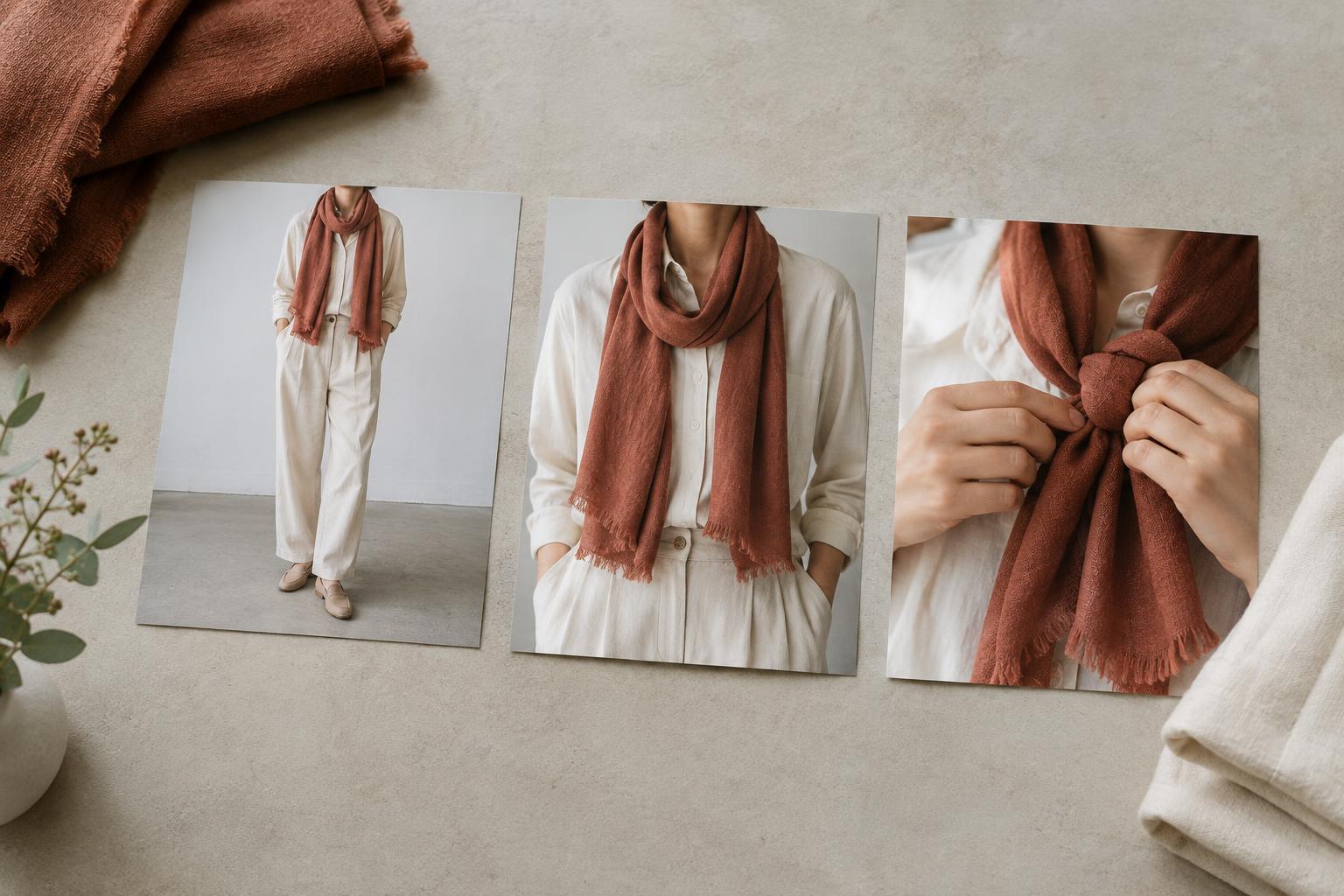
Begin with five to eight outfits you have actually worn and liked. They do not need to be your most polished looks. Include clothes you reach for on ordinary days, along with any outfit that made you feel especially like yourself. If you have photos, place them together; otherwise, lay out the garments or write down their components. Notice repeated choices in shape, colour, texture and level of formality.
Pay attention to what made each outfit workable, not just what looked good. Perhaps you liked the ease of loose sleeves, the clean line of a tucked shirt or the contrast of a plain outfit with one expressive accessory. These details give your brief a foundation in clothes you can comfortably wear.
Find words that describe a visible choice
Write down a few words that come to mind as you compare your outfits. Words such as playful, restrained or polished can be useful starting points, but they become more helpful when you define what they mean to you. One person’s version of polished might involve crisp collars; another’s might rely on simple shapes and well-kept shoes.
Try pairing each broad word with something observable. For example, “playful” could mean an unexpected colour pairing, while “quiet” might mean a limited palette and little visible decoration. If you love both qualities, you do not have to choose one. Your brief can describe how they work together: “mostly quiet shapes with one playful detail” is more actionable than either word alone.
Avoid choosing words because they sound impressive. Choose ones that help you recognize your own preferences. If a word makes it difficult to explain why a favourite outfit works, replace it with a clearer description.
Turn your observations into a short brief
Keep the finished brief short enough to remember. Two or three sentences can cover the look you are aiming for, the details you rely on and a practical requirement. For instance: “I like relaxed shapes with a clear outline. I keep most colours muted and use one bright or patterned detail. I need clothes that let me move easily through my usual day.” This is an example, not a formula; your own brief may describe an entirely different balance.
It helps to include a contrast if that is how you enjoy dressing. You might prefer soft fabrics with structured accessories, or familiar basics with unusual colour combinations. Naming the contrast makes it easier to build outfits without trying to make every piece equally expressive.
Leave room for exceptions. A brief should identify your common preferences, not declare that every garment must meet every condition. You can enjoy a dramatic piece even if most of your wardrobe is understated.
Use the brief to make an outfit decision
The next time you get dressed, make an outfit as you normally would, then compare it with your brief. Ask which part is already present and which part, if any, you want to bring forward. If your brief calls for a clear outline but the outfit feels shapeless to you, changing the way you wear one garment may be enough. If you want a playful detail, try an accessory or colour you already own before assuming you need something new.
Use the same approach when considering a purchase. Instead of asking whether a piece matches your style in the abstract, imagine two or three outfits you could make with your existing clothes. Does it support a preference named in your brief? Does it meet the practical requirement you included? A piece can be attractive without being useful to you, and the brief gives you a way to tell the difference.
If the brief repeatedly pushes you away from outfits you enjoy, treat that as information. The wording may be too narrow, or it may describe a look you admire more than one you like wearing.
Revise it when your life or preferences change
Keep your brief somewhere easy to find, such as a note on your phone. After wearing a few outfits with it in mind, adjust any phrase that does not help you make a choice. You may discover that a particular colour matters less than you thought, while texture or ease of movement matters more.
Your style brief does not need to capture every side of your identity. Its job is smaller and more useful: to make your recurring choices visible. When you can name what you enjoy and connect it to garments you already wear, getting dressed becomes an opportunity to express yourself rather than a test of whether you followed a set of rules.