Start with the lines you can see
Outfit proportions are about the visual relationship between pieces: how much space a top takes up, where a bottom begins and where its hem ends. The point where one garment meets another creates a line for the eye to follow. Move that line, and the same clothes can give a different impression.
Try looking at an outfit as a few broad shapes rather than judging how it looks on your body. Notice the top’s hem, the waistband, the bottom’s hem and the shoes. A visible waistband often makes the top and bottom read as separate shapes. An untucked top that covers it may create one longer shape above the legs. Neither is inherently better; each gives you a different way to express yourself.
How top length shifts the balance
A shorter top, or a longer top tucked in, places the visible dividing line closer to the waist. This can make the lower part of an outfit appear to take up more space. A top that falls over the hips moves that line down, giving more visual emphasis to the upper garment. You can explore either effect without buying a new top: try a full tuck, a small front tuck or a loose fold under the hem.
Where the hem lands matters as much as whether it is called cropped or long. Two tops with similar measurements can look different when one ends near a waistband and the other ends at the widest part of a trouser pocket. Fabric changes the effect too. A soft top may drape and blur its hemline, while a structured shirt may create a more distinct edge.
If you like a longer top but want to show the waistband, consider wearing it open over a shorter layer. The open edges create vertical lines, while the inner layer shows where the bottom begins. This is one option, not a formula: the useful question is which lines you want people to notice first.
How bottom length changes the finish
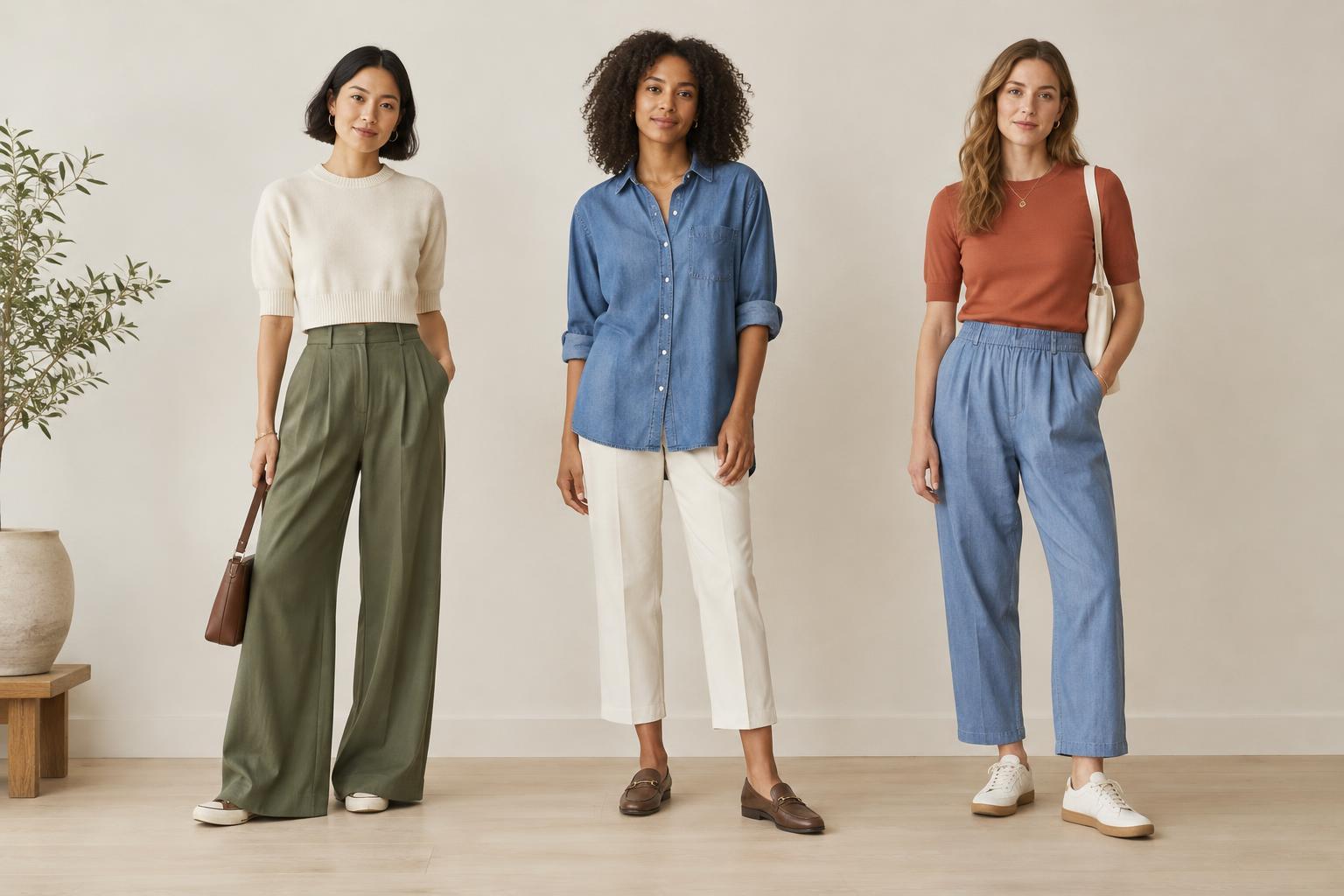
The hem of a skirt, pair of shorts or pair of trousers creates another visual stopping point. A hem above the knee leaves more of the leg visible; a longer hem gives the garment more visual area. With trousers, an ankle-length cut creates a clear break before the shoe, while a full-length cut may connect visually with the footwear. A wider hem can feel more prominent than a narrow one at the same length.
Shoes affect how that final line reads. Trousers and shoes in similar colours can create a more continuous shape, while contrasting colours make the boundary easier to see. Socks can add another deliberate line. These details are worth noticing if an outfit feels unexpectedly busy or if you want to make a simple combination more expressive.
Length also needs to work in motion. Sit down, walk and check whether a hem stays where you want it. A proportion you enjoy in a mirror may feel different when a top shifts upward or a trouser hem catches under a shoe. Comfort is part of a successful outfit, not a separate concern.
Change one line at a time
To learn what you like, keep most of an outfit the same and change just one thing. Put on a top and bottom you already wear together. First leave the top untucked; then tuck it in or fold its hem to a different length. Notice whether your attention goes to the top, the waistband or the bottom. If it helps, take photos from the same position so you can compare the overall shapes.
Next, keep the top arrangement you prefer and try bottoms with different hems, such as ankle-length trousers and full-length trousers. You are not looking for the length that is universally most flattering. You are learning which combinations communicate what you want: relaxed, precise, playful, understated or something else entirely. Write down the pairing you enjoy and why; that observation is more useful than a rule to memorise.
Make proportion a choice, not a correction
Style advice often treats proportions as a problem to fix. They can be more useful as a creative tool. You might choose a long, loose top over wide trousers because you enjoy an expansive silhouette. On another day, you might pair a short top with a high waistband to make the change between shapes more pronounced. Both choices can be intentional.
When an outfit does not feel right, try describing its lines before changing everything. Is the top hem hiding a detail you like? Does the bottom end at a point that draws more attention than you want? One adjustment—a fold, a tuck, a different hem or a shoe change—may be enough. The goal is not to reach an ideal ratio. It is to recognise the visual choices available to you and use them in a way that feels personal.