Start with what you want the viewer to notice
A lookbook and a photo essay can feature the same clothes, the same person and even the same location. The difference lies in what the images ask viewers to do. A lookbook invites them to study outfits: how pieces fit together, what details repeat and how the styling changes from one look to the next. A photo essay invites them to follow an idea, mood or experience in which clothing plays a part.
Neither format needs a large wardrobe or a professional shoot. You can make either one with a few outfits and a phone camera. Before taking pictures, finish this sentence: “I want someone to notice…” If your answer is about combinations, shapes or styling options, a lookbook is a natural fit. If it is about a feeling, a place or a person’s relationship with clothing, consider a photo essay.
A lookbook makes outfits easy to compare
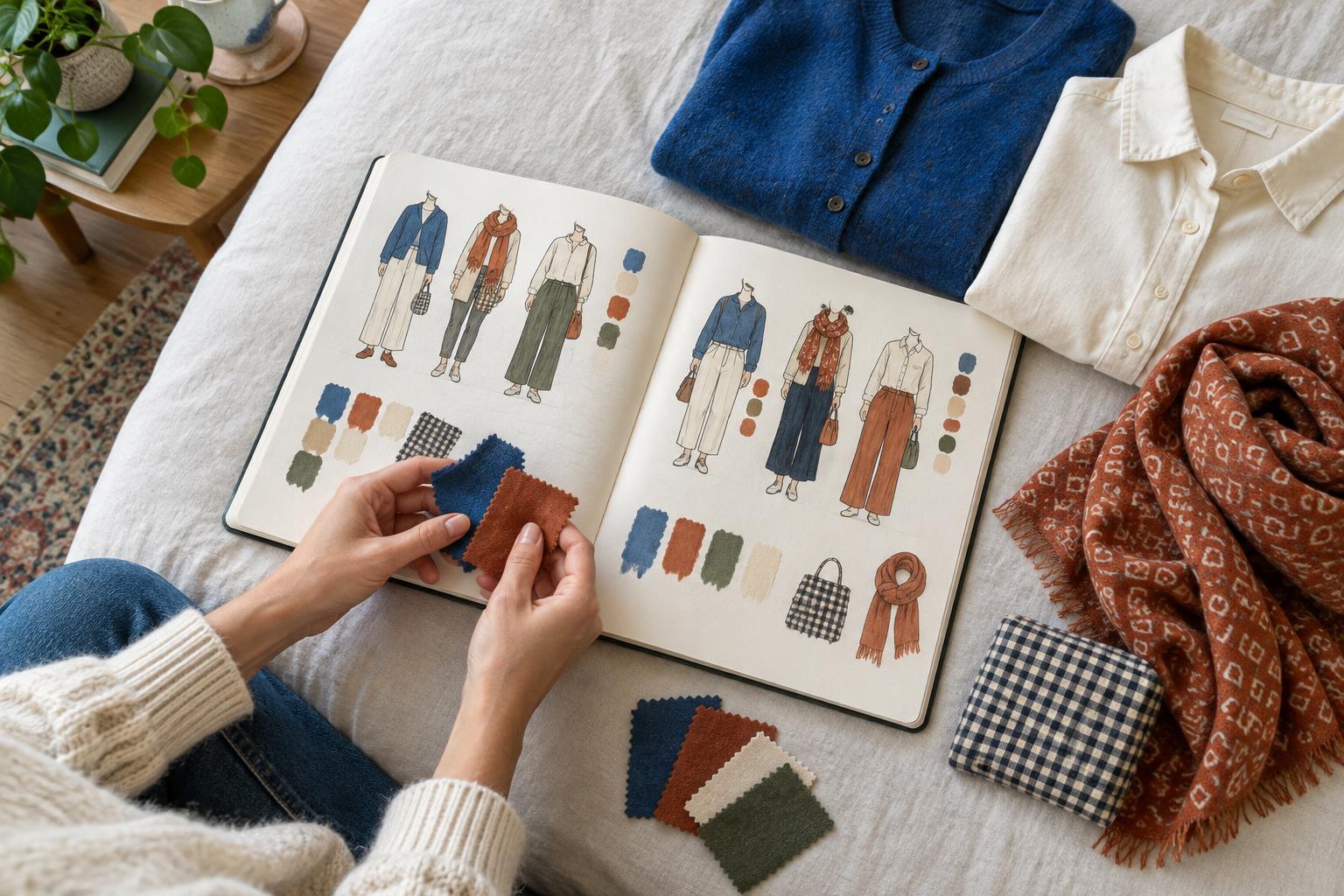
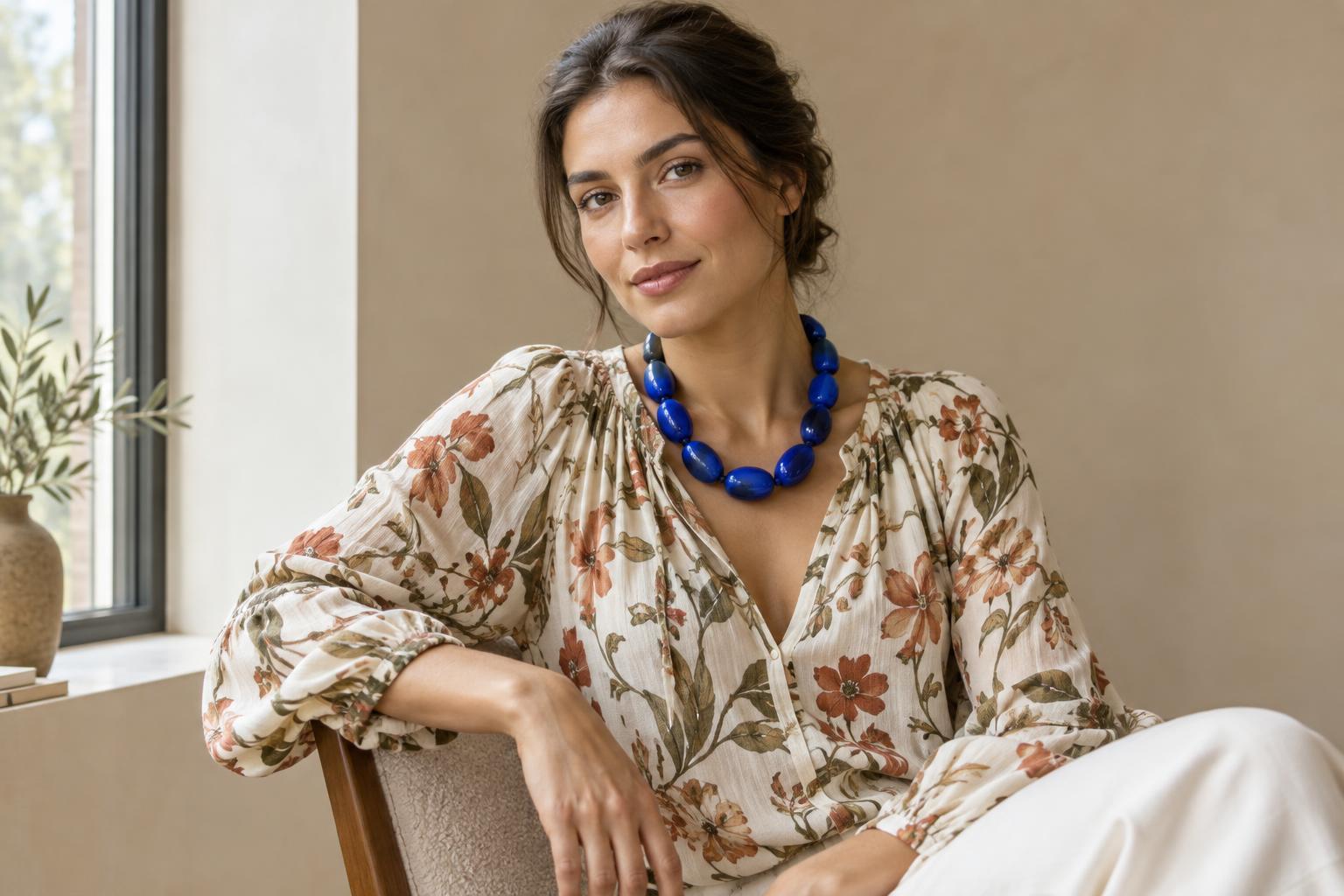
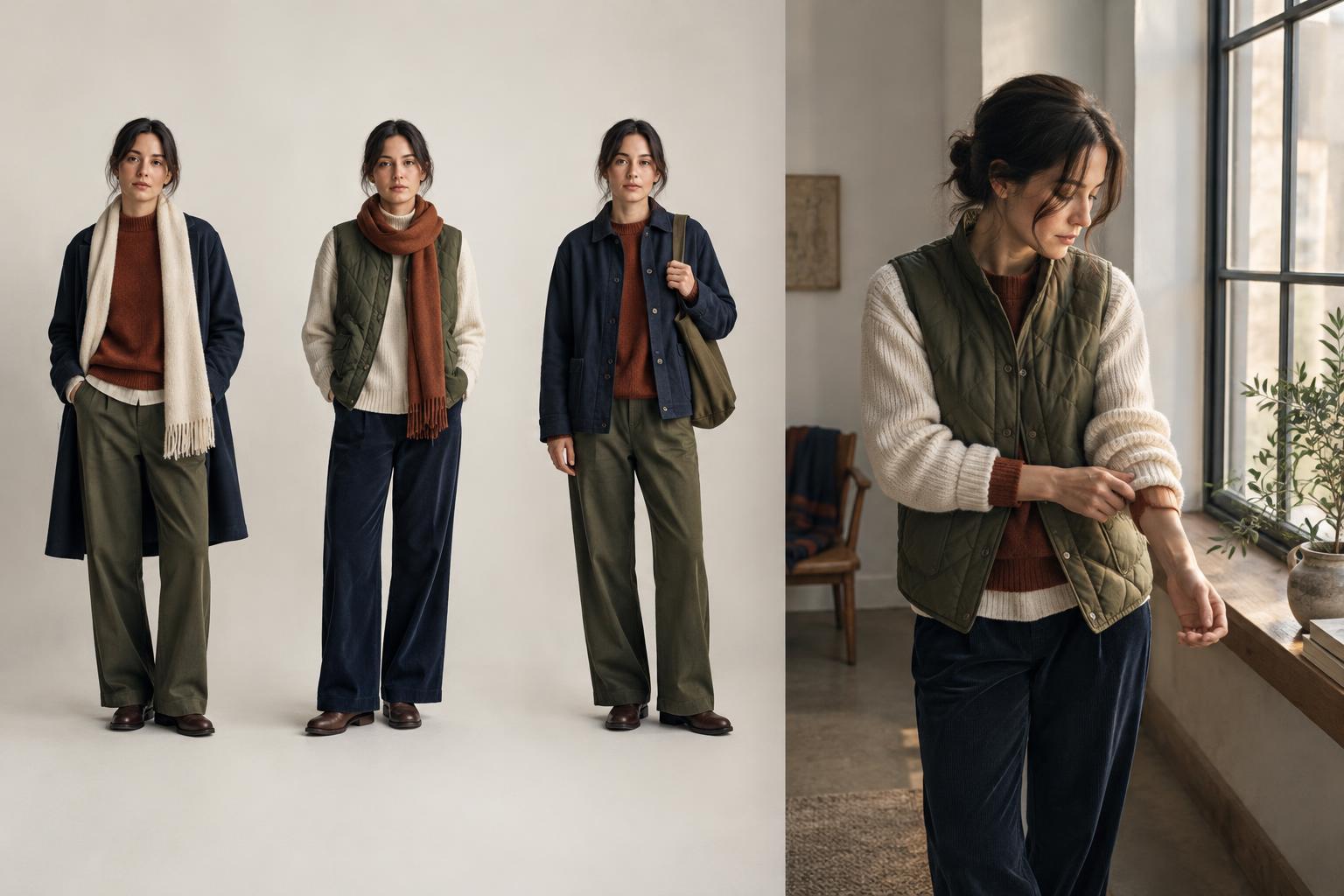
A lookbook works best when each outfit gets enough visual space to be understood. Full-length or nearly full-length images show proportion and layering. Closer images can reveal a cuff, a bag, a fastening or a pattern that might disappear in a wider frame. You do not need identical poses, but some consistency in framing, lighting or background helps viewers compare looks without working too hard.
Think of the sequence as a guided tour. You might begin with a simple outfit, then introduce more colour, texture or accessories. Alternatively, show several ways to wear one item. Repetition gives the collection coherence: the same scarf can appear tied at the neck, carried on a bag and worn as a head covering. A lookbook can still have personality and atmosphere. Its main obligation, though, is to let the clothing remain legible.
When editing, ask whether a viewer can tell what changes between one look and the next. If two photographs convey nearly the same information, keep the clearer one. If an important detail is hard to see, add a close-up rather than relying on a long description.
A photo essay lets clothing carry an idea
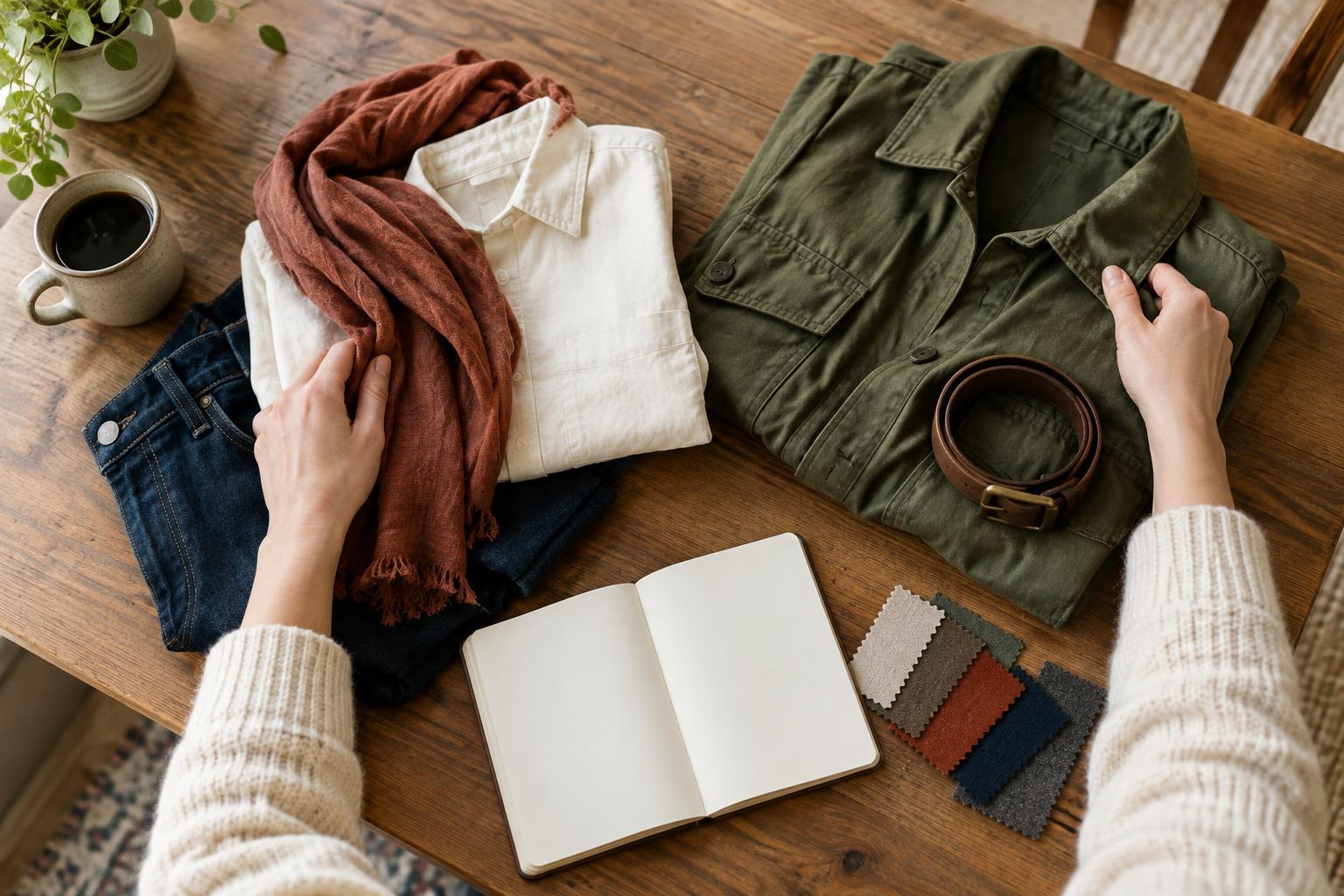
A photo essay can move beyond a clear view of each outfit. It may include a person choosing what to wear, a garment folded on a chair, shoes at the edge of a doorway or a close-up of a hand adjusting a sleeve. These images do not have to catalogue every piece. Together, they can suggest a story about getting ready, belonging somewhere, changing roles or finding comfort in a familiar garment.
The connection between images matters more than perfect visual consistency. A wide shot can establish a setting; a detail can slow the viewer down; a final image can leave a question open. For example, an essay about dressing for a quiet day might move from clothes laid out in morning light to an outfit worn outdoors and end with the same jacket hung by the door. The clothes remain central, but their meaning grows through context.
A photo essay is not permission for every image to be vague. Give viewers a few visual anchors: a recurring colour, garment, gesture or place. Those anchors help the sequence feel intentional even when it shifts between portraits, objects and details.
Choose the images and order that serve your purpose
Before shooting, make a short image list. For a lookbook, list the outfits and the details each one needs to show. For a photo essay, list the moments or ideas you want to connect. Then make more images than you expect to use, changing distance and angle where useful. During editing, place your strongest candidates in an order and view them together rather than judging each photograph alone.
Try a simple test: hide the text and ask what the sequence communicates. If a lookbook makes it difficult to distinguish the outfits, simplify the backgrounds or add clearer views. If a photo essay feels like unrelated pictures, look for a recurring element or remove images that interrupt its direction. Short captions can clarify a garment detail or provide context, but they should not have to explain every visual choice.
You can also combine the formats. A lookbook might open with an atmospheric image, while a photo essay might pause for a clear portrait of an outfit. Decide which purpose leads, then let the other format contribute where it helps.
Try both formats with one small wardrobe
Choose three outfits built around one garment, such as a jacket or pair of shoes. First, make a six-image lookbook: one full view and one detail for each outfit. Arrange the images so viewers can follow how your styling choices change. Next, make a six-image photo essay using the same garment. Photograph it in preparation, in use and at rest; include people or places only where they add meaning.
Compare the two sequences. Which one helps someone understand how you wear the garment? Which one says more about why it matters to you? The exercise is not about finding the better format. It is about recognizing that presenting clothing is an act of selection. What you include, what you leave out and the order you choose all shape the story a viewer sees.