Start with a colour family, not a perfect match
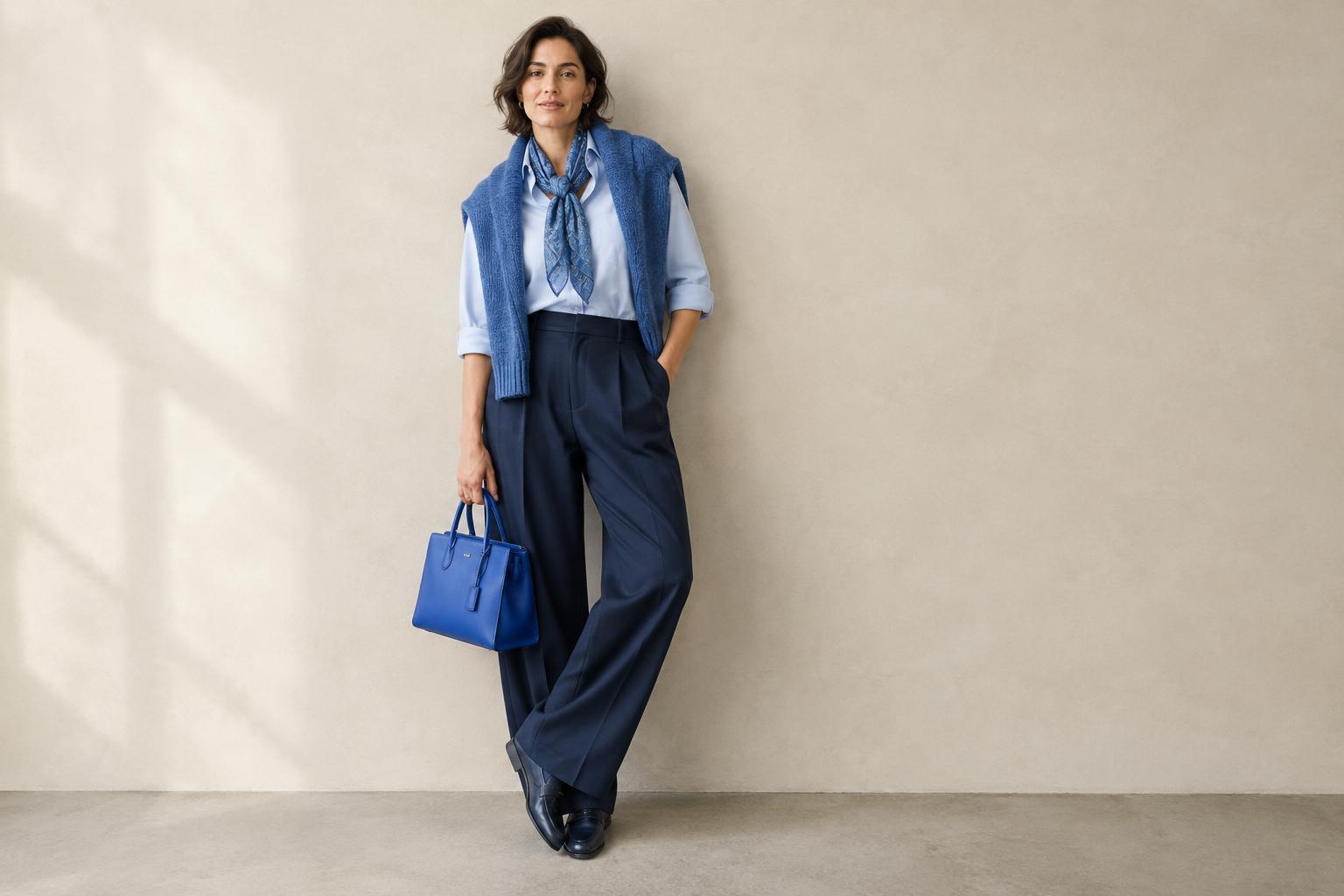
Dressing in one colour does not mean every piece has to match exactly. A monochrome outfit can draw from lighter, darker, softer and more saturated versions of a single hue. Navy with powder blue, for example, reads as one colour story even though the pieces are visibly different. You can also choose a narrower range if you want a more uniform effect.
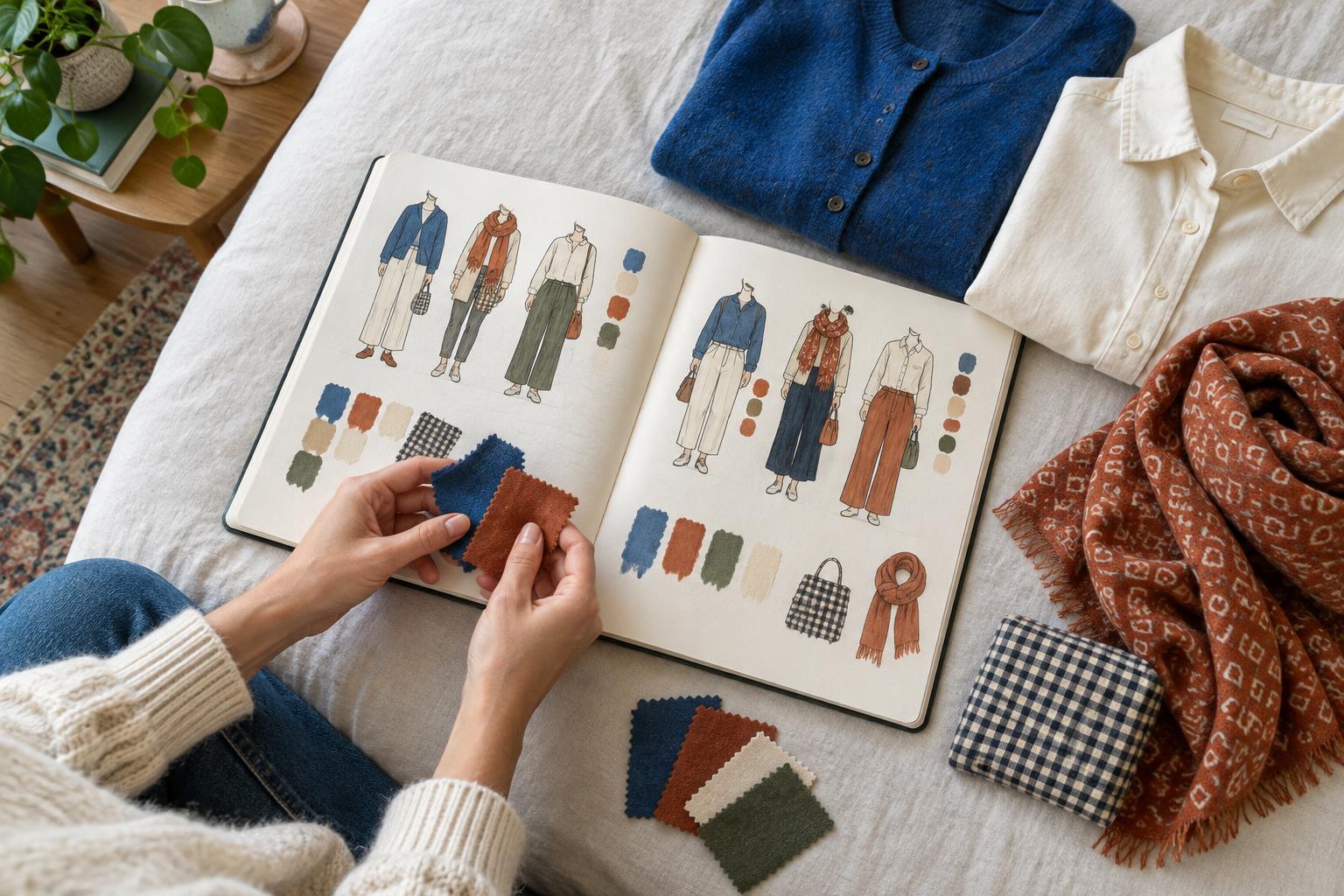
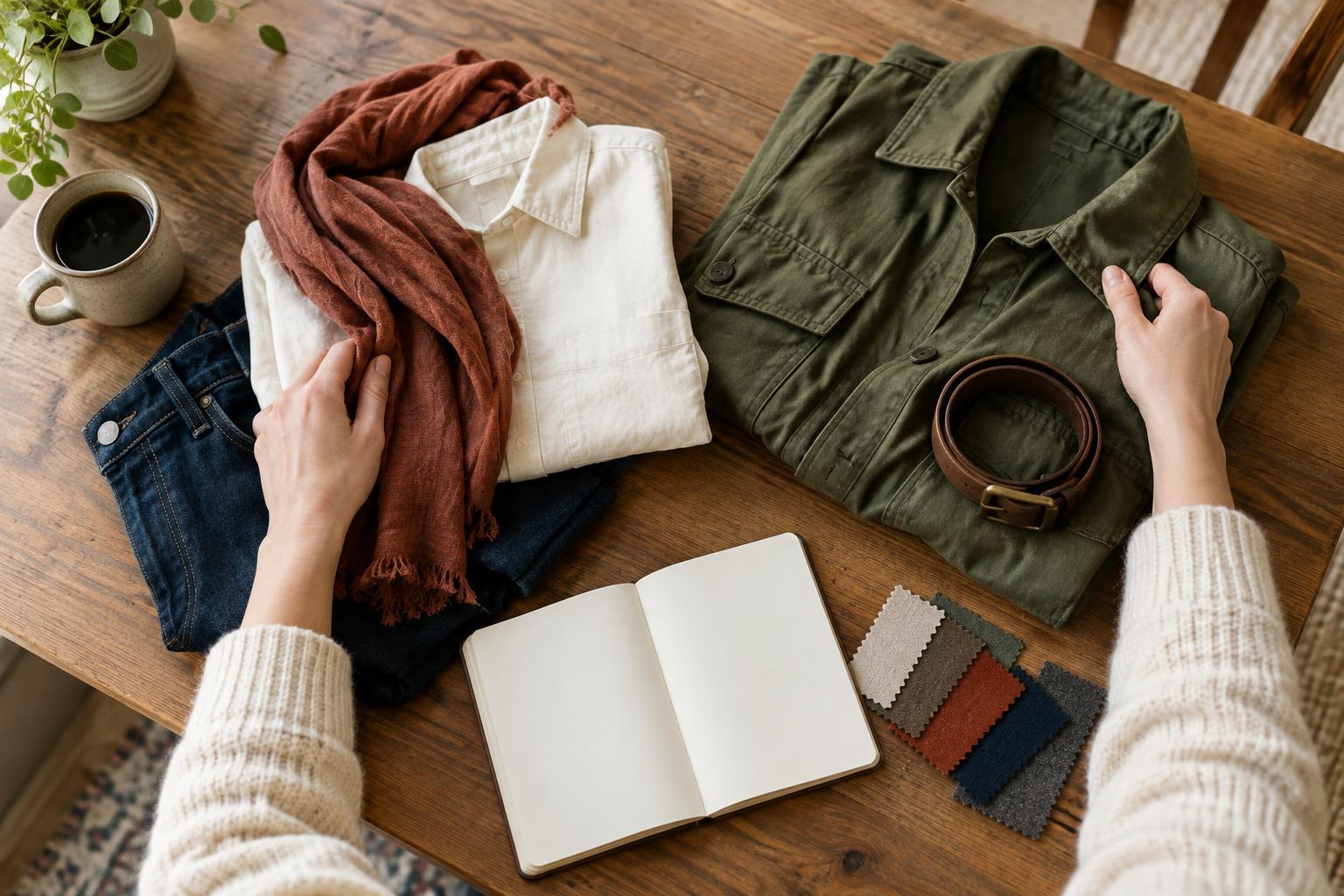
Start with clothes you already own and lay out everything in one colour family. Look for three possible roles: a main piece that covers the most area, a second piece that offers a different shade, and a small detail that draws the eye. Try the combination on rather than judging it only on a bed or hanger. The space between pieces, your movement and the light around you all affect how the colours appear together.
Decide what you want the outfit to communicate. Closely matched shades can feel calm and continuous, while a pronounced light-to-dark contrast may feel more graphic. Neither is more successful; the useful question is whether the result expresses the mood you intended.
Use light and dark to guide the eye
Value—how light or dark a colour appears—is one of the simplest ways to add structure without introducing a new hue. A pale top against darker trousers creates a clear division. A dark outer layer over a lighter base can frame the centre of an outfit. Moving from dark at the shoulders to light at the hem produces a different visual rhythm from reversing that order.
Choose one place for the strongest contrast. It might be the collar of a shirt under a sweater, a belt against a dress, or shoes that are noticeably deeper in tone than the trousers above them. If every edge has equal contrast, the outfit may feel busy even though it uses only one colour family. A few low-contrast areas give the eye somewhere to rest.
For a quick exercise, take a photo of your outfit and view it in grayscale. You are not checking whether the colours match; you are checking whether the light and dark areas form a shape you like. If the outfit looks flatter than you intended, change the placement of one lighter or darker item before adding anything new.
Let texture do some of the work
When colour stays consistent, fabric surfaces become more noticeable. A smooth shirt beside a chunky knit, or matte cotton next to a slightly lustrous scarf, introduces variety that may be subtle from a distance and clear up close. Texture can make an outfit feel layered without relying on multiple colours.
Compare pieces by touch as well as sight. Are they crisp or soft, flat or ribbed, fluid or structured? Pairing materials with different qualities can give each piece a distinct role. For instance, a soft cardigan over a crisp shirt creates contrast at the neckline and cuffs even when both are similar shades. You do not need an elaborate stack of layers; two contrasting surfaces are often enough.
Pay attention to comfort and practicality while experimenting. Some fabrics work better together for a particular temperature or activity than others. An outfit that looks interesting but needs constant adjusting may not support the easy, confident effect you want.
Change the shape, then add a pattern
Silhouette gives a monochrome outfit its outline. Try a relaxed top with a straighter lower half, or a fitted layer beneath a roomier jacket. Tucking, rolling a sleeve or leaving a shirt open can shift the proportions without requiring another item. These small changes also reveal where one shade or texture ends and another begins.
Pattern can add movement while staying within the same hue. Tonal stripes, checks or a small motif are options when the pattern’s colours remain close to your chosen family. If a print feels too dominant, make it a smaller part of the outfit, such as a scarf, socks or a bag. A pattern does not have to be immediately visible to give the look personality.
Try building two versions from the same pieces: one with a clean, uninterrupted outline and one with a visible tuck, cuff or patterned detail. Notice which version feels more like you. Monochrome is a framework for making choices, not a rule that requires every outfit to look minimal.
Finish with one deliberate focal point
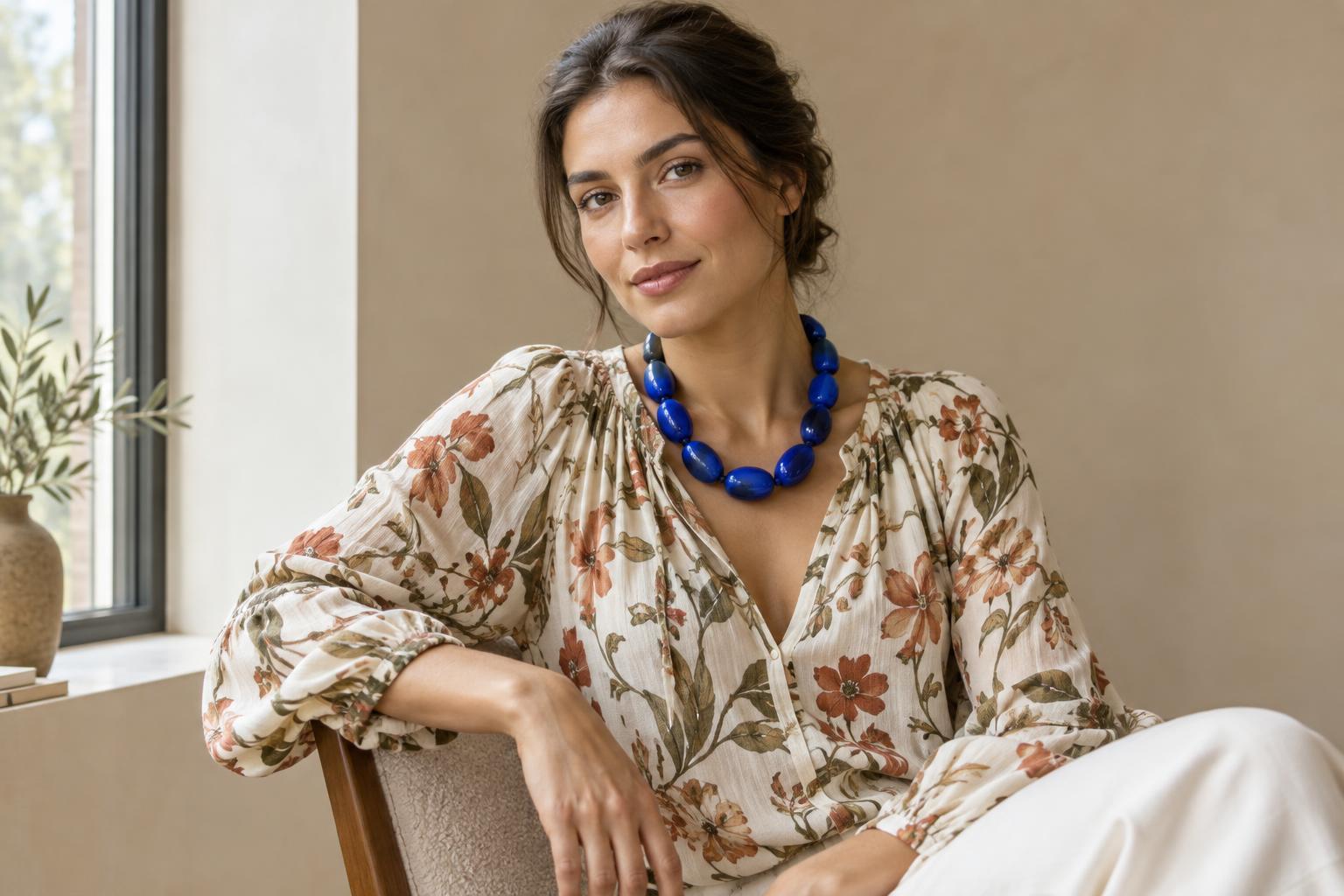
Accessories offer a final chance to direct attention. Within a blue outfit, a pale blue bag against a dark coat becomes a focal point through value rather than a new colour. A glossy buckle, textured headband or sculptural shape can serve the same purpose. Choose one detail you want someone to notice first, then let the other elements support it.
Before heading out, look at the outfit from a few steps away. Ask yourself whether the focal point is clear and whether the overall colour story still feels connected. You may decide that a near-match looks richer than an exact match, or that removing one accessory gives the textures more room to speak.
A useful monochrome outfit does not depend on owning a perfect set of matching pieces. By rearranging shades, surfaces and shapes, you can make familiar clothes express a different idea each time.