Admiration and enjoyment are different experiences
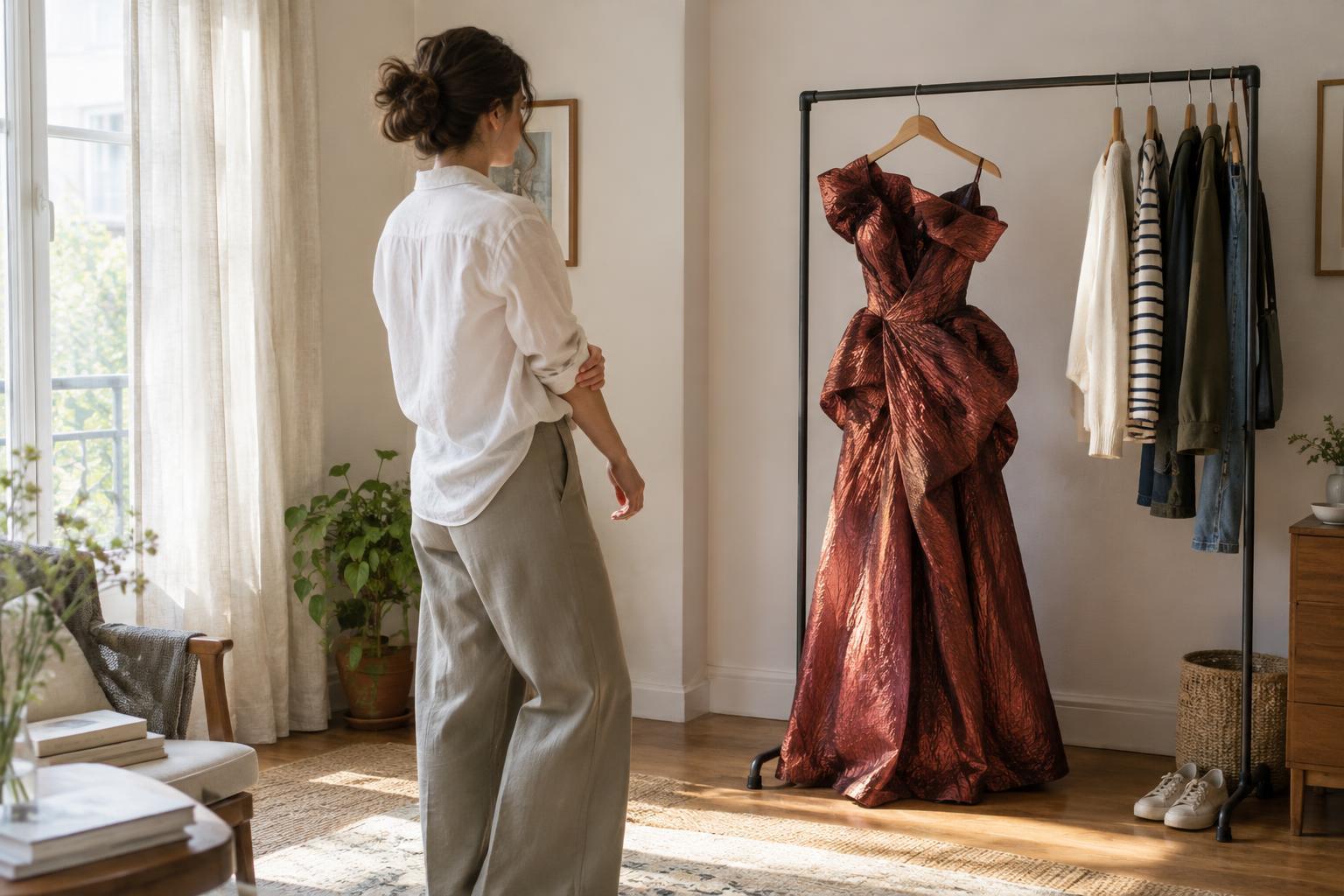
You can love the look of a sharply tailored coat, a dramatic sleeve or an intricate pair of shoes without wanting to spend a day in them. Admiration happens at a distance: you notice the shape, colour, workmanship or mood a piece creates. Enjoyment happens while you are wearing it: you sit down, move around, carry your things and decide whether you still feel like yourself.
Neither response is more authentic. A garment you admire can teach you about your taste even if it never enters your wardrobe. The difficulty begins when you treat every appealing image as a shopping instruction. A photograph captures a moment; your clothes have to accompany you through many moments. Separating those roles lets you appreciate ambitious style without asking every purchase to live up to an image.
Find out what you actually admire
When an outfit catches your eye, name the specific attraction before deciding you want the clothes. Is it the contrast between a soft fabric and a rigid shape? The confidence suggested by a bright colour? The way a small accessory draws attention to the face? You may be responding to one visual idea rather than the entire outfit.
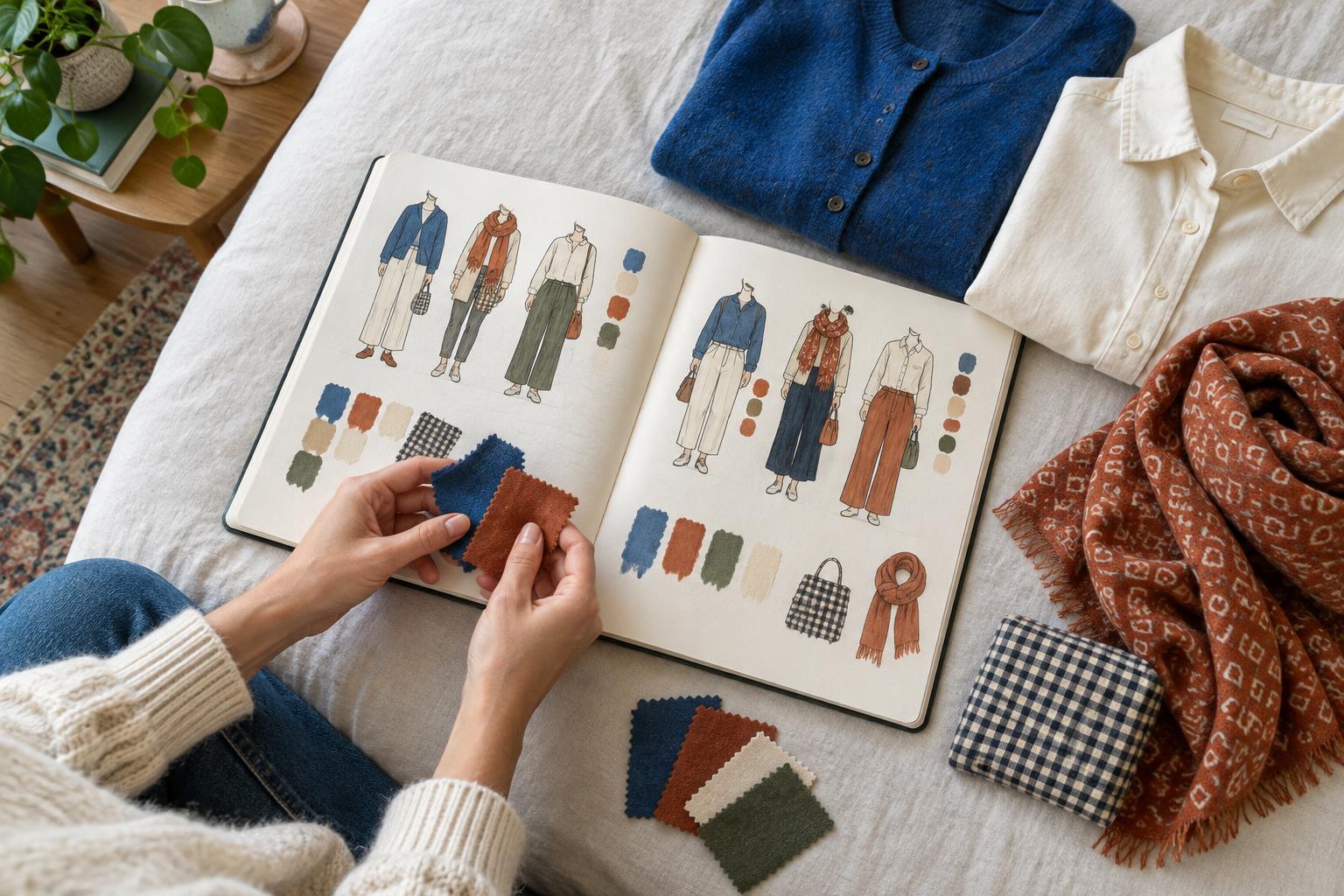
Try collecting five images or descriptions of looks you admire, then write a short note beside each one: “I like this because…” Be precise. “The red interrupts an otherwise quiet outfit” is more useful than “It looks cool.” Next, look for repeated ideas. Perhaps you admire strong outlines, playful details or carefully limited colour palettes. Those observations describe your visual interests, not a list of items you must own.
Test the wearing experience, not just the mirror view
For a piece you already own, compare your first impression with what happens over a normal stretch of wear. Can you move as you need to? Do you keep adjusting a strap, tugging at a hem or protecting a fabric? Are you comfortable with the attention the item attracts in the places you actually go? An outfit can look wonderful in a still reflection and still ask more of you than you want to give.
This is not a demand to choose only easy or quiet clothes. Some people enjoy the deliberate effort of a striking outfit. The useful question is whether that effort feels rewarding. If you gladly make room for a long skirt or a sculptural jacket, the extra care may be part of the pleasure. If you feel relieved every time you take it off, the garment may be better suited to admiration.
Translate the idea into your own wardrobe
Once you identify what you admire, look for a version that works in your life. If you love dramatic proportions but dislike bulky layers, try a defined shoulder on a lighter shirt. If elaborate prints appeal to you but feel overwhelming from head to toe, place one near a familiar solid colour. If a vivid outfit feels too exposed, repeat its colour in a scarf, bag or pair of socks.
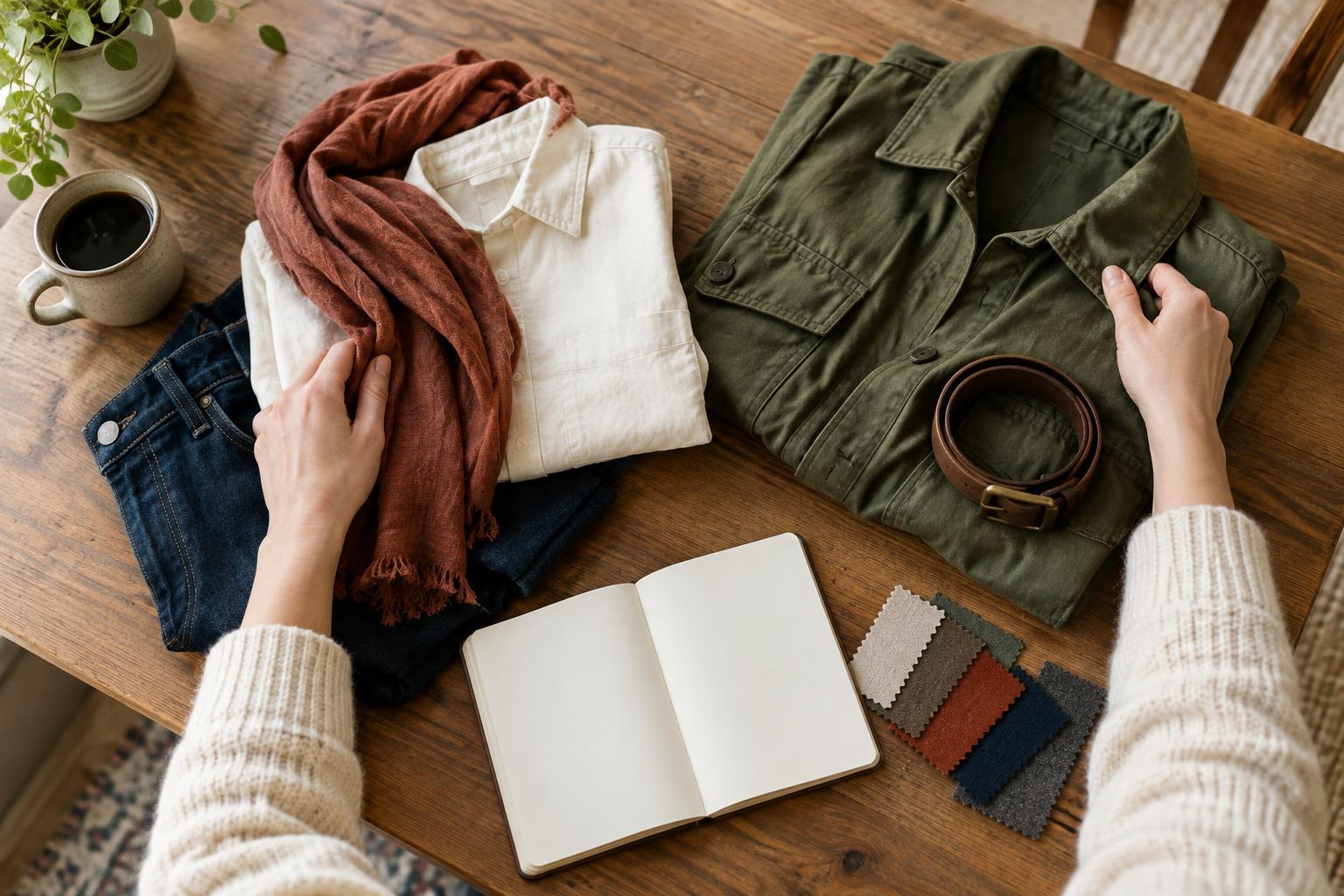
You can also experiment without acquiring anything. Pair two pieces you rarely wear together, move an accessory to a different outfit or photograph several combinations to see which one communicates the idea you had in mind. The aim is not to create a smaller copy of someone else’s look. It is to carry forward the part that speaks to you, in a form you will want to wear again.
Give admired clothes a place without making them obligations
Some pieces remain interesting precisely because they do not fit your routine. You might enjoy visiting a costume display, studying a beautifully constructed garment or saving an image for its colours. That appreciation is a valid part of your creative identity. It does not need to become a purchase or a wardrobe goal.
For items already in your closet, notice which ones you repeatedly choose and why. Their appeal may be less obvious than that of a statement piece, but they reveal the conditions under which you feel expressive: perhaps an open neckline, a dependable fit or one unexpected detail. Keep those clues alongside your inspiration notes. Over time, the gap between clothes you admire and clothes you enjoy wearing becomes less frustrating. It becomes a useful map of what you like to see, what you like to feel and where the two can meet.