Start with the effect you want
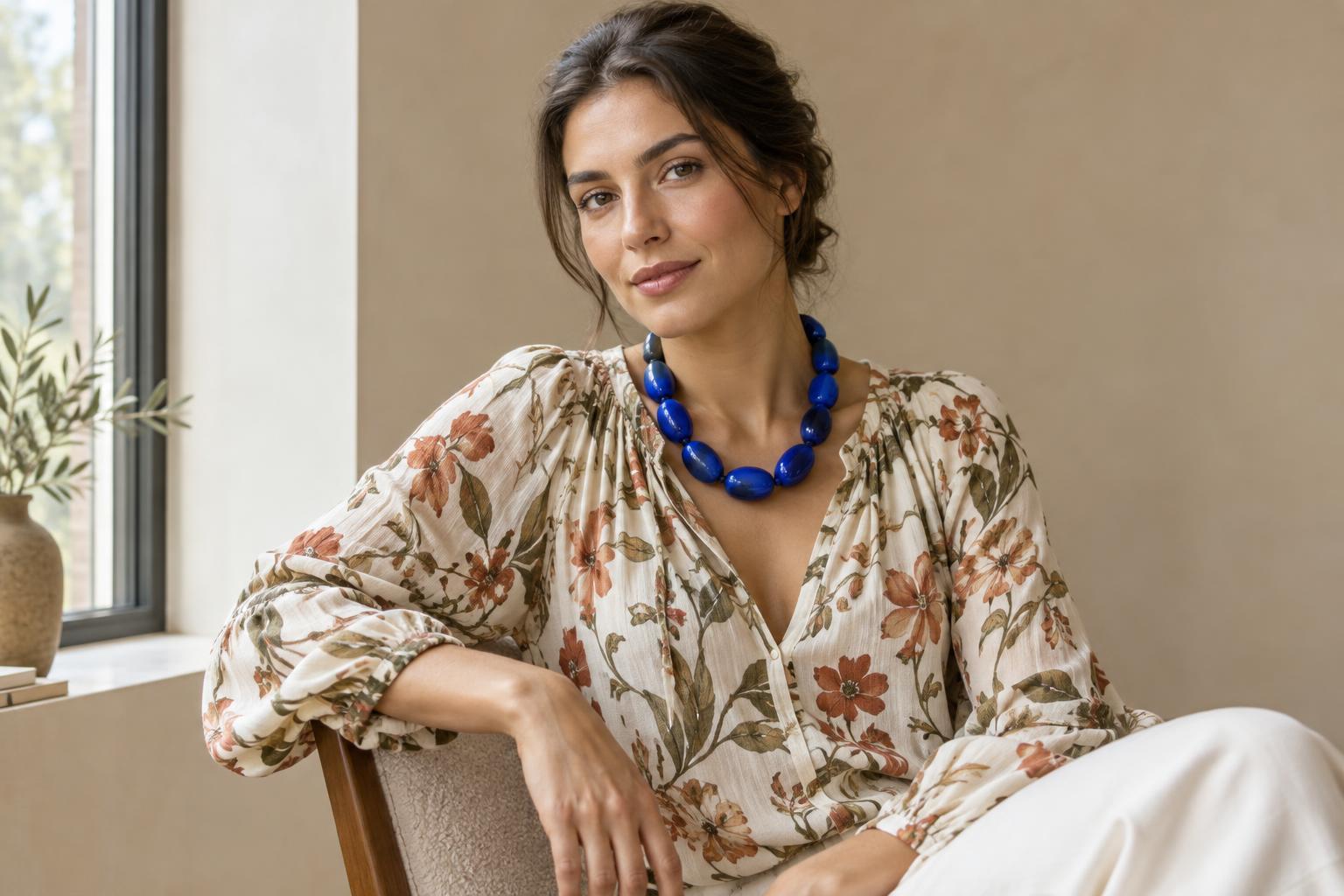
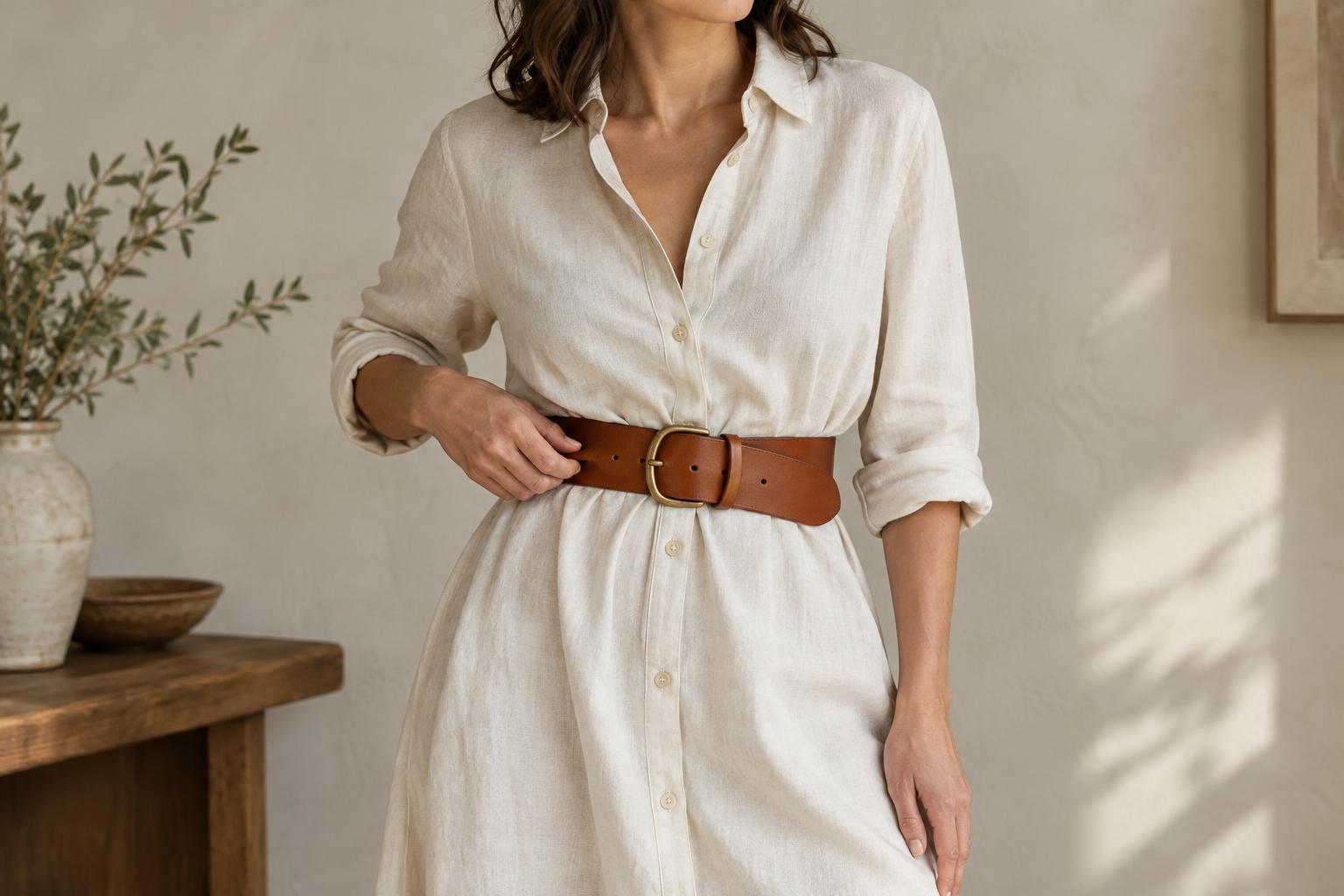
A statement belt does more than hold fabric in place. Its colour, width, buckle, or texture can draw the eye to a particular part of an outfit. Before deciding where to wear it, ask what you want it to do. A belt over a loose dress can create definition; one worn lower over a long shirt can keep the shape relaxed. A vivid belt against a quiet outfit can provide a focal point without adding another patterned garment.
Placement is a styling choice, not a rule tied to a particular body shape. Your natural waist, the waistband of your trousers, and a position over the hips may each give the same belt a different effect. Try the position that suits both your intended look and the way you need to move.
Test height before tightening
Stand in front of a mirror and hold the belt at several heights before fastening it. At the natural waist, a belt often makes the upper and lower parts of an outfit look more distinct. Slightly below the waist, it may create a softer line across a tunic or dress. At the hips, it can add detail while leaving the middle of a loose garment less defined. Notice what happens to the fabric above and below the belt, not just how the belt looks on its own.
Then sit down, bend, reach, and take a short walk. A position that looks appealing while standing may press into you when seated or ride upward as you move. If it does, loosen the belt, shift its height, or try it over a different layer. You should not need to keep pulling it back into place to make the outfit work.
Let the garment guide the placement
Different clothes give a belt different jobs. On trousers or a skirt, belt loops usually set its height, so focus on a belt that fits the loops and sits comfortably with the waistband. Over a dress, cardigan, or jacket, you have more freedom, but the fabric must be able to gather or lie smoothly beneath it. A thick, structured jacket may resist a narrow belt; a soft dress may bunch under a very wide one.
Check the garment from the side and back as well as the front. If excess fabric collects in one spot, adjust it evenly before changing the belt’s tightness. For a loose outer layer, you can also try belting only an inner layer and leaving the outer one open. The statement detail remains visible while the outer garment can move freely.
Choose details that feel good in motion
Width, material, and hardware all affect comfort. A wide belt covers more space and can make a strong visual line, but it may fold or press when you sit if its material is stiff. A narrower belt is often easier to position between the ribs and hips, though a heavy buckle can still pull it downward. Smooth edges and a closure that lies flat may feel better under a coat or against a thin top.
Check where the buckle lands, especially if you often sit at a desk or carry a bag across your body. A large buckle may be more comfortable slightly off-centre, provided the belt closes securely and the shift looks intentional to you. If a belt has only one usable hole and feels either too loose or too tight, choose a more adjustable option rather than relying on discomfort to keep it in place.
Build a repeatable placement test
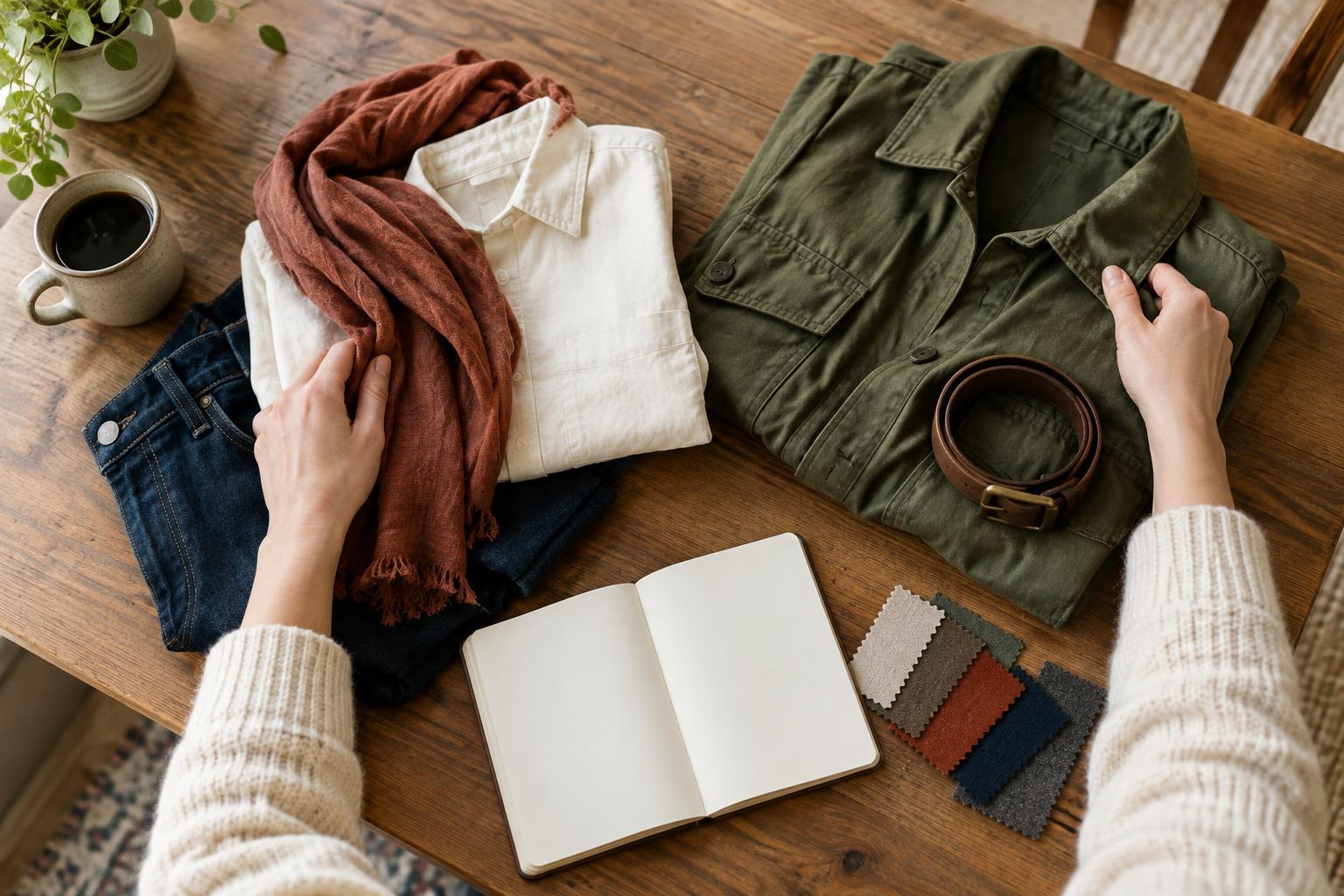
Try one outfit with the belt in two or three positions and take a photo of each. Keep the shoes and other accessories the same so you can compare the belt’s effect clearly. Ask three questions: Where does my eye go first? Does the fabric sit the way I want? Can I move comfortably? A striking position is most useful when you can wear it without monitoring it all day.
If none of the positions works, the belt may need a different garment rather than a different body. Test it over a sturdier layer, with a simpler silhouette, or at a looser setting. Once you find a combination you like, make a note of the garment and fastening position. That small reference makes a statement belt easier to reach for again—and lets its bold detail feel like a natural part of your personal style.