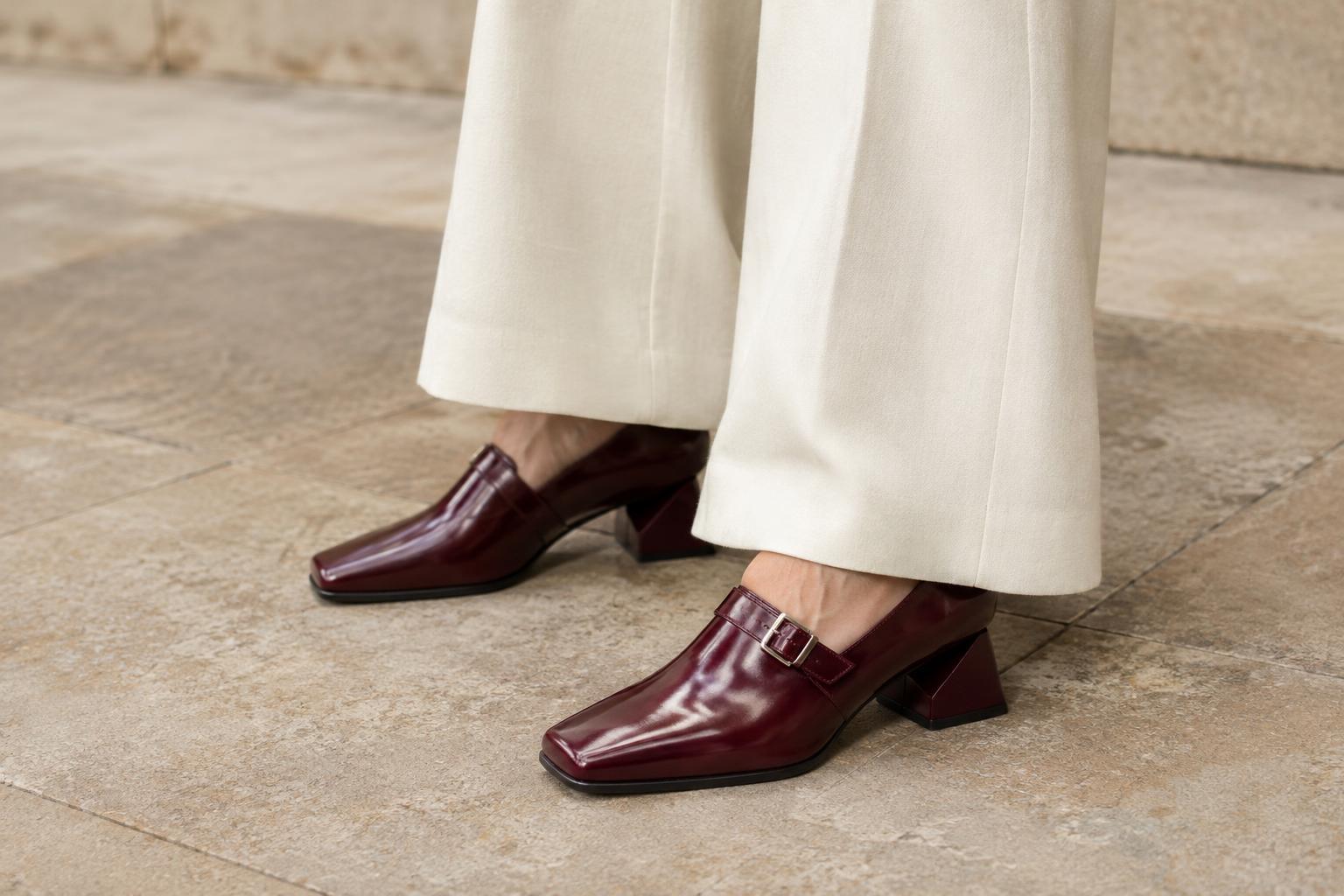
Start with the impression, not the volume
A statement shoe does not have to be bright, tall or unusual. It simply draws the eye and contributes something clear to the outfit. A glossy black loafer can feel as expressive as a red boot if its shape and finish stand apart from everything around it. The useful question is not “Is this bold enough?” but “What does this shoe add?”
Think of shoes as the final line of a visual sentence. They can reinforce the mood already set by your clothes or introduce a contrast. Soft trousers and a relaxed shirt may feel casual with canvas sneakers, sharper with pointed flats, or more playful with chunky, colourful soles. None of these choices is inherently better; each gives the same clothes a different ending.
Before choosing a pair, name the impression you want in a few words: grounded and practical, crisp and deliberate, light and whimsical. This small step makes it easier to decide whether the shoes support the outfit or compete with it.
Use shape to change the outfit’s outline
Shoe shape affects how an outfit reads from head to toe. A narrow, pointed toe extends the visual line of a trouser leg or skirt, often making an outfit feel precise. A rounded toe can soften that line. A square toe adds a more structured edge, while a broad, chunky shoe gives the lower half of an outfit a stronger visual anchor.
Look at proportions rather than judging a shoe on its own. Wide-leg trousers might nearly cover a slim shoe but reveal a thick sole as you move. Cropped trousers leave more of the shoe visible, giving its toe shape and fastening room to speak. With a long dress, a sturdy boot can provide contrast to the fabric’s movement; a delicate sandal may continue its lightness instead.
Try taking a full-length photo in the same outfit with two different pairs. Notice where your eye lands first and whether the shoes seem connected to the clothing. The goal is not to find a universal rule about balance. It is to see which outline expresses what you intended.
Let the finish control the mood
Finish describes how a shoe’s surface catches light and shows texture. Matte leather, canvas or suede-like materials tend to look quieter than patent shine, metallic surfaces or high-contrast prints. A reflective finish can bring energy to a simple outfit without changing its colour palette. A textured finish can add interest more gently, especially when the clothing is smooth.
Consider how finish relates to the rest of what you are wearing. Glossy shoes beside a crisp jacket may make the outfit feel especially polished. The same shoes with worn-in denim create a more noticeable contrast. If several pieces already have sheen, print or texture, a matte shoe can provide a pause; if the outfit is visually calm, a shiny pair may become its focal point.
Colour matters here, too, but it need not match anything exactly. Repeating a colour from a scarf or bag can create a sense of connection. Choosing a contrasting shoe colour can make the feet the destination of the outfit. Both approaches work best when the choice looks intentional to you.
Notice what small details say
Buckles, laces, stitching, hardware and unusual heels can carry the statement even when the shoe’s basic shape is familiar. A large buckle gives a plain flat a graphic point of interest. Contrast laces can make a practical shoe feel playful. Visible stitching may emphasise craft and texture, while minimal detailing can make a distinctive silhouette feel calmer.
The scale of a detail changes its effect. A small metal accent might echo jewellery without demanding attention. Oversized hardware may become the main event, especially beneath a simple trouser hem. If you want one detail to lead, leave it some visual space: fewer competing accessories or a quieter hem can help it register.
Details also affect how easily a pair fits your routine. Consider whether a fastening is convenient, whether embellishments might catch on a hem and whether you are comfortable caring for the finish. A shoe makes a better personal statement when you can actually enjoy wearing it.
Build an outfit around one pair
To practise, choose one expressive pair you own and style it three ways. First, pair it with simple clothes in related colours and let the shoes lead. Next, repeat one of the shoe’s features elsewhere: a colour, a rounded shape or a metallic detail. Finally, create contrast, such as a substantial boot with a fluid garment or a polished shoe with relaxed separates.
Compare the three outfits in a mirror or photographs. Which feels most like you, and which would you wear for a full day? If the shoe seems disconnected, try changing the length of a trouser, adding a small colour echo or simplifying another accessory. Small adjustments often matter more than buying an entirely new outfit.
Statement shoes are useful because they let you experiment with identity at the edge of familiar clothing. Shape sets the outline, finish sets the mood and details give the look its accent. Choose the combination that communicates something you want to say, while still making room for the practical act of walking through your day.


