What structure and drape actually mean
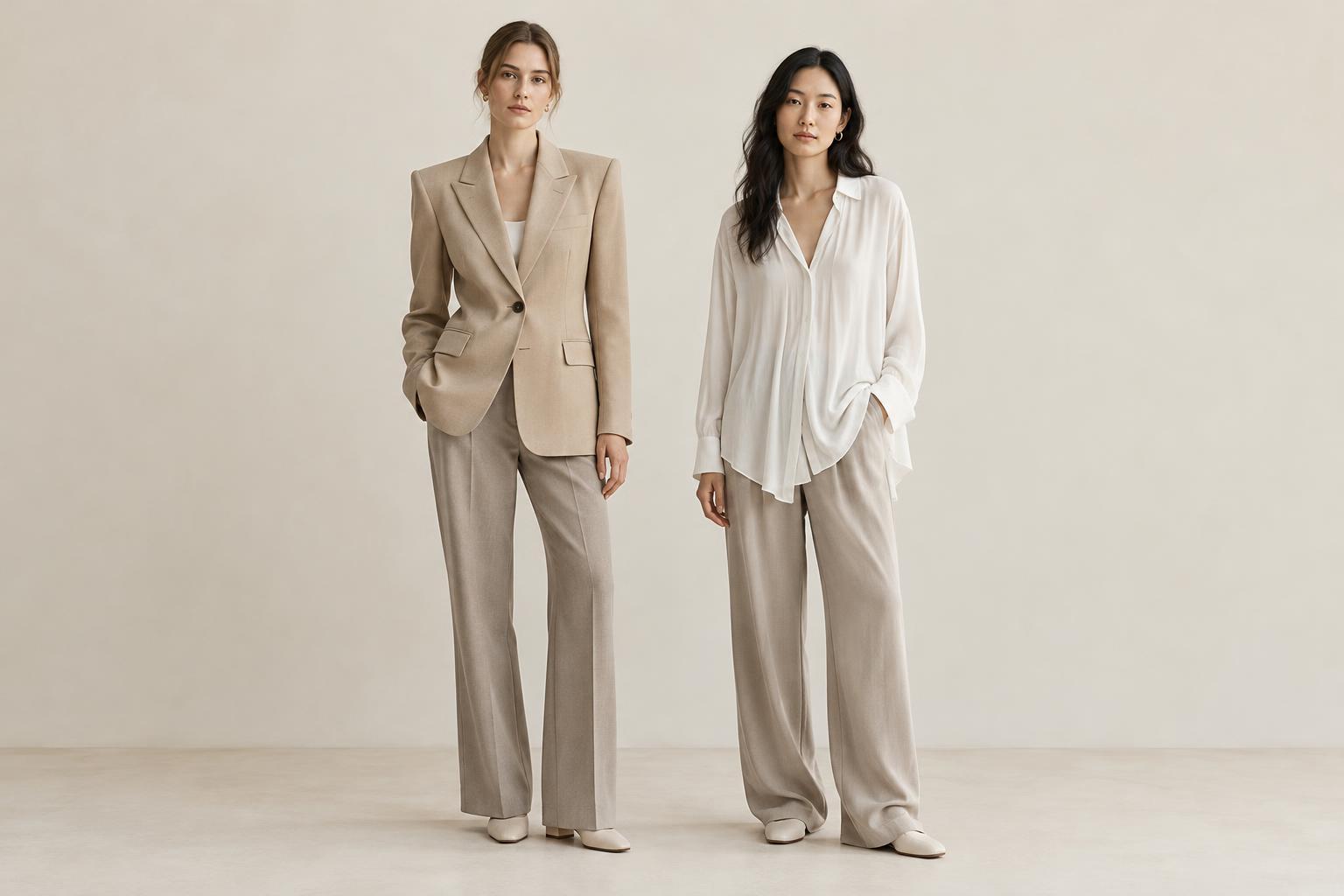
Clothing does more than cover the body: it creates a shape around it. A structured garment holds some of its own form. Think of a jacket with a defined shoulder, a crisp cotton shirt or trousers with a firm crease. A draped garment falls, folds or moves more readily with the body, like a fluid blouse or a softly gathered skirt. Neither approach is inherently more polished, comfortable or flattering. Each offers a different way to direct the eye.
The distinction is a spectrum, not a choice between two fixed categories. A coat may have a firm collar and loose, flowing sleeves. A skirt may be made from a soft fabric but gain a clear outline from pleats or a fitted waistband. Looking at both the fabric and the garment’s design gives you a better sense of the shape it will make when worn.
Look at the fabric, then the construction
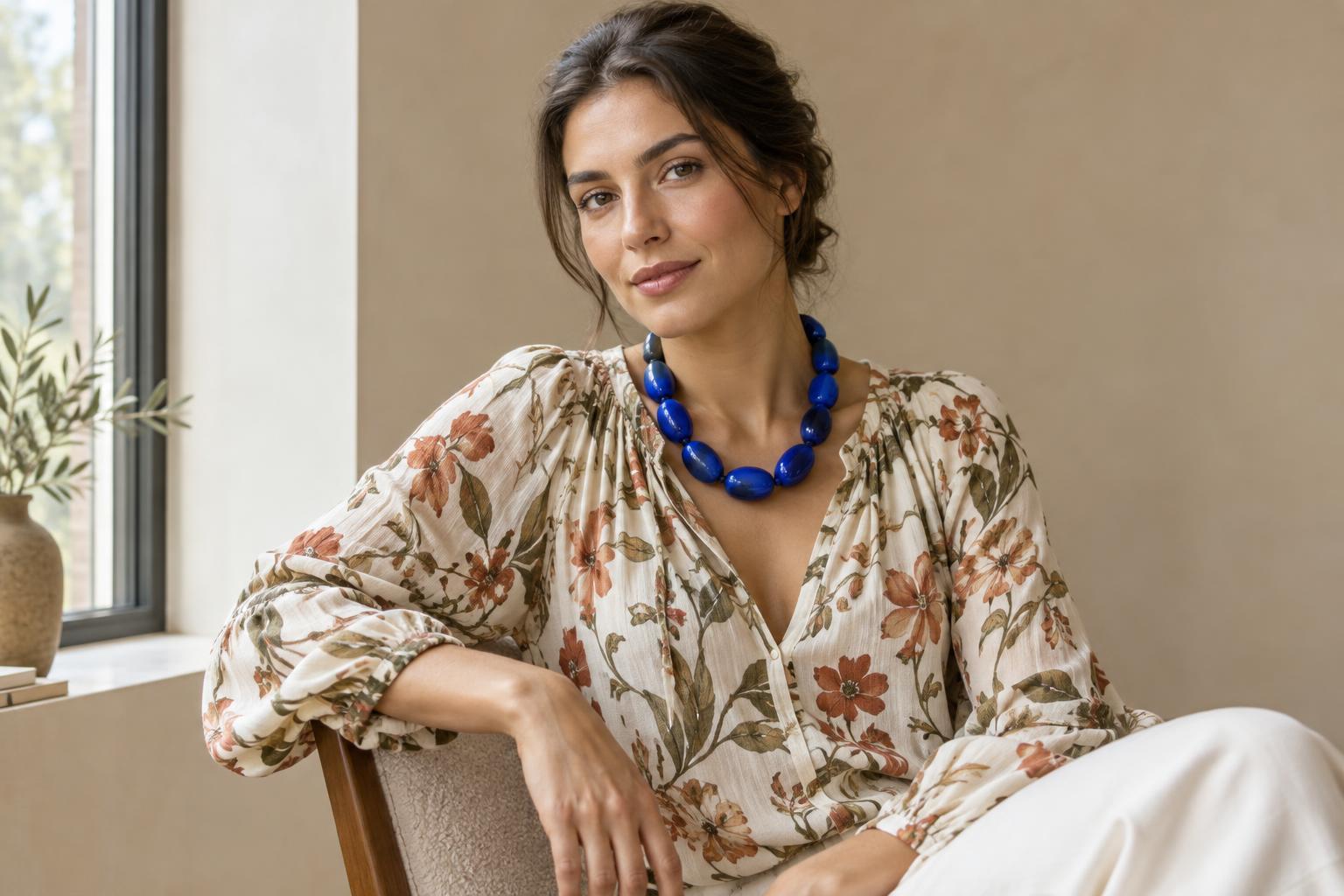
Fabric affects whether a garment stands away from the body or falls close to it. A firm, densely woven cotton often keeps a crisp edge; a softer, more fluid material may settle into folds. Weight matters, but it does not tell the whole story. A heavy fabric can hang in long, loose lines, while a light fabric can look crisp if it has enough stiffness. Texture also changes the effect: visible folds may become part of the outfit’s character rather than disappear into its outline.
Construction can reinforce or redirect what the fabric wants to do. Shoulder pads, interfacing, seams and waistbands help hold a shape. Bias cuts, gathers and extra fabric can encourage movement. When comparing two garments, ask where the outline comes from. Does it come from a firm textile, a shaped pattern, a built-in support, or a combination? This is more useful than relying on a fabric name alone.
Notice the shape from a few steps away
The quickest way to understand an outfit’s silhouette is to step back from the mirror. First, ignore colour and small details. Notice the outer edge: where does it widen, narrow or fall straight? A structured shoulder might make the upper body look more angular. A draped layer might soften that line or create a longer curve. Neither effect says anything fixed about your body; it is simply a visual result you can choose to use.
Then move. Sit, walk, lift an arm and turn to the side. A garment that looks striking while still may feel restrictive in daily use. One that seems shapeless on a hanger may form appealing folds in motion. Check whether the fabric stays where you want it, whether its folds feel intentional to you and whether you can wear it comfortably through an ordinary day. Your preferred shape should work in your life, not only in a photograph.
Combine structure and drape with intention
You do not need to commit to one silhouette from head to toe. A crisp jacket over a fluid top creates a clear frame around softer movement. Wide, draped trousers can sit beneath a compact, structured shirt. If an outfit feels too rigid for your taste, try replacing one firm piece with something that moves. If it feels less defined than you want, add a garment with a distinct shoulder, collar or waistband.
Pay attention to where the contrast happens. A firm layer on top tends to define the shoulders and torso; a structured bottom can give shape to the waist and legs. Repeating one feature can make the combination feel deliberate: the clean edge of a jacket might echo a sharp bag, while the folds of a blouse might be picked up by a loosely tied scarf. These are options to experiment with, not rules about what anyone should wear.
Try a small silhouette exercise
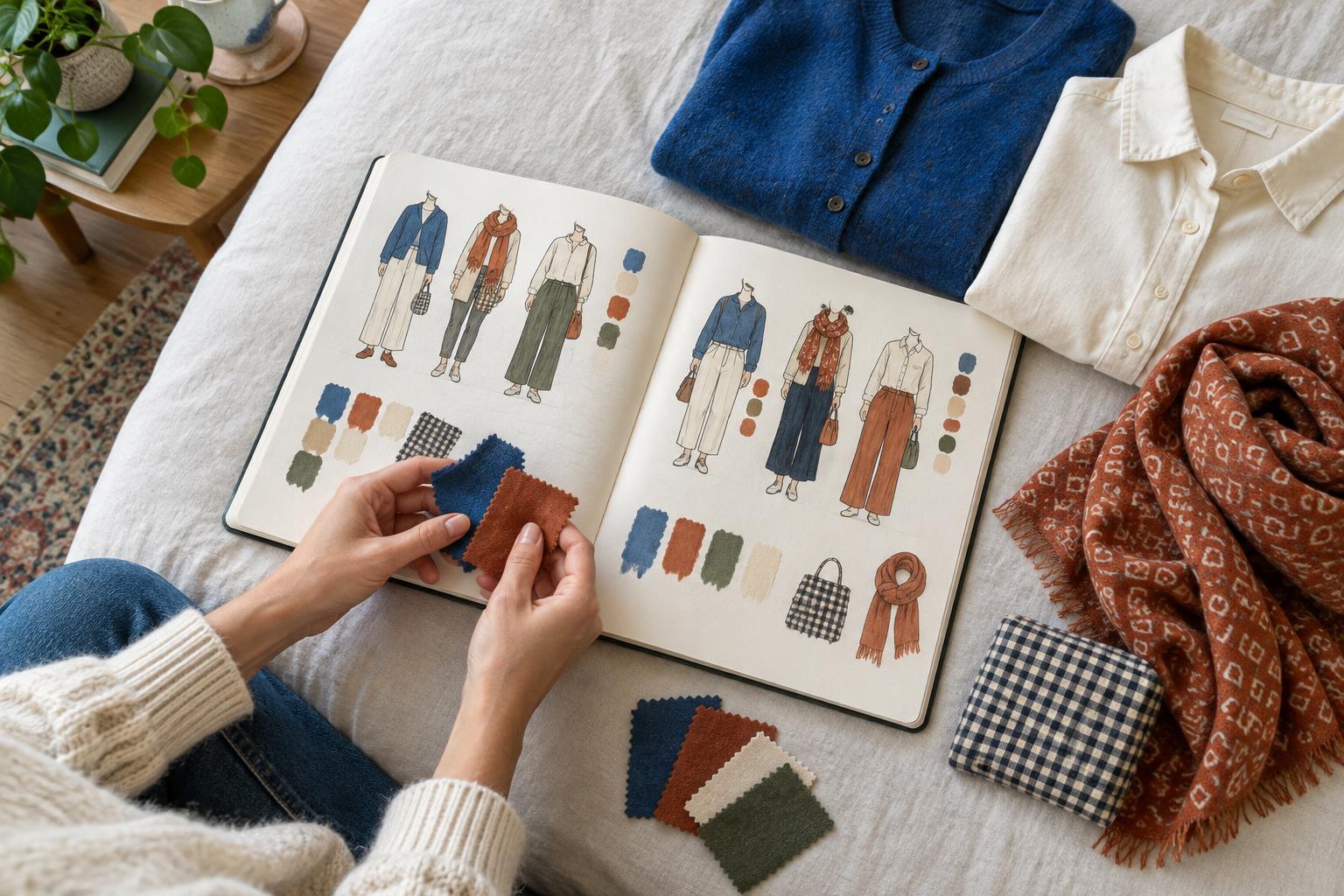
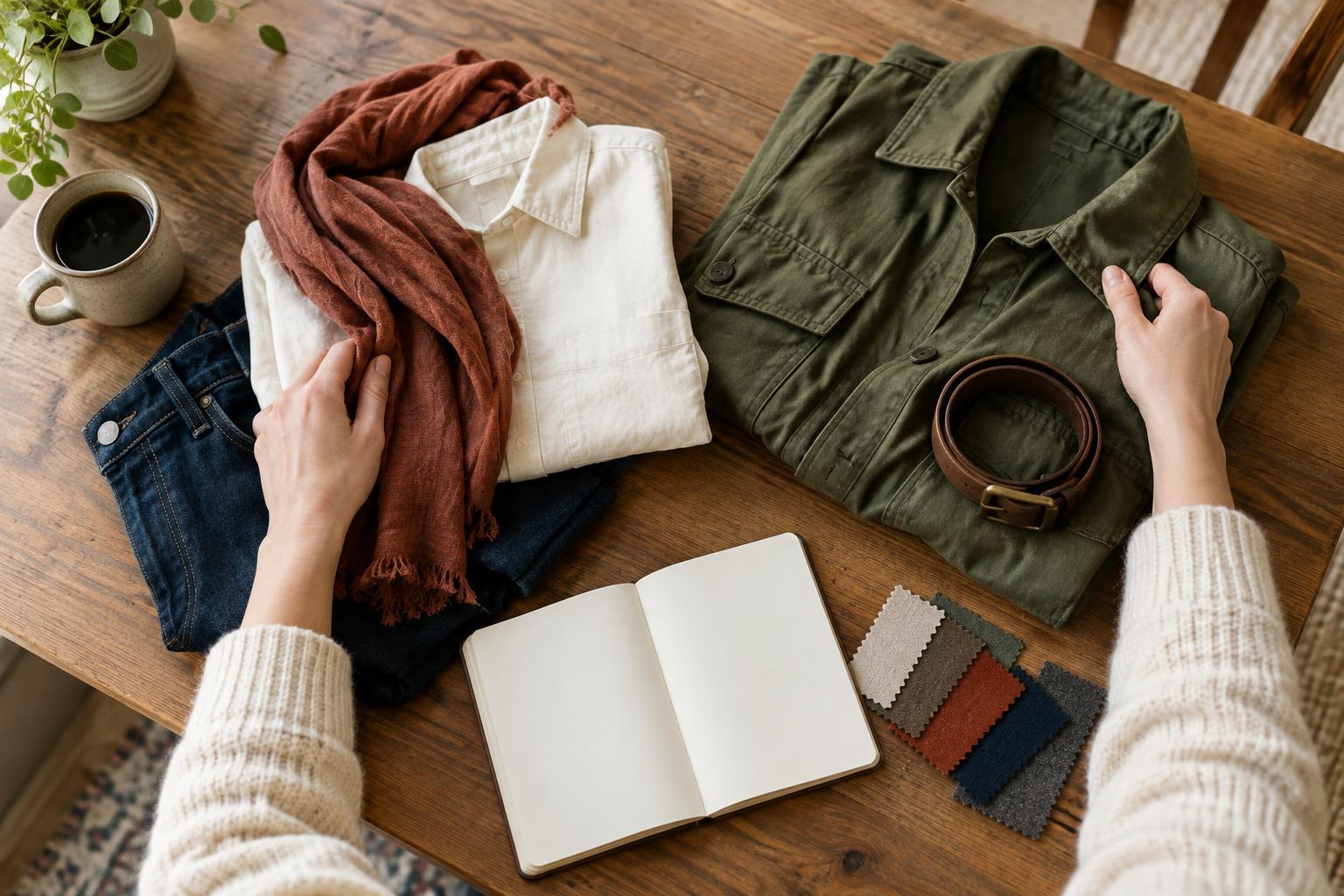
Choose one item you wear often, such as a pair of trousers or a plain top. Build two outfits around it. In the first, add a piece that holds its shape; in the second, add one that falls softly. Keep your shoes and other accessories the same if you can. Take a photo of each outfit from the same distance, or simply compare them in a full-length mirror. Focus on the overall outline before deciding which details you like.
Write down three observations: where your eye goes first, how the clothes move and how you feel wearing them. You may prefer the clarity of the structured version, the ease of the draped one or a combination you had not considered. The point is not to find a permanent label for your style. It is to notice how fabric and construction give you choices—and to use those choices to express yourself more deliberately.