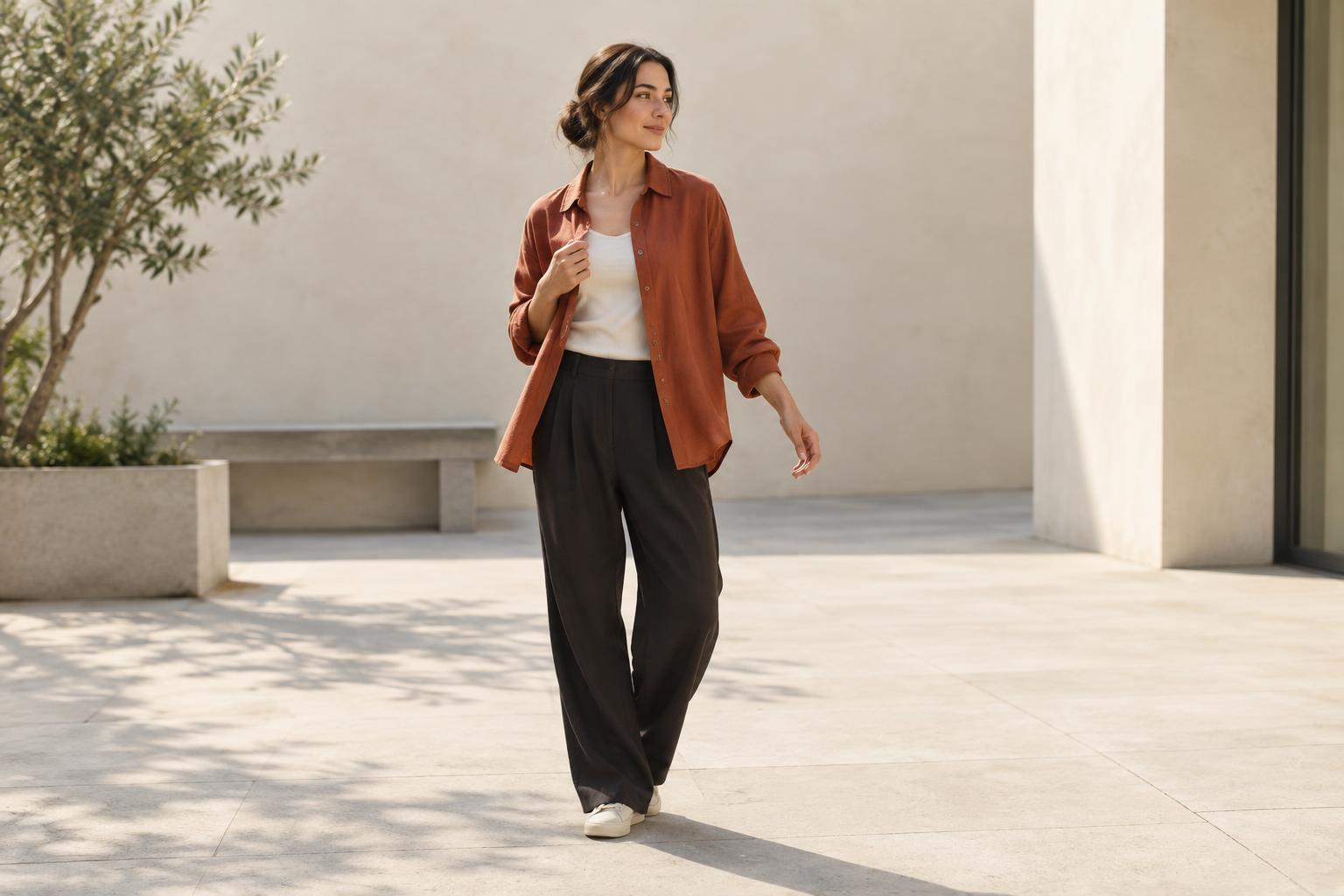
Start with the idea behind the outfit
Before choosing a pose, ask what you want the image to say. An outfit might feel playful, precise, relaxed or dramatic. It might also hold a more specific idea, such as getting ready for a journey or enjoying a quiet afternoon. A clear intention gives your body something to express beyond “show the clothes.” You do not need to act out a character; a small choice in how you stand can be enough.
Write down three words that describe the image you want to make. Then consider which parts of the outfit carry those words. A structured jacket may look especially deliberate when you stand still with your shoulders comfortably open. A flowing layer may come alive when you take a step. Treat these as experiments, not rules: the same garment can tell different stories depending on how you wear and photograph it.
Let posture set the tone
Posture shapes the overall impression of an outfit image. Standing squarely toward the camera can feel direct; turning slightly away can suggest a moment caught in progress. Sitting with your body settled into a chair may give the image a slower pace. These impressions also depend on framing, setting and facial expression, so try a few versions rather than assuming one stance has a fixed meaning.
For a useful comparison, keep your camera position and outfit the same while making three images: one standing still, one leaning lightly against a surface and one walking through the frame. Look at where your eye goes in each photo. Does a coat keep its intended shape? Does a scarf become more visible? Choose the posture that supports both the garment and the feeling you want to convey. Comfort matters; there is no benefit in holding a position that strains your body.
Give your hands a purpose
Hands can draw attention to details and make a photograph feel less static. You might adjust a cuff, hold a bag by its strap, rest a hand near a pocket or lightly touch a necklace. A gesture often looks more natural when it comes from something you would actually do. If you want to show a ring, for example, you could hold a book or cup rather than positioning your hand solely for the camera.
Try changing just one hand placement at a time. Compare a hand at your side, a hand holding an accessory and a hand interacting with a garment. Notice whether the gesture highlights a detail or hides it. Check the edge of the frame, too: an expressive hand can lose its effect if it is accidentally cropped. If your hands tend to tense when photographed, pause between shots and let them rest before trying again.
Use movement to show how clothes behave
A still image can suggest motion. A step, a gentle turn or the moment after putting on a jacket can reveal how fabric falls and how pieces work together. Movement is especially useful when a garment changes shape as you wear it, but it need not be dramatic. Even shifting your weight can create a different line through the outfit.
Ask the photographer to take several images while you repeat one simple action, or use a timer and make the same movement more than once. Begin slowly so you can see what the camera captures. Keep an eye on practical details: a swinging bag might cover the main feature, while a turn could reveal the back of a jacket you want to show. Select the frame that communicates your idea, not merely the one with the most motion.
Make room for your own way of moving
The most useful pose is one you can inhabit, not one copied exactly from someone else. If standing or walking is uncomfortable, expressive choices are still available while seated or supported. A change in the angle of your shoulders, the direction of your gaze or the placement of an accessory can shift the story. You can also communicate stillness intentionally; a calm, steady posture can give a detailed outfit room to speak.
Finish with a small editing exercise. Choose two or three photos of the same look and describe what each seems to emphasize, without judging whether you look “good” or “bad.” Perhaps one draws attention to colour, another to movement and a third to your expression. This helps you see gesture and posture as creative tools rather than tests you have to pass. Keep the image that best matches what you wanted to share.


