Give the prop a purpose
An outfit photo can show more than what you wore. A well-chosen object can suggest what you were doing, what you care about or how you want the clothes to feel. A notebook might make a relaxed outfit look ready for a creative afternoon; a bunch of flowers might bring softness to a structured jacket. The object works best when it adds a layer of meaning that the outfit alone does not quite convey.
Before reaching for a prop, finish this sentence: “This photo is about…” Your answer might be “an easy way to wear bright red” or “feeling prepared for a day of making things.” Then ask what the object contributes. If it simply fills an empty hand, try a frame without it. You do not need to explain every detail of your life through one photograph. One clear connection between the outfit and the object is often enough.
Choose an object that belongs in the scene
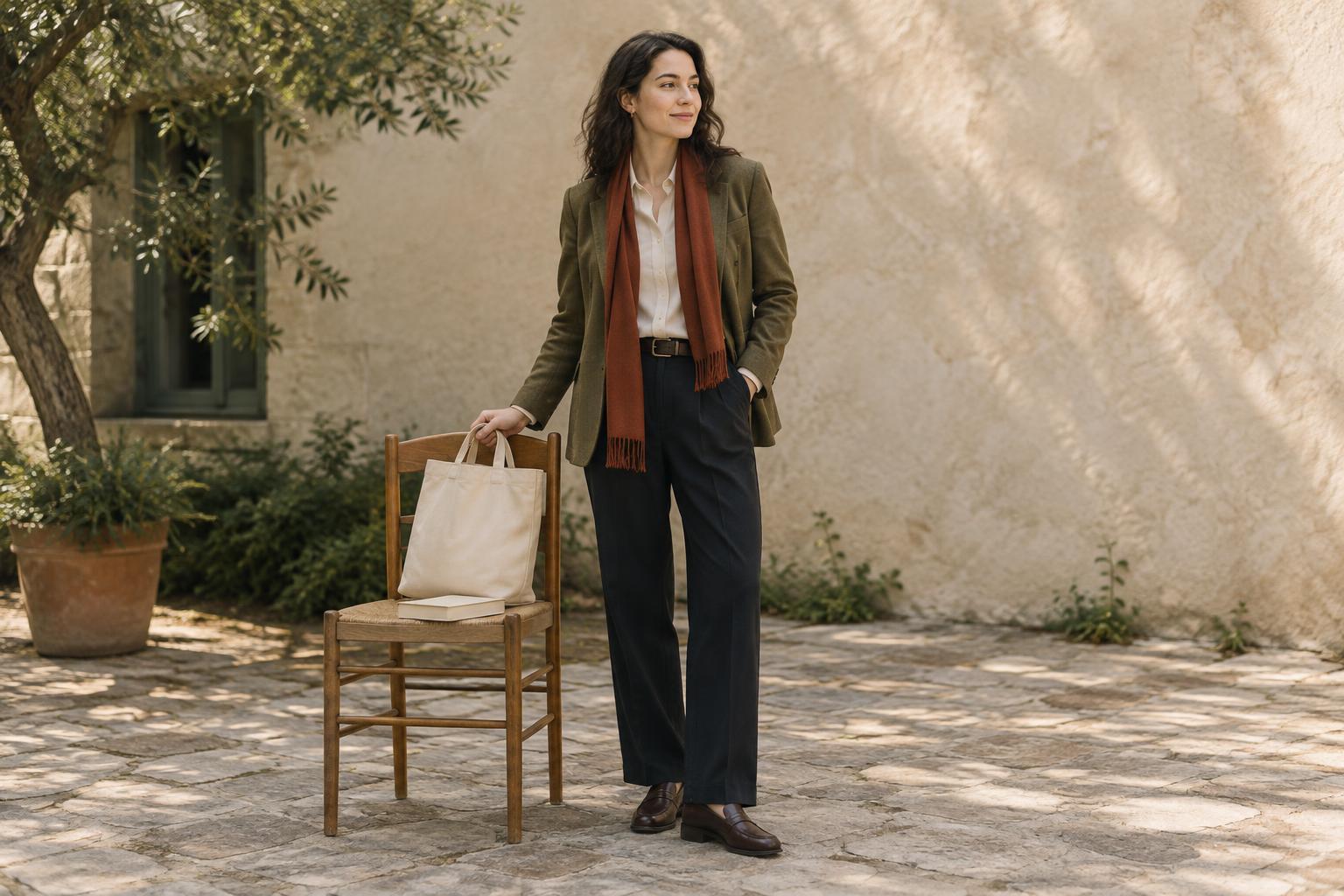
Useful props are often ordinary things you might naturally carry, use or encounter: a tote, a book, a pair of headphones, a bicycle or a café cup. Familiar objects can make a portrait feel inhabited rather than staged. They can also give your hands something comfortable to do, which may help you settle into a pose. Pick something you can hold or interact with easily; awkward handling tends to draw attention to the prop instead of the clothes.
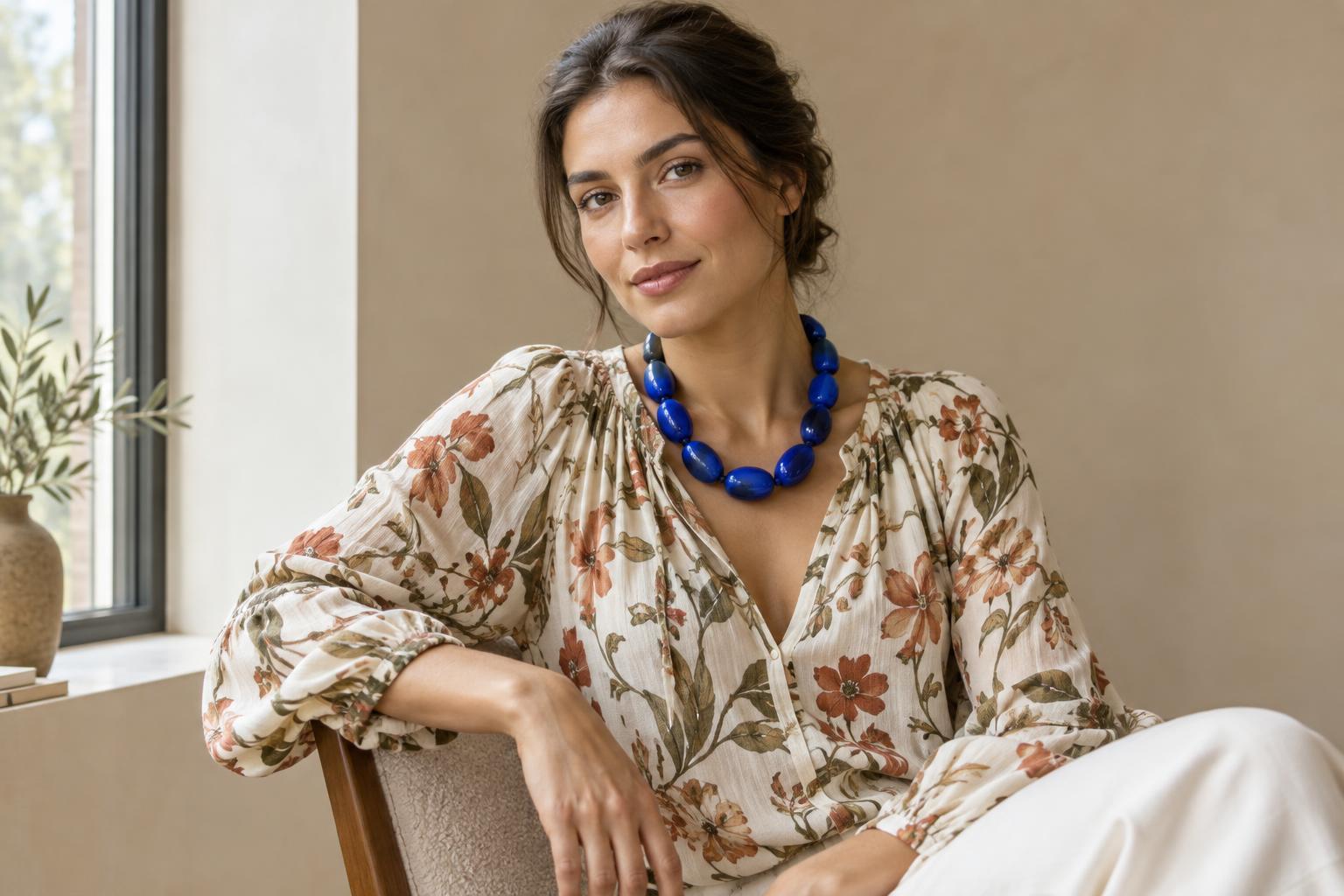
Consider the object’s visual weight as well as its meaning. A large, brightly coloured umbrella may be perfect if it echoes a small accent in your outfit, but it can overwhelm a quieter look. A compact object in a related colour or texture is less likely to compete. If a prop has prominent text, a logo or a busy pattern, check whether viewers will look there first. When the answer is yes, choose a simpler version, turn it slightly away from the camera or leave it out.
Build a clear visual hierarchy
Decide what someone should notice first: the full silhouette, a layered combination or a particular accessory. Place and frame the prop around that decision. If the shoes matter, avoid letting a bag hang in front of them. If the shape of a coat is the subject, hold an object beside your body rather than across the coat’s front. A little space around the key garment helps its outline remain readable.
Distance can control emphasis. An object close to the camera may look unusually large, while one held against your torso can cover details you intended to show. Try taking three versions: one with the prop in your hand, one with it beside you and one without it. Compare where your eye goes first in each image. You can also temporarily view the photos as small thumbnails. If the outfit still reads clearly at that size, the visual hierarchy is probably working.
Use colour and gesture to connect the story
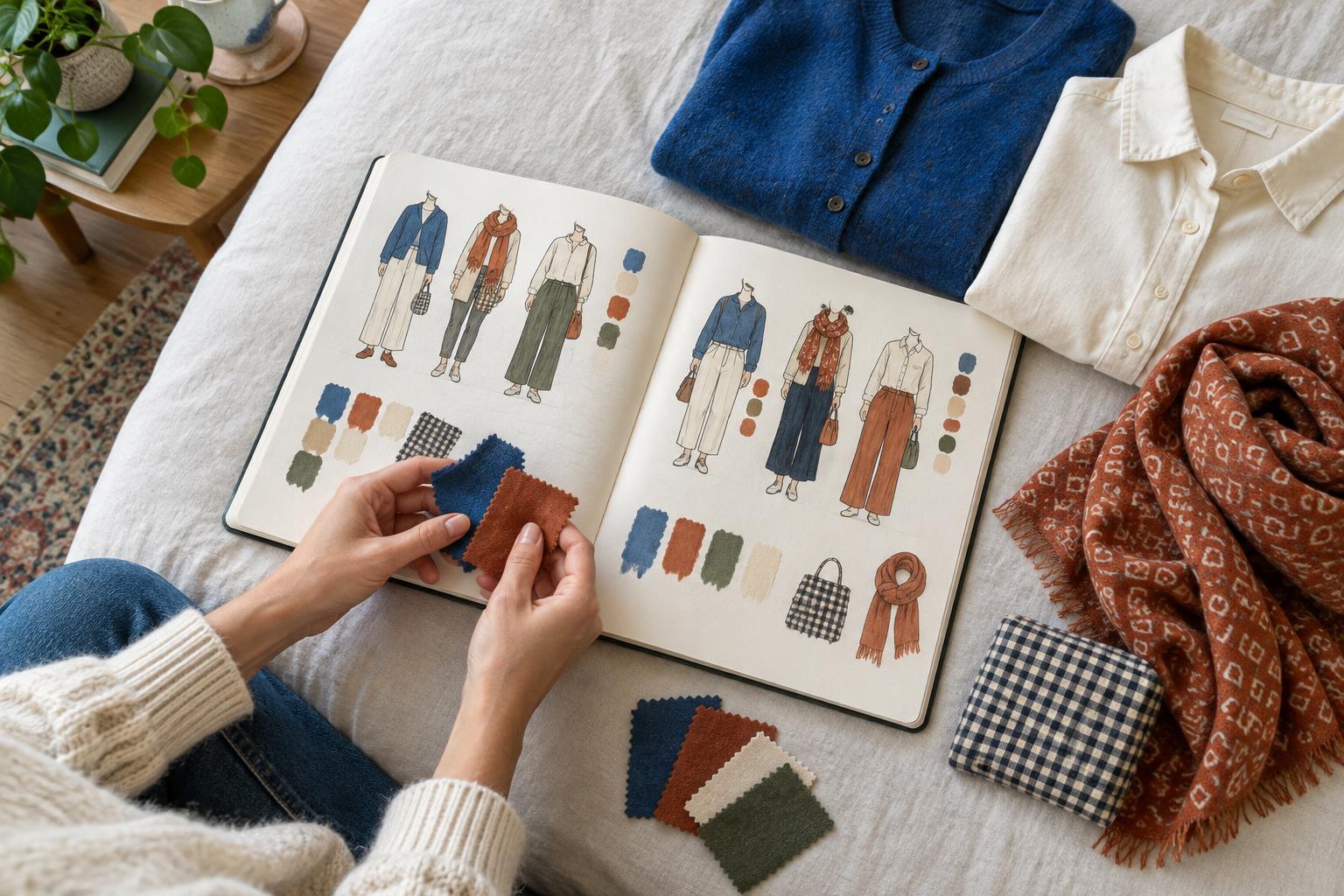
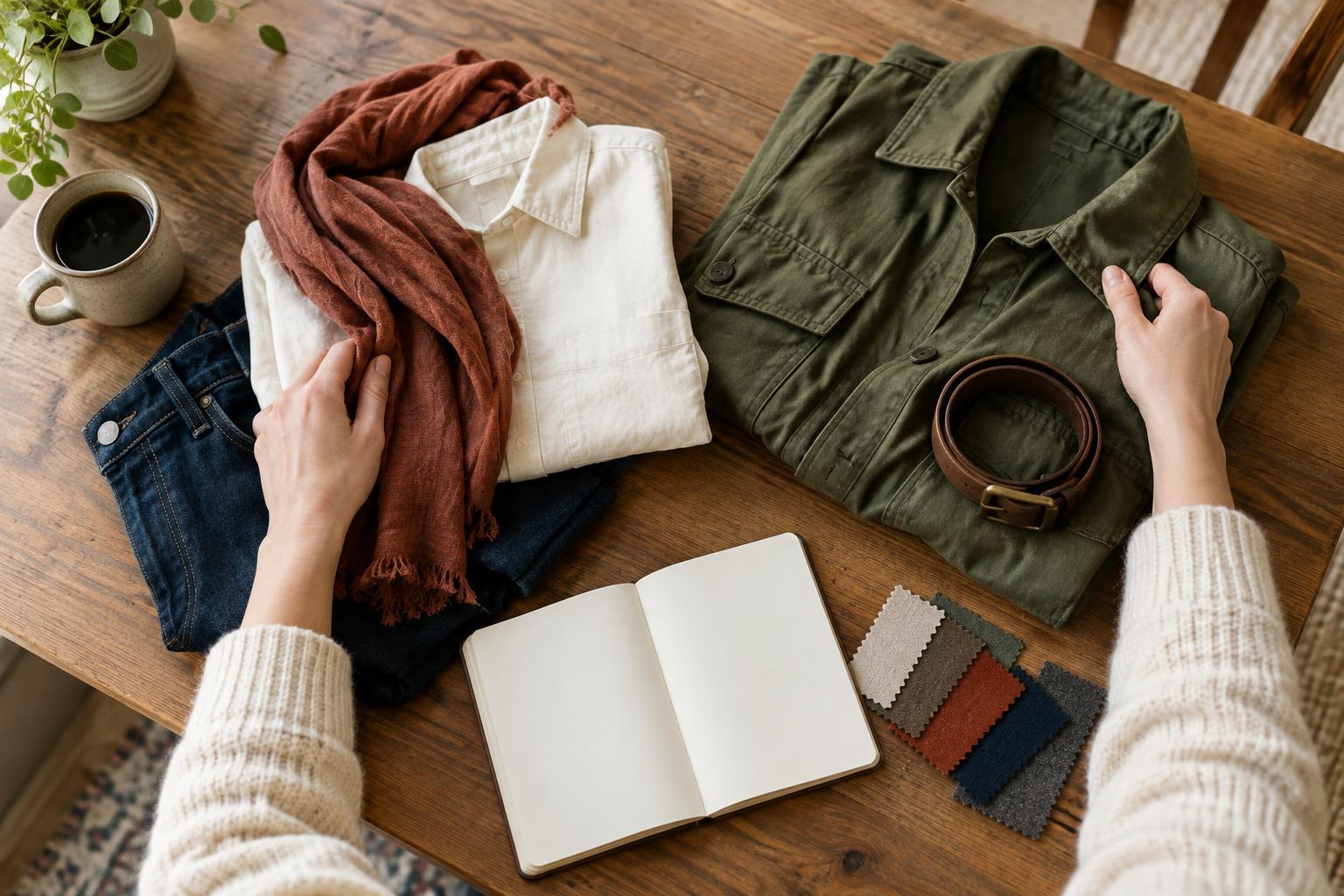
Props can bring separate parts of an outfit together. A blue book cover might repeat the blue in patterned trousers, while a warm-toned scarf draped over a chair could connect with tan shoes. The match need not be exact. Repeating a colour family, shape or material can make the object feel intentional without making the photo look overly coordinated. If the outfit already has several strong colours or patterns, a neutral prop may give the eye somewhere to rest.
How you use the object matters as much as what it is. Reading the book, adjusting the bag strap or resting a hand on a chair can suggest a small action. Keep the gesture simple enough that it does not hide the clothes or become the whole performance. If you are photographing someone else, ask what feels natural to them. A comfortable interaction often expresses more personality than a pose designed around displaying an object.
Edit the scene, then try a small exercise
Look beyond the prop you chose. Background objects can become accidental props: a vivid sign, a crowded shelf or a bright bin might pull attention from the outfit. You may only need to shift a step, change the camera angle or crop more tightly. When selecting a final photo, favour the image where the outfit remains legible and the object adds context. A beautiful object is not a reason to keep a frame that hides the look you wanted to share.
For a practical exercise, photograph one outfit with three approaches: no prop, a neutral everyday object and an object that repeats a colour or theme in the clothes. Keep the location and framing similar. Then note what each version communicates before deciding which you prefer. The prop-free image gives you a useful baseline; the other two show whether an object adds a meaningful detail or merely adds more to look at. Let that comparison guide your next photo, rather than treating props as a requirement.