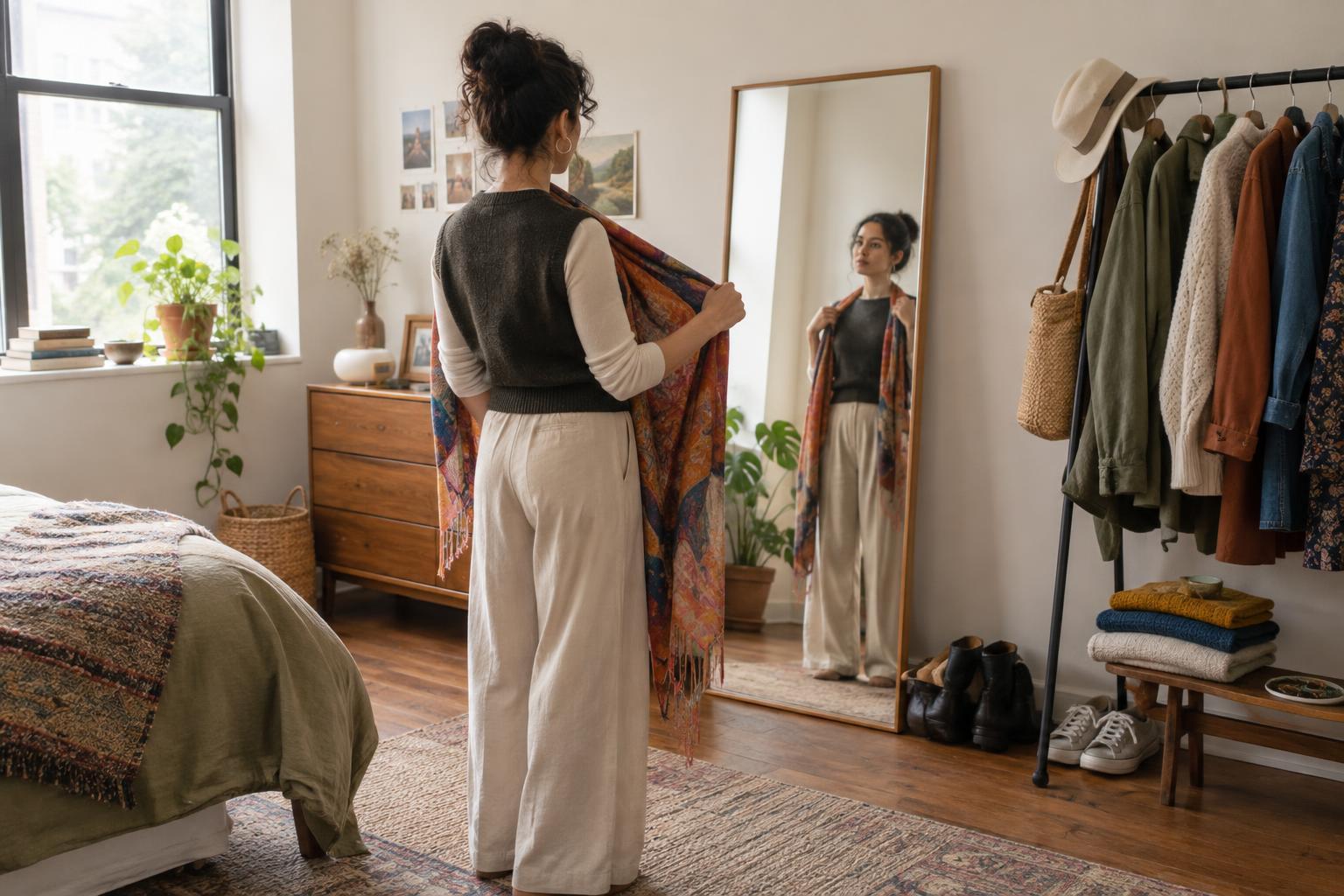
Creative identity is a way of expressing yourself
Creative identity in dress is the collection of choices that makes your appearance feel like an expression of you. It might show up in the colours you return to, the shape of a favourite jacket, or the way you combine pieces that were not designed to go together. It is less about having a signature look than understanding what you enjoy communicating through what you wear.
That communication does not need to be obvious to anyone else. A pair of sturdy boots might remind you that you like to feel ready for anything. A bright scarf might bring playfulness to an otherwise quiet outfit. Clothes can also serve practical needs: comfort, movement, warmth and the expectations of a particular setting all shape how you dress. Creative identity develops within those realities, not apart from them.
Start by noticing what already feels like you
Before buying or changing anything, look for patterns in what you already choose. Pick three outfits you have worn and felt comfortable in. For each one, write down what worked: the fit, the colours, the texture, the amount of detail or the ease of getting dressed. Then look at three pieces you rarely wear. Ask what gets in the way. The answer may be as simple as an awkward neckline or a colour you enjoy looking at more than wearing.
Notice your visual interests beyond your wardrobe, too. You may be drawn to orderly shapes, layered materials, soft contrasts or unexpected flashes of colour in objects and images. Treat these observations as clues, not rules. Liking a bold painting does not mean you must dress boldly from head to toe; one small detail may capture the part that appeals to you.
Try finishing the sentence “I like my clothes to feel…” with three words. You might choose “relaxed, precise and colourful,” or “soft, practical and surprising.” There is no ideal answer. The words give you a starting point for deciding what to keep, combine or try differently.
Translate an idea into visible choices
Abstract words become more useful when you connect them to details you can wear. If “playful” is one of your words, you might express it through an unusual colour pairing, patterned socks or a bag with an interesting shape. If “grounded” matters to you, you might prefer substantial fabrics, simple layers or familiar shoes. The same idea can produce very different outfits on different people.
Build one outfit around a choice you already like, such as a favourite shirt. Change just one element at a time. Compare it with a smooth accessory and then a textured one, or try two different outer layers. Ask which version better matches your three words while still working for your day. This small comparison is often more revealing than trying to reinvent your whole wardrobe at once.
A useful visual identity can hold contrasts. You can like neat tailoring and worn-in denim, or quiet colours and an oversized earring. Rather than treating those preferences as inconsistent, look at how they work together. Contrast may be part of what makes an outfit feel personal.
Experiment without turning style into a test
An experiment is easier when it has a clear limit. For one week, try wearing a colour you own in a new combination, repeating a favourite accessory with different outfits, or changing the proportions of a familiar look. You do not need to purchase anything. Borrowing an idea from another area of your wardrobe can be enough: a belt worn with a different layer may change the whole impression.
If you find photographs helpful, take a quick outfit photo before you leave and note how you felt wearing it later. The point is not to judge how you look in every image. It is to compare intention with experience. Did the outfit feel expressive, comfortable and suitable for what you did? Sometimes a combination looks appealing at home but needs adjusting to work through a full day.
Give yourself permission to discard an experiment. A choice that does not feel right has still taught you something about your preferences. Creative identity becomes clearer through trying, noticing and editing, rather than getting every outfit right.
Leave room for change
Your creative identity does not need a final definition. Your routines, interests and needs may change, and your clothing can change with them. Keep the parts that continue to serve you, and allow others to fade. Repeating a beloved combination is as valid as trying something new; familiarity can be expressive too.
When you feel unsure what to wear, return to your three words and one piece that reliably feels good. Use them to make a small decision, such as adding a contrasting texture or choosing the simpler of two accessories. Over time, those choices form a visual language you can recognise. The aim is not to make every outfit announce who you are. It is to make getting dressed a little more intentional and a little more your own.


